




Beyond the portfolio: How smart websites build better client relationships
On this episode of “The Building Code,” Charley is joined by returning co-host, Carly Ward, partnerships manager here at Buildertrend. They’re sitting down with Katlyn Slocum, creative director at Katlyn Slocum Design, a web design agency that builds strategy-driven websites for home builders and contractors. With a background in marketing and deep roots in the trades, Katlyn combines industry insight with design expertise to create websites that elevate brands, attract better leads and drive sales.
Tune in to the full episode to hear how builders can turn their websites into powerful tools for streamlining communication, setting clear expectations, and boosting client satisfaction from the very start.
What tips or tricks do you have for builders who want to take their website to the next level with communication?
“A lot of business owners were treating their websites as a digital business card, if you will. And I think that just comes from maybe just not knowing what websites could be, what the capability of those are to leverage in doing some heavy lifting for you. One example is how much time you could save by answering common questions. Think of the last 20 calls you got on. I’m sure that a lot of the questions were repetitive, and they were the same. And so, including things like that on your website on a frequently asked questions page or section. And that’s great for SEO, too, by the way. Outlining a brief overview of your process, especially if most of your clients, this is their first time building a custom home or going through a renovation, giving them just a bite-sized look of what this looks like can help ease some initial fears and break down those barriers.”
What does the process look like for helping builders revamp their website?
“One of the main questions I ask when I get on calls is what are your goals? I think it’s important to know where you’re at, what services you’re currently offering, what clients you’re currently working with. And then decide if you like doing some of those projects or services. If you do them out of necessity because you’re not getting leads for other projects that you’d rather be doing. Who the people you’re working with are. Do you want to keep working with those people? Are you looking to work with different people? Just start asking those questions of what’s profitable, but also what you’re passionate about. And then my approach is based on that information and the goals that I get from you, your website is going to be custom curated for those goals.”
Links and more
Learn more about Katlyn Slocum Design and get her free guide “10 Things Every Home Builder Website Needs.”
Follow Katlyn on her social channels:
The latest State of the Residential Construction Industry report is out now!
- Learn systemized processes for driving profitability
- See why financial literacy is an opportunity for growth
- Understand how prioritizing planning leads to long-term success
Get your free copy – and see what’s shaping residential construction in 2025.
Related content:
Listen to the last episode to hear how Roberto Gutierrez, co-founder of Jackson Builders, used intentional systems and streamlined processes to fuel sustainable growth – from custom jobs to high-volume production.
Subscribe here and never miss an episode.
Got podcast topic suggestions? Reach out to us at podcast@buildertrend.com.
The Better Way, a podcast by Buildertrend:
Looking to add construction tech to your daily processes? On the newest season of “The Better Way, a podcast by Buildertrend,” you’ll get best practices for implementing software and getting your team on board from other industry pros and our experts. Subscribe and stream today wherever you listen to podcasts.
Follow us on social:
Listen to “The Building Code” on YouTube! And be sure to head over to Facebook to join The Building Code Crew fan page for discussions with fellow listeners.
Charley Burtwistle (00:00):
What is up, everybody? Welcome back to another episode of “The Building Code.” I’m Charley Burtwistle.
Carly Ward (00:08):
I’m Carly Ward.
Charley Burtwistle (00:09):
Carly Ward, third time.
Carly Ward (00:10):
She’s back.
Charley Burtwistle (00:11):
She’s back.
Carly Ward (00:12):
She’s not leaving.
Charley Burtwistle (00:12):
How are you feeling? Seasoned pro at this point.
Carly Ward (00:15):
This is my new desk.
Charley Burtwistle (00:16):
There you go. We just posted up here. Were you nervous for the first two, or are you nervous for this one?
Carly Ward (00:22):
Oh cobwebs are off.
Charley Burtwistle (00:23):
Okay.
Carly Ward (00:24):
Yeah.
Charley Burtwistle (00:24):
So, we’re letting it rip today.
Carly Ward (00:26):
First one, second one, feeling better. Water’s warm now.
Charley Burtwistle (00:30):
There we go. We love that. And speaking of recurring guests, recurring co-hosts, Katlyn Slocum, who is a recurring guest, is back with us today. She was back on episode, let’s see, 238. This is episode 271, so it’s been a few months. Want to have Katlyn back on. She is the creative director at Katlyn Slocum Design, website design for residential commercial contractors in the construction space. She is awesome. We are huge fans of her over at Buildertrend, and I think our listeners will be huge fans of her, as well. So, without further ado, let’s get Katlyn in here.
Hey, Katlyn, welcome back to “The Building Code.” We were just making the joke you were joining a very elite list of recurring guests here on the podcast. This is your second time on. How’s it going? How you been?
Katlyn Slocum (00:40):
Good. I didn’t realize it was so exclusive. That makes me even more excited because it’s also my first second appearance on any podcast, so that’s awesome.
Charley Burtwistle (00:47):
There you go. Yeah, I want to, it’s just kind an image or a vision in my head right now, but I want to have either a walkway of stars of like, the Hollywood stars of people have been on multiple times.
Katlyn Slocum (00:48):
Hall of fame.
Charley Burtwistle (00:48):
Yeah.
Carly Ward (00:51):
They’re an elite squad.
Charley Burtwistle (00:54):
Or plaques up on the wall or something. So, I’m working on that, but we’ll get you added there for sure. But for our listeners that weren’t lucky enough to hear you the first time on the podcast, always like to start with just quick intro, who you are, where you came from, how you got to where you’re at today.
Katlyn Slocum (00:60):
Yeah, I will try to keep that short. So, yeah, my name’s Katlyn Slocum. I am the owner and the lead designer of Katlyn SlocumDesign. We are a website design company, I was going to say based out of Vancouver, Washington. That’s where I’m from. But just recently my family and I moved to Cincinnati, Ohio. But we work with builders, remodelers and other home industry professionals on getting the most out of their websites through website strategy, strategic website design and really helping make their websites a sales tool. I got three little boys at home with crazy baseball and extracurricular schedules, so it’s crazy, but I love it. It’s super fun.
Charley Burtwistle (01:27):
Awesome. And I always like to hear people that work in these parallels alongside the construction industry. Obviously, website design can span multiple verticals. How’d you narrow in on the construction specific? What drew you to that? Yeah, just a little bit more context there.
Katlyn Slocum (01:43):
Yeah, that’s a great question. Yeah, so I never thought I would own my own business. It kind of started out of necessity because I was let go from my marketing job. The business just went under, so we all were displaced. And I was pregnant with my second son at the time and so, long story short, I ended up pursuing my own business. I’ve always liked design. I started investing in web design courses and things like that and freelancing. And very early on when I was going down that path, some educators that I was following and taking courses from really encouraged niching because it helps with your marketing messaging. You’re really able to hone in on a specific set of people or group of people, learn what the problems are that they’re facing with their online marketing and then be able to directly message to those people.
(02:32):
So, that was really easy for me to actually niche into construction though because I was going back and I’m like, every single man in my family owned his own business in the trades. So, my dad and his dad, my grandpa, had an HVAC repair company. My grandpa on my mom’s side actually opened his auto mechanic shop the year I was born. So, he had that for over 30 years. My stepdad to this day is a really successful roofer in Southeast Minnesota. And my husband today, he doesn’t own his own business yet, but he’s an electrician. So, it was just like, I’m familiar with these people. I grew up with this. I used to work for my stepdad who’s a roofer and do payroll and all that stuff. So, that felt really natural.
(03:20):
And when I started marketing and doing podcasts and things like that, the first person’s podcast … or really early on, I was on Brad Leavitt’s podcast, and he ended up becoming my client, which was totally unexpected. But after we had the episode. And he was the first home builder I ever worked with. So, before I was doing electrician sites, plumber sites, concrete contractor websites, things like that. And he was the first builder I ever worked for. And, obviously, going from working with images and content for plumbers to somebody like AFT Construction’s crazy homes that he builds, visually as a designer, I was really drawn to that. I’m like, oh, I can do so much with this. It just feels like a really cool space to be in. And then it just turned into a lot of the inquiries I was getting were from other builders and so, it kind of naturally niched into custom home builders and renovators.
(04:14):
So, yeah, I guess that’s where I got family background in the trades, no home builders, but then it ended up becoming home builders as my niche.
Charley Burtwistle (04:24):
I love that. And I’m going to try not to ask just the same questions that I asked last time, so it’s new content.
Katlyn Slocum (04:30):
That’s okay.
Charley Burtwistle (04:31):
But I think it’s important to set the stage for the rest of the interview here, especially for our listeners. Carly and I have gone to a lot of different conferences and heard a lot of different speakers and digital marketing and having online presence is something that people are constantly talking about and focused about. So, I’m sure a lot of our listeners are going to be really intrigued to hear what you have to say. So, I want to start with just your typical client that you work with. Where are they at in their website journey? Are you doing a lot of redesigns for existing websites? Or people that are just starting from scratch of like, “Hey, I have a Facebook group that I’m updating regularly?” Where in that life cycle do they typically land and how do you insert yourself to help them take that next step?
Katlyn Slocum (05:13):
Yeah, I would say earlier on in my business, it was maybe 50/50 where 50% of my clients didn’t have a website and they were starting from scratch and 50% had one, but it needed revamping. It wasn’t performing well, it was outdated, it wasn’t representing their brand. Now, more so I would say it’s probably 80% of my clients have an existing website, but some of their goals may look like, “Katlyn, we have a website, but it doesn’t reflect where we’re at as a business now. It doesn’t reflect the quality of the work we do. The services that we have on there are outdated.” Maybe on their website they have residential builds, commercial builds, renovations, and they’re like, “We just want to go into high-end residential.” So, reconstructing a site that’s geared towards attracting that type of client.
(06:08):
Sometimes they’re in a space where it’s like, “Hey, we’re working on this investment range as far as the clients we work with, and we want to be booking higher end projects.” So, it really just depends, but most of my clients have an existing site. The other, I don’t know, 15% to 20%, they maybe have an Instagram or a Facebook or a Google landing page or something but have never really had a website. And so, they’re very new to the digital creation. But yeah, it’s changed over the years with how that ratio is broken down.
Carly Ward (06:46):
And I feel like we typically see for a lot of our builders, they’re using their website more is a portfolio to showcase their projects, and not a lot of them are leaning into some of the communication tools to set expectations and get the right clients in the door. For those builders that are really just using it as a portfolio, what tips or tricks do you have for them to take their website to the next level as far as communication?
Katlyn Slocum (07:13):
And I don’t even think it’s just builders, too. Back at the beginning of my business when I was networking in my local area, it seemed like a lot of business owners were treating their websites as a digital business card, if you will. It’s like, “Here’s my address, here’s my phone number, email,” and then for builders of course, it’s like, “Here’s some pictures.” And I think that just comes from maybe just not knowing what websites could be, what the capability of those are to leverage in doing some heavy lifting for you.
(07:40):
And I know today’s episode is about client communication specifically. One example is how much time you could save by answering common questions. Think of the last 20 calls you got on. I’m sure that a lot of the questions were repetitive, and they were the same. And so, including things like that on your website on a frequently asked questions page or section. And that’s great for SEO too, by the way. So, that’s one way.
(08:10):
Outlining a brief overview of your process. Now, some builders go crazy in depth into their process on their websites, which I think is a little overkill and overwhelming for the user, but for somebody, especially if you’re working with somebody, if most of your clients, this is their first time building a custom home or going through a renovation, giving them just a bite-sized look of what this looks like can help ease some initial fears and break down those barriers. Our first step is a consult call. Okay, it’s a 30-minute call and we learn about your goals and blah, blah, blah. And then the second step is this, and the third step. Three to five steps. There are things you can do there to outline your process.
(08:54):
Obviously, you have multiple services, having separate service pages to include different information that’s relevant to that service. And then we get into more of the nitty-gritty of you’re actually working with a client, having tools like Buildertrend to have instant communication with your clients on real time updates of how the project is going, saving the back and forth in the emails or on the phone calls. There’s just so many ways you can utilize the website to save yourself time internally, but also to just give a stellar client experience, one where those clients are going to walk away and be like, “I’m going to refer you to everybody I know.” There’s just so many ways.
Charley Burtwistle (09:42):
Yeah, I remember we spent a lot of time last time talking about brand specifically, and I think a lot of people may have a website but not a brand. And I think a lot of people listening are probably thinking …
Katlyn Slocum (09:55):
Very common.
Charley Burtwistle (09:56):
… “Oh, I have a website. I’m good to go. Fast-forward, I’ll tune in next week.” But there’s so many different, and you did a really good job hitting on a lot of them right there, so many different aspects that just a really efficient website can handle a lot of the problems for you. A lot of people think it’s my sales phone and I want a website contact form so I can get more leads, but maybe you actually want to filter down some of those leads and actually saying the industry that you work in, what you specialize in, your process helps you get in contact with the right prospects, not just as many prospects as you can.
Katlyn Slocum (09:56):
I remember …
Charley Burtwistle (10:32):
But it’s …
Katlyn Slocum (10:33):
Oh, sorry. Go ahead.
Charley Burtwistle (10:33):
No, you go. I was just saying it’s important to know what your goal is because there’s different avenues and approaches that you can take. So, I was hoping that you could maybe elaborate on how do you set the … and it’s probably your sales pitch, so you should be pretty good at it, but how do you set, what am I trying to do and how can my website help me get there? Because there are different reasons that people would want to revamp their websites.
Katlyn Slocum (10:54):
I love this because this is exactly what I talk about on sales calls. One of the main questions I ask when I get on calls is what are your goals? And I have some questions that I ask, too. I’ll give an example. I was just on a sales call yesterday with a company and he had gone through a couple different marketing firms and was really having a hard time either communicating to the company what needed to be done, or he communicated, and they were not responding to it. He had gone with a marketing company that was really good at the SEO side of things. They built him probably 40 or 50 pages for SEO related things. And as soon as I went on a site, I could tell that’s what it was because it was just overwhelming from a user experience. Your users don’t need to see all your location pages. Your users don’t need to see 20 different service pages that you’ve created for SEO.
(11:48):
When I got on the call with him, he said to me, “I get plenty of leads, but I’m wasting time. It’s not the people I want to be working with.” He said, “We want to be attracting outdoor living projects, not little deck repairs.” Or he’s like, “Commercial decking’s on our site. We don’t even do commercial decking.” So, just by asking him some questions, I looked at all of his services. I was like, “Okay, what on here do you still offer?” Or, “What are you doing now? And do you want to still be doing that, or do you want to get away from that? What price point are you working within? And do you want to stay there, or do you want to raise your rates and work with higher end projects?”
(12:33):
So, I think it’s important to know where you’re at, what services you’re currently offering, what clients you’re currently working with and that kind of thing. And then decide if you like doing some of those projects or services. If you do them out of necessity because you’re not getting leads for other projects that you’d rather be doing. Who the people you’re working with are. Do you want to keep working with those people? Are you looking to work with different people? Just start asking those questions of what’s profitable, but also what you’re passionate about.
(13:07):
I have a lot of builders who come to me, and they do renovations because in challenging, like election years for example, or times where people are holding onto their money a little tighter, and they’re not ready for a custom build, they fall back on the renovations as a revenue cycle. But they don’t want to be doing the renovations. They really only want to be doing custom homes. And then I have other builders who are like, “Renovations are our bread and butter. We’re super efficient. These are profitable for us.” So, you just have to know what you’re willing to do, what you’re not willing to do.
(13:38):
And then my approach is based on that information and the goals that I get from you, your website is going to be custom curated for those goals. No builder that I have worked with has ever had… there may be similar pain points and problems and some similar goals, but no one has the same market, no one has the same goals, no one has the same team sizes. There’s so many different variables and so, there’s really not a one size fits all solution. So that’s the approach I take is where are we at now? Where do we want to go? And what do we need to do in the middle to get us there?
Carly Ward (14:14):
And that makes sense. Every business is going to be a little bit unique and different and diving into their goals like you had said. But generally speaking, is there any low hanging fruit that you typically see builders be really successful in revamping their website or upgrading?
Katlyn Slocum (14:32):
As far as design features or functionality?
Carly Ward (14:36):
Yeah, or even those small little features like we talked about the FAQs, different timelines and just taking a peek behind the curtain of what their process is like?
Katlyn Slocum (14:50):
Yeah. We talked about some of the communication features, I would say what I try to do with every site, no matter how small or big it is, is simplify. What is the absolute most necessary information a user on your site needs to build trust and to feel confidence in taking the next step of reaching out with you? For all my projects, that’s usually five core pages. It’s your home page, obviously, your landing page, about the company, because when you’re investing so much money with a builder or renovator, you want to know who you’re working with, you want to put a face to the name. That personality, that’s really important for a user perspective.
(15:34):
A process page. You could have several process pages for however many services you have, but let’s say you’re a custom home builder. The process page is where it’s going to go into what makes you different as a builder? Why should somebody choose to work with you over a competitor? What are some questions that you can answer that have to do with custom home building? What does your process look like, the literal process? And things of that nature. Your portfolio, still super important, but with a caveat, you don’t have to have every project that you’ve ever done on your portfolio. If it’s a past project that has grainy imagery and since then you’ve invested in professional photography, and you have awesome photos and new projects, get the older projects off of there. It can overwhelm users to have … you have 50 projects on your website. And you want to just put out what you want to attract, so put your best work and more work that you’d want to do. And then the contact page.
(16:30):
And that’s my bare bones website of these are the most essential things that users are looking for before they’re ready to reach out, on top of a number of things. They’re probably looking at, they’re definitely looking at your reviews. They’re going to look at your Instagram, your social media. They’re going to ask people in the location about you and for referrals and things like that. But that’s the first thing I ever do is simplify. And then of course we add things that are relevant to each individual company based on their goals of course but make it easy to get people to reach out. Don’t make it too cluttered, too much information overload. And don’t be too bare bones where you don’t have enough information that they feel like they trust you enough to reach out.
Charley Burtwistle (17:16):
Yeah, that makes a ton of sense. I love the simplification aspect. I was actually super impressed by your website, your personal website. I was doing some research before we hopped on today.
Katlyn Slocum (17:25):
Did you just look at it? Because I just redesigned it. So, that’s new as of three days ago.
Charley Burtwistle (17:30):
Okay, cool. I did look at it a couple hours ago, so I was like, oh, do I need to refresh it? How new are we talking here?
Katlyn Slocum (17:36):
No, this week.
Charley Burtwistle (17:37):
No. Well, thank god you have an incredible website, otherwise I’d imagine people wouldn’t have a lot of faith in you. But I was really …
Katlyn Slocum (17:44):
The other one was good, too. This is just, it’s a rebrand. It’s a different direction.
Charley Burtwistle (17:48):
I was just super impressed it followed everything that you just hit on right there is the, I knew exactly how to get around it. I knew exactly what you did and who you are. And as I scroll down, it was in a very logical flow of this is who I am, this is my process, this is who I work with, this is what our next steps would be like. Here’s a little contact box.
(18:06):
This next question may be a little in the weeds, but since it’s your second time on here, I think we can get a little in the weeds. You talked about the simplification and previously you talked about a super cluttered SEO heavy type website. What would be the balance points between those two? And when you say it’s a super SEO heavy type website, what does that actually mean? What are the pros and cons? And how do you walk the line between the simplification and something that’s going to perform well from an SEO standpoint?
Katlyn Slocum (18:35):
Yeah, that’s a great question because that’s something I work with my clients on, too.
(18:39):
Now, back to that previous sales call I had with the guy who had the super SEO heavy website. Not a bad thing to have a super SEO heavy website, but a lot of that come … from a design standpoint, there are things you can do to include all those pages that are not front facing for the user. There’s a lot of things you can do on the backend, pages you can create that you can have more hidden that the search engines can still see that you can still bring traffic to your website through, but it’s not in the user’s face. Like I said, that one client, and on this call, I told him, I said, “I want to keep your SEO location pages. That’s really smart to have them on there. But it doesn’t need to be in your main navigation because if I’m going to book you to build a deck, I’m not going to use any of those links in your navigation to see what areas you serve. That is for search engines. That is not for me.” So, it doesn’t make sense to have those in the user’s perspective.
(19:40):
So, from a design point of view, I talk with my clients about, okay, what pages should we keep? And for that same guy, he had several services that had SEO pages created for that are not services he offers. So, it’s doing a disservice to him because the traffic that’s coming through those pages or for clients he will not work with. So, he may be getting a ton of leads, but if he’s only able to work with 1% of them, then it’s a waste of his time. So, that’s why I asked him, “Okay, what services do you actually offer? If you don’t offer any of these other services, we’re getting rid of these pages because we would be driving unqualified traffic to your site based on where you’re at in your business now. The location pages, we’ll just put those on the backend. We don’t need links to them. We don’t need to mention them anywhere for the users to see, but they will still exist and be visible to search engines.”
(20:31):
And I talk with my clients, too, because I don’t know. A lot of it is design-based, for example, and we’re getting into the weeds now. I’m getting really technical, but …
Charley Burtwistle (20:46):
This is perfect.
Katlyn Slocum (20:47):
… on every page there’s an H1 heading. That’s your primary heading that tells Google and other search engines what your website and what each individual page is about. So, in my designs, in Squarespace, your H1 heading, how they have it in the design is the H1 headings, the giant headline text. Well, I’m not going to put on my client’s site in giant headline text like, “Boston Custom Home Builder,” because for the user, they don’t care. They know you’re a Boston custom home builder. They came to your website knowing that. So, I, in my designs, make the H1 heading small. It’s still there. It has to be there for search engines. And I’ve had lots of clients say, “Can you remove that?” And I’m like, “I could, but no. You want that there. You need that there.” I said, “I know it’s annoying, but you need it.”
(21:36):
And then I make the H2 heading bigger and the big headline, and that’s what is going to be the more engaging headline that has to do with the feeling or the experience you’re going to give your consumer. So, it’s really marrying, making a very user-friendly site and focusing on having the content be for them to convert those users into leads, but not neglecting the SEO side of things. And it’s done with strategic design choices. Let’s just say that. Sorry, that got really weedy and technical.
Charley Burtwistle (22:14):
No.
Carly Ward (22:14):
A lot of hot words.
Charley Burtwistle (22:17):
It was perfect. I think where I have always been frustrated with these types of conversations, whether it’s been at conferences or other podcasts and stuff, it’s like, yeah, no shit I need a website. I know that. You don’t need to pitch why I need one. Rarely do people actually get into the weeds on here are the things that you can actually be doing and be doing better. And I think that’s hopefully what our listeners are really looking for of how can we improve, be more intentional, be better about why we’re doing this. You don’t just randomly throw together a house, you’re really intentional about it. And this is the same sort of aspect and the way you’re thinking about things.
Katlyn Slocum (22:50):
Yeah, the same conversation of when you’re building a house, those are things architects and designers and builders are thinking of is you’re not just putting a box together with all these haphazard design choices. The purpose of it is to flow. And so, when the family moves in, it makes sense for how they live. We’re doing the same thing on websites. How do the users need to be able to navigate through this, and it be the most efficient flow for them? And that’s going to bring you the better ROI when you make it easy and functional for them. So, yeah, same concept there.
Carly Ward (23:30):
So, I want to shift gears just a little bit. We’ve talked about websites that might be misaligned based off of their services or the target market that they’re going for. And I want to ask kind of a personal question.
Katlyn Slocum (23:44):
Sure.
Carly Ward (23:44):
But you’ve obviously seen thousands of websites. Is there an ick that you see on a website that you’re like, “No, no, no, we got to fix that now?”
Katlyn Slocum (23:56):
Oh, an ick? That’s a really good question. Might need to sit on that one for a little bit.
Carly Ward (24:08):
Like from a design perspective?
Katlyn Slocum (24:10):
From a design perspective, I think the cluttered navigation is my biggest ick. And of course, really poor photo quality is an ick because I’m like you do stunning homes. This is another call that I was on yesterday, a different one. There’s this builder who, they’ve been in business forever. They’ve done over 200 homes, and their Instagram is filled with stunning photos. And I saw their Instagram first, then I went to their website, and I was like, they’re grainy images. They’re not good at all. And so, that’s an ick.
(24:53):
But the cluttered navigation is my biggest pet peeve, and it’s also the easiest fix for me as a designer. I love problem-solving of like, okay, what’s absolutely necessary? Where can we put these where it’s not going to be in people’s way? Yeah, that’s probably my biggest one. And I see it a lot, especially with builders who also do development properties. And usually, they have more links anyways because then you have our communities, and then X amount of communities, and lots for sale, and there becomes a lot more services that they offer and things that they do. And so, it’s just a matter of strategizing on like, okay, how do we best lay this out that makes sense? And that’s my favorite thing to do.
Carly Ward (25:34):
Well, it makes sense because working with mostly custom builders, and their work is in the details. And so, I imagine a lot of the times they’re trying to fully convey that to the best of their ability through a website. But there’s obviously a really fine line of providing just enough information to get them the answers they need versus what the heck am I looking at?
Katlyn Slocum (25:54):
And just laying it out different on the site. One builder that I worked with had all these links at the top, he ran out of links, and then there was a drop-down, and his contact page was in his drop-down. I’m like, “Who’s going to find the contact page in your drop-down? There’s just too much going on up there.” So, I’m like, “We can keep all these pages, but let’s make what’s up here really minimalistic and put everything else in the footer. Or link to it from other places from the site. But we definitely don’t need information overload in the main navigation.” Definitely have your contact page visible, not in the drop-down, please.
Carly Ward (26:33):
Front and center.
Charley Burtwistle (26:35):
And we do also, on that note, if you are a Buildertrend users, we have some fantastic embeddables for your website with a contact page that links directly into your CRM in Buildertrend. As well as a login box, so they can log in directly into their client portal to hopefully streamline some of those things where they’re constantly landing on your website as opposed to ours or anybody else’s.
Katlyn Slocum (26:56):
Yep, and I’ve put a lot of those on websites, too. It’s a very cool feature. Yeah.
Charley Burtwistle (27:00):
Yeah. I love talking to people like you, and I’m sure Carly, you can relate to since this is your whole world of there’s things that our builders are really, really good at and really, really passionate about. And our job here at Buildertrend, and your job is to allow them to focus and spend time on the things that they’re good at and the things that they’re passionate about and offload the things that they don’t want to worry about to people that are passionate about them, like website design and a lot of other partnerships that we work with across the landscape there. So, I really appreciate you coming on.
(27:32):
I always like to end with just, hopefully you inspired a lot of people out there listening to this. If they are interested in upping their game and revamping their website, where can they go to learn more, contact you, get some additional resources, anything and everything?
Katlyn Slocum (27:49):
Yeah, absolutely. So, you can obviously go to my website, KatlynSlocumDesign.com. It was just revamped. And I do have case studies on there, which is my new page that I’m super proud of. And then I also have a freebies page on there that has a guide called The 10 Things Every Home Builder Website Needs. So, that has some actionable tips that you can apply to your existing website. And of course, I love to connect on Instagram at KatlynSlocumDesign.
Charley Burtwistle (28:15):
Perfect. We’ll make sure to link all of those in our show notes. As always, absolute pleasure having you on, Katlyn. Appreciate you making the time. And until the third go round, I suppose, huh?
Katlyn Slocum (28:26):
Yeah, the ultra-elite group, I guess. Thanks, Charley and Carly.
Charley Burtwistle (28:31):
Yep. Have a fantastic day. We’ll talk soon.
Carly Ward (28:33):
Thanks, Katlyn.
Katlyn Slocum (28:33):
Thanks.
(01:08):
Well, we just heard from Katlyn Slocum, creative director at Katlyn SlocumDesign. Carly, what’d you think?
Carly Ward (01:20):
It’s a great conversation to have. We talk to so many builders that the common sentiment is, I’ve been building houses with my bare hands and a pen and paper for X amount of years, and I think all our builders see the value in having a website but maybe don’t know the tactics or the ways to get there. So, it’s great to have her perspective to really show the value in what a website can do, not only from a lead generation standpoint, but a communication tool to bring in the right clients and set the right expectations.
Charley Burtwistle (01:51):
For sure. There’s a lot of parallels in what she was talking about, and what you and I and the rest of the Buildertrend employees talk about consistently is, there are areas that people like to spend time and know a lot about and are really passionate and really good at, and there’s areas where there are other people out there that are smarter than you. And we do that all the time here at Buildertrend. We’re not experts in a lot of different things. We partner with different consultants and firms to come in and help us, different softwares that we use to come and streamline our processes.
(02:22):
There is no shot that I could become as smart as Katlyn is at website design in a day, a week, a year or a decade. So, if I wanted to have a really, really good website, why wouldn’t I go with someone that does this for a living, helps hundreds of different builders do the same thing, and make that part of my client experience, my website, the first thing they see, the thing they probably see the most until I start building, make that experience as fantastic as my building experience is.
Carly Ward (02:46):
A hundred percent. And you’re going to get there a lot faster with somebody like Katlyn helping you out and that have gone through the trials and tribulations and knows what works versus trying to figure it out on your own. Spend your efforts where they’re really truly mattered, and that’s in building.
Charley Burtwistle (03:03):
Yeah, a hundred percent. I’m sure we’ll have her on again. Every time we have her on, she gives more and more nuggets, and I always nerd out about it. This is something I think is super cool. And I would, everyone, recommend, even if you already have a website, and you’re not interested, I would go out and check out hers because it is sweet. Her recent, today …
Carly Ward (03:22):
Newly launched.
Charley Burtwistle (03:22):
I guess by the time, yeah, this airs, it’ll be a couple weeks old but still hot off the press. Go check it out, it’s sweet. Let’s see. You got anything else, Carly?
Carly Ward (03:32):
Looking forward to the next one. I think we got a fourth coming up.
Charley Burtwistle (03:34):
There we go. Looking forward to another one. You guys will have to tune in to see what that’s about. Like, review, subscribe, tell everyone in the comments how much you love Carly being on the podcast, and join us on The Building Code Crew on Facebook. Otherwise, until next time, I’m Charley Burtwistle.
Carly Ward (03:52):
Carly Ward.
Charley Burtwistle (03:53):
Peace.

Katlyn Slocum | Katlyn Slocum Design
Places You Can find us




We think you’d also like this
podcast
Sep 26, 2024Websites that wow: Elevating your online brand – because first impressions matter
Listen to the full episode to learn for tips on how to strengthen your construction bussiness’s website and branding to boost sales – and profits.
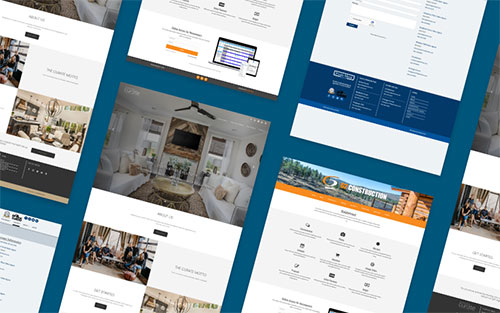
Here’s why you want a construction website design connected with Buildertrend
Websites can be used for more than marketing. Sync your construction business website with Buildertrend and watch your success grow.

Here’s why your construction website is a strong selling tool
Websites can be used for more than marketing. Read more about how your construction website can be used as a strong selling tool.