




Scaling with intention: The power of systems-first building
Today on “The Building Code,” Charley is joined by returning co-host, Kate Vazquez, senior manager of community here at Buildertrend. They’re chatting with Roberto Gutierrez, co-founder of Jackson Builders. Since helping launch the company in 2016, Roberto has helped deliver more than 500 homes and is actively leading mixed-use developments across the city, with a focus on revitalizing neighborhoods. His work blends strategic investment with a strong commitment to community-focused growth.
Listen to the full episode to hear how intentional systems and streamlined processes can fuel sustainable growth in home building – from custom jobs to high-volume production.
At what point did you realize you needed something else to scale and get to where you wanted to be?
“I remember at one point, I was capturing all the schedules in an Excel spreadsheet that had a Gantt chart, and I was having to update it multiple times a week. And once you get past nine or 10 of those, it’s just pretty inefficient because things don’t just update on their own. And I was also sending out schedule updates to all the subcontractors and vendors. So, I had like 40 emails that would go out every Monday morning to all our main vendors. I knew it could be automated, but I think first we wanted to wrap our head around what the process needed to be, so we were able to have educated discussions about project management software and make sure we chose the right one.”
What would you say are the Buildertrend features that are most used by your clients?
“They love all of it, but I’d say, they really love the daily logs. That’s something that everyone really enjoys. And then most recently, those client updates that has the AI-generated text that can go out weekly, they really enjoy that. We do have clients that are out of state, so it’s really difficult for them to get here. We do a lot of production and spec type product for investors. And we’re pretty open book, so we allow them to see the schedule and everything. And then for some of the clients that are a little more into the number side, they really like the Job Costing Budget to be able to see what we’re over on, what we’re under on, how much is remaining to be spent and all that.”
Links and more
Learn more about Jackson Builders.
Systemize your construction processes with Buildertrend’s project management software.
The latest State of the Residential Construction Industry report is out now!
- Learn systemized processes for driving profitability
- See why financial literacy is an opportunity for growth
- Understand how prioritizing planning leads to long-term success
Get your free copy – and see what’s shaping residential construction in 2025.
Related content:
Listen to the last episode to hear from Eric Stenger and Preston Reed, co-founders of Seed Development + Design, about how they completely restructured their company to get back on the path to profitability with the help of Breakthrough Academy and Buildertrend.
Subscribe here and never miss an episode.
Got podcast topic suggestions? Reach out to us at podcast@buildertrend.com.
The Better Way, a podcast by Buildertrend:
Looking to add construction tech to your daily processes? On the newest season of “The Better Way, a podcast by Buildertrend,” you’ll get best practices for implementing software and getting your team on board from other industry pros and our experts. Subscribe and stream today wherever you listen to podcasts.
Follow us on social:
Listen to “The Building Code” on YouTube! And be sure to head over to Facebook to join The Building Code Crew fan page for discussions with fellow listeners.
Charley Burtwistle (00:00):
What is up everybody? Welcome back to another episode of “The Building Code.” I’m Charley Burtwistle, and here with me today, Kate Vazquez. Kate, how’s it going?
Kate Vazquez (00:08):
It’s going good. I’m really excited to be here.
Charley Burtwistle (00:10):
We are super excited to have you. I really enjoy when I have a co-host and don’t just have to mindlessly talk to myself during these intros.
Kate Vazquez (00:18):
A little buddy.
Charley Burtwistle (00:19):
Exactly. Kate, tell our listeners a little bit about what you do at Buildertrend.
Kate Vazquez (00:25):
Yeah. So, more to come specifically on what I do, but I am the senior manager of community here. So, if that’s not an Easter egg, I don’t know what is, but there’s some really great opportunities coming for all of our builders soon, being able to interact more, just more to come.
Charley Burtwistle (00:41):
More to come. Very secretive of you.
Kate Vazquez (00:42):
Very secretive, but it’s exciting
Charley Burtwistle (00:45):
Dropping Easter eggs left and right, and so, hopefully when this new thing comes to fruition, our Building Code listeners will be the first to know. They’ll be like …
Kate Vazquez (00:54):
I think so.
Charley Burtwistle (00:54):
“Kate mentioned this on episode 270.”
Kate Vazquez (00:57):
Exactly. I would say all summer you’re going to start seeing a little bit more hints to the community and what’s to come. So, I think we’ve had a lot of people talk about this opportunity for a long time at Buildertrend. So, ultimately, we’re really excited to prepare an awesome experience for our builders, just a way that can really help your business continue to grow, not just the functionality of our program, but really the thought leadership and the growth of businesses and what the community can do for them.
Charley Burtwistle (01:22):
Love that. Some great overarching themes that I think all of our listeners will be excited about. And as far as thought leadership and scaling your business, we have a fantastic guest on today, Roberto Gutierrez, who is a partner and co-founder of Jackson Builders. I actually met him at the International Builder Show a few months ago. Super cool success story at a company that’s had some extreme hyper growth. Great users of Buildertrend. Talking to him, it’s just like the perfect person that we want to have on the podcast. So, unless you want to keep bantering back and forth, Kate, let’s get them in here.
Kate Vazquez (01:56):
Let’s do it.
Charley Burtwistle (01:58):
Hey Roberto. Welcome to “The Building Code.” Really appreciate you making the time to join us today. How you doing?
Roberto Gutierrez (02:03):
Doing great. Thanks for having me on. It’s been a long time listener, so I was excited to get the opportunity to come on and give you some of my time.
Charley Burtwistle (02:10):
Absolutely. Well, we are excited to have you. First question that we always like to start with our guests is just quick background, who you are, where you came from and how you got to where you’re at today.
Roberto Gutierrez (02:21):
Yeah, sure. So, I’m one of the co-founders of Jackson Builders here in Nashville, Tennessee, and I have a more of a business background, so I went to school for accounting, but I have some family that’s been in construction for a long time and commercial construction, actually they’re a masonry subcontractor. So, after I got out of school, I decided to take more of an entrepreneurial route and construction was always interesting to me. I worked in IT growing up with the rest of my family. So, I founded the company with one of my cousins, and it was a natural progression like that. So, he’s the one with the general contractor’s license. I have the business background, so it was actually a really good yin and yang effect to let us get it off the ground. So, we have an unlimited combined license, and we can build project of any size, residential, commercial and industrial, but we mainly stick to residential. It’s probably 95% of our work.
Kate Vazquez (03:21):
I love that. When I was looking at your guys’s company, what was really impressive is just your growth journey from going from up to 600 homes a year. That is a very impressive feat to do. So, can you take us through some of those key milestones in your growth journey that really got you here today?
Roberto Gutierrez (03:39):
Yeah. Absolutely. So, I’m definitely the person on the team that is really about systems and processes. If things aren’t systematized, it drives me crazy. So, from the start, we were always doing everything with the intent in mind to be able to replicate it. No matter what, we’re always writing things down. So, I mean, we started at my house. We didn’t have a brick-and-mortar office, so we would just meet there several times a week around the dining room table with our laptops open, running through things. And as we started to bring in more income, we eventually had enough funds to get a brick-and-mortar office. That gave us more credibility there.
(04:23):
And then we were able to look into actually creating job titles, delegating things to other people, and using technology to our advantage to be able to pretty much get back our time because we already had the expertise in what it took to construct a home in Nashville. And once we were able to really create a good roadmap for it, that is always a work in process, that isn’t perfect. It really allowed us to spend our time on the sales aspect or whatever other aspect of the business that needed help.
Charley Burtwistle (04:57):
Yeah. I think a good recurring theme that I always hear on the podcast here is what things are you passionate about doing and what things can you delegate to a system or process? And it’s like not getting constantly caught up doing the things that are tedious and not fulfilling. You got into the business for a reason, you should focus and spend your time for that reason, an awful lot of the rest. Before we get too much further down the road here, obviously, 150 homes delivered annually is impressive. What is the current structure of your company? How many employees do you have? How much do you sub out? What is the format there?
Roberto Gutierrez (05:34):
Great question. So, we’ve got 10 people on staff, that’s including myself and the other partners. And then we also have some outsourced contract services that we pay for. We have a fractional controller/CFO service we use, and then we actually have a company out of India that helps us with some bookkeeping. So, we have a company that we pay that goes in overnight and they do a bunch of batching for us, and they’ll do seven, eight hours of work while we’re sleeping. So, it’s pretty lean and mean right now.
Charley Burtwistle (06:09):
I mean, hearing you talk about your company is, obviously, incredibly impressive. You brought on Buildertrend in 2018, I think. What was the tipping point that made you realize, “OK. We need something else if we want to scale to get to the point of where we want to be?”
Roberto Gutierrez (06:24):
Yeah. I remember at one point what I was doing was capturing all the schedules in an Excel spreadsheet that had a Gantt chart, and I was having to update it multiple times a week and have all these spreadsheets ready for the meeting. And once you get past nine or 10 of those, it’s just pretty unproductive to be doing that and pretty inefficient because things don’t just update on their own. And I was also sending out schedule updates to all the subcontractors and vendors. So, I had like 40 emails that would go out every Monday morning to all of our main vendors that would say, “Here’s what you have for the next couple of weeks.” So, obviously, it was very repetitive, so I knew it could be automated, but I think first we wanted to wrap our head around what the process needed to be, so we were able to have educated discussions with the different companies that offer project management software to make sure that we chose the right one.
Charley Burtwistle (07:31):
So even for a finance guy like you from your background, too many spreadsheets?
Roberto Gutierrez (07:38):
Yeah. Way too many.
Kate Vazquez (07:38):
Don’t love diving into all those cells and all those columns and everything. But when you really started building out multiple parts of your business, as you said, you do custom homes, you do large scale production work, how do you really manage the difference of those in the program, and what are the things that you carry over to both sides of your business?
Roberto Gutierrez (07:59):
That’s a good question. We start everything with a template. We have a template for our, we’ll call it production/spec type work. And then we also have a template for our custom type work, which they have a lot of similarities, but of course I’d say the client aspect of it is what is totally different. With the production, you may be able to come into a template and make some tweaks over the course of 15 and 20 minutes and that project is ready to go. The custom you really have to dive into and see what’s going on? What are the intricacies of that project? What type of client are you dealing with? Because you have to go slower, you have to put in those breaks to be able to talk to them, show them the project. So, it’s really a lot more client based, customer based.
(08:50):
Whenever we’re working with a custom client, we’re having to give them tons of updates. There’s a lot of change orders. We’re making sure we try to capture every little thing and document everything. That still happens on the production side, but there’s a lot less emotion involved. A lot of times on the production spec projects, they already have an interior designer involved, so it’s like all those selections are made day one as opposed to a custom. You may be dragging … I mean, sometimes you won’t make a selection until you’re literally there about to do the work, no matter what your contract says, contract may say you have to have all selections done in 60 days, but that stuff always drags out. So, I think those are some of the big differences there.
Kate Vazquez (09:34):
And with your client experience, how has that improved or grown with the use of Buildertrend? What are your clients enjoying a part of Buildertrend? If you’re showing them parts of their project along the way, what are they enjoying?
Roberto Gutierrez (09:49):
They love all of it, but I’d say, they really love the daily logs. That’s something that everyone really enjoys. And then most recently, those client updates that has the AI-generated text that can go out weekly, they really enjoy that because we do have clients that are out of state, so it’s really difficult for them to get here physically since we do a lot of production and spec type product for investors. So, that’s what they really like, not feeling like they have to physically be here, and we’re pretty open book, so we allow them to see the schedule and everything. And then for some of the clients that are a little more into the number side, they really like the Job Costing Budget to be able to see what we’re over on, what we’re under on, how much is remaining to be spent and all that.
Charley Burtwistle (10:35):
Yeah. And I know that one specifically, the Job Costing Budget was a newer release for us over on the Buildertrend side and something that you guys adopted relatively quickly. I’d love to hear a little bit more about how that changed your project management workflow, how you interact with your clients and what they see, what you show them, how that helps you stay on track and just talk to me a little bit more about the use case.
Roberto Gutierrez (10:55):
Yeah, absolutely. Well, we looked into Buildertrend financials, it had to be two or three years ago, and at that point I decided it wasn’t a fit until I saw that job costing budget. That’s when I really came back around to it and decided to adopt it. So, I’d say it really helped us out with the clients, but it also helped me out a ton because I’m the member of the team that does our … I’m over the administration, the sales side of the business, so I’m getting those contracts signed. I’m in charge of doing all the bidding, getting all the budgets ready. So, that helped me out a ton. Obviously, having the bids to go to the estimates to then go into the job costing budget.
(11:40):
But then from there, as far as the project management workflow, then I was able to reassign the purchase orders to the project manager’s responsibilities. So, it really pushes them to dive into the budget and really gain an understanding of it. And, of course, from our client’s perspective, it just provides predictability and peace of mind. I remember before this, what would happen was I would just pull out a report that we had in QuickBooks online, and I’d have to go through add a column and pretty much do my own forecast. And truthfully, I was a big bottleneck in some cases, and I just didn’t have real-time information. Obviously, that’s air clone, and it’s just inefficient.
(12:24):
So, our clients are able to get real-time information. You still to update it and tweak things and explain it to them, but nowadays it’s very rare that we’re going over budget on anything and not capturing actual changes and change orders. So, I think that’s been huge because most of our work is cost plus, and although you may have a cost plus contract without a guaranteed maximum price, it’s still not an easy conversation if you’re going over budget for a client. So, it’s really important to be able to capture things before they happen of course. And then at the end of a project, regardless of the outcome, be able to have this clean roadmap we’re able to show, we started here, this is how we got here, and we communicated everything along the way.
Charley Burtwistle (13:15):
Yeah. We were just talking to someone at Buildertrend University last week. We had a little panel here and they mentioned something similar to you where in the past the budget lived, breathed and died inside their mind and they were cautious or potentially even nervous to open that up to the rest of their team because then they started asking questions, “Are we profitable? How much money is the company making? How much money…” Were conceptions that they had about that. But unlocking that, sharing that with their project managers and enabling them to better forecast and make decisions real time on the job has really unlocked some of the potential for the rest of their team and taken a lot of stress off of them as owners of the business. Is that something that you also saw, or talk to me a little bit more about your experience of opening that up to your team to allow them to be maybe even more bought into a project from start to finish?
Roberto Gutierrez (14:08):
Yeah, 100%. That’s definitely correct. So, we’ve always been open book. I’ve never had any issue with any one of the teams seeing how much we’re making or not making on a particular job. My opinion is that if someone wants to leave and do it on their own, they’re going to do it whether they see our secret sauce or not. So, I wasn’t concerned about that, but yeah, it’s really just enabled them to make decisions. And I think what I’ve grown to understand is that on the operation side, to have a really good … We have it where we have a project manager and then above them, we have a project executive, but to have that team be really successful, obviously, managing the project from an operational standpoint is crucial, but the financial standpoint is just as crucial. So, really, I was keeping information from them that was preventing them from making decisions that they needed to make.
(15:03):
So, not only was it costing me more time, but it was giving them an incomplete understanding of the project because when you’re doing well on a project, then maybe you can spend a little money on extra things. So, maybe you’re under budget, and you decide to get an extra couple of cleanings at the end, or maybe on the other side of the equation, the budget’s really tight, so you got to be really, really careful about it. And we’re going to send one our own guys, one of our own employees to go sweep and mop a house. It could be something as simple as that, or it could be client wanting to make a big change, an upgrade, whatever it may be, and they could go to that Job Costing Budget and say, “All right. Based on completed categories to date, I’m 50 grand under budget.” So, if you’d like to do that, it is going to be a change order. It is going to have a markup with my fee, but I think we can capture that in the original cost that we quoted you.
Kate Vazquez (16:02):
Yeah. And as you continue to talk, we know that this industry is very relational based, so you’re working with your clients, and you talked about how that’s impacted your clients, but you’ve also talked about your internal team and now how they feel a little bit more empowered with using the system and working and being able to manage that job. How has it impacted your trade partners? Or anybody that you’re working with more externally within your company, how has either Buildertrend or the Job Costing Budget impacted those relationships?
Roberto Gutierrez (16:30):
That’s a good question. It’s helped out a ton. It’s actually helped us weed some people out along the way that really couldn’t get with the picture because now, I know we’re in residential, but most of our vendors and subs have at least some semblance of a back office at this point. So, our guys have to be able to check email. They got to be able to have some level of technological proficiency. So, it’s really helped keep them accountable from a scheduling standpoint where we tell them they have to go in there and check things. Whenever they ask us for updates about when certain jobs are starting, at this point, we actually refrain to even tell them. We say, “Have you checked Buildertrend? Did you look here?” So, we really try to force them into it, and once they adopt it, then they really realize how much it’s helping them because they’ve got most of their questions answered there.
(17:22):
And then we also use the purchase orders with them. So, that helps us, of course, financially, but I think it also sets the expectation for them, and that’s, I mean, that’s what being in business is all about, whether it’s with the client, someone internally or with the trade partner, it’s all expectations. Contracts are very important, and that’s really what you have to point to sometimes when things get a little sticky, “Say, these are the rules that we agreed on,” but day to day, from a relationship aspect, having that expectation set is crucial, and I think that’s really what it helps us do with the trade partners, all the subs.
Kate Vazquez (18:01):
Yeah. And one of my favorite things to ask builders because we get this question all the time, is just how did you really start that relationship with your trade partners? Not necessarily working together, but with Buildertrend, we’ve heard people say, “I literally invited them for a Friday lunch, gave them pizza, gave them food, and we taught them Buildertrend.” What did you do to really get them because they’re not in your company, and they’re not your clients, how did you really get them aligned with using Buildertrend or using these different systems that you put in place from the get-go?
Roberto Gutierrez (18:31):
It was like you described, we added them all to it, so they got links to log in, and then we got a how-to document early on from someone at Buildertrend, and we sent that out to them, and then what we would tell them is that if they needed help, they could come by our office. So, we probably had 15 to 20 different 30 or 45 minute meetings where we had vendors coming in. We said, “Bring your laptop, I’m going to show you how to do this.” We got them logged in and just walked them through some of the basics. And really most of it was just how to see a list view and a Gantt view of their schedule. And then once they adopted that, that’s when we’re able to get a little more intricate and start looking at purchase orders and financial things, things of that nature.
Kate Vazquez (19:16):
Kind of stair stepped it, so that they would feel comfortable coming out. That makes sense.
Roberto Gutierrez (19:20):
For sure.
Charley Burtwistle (19:21):
It’s super awesome talking to people like you that have had such a successful implementation of Buildertrend, but also a really successful roadmap for their business of starting out. This is where we want to be, this is where we want to get to. I think our listeners and Kate and myself internally can learn a lot from it. What I’m always curious to ask is, what’s next for you? Where are you really spending time focusing right now to hit 2025 goals or set yourself up for 2026? Where do you focus a lot of that time and effort now that you have a pretty sustainable business? And I’m sure you’re one of those people that are never settled with it.
Roberto Gutierrez (20:00):
Yeah. You got that right about me, for sure. So, I’d say right now we’re working on expanding to some of the outlying counties where it makes sense. So, we’re in Nashville, that’s Davidson County, but also going south, you got Williamson County, so there’s a lot of people that live there, very densely populated areas with one of the best school systems in Tennessee. So, there’s a lot that’s happening over there. So, we’re looking to expand there.
(20:27):
And a few years ago, we definitely would’ve been hesitant to do it, but now that we’ve got such an ironclad template process, we’re really not fearful anymore about the logistical challenges that it presents. Because at the end of the day, it’s the difference between having a job that’s 10 minutes away versus 30 or 45 minutes. So, it’s still close enough that our subs and vendors are willing to commute, and some of them may already live there anyway, so really it may be less of a commute than they’re commuting today to Nashville. So, that’s something that we’re doing.
(21:02):
And then we’re also looking at the different trades that we’re paying for right now, and seeing if there are any that make sense to bring in house. There’s some that are just way too competitive that we wouldn’t mess with drywall or paint, but some things that are really technical where we have identified difficulties and finding really good subs in the market. That’s what we’re also exploring.
Charley Burtwistle (21:29):
Yeah. I think that’s always a pretty big wake up call for how solid understanding you have of your current business processes and systems is, could I pick this up and place it somewhere else and would it still function? Or is there too much day-to-day decision making that I need to be involved in that, just like you said, I wouldn’t feel comfortable even going a county over without having a lot of concern that we’d miss something along the way? And I think that’s a huge testament to the roles and responsibilities and systems and processes that you put in place that you do feel comfortable making that move now and are confident that it’ll be a repeatable success story there.
Roberto Gutierrez (22:13):
Definitely. Yeah. I mean you have to have technology, have to have systems, and something that I’m realizing more and more as the company goes on and on is that best practices are best practices for a reason no matter what industry you’re in. I’m not saying you have to just copy what everyone else is doing, but whether it’s accounting, human resources, operations, the way that successful companies have done things in the past is a really good place to start, a really good roadmap.
Kate Vazquez (22:47):
After reflecting, too, on your journey of what your tipping point was or something you learned along the way, what would you say to other builders, this is the first place I would start, not only looking at best practices or doing your research or reading about it, but what would be that first decision to really make that change to say, “I’m getting this system in place, or I’m getting this operation defined for the company, so you can have that trajectory for success.” What would you say that piece of advice would be?
Roberto Gutierrez (23:16):
I’d say that to remain competitive, you have to adopt technology, and it can seem very overwhelming, but you don’t have to do it all at once. My advice would be to pick a couple aspects that you really need to improve on and just piecemeal it. Take it one step at a time, and also understand that there’s people at a Buildertrend, for example, to help you implement this. It’s not going to be all on you. So, I think just take it one step at a time, and you’ll thank yourself whenever you can start to see employees of the business start making decisions that you previously had to make, and you start freeing up your time, whether that’s for other business pursuits or personal time.
Kate Vazquez (24:03):
For sure.
Charley Burtwistle (24:04):
Love that. I think what I always tell myself when I go to conferences or something like that, overwhelm, just information dump is like, what’s the one thing I can take and go home and instantly improve upon and then move on to the next one thing? But if you try to do 10 things all at once or 20 things all at once, you’re just going to get lost and …
Kate Vazquez (24:22):
Overwhelmed so fast.
Charley Burtwistle (24:23):
Exactly. If you’re trying to do 20 things, are you’re really doing anything at all? So, that definitely resonates with me internally. We’re getting close to time here, but fun question to end on. Zooming out from just your business and looking at the construction landscape as a whole, what innovations or trends are you most excited about for the construction industry?
Roberto Gutierrez (24:45):
I think I’m interested to see how AI is going to play into everything, and that’s say in line with different project management software tools like Buildertrend, how that’s going to help speed things up and automate things as well as, I’d say also data analytics, just being able to get more information that you can really use. Outside of that, we’re starting to introduce the use of drones at some of our sites. So, not only do we get cool pictures and footage, but we’re seeing how that’s really helping us manage our projects, manage the sites. So, I think that’s going to be interesting to see.
(25:25):
And then also modular construction techniques. So, right now we’re mainly doing it with foundation walls, whenever we’re building basements, but we’re getting these modular panels that are probably 35% the cost of a cast-in-place concrete wall. So, I’m starting to see, and it’s also much quicker, so there’s really no downside to it that we’ve identified yet. So, I think seeing how these modular techniques will slowly become more affordable, so they can actually be implemented.
Charley Burtwistle (26:00):
That’s a ton of good stuff there. But the drone specifically, that’s something I noticed on your website when I was looking before this, you had a little job site fly-through thing. I was like, “That’s so sharp.” Are you out there with the controls? Are you driving the drone?
Roberto Gutierrez (26:12):
No. That’s some of the other guys, actually. I don’t even mess with the drones, but we have three at this point, and I’m tempted to do it, but the other guys doing it so much. So, it’s like I have enough to do. I’m not going to steal their fun.
Kate Vazquez (26:23):
You can just stand there and be like, “I’ll just be here.”
Roberto Gutierrez (26:25):
Yeah, exactly.
Charley Burtwistle (26:27):
That’s awesome. Roberto, thank you so much for your time today. It was great seeing you again. I really appreciate you joining us and talking through the development and growth of your company. And I feel like you’re one that we’re going to have to have back on a couple of years from now to see what sort of crazy things that you’re doing up then.
Kate Vazquez (26:42):
You can bring those drone shots take.
Charley Burtwistle (26:44):
Exactly. There you go.
Roberto Gutierrez (26:45):
I love that. I’d be happy to come back on.
Charley Burtwistle (26:48):
Sweet. Well, thank you, Roberto. Have a fantastic day.
Roberto Gutierrez (26:51):
Same.
Kate Vazquez (26:51):
Thanks.
Charley Burtwistle (26:52):
Well, we just heard from Roberto. Kate, it was your first time on “The Building Code” as a host. So, I want to toss the question over to you. What’d you think?
Kate Vazquez (27:02):
I really enjoyed learning about his story of just that he had that growth mindset from the beginning. He talked about his background and how he knew lots of different people in the industry and how they really came together to grow a really great business that is flourishing today. And I think the key there was systems and relationships. You have to build a good system. You have to know those repeatable processes that you can make more efficient, so then you can really work on your business. And I really enjoyed hearing him talk about that along with the relationships. If he doesn’t have the good relationship with his clients, his team or those sub and trade partners, it’s not going to be a complete project. So, it was really good just hearing him, how he got all these people in lockstep with each other to move forward and really grow the business through technology.
Charley Burtwistle (27:48):
Yeah. The one word that really I kept coming back to when we were listening to him talk was just intentionality. All the things that you just mentioned, systems, processes, relationships, even vision for the business when he first founded, it was very intentional about what he was going to do and where he was going to get to. Even as he was talking about where they’re at today, very intentional about what the next steps are, things that they’re working on internally. And I think a lot of times, based on customers that I’ve talked to and other builders in the industry is like it’s really easy to get distracted. There’s a lot of jobs out there, there’s a lot of things that you can’t be doing, like “construction” is such a broad landscape that there’s a lot of opportunity everywhere, and sometimes the more and more you try to do, the less and less you’re actually doing. So, being really intentional about it.
Kate Vazquez (28:39):
That’s the same on the inside, too. I feel like if you’re going to try to get every single job that’s out there, it’s going to be hard to really excel at something. And same on the inside, too, it’s if I’m trying to attack every different process, every different system to attack right here in this quarter, that’s going to be really hard for you to make a really great repeatable system that’s going to help you scale over time. So, it’s on the external side and the internal side, I really feel like he talked about.
Charley Burtwistle (29:04):
Yeah, absolutely. And if our listeners are motivated or liked what he was hearing, obviously, if you’re a Buildertrend customer, you can reach out to your coach or account manager here at Buildertrend who have worked with hundreds of other customers like that and can help you get some of these things stood up, specifically, in Buildertrend. I loved how he was taking advantage of the templates. That’s something that I’m sure we coach all the time down in CS. So, you’re not alone. Don’t try to do it by yourself. Ask for help. There’s a lot of people out there that’ll help you.
Kate Vazquez (29:30):
Yeah, 100%.
Charley Burtwistle (29:32):
Cool. Well, as always, thank you for listening. Would really appreciate a quick like, review and subscribe if you could, let Kate know what an awesome job she did on the episode. Otherwise, until next time, I’m Charley Burtwistle.
Kate Vazquez (29:44):
And I’m Kate Vazquez.
Charley Burtwistle (29:46):
Peace.
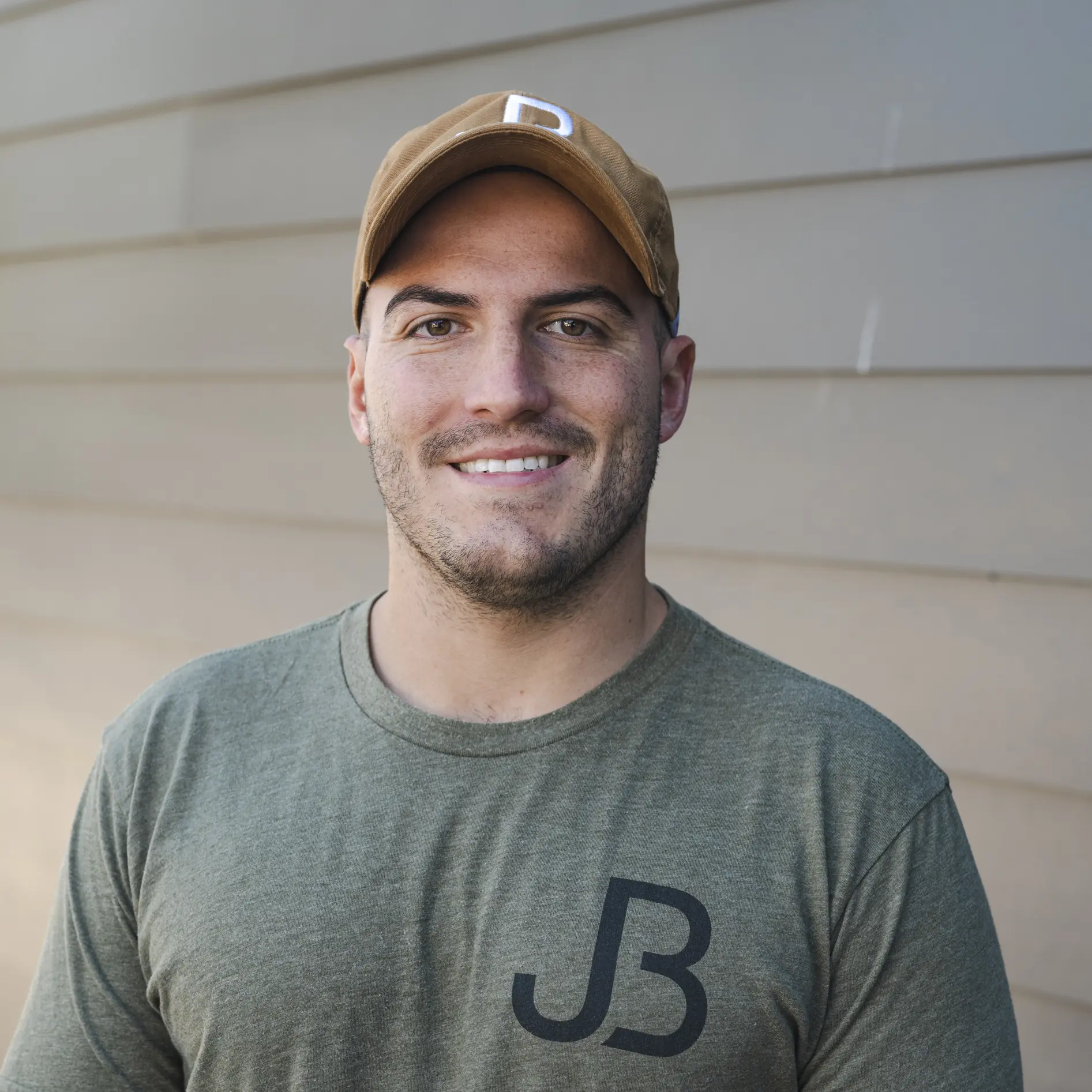
Roberto Gutierrez | Jaskson Builders
Places You Can find us




We think you’d also like this
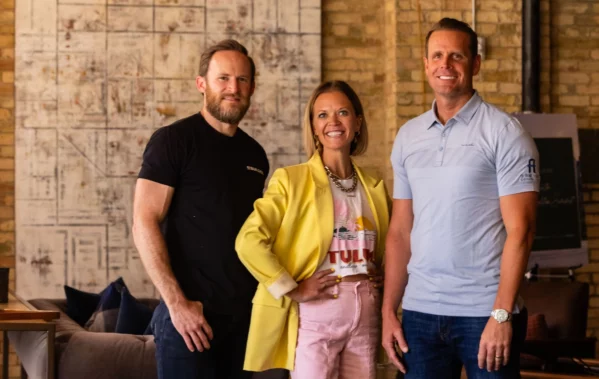
From builder to boss: How top pros are scaling smarter – and you can, too
Discover expert strategies from the hosts of the Contractor Coalition Summit in this insightful Q&A on how to grow profitably and sustainably in 2025.
e-book
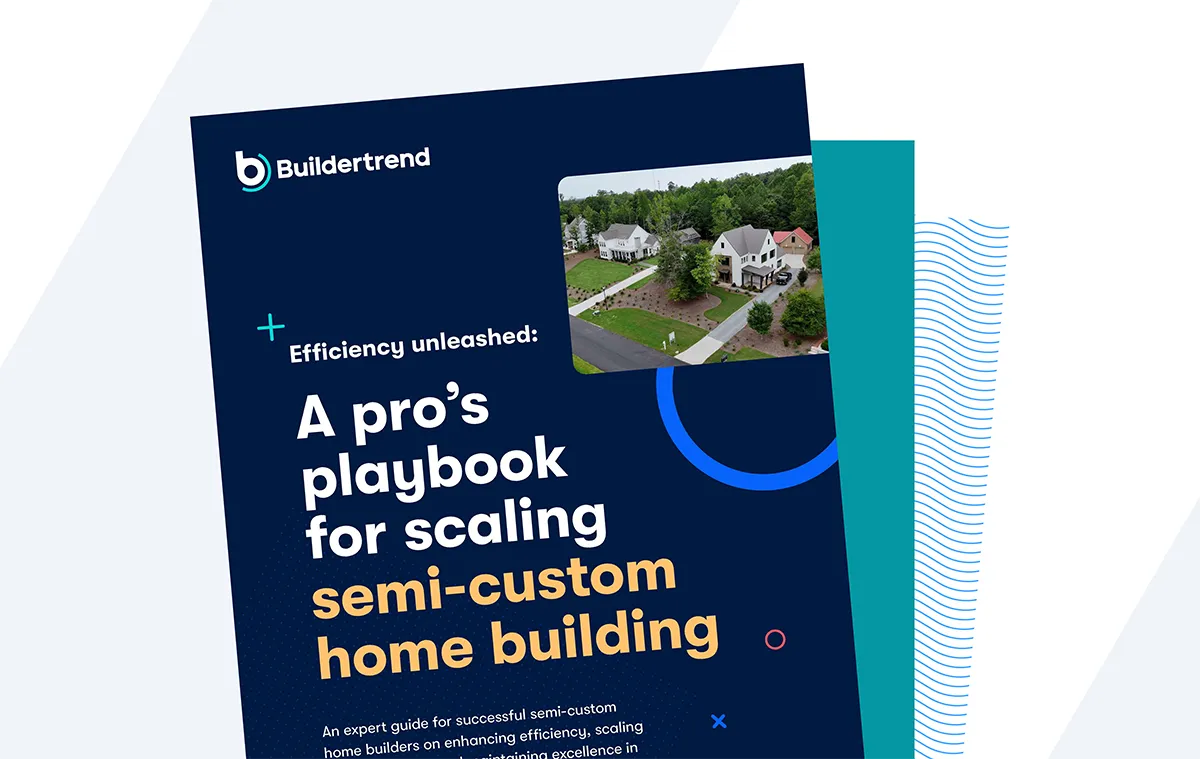
Sep 16, 2024Efficiency unleashed: A pro’s playbook for scaling semi-custom home building
Efficiency unleashed: A pro’s playbook for scaling semi-custom home building An expert guide for successful semi-custom home builders on enhancing efficiency, scaling operations and maintaining excellence in project management. Top … Continue reading “Efficiency unleashed: A pro’s playbook for scaling semi-custom home building”

Scaling to 8 figures: What makes a construction project manager successful (Part 2 of 3)
You want your construction company to stand out from the competition, but you’re not sure what steps to take next? Discover how project managers can help scale your business – and fast.