




2025 economic outlook: What builders need to know
Today on “The Building Code,” Courtney is flying solo on an insightful episode with Tim Sullivan, chief advisory officer at Zonda. Tim is a major influencer in the field of real estate market research and community development. He has developed the ability to interpret diverse statistics and trends and translate them into actionable plans.
Listen to the full episode to get Tim’s insights on current economic trends as we start 2025 – and see what his predictions are for later in the year.
What would you say is the theme of the economy heading into 2025?
“Interest rates have been such an important concept, but I want to warn you that interest rates aren’t going to be the best news. I think if you listen to many of the pundits who are on the capital market side, they’re estimating we’ll probably see a 30-year fixed mortgage sit right around 6.5%. There was a concept of we didn’t know who was going to be elected president, we now know. And the last is seasonality. You put all those together, and I think we’re starting to pull it apart. I think you’ll see some improvement in the first quarter, in the spring selling season. But I think the overarching theme was some of uncertainty, and I think some of that uncertainty has been addressed.”
What is your advice for how builders can stay resilient?
“I mentioned earlier about the internal element. Nurturing your best performers. Be selective. Just because there’s a market you’re not in, it doesn’t mean you should be in it. Find the markets that crisscross your skillset and what the market needs. That’s the perfect mix. If you’re an entry-level builder, a move up builder or a luxury builder, you’ve got to pick the market very, very carefully. Then I think, ultimately, there’s a consumer element there. Match the product to the consumer. Because it sounds simple, but it’s not easy. It’s very direct, but the sauce is very specific in terms of the research you conduct and then the product you make.”
Links and more
Learn more about Zonda and the services they offer.
If you haven’t already, now’s the time to set goals for your construction business. Download this free construction strategy template created by the team at Breakthrough Academy and get:
- Simple directives to get you started
- A complete example for reference
- An editable template to start using immediately
Related content:
Listen to the last episode to hear from Mark Williams, founder of Mark D. Williams Custom Homes and host of “The Curious Builder” podcast on why he’s become an advocate for wellness and self-care to drive both personal and professional growth.
Subscribe here and never miss an episode.
Got podcast topic suggestions? Reach out to us at podcast@buildertrend.com.
The Better Way, a podcast by Buildertrend:
Looking to add construction tech to your daily processes? On the newest season of “The Better Way, a podcast by Buildertrend,” you’ll get best practices for implementing software and getting your team on board from other industry pros and our experts. Subscribe and stream today wherever you listen to podcasts.
Follow us on social:
Listen to “The Building Code” on YouTube! And be sure to head over to Facebook to join The Building Code Crew fan page for discussions with fellow listeners.
Courtney Mattern (00:05):
Welcome to “The Building Code,” Buildertrend’s flagship podcast. I’m your host Courtney Mattern. As you can see, friends, I’m here alone today. The results of our Instagram poll are in. I’m your favorite host. We don’t need Charley anymore. No, I’m just kidding. I’m just kidding. Charley couldn’t be here with us today. But I feel so lucky, because today on the podcast we have Tim Sullivan, the chief advisory officer at Zonda. He’s going to be giving us an economic outlook. He’s one of my favorites to talk to about the economy because he’s a great storyteller, he gives great insights by market. And gets some pep in your step so that you can take on all the uncertainty of the economy with some confidence.
(00:50):
Before we dive in, I’ll take care of some housekeeping. Today’s episode is the first one of the new year, so happy new year. Happy 2025 to everyone out there listening. It is also episode 249, so I don’t know if anyone else is keeping track but that means next week is our 250th anniversary. Only about 2% of podcasts make it to 250 episodes, and we have you to thank for that. You keep tuning in, you keep listening to the podcast. To all of our guests and all of our builders out there who come on week after week to share their stories, we could not appreciate you more. Tune in next week, we’ve got a special episode planned for the anniversary.
(01:30):
I don’t know if you’re following us yet, but “The Building Code” has its own TikTok channel. I don’t know about y’all, but I had to join TikTok just for this effort so I’m finally on TikTok. You can also find us on Instagram @thebuildingcodepod. Follow along for lots of snippets, behind the scenes. You can see what it’s really like to put on a podcast. But without further ado, let’s dive into our first episode of 2025 with Tim Sullivan.
(01:58):
Hi, Tim. Welcome to “The Building Code.” How are you doing?
Tim Sullivan (02:02):
Oh, I’d say everything’s going pretty well. If I were to summarize it quickly, I feel like Goldilocks because I was in Miami last week, it was way too hot. Then I went to New York, it was way too cold. Now I’m in San Diego, it’s just right.
Courtney Mattern (02:15):
It’s just right. Well, that makes me feel good. I’m going to San Diego right after the holiday. That’s just what I need, something that’s just right to kick off …
Tim Sullivan (02:25):
The weather’s perfect, yeah.
Courtney Mattern (02:25):
… the holidays.
(02:27):
Today’s episode, we brought you on to be the first episode of 2025. We are going to be talking economic outlook. But before we get into the nitty-gritty of the economy, dun, dun, dun, why don’t you go ahead and introduce our listeners? Tell us a little bit about yourself, Tim.
Tim Sullivan (02:44):
Well, hello, everybody. I’m Tim Sullivan. My official title is chief advisory officer at Zonda. I’ve had about four decades of market research experience. I started with a small company, ended up at KPMG working at a national group. Then wended my way with Jeff Myers through a couple different organizations. We are now Zonda.
(03:05):
Zonda is a compilation of two organizations. The former Myers Group and Metro Study. We put together because we have the only database that is for the new home sale market. We track all actively selling subdivisions, build per rent. Plus, we’ve got a media company, we do a lot of conferences. We’ve got published research. We’re really here as a platform to help our industry make really good decisions. That’s what I’m here for.
Courtney Mattern (03:31):
Yeah. All of us at Buildertrend, we’re big fans of Zonda because we can go to you to get insights, and help serve our customers and our industry.
(03:40):
Before we dive specifically into the economy for 2025, with all of your experience on market research, maybe you can tee up for our listeners who are business owners why it’s important to understand the economic outlook or why it’s something they should pay attention to?
Tim Sullivan (03:58):
Well, when you think about economics and the indicators for what’s happening in the economy, and housing, ultimately that’s the rudder of your ship. If you really have a handle on what’s going to happen with interest rates, the consumer mindset, supply and demand, whether you’re in building products or you’re a home builder, it helps you make the right decisions.
(04:21):
I said earlier that that’s what we’re here for. We project, we look forward. Are we always right? Absolutely not. But Ali Wolf who is our chief economist and I, we’re constantly trying to say, “This is what we think, and here’s why we think it.” So that when a listener hears that they can say, “Wow, I agree with that, or a couple things I don’t.” And you can make decisions that really are correct for your company.
(04:43):
Because you and I will talk a little bit about this, but geographies are very different right now. Segments are different. The timing of when you enter a market matters greatly. There’s all these levers that are being pulled. The more education you have, the stronger your rudder is, and you can move forward.
Courtney Mattern (05:01):
Before we get into markets and the specific regions, what would you say is the over-story or theme of the economy heading into 2025?
Tim Sullivan (05:11):
Boy oh boy, there’s a couple. Interest rates have been such an important concept, but I want to warn you that interest rates aren’t going to be the best news. I think if you listen to many of the pundits who are on the capital market side, they’re estimating we’ll probably see a 30-year fixed mortgage sit right around 6.5%. That’s a 10-year at about 4.25. And then the spread is 2.25, so right around 6.5.
(05:39):
It’s been a little higher than that towards the latter part of 2024, which is a little alarming. I think you would hear most of the home builders at least say October and November were difficult. But there are a few builders who have said December has been one of the best months they’ve had all year.
(05:55):
I think there was an element … One of the stories I think we have to pay attention to was the gum in the system that happened in the fourth quarter, that came about from consumers’ expectation of lower interest rates. Concept of we didn’t know who was going to be elected president, we now know. And it was by a pretty considerable margin. And the last is seasonality. You put all those together, and I think we’re starting to pull it apart. I think you’ll see some improvement in the first quarter, in the spring selling season. But I think the overarching theme was some of uncertainty, and I think some of that uncertainty has been addressed.
Courtney Mattern (06:31):
Yeah. Do you think our industry was holding their breath?
Tim Sullivan (06:35):
I think the world was holding their breath.
Courtney Mattern (06:36):
All of us.
Tim Sullivan (06:38):
Yeah. I think that regardless of what side of the aisle that one finds themself on, there was just uncertainty. Now we have some direction. Some like it, some don’t, but we have some direction. But boy, there’s a lot of un-peeling of the onion still to go because there’s an idea about policy, but we really don’t know what the new policies will be with this new administration.
Courtney Mattern (07:00):
Tim Sullivan (07:11):
What are some economic indicators that our builders … There are so many things that they could latch their attention onto. If it’s only a couple different items, what would you say they should be watching?
Well, we talked about interest rates, but look at the two things, the 10-year Treasury and 30-year fixed. They’ve disassociated from each other. Typically, in years past you’d see the Fed drop interest rates, 10-year shows that, and mortgage rates go with it. But what it means is the bond market is saying, “Ooh, we’re uncertain about the market. There’s some risk there.” That’s number one.
(07:33):
Number two is certainly supply, and that’s resale and new. We’ve seen an increase in supply on the resale side. I think overall it’s good news because the resale market, in most markets the entry level first move up and sometimes even second move up. That’s not necessarily bad. But on the resale side, keep in mind the quality of that product matters. Then on the new for sale side, we’re starting to see what we call QMIs, quick move-ins, product that you can be in within 90 days, start to trend up. It’s moved up. It’s the highest we’ve seen it for a handful of years. But still, the good news about that is it gives the consumer an option and an immediate opportunity to purchase a home. But eyes on that.
(08:16):
Then the last thing is ultimately just the capital markets’ availability. Now for public builders and public companies, it’s not as much of a concern. But for private home builders and for the commercial real estate side, including multifamily, the capital markets have been frozen. Let’s see what happens with that because that indicator, to me, will definitely be the wind in the sails for a market improvement. If capital markets are back, we see more activity.
Courtney Mattern (08:44):
What is your forecast then for housing demand? You had this comparison, or these two different areas, quick move-ins or the high-quality custom home builds. Is demand going to be the same for both markets? Are we looking at something a little different across regions?
Tim Sullivan (09:04):
Well, my dear friend Ali Wolf, our chief economist, tends to be very, very careful and adjusts our expectations of market pretty much every month. We find ourselves right now probably being one of the more optimistic prognosticators with the concept that we think we’ll see a small increase in single family and multifamily starts going forward. That’s into 2025. When I say a small increase, a two to three percent increase. Some are calling for a decline. We think there’s the capability of home builders being ready. And remember, we’ve got those homes that are construction and ready to go, the QMIs.
(09:44):
But the other part is we anticipate that the consumer will have a little bit more certainty. Like we mentioned, that freezing is now breaking up, the uncertainty that we saw in the fourth quarter of 2024. And there’s still fundamental demand. That’s why we’re anticipating a small uptick in terms of activity.
Courtney Mattern (10:03):
Do some markets have a leg up heading into 2025? What are the booming zones, the builders who can rejoice?
Tim Sullivan (10:12):
Well, the answer to that is almost zip code specific.
Courtney Mattern (10:16):
Wow.
Tim Sullivan (10:16):
Honestly, you can say Southern California, it’s challenged, and then I could show you a couple of neighborhoods that are just smoking any time they have product available. Keep that in mind.
(10:26):
But to answer your question directly, the Midwest is doing really well. Indianapolis, Cincinnati, Columbus, those markets I think have legs going forward for a foreseeable future. The affordable factor is pretty significant there. A great place to live. There’s even some halfway decent college football teams around there. I’m calling out the Buckeyes for Ali.
Courtney Mattern (10:48):
Yes.
Tim Sullivan (10:48):
But also, the Southeast. I’ll call out Myrtle Beach and also Charleston because we’ve been working in both of those markets and we’ve seen a strong upswing for two levels. We have a growing population base, but also the move downs and what we call the baby chasers are moving there, too. A great place to live, lovely weather. I’m just going to tell you that those are two I think that are going to hold on really well.
Courtney Mattern (11:13):
Yeah. Here in Omaha in the Midwest, I think our community down here in Buildertrend HQ, we’ve been more isolated and insulated from economic uncertainty. Omaha often ends up on those lists of it’s a great place to raise a family, houses are really affordable. If anyone’s interested in Omaha area …
Tim Sullivan (11:36):
Well, you and I talked about that previously.
Courtney Mattern (11:38):
Yeah.
Tim Sullivan (11:38):
I’m actually a fan of Omaha because for those of you who haven’t been to Omaha, there’s good food, really nice people, and there is an undercurrent of Fortune 500 companies. Then of course, Berkshire Hathaway is there, but there’s many others. It’s a surprise because Omaha is considered a Midwestern market, who else is there? It’s a great place to live, too, so I’m with you on that.
Courtney Mattern (12:00):
Yeah. These Midwest cities are definitely underrated. If any builders want to set their sights on Omaha, you’re going to be hanging out with the Buildertrend crew as well.
Tim Sullivan (12:10):
Come on out.
Courtney Mattern (12:12):
On the flip side, are there markets that are going to have a little bit of an uphill climb?
Tim Sullivan (12:19):
Well, this is not fair to say because these two states are not really markets, they’re hundreds of markets. But watch Florida and Texas, because typically Florida and Texas are generating maybe 40% of the new home building activity. Because of bad weather, increasing insurance rates and a series of other things, both of those states have taken a punch in the gut.
(12:44):
Now, separate those and separate the markets. I’m a huge fan of Dallas. It’s an economic juggernaut. People overlook Houston. It’s one of the two biggest housing markets in the country, and it’s an international market. San Antonio is affordable. Austin is a second coming of Southern California, I’m not sure that’s a good thing, but it is. Then when you look at Florida, Orlando is holding its own. Tampa’s a great place to live but got hit hard by the hurricanes.
(13:12):
When you take apart each of the states, there’s significant opportunities in all of them. But that insurance element is also impacting California, by the way. I for one, I live in San Diego. Three of my neighbors had their home insurance canceled this year. Ours is coming up for review in January, and I anticipate they’re going to say the same thing to us. It’s a real deal. And it’s a monthly cost that really pulls down affordability because if you’re paying 1200 to 1500 a year and it goes to 6000 a year, that impacts what you can pay.
Courtney Mattern (13:51):
Yeah. And it definitely impacts homeowners, and our builders’ potential clients and the decisions they’re making financially, whether they’re going to renovate, go try to buy a new home or build a new home.
(14:02):
What are some things about consumer confidence on the homeowner side, economic impacts that are shifting their confidence in the market? How can builders prepare for the unknowns of the decisions their customers are going to be making this year?
Tim Sullivan (14:20):
Yeah. I think the biggest concern a consumer has is uncertainty. Uncertainty about their job, uncertainty about what the economic conditions mean, uncertainty about their net worth. But one of the good things is that if you are a homeowner, net worth based on the equity in your home as significantly increased across the country certainly since COVID. That is a buffer for some of the uncertainty.
(14:47):
But with interest rates flattening, and with builders continuing their incentives, new home builders that is, continuing their incentives, I think it’ll be a match that lights some of the demand that hereto for was held back because of that uncertainty we talked about in the fourth quarter.
(15:05):
With a little bit of … Oh, don’t forget. If you’re at entry level, if you have a parent that’s a Baby Boom, you probably have an opportunity to tap the bank of mom and dad for equity.
Courtney Mattern (15:05):
Yeah.
Tim Sullivan (15:17):
If that’s the case, then the ability to get in the market is a little easier.
Courtney Mattern (15:21):
I think for the builders and the industry, there’s some factors that are beyond their control. We don’t know exactly what policies the incoming administration is going to be making. We don’t know exactly what decision the clients are going to make.
(15:35):
What are some things that builders can focus on that are totally within their control? Like you said, even in challenging markets, there’s opportunity. How can we shift the focus to what’s in their control? Maybe give some confidence to the business owners.
Tim Sullivan (15:51):
Well, number one, start internally and take care of your best performers. Acknowledge them, speak to them. Find out what their goals are. And work with them, nurture them, so that they feel they’ve got a future at the company. Because each of our organizations really are the sum of the whole with the people, so that starts internally.
(16:12):
Externally, for a public builder it’s choosing the right markets. Then when you’re in that right market … And by the way, watch this because a number of our larger builders are looking at secondary and tertiary markets. I guarantee you Omaha is in the crosshairs of some of them.
Courtney Mattern (16:28):
Yeah.
Tim Sullivan (16:29):
Because they’re looking for markets where there’s not a huge footprint for the publics, and with that they can go in and control market share.
(16:37):
Then for private builders, holy cow, it’s a relationship with your lender. It’s been able to tell the story about this asset. Your skillset, your past, the fact that you’ve always been a great borrower, and the future of this asset. You put those things together, telling the story and keeping the relationship going, to me that’s job one for a private builder.
Courtney Mattern (16:59):
Yeah. We’ve heard from quite a few builders that we’ve even had on the podcast who are just recently opening second locations in some of these hot markets. Charleston’s been really popular, I’ve heard a lot of our builders heading that way. Sometimes I think business owners forget you can take accountability, take ownership, make your own destiny.
(17:19):
I think it might be fun … I’m going off-script, so you might not have an answer for this one. But I always think it’s interesting, like you said, you and Ali take everything month-by-month. You don’t stick to your guns too hard because everything changes.
Tim Sullivan (17:37):
It changes, exactly.
Courtney Mattern (17:37):
What are some examples of things in 2024 that are a good examples of situations that changed really quickly? Just to illustrate why it might be important to focus on what you can control.
Tim Sullivan (17:50):
Well, we mentioned the first one, interest rates. If you go back to the conversations we were having with capital sources, with the banks we work with, the expectation I think in early 2024 was that we were going to see interest rates erode. Primarily because the Fed was starting to say, “With inflation getting under control, we can change interest rates,” yada, yada, yada. Well, what we didn’t account for is the way the bond market looks and the investors look, and they anticipate a little bit more risk. Or at least, during this last year they have. I think that’s where we had a bit of a miss.
(18:25):
When I say we, many of the people I talked to, the capital markets people. I think we had been hoping, and hope’s not a strategy …
Courtney Mattern (18:31):
Yeah.
Tim Sullivan (18:32):
But we’d been hoping that maybe interest rates by this time would have been below six. Well, you heard what I said, that I think those are settling in.
(18:39):
I think the second thing is consumer behavior. I think in early 2024, there was an expectation, “Gosh, with interest rates going down, there’ll be more interest by consumers.” Well, interest rates didn’t go down. Consumers still showed up, but they didn’t show up with a spike. That was a bit of a surprise.
(18:57):
I think the last thing is, and this has become a topic in almost every conversation I have with clients, on a podcast, doing our own webinars, it has to do with supply. Specifically unsold supply on the resale side, and then those QMIs that I mentioned.
(19:14):
That’s why early on, I mentioned that put them in perspective. Quality matters, location matters. I’m not throwing a red flag up. A yellow flag maybe, just because we’re seeing the move. But more supply right now is better because it increases the consumer choice. The flip side of this is when there’s more resales, you typically will see the new home market erode a little bit in terms of its share, just because classically, resale has been outselling new seven-to-one.
Courtney Mattern (19:44):
Wow.
Tim Sullivan (19:44):
We’ve been away from that for a while. It’s been more like four-to-one. Let’s see how this evolves, but it’s really those three things.
Courtney Mattern (19:51):
Well, I want to dig a little bit into quality. A couple months back, we had the pleasure of having Tim, for our listeners who don’t know, came to our CBUSA Summit in Minneapolis and addressed our builders there who are in our group purchasing organization. I remember you talking about quality.
(20:08):
Maybe you can share some of your insights there. That homeowners and people who are making this decision, especially Millennials, too, who are going out to build their home, are really looking at having a good builder building a home that’s going to last. You want to dig into that trend?
Tim Sullivan (20:26):
Sure. But let me even back up from there. That really has to do with what started to happen during COVID. We had a large number of people that were buying resale homes sight unseen. They couldn’t get in. People that were owners wouldn’t let strange people walk through their house. Many purchases were made, hundreds of thousands were made, of homes that people are in right now, and this is a technical term, but the homes are crappy.
Courtney Mattern (20:52):
Yeah.
Tim Sullivan (20:53):
Once you’ve been in it and locked away for a while, and you’re looking around, and you see the cracks and you see the dents, and you think, “Ugh.”
(21:01):
Todd Tomalak, who runs our BPM practice, was quick to say that we’re not certain when, he thinks toward the end of next year. But we’re going to see a real spike in the activity of remodeling because there’s been so many homes held for so long that people are either going to dump … I shouldn’t say dump, sell. Sell at a reasonable price. Or, like my house which is 75 years old, it needs a lot of work. I’m just biding my time before I sink a lot of money into it for its third renovation.
(21:30):
Now, on the new home side, quality is in the eye of the beholder. Meaning if you’re an entry-level buyer, and you’re talking to D.R. Horton, or you’re talking to LGI, you have a buy box that you can afford. Then you look for a location that’s closest to what you like and a home that fits your needs. Now, I’m not saying LGI and D.R. Horton aren’t quality home builders, they are. They’re very good. But that is an entry level or first move up product in most markets where they operate. Now, when you go to Toll, Toll is at the higher end. What you see, some of the other builders, Lennar builds some really nice high-end stuff in California. The perception of quality there is different.
(22:10):
So, really, as you step up the buyer profile segment for age, income, net worth, the perception of quality changes. Once you become a discretionary buyer, you can pretty much buy whatever you want. My first home was a 1200-square-foot town home that was really good quality, but I wouldn’t think 29 years later that it’s held up that well.
Courtney Mattern (22:34):
Yeah.
Tim Sullivan (22:35):
But when I bought it, I was thrilled. That’s the difference. But I think most builders are truly trying to hit that balance between affordability, even their value for what you’re paying, and the quality of the home they’re in.
(22:49):
I don’t think any builder would ever purposely put up poor quality housing on purpose. There’s been examples of mistakes made. But boy, when I talk to builders, they’re focused on that. And the warranty effort is very, very, very focused.
Courtney Mattern (23:04):
Yeah. I suspect that there are homeowners like myself, a little bit older Millennial who stayed in their first home a little longer than I expected. Now that I’ve stayed there so long, it’s one of those do I go for a really nice renovation, or do I go for a more custom home that I can have some special touches on? Those Millennials, if they’ve been sitting for a while in a house they didn’t mean to stay in so long, they might have some equity and be able to make some interesting decisions heading forward. I think, too, some people might be throwing their hands up like, “Ah, I was waiting for those interest rates, it’s never going to happen. I might as well make a move now that we know what’s going to happen in 2025.”
Tim Sullivan (23:45):
You nailed it, Courtney. You’re a focus group of one.
Courtney Mattern (23:47):
Yeah.
Tim Sullivan (23:48):
That’s a perfect way to say it.
Courtney Mattern (23:50):
Yeah. I love to be able to add a very scientific anecdote into any podcast episode I can.
Tim Sullivan (23:55):
Yeah. Nice.
Courtney Mattern (23:57):
How do you advise builders stay prepared for the economy ahead? I almost don’t even want to say possible economic downturn because I think we all need good news. How to builders stay resilient?
Tim Sullivan (24:10):
Well, I mentioned earlier about the internal element. Nurturing your best performers. Be selective. Just because there’s a market you’re not in, it doesn’t mean you should be in it. Find the markets that crisscross your skillset and what the market needs. That’s the perfect mix. If you’re an entry level builder, a move up builder, or a luxury builder, you’ve got to pick the market very, very carefully.
(24:36):
Then I think, ultimately, there’s a consumer element there. Match the product to the consumer. Because it sounds simple, but it’s not easy. It’s very direct, but the sauce is very specific in terms of the research you conduct and then the product that you make.
(24:53):
But know this. I’m very confident that fundamental demand is very strong. What I mean by fundamental demand, Ali Wolf and I will often say, “Life happens.” But here’s what we mean by that. We’re aging, unfortunately.
Courtney Mattern (25:06):
Yeah.
Tim Sullivan (25:07):
Some people are getting married, some people are getting divorced. Some people are having babies, some people are retiring. Unfortunately, we lose some family members, a spouse dies. All of these things are those levers that pull and their demand changers. Plus, we have in migration still. We’re going to see what happens with that.
(25:25):
We didn’t talk a lot about tariffs and the migration, immigration policies of Trump. That’s because we probably don’t know a whole lot about it yet. But we should revisit this in six months, because those could impact housing pretty significantly.
Courtney Mattern (25:40):
Yeah.
Tim Sullivan (25:41):
Both negatively and positively.
Courtney Mattern (25:42):
Yeah. Those are two themes that even our teams are starting to think, “How do we prepare customers?” But it’s hard to say if we don’t know exactly what tariffs are going to be imposed. We don’t know how the labor shortage is going to impacted if there are any immigration policies. Would love to circle back when we do know more on those.
(26:01):
Is there any advice before this early or anything that’s on your mind?
Tim Sullivan (26:08):
Well, let me take a step back and think about the three key inputs. There’s so many more, but the three key inputs for us in home building. It’s land, it’s labor, it’s capital. We can’t necessarily control those, but those are the three things we focus on. If there’s policy that takes away one of those things, like labor or access to labor, that is something we have to make adjustments for. But we can’t do it yet because we don’t know the impacts.
Courtney Mattern (26:08):
We don’t know.
Tim Sullivan (26:34):
But I will say that I do worry a little bit about the immigration policies, just because builders, every builder I talk to is very focusing on having workers that are documented. Where the disconnect could come is when they’ve got subcontractors who the builders don’t have optics into and who their employees might be. There could be a loss of employees if there’s a Draconian measure to deport some of these workers. I’m keeping my fingers crossed that we don’t lose labor in home building because it would break the supply chain again, like we saw during COVID. We saw what happened there, that could be a real troublesome situation.
Courtney Mattern (27:18):
Well, and to your earlier point, one of the levers that our builders can control is their internal workforce, if they’re keeping their best talent. And if there’s an outside force that impacts that, then they have to reevaluate, and they have to put effort into recruiting new talent, if there even is any talent to recruit. We’re definitely keeping our eyes on that as well.
(27:39):
Another thing that comes to mind, and I know economics always seem so left-brain logical. But just a couple episodes ago, we had a builder in Minneapolis on talking about wellness. Taking care of your business, taking care of your mind. I can’t help but point out the tie-in here of this idea of a sacred pause. It’s almost like we’re in this moment of a sacred pause with the economy where everybody should take a deep breathe, pause because we can’t exactly react or take an action until we know all of the outcomes. But if builders do take a moment to think about their goals, the audiences, the markets that they want to be in, what their specific skills are, that when some of these decisions come down, they can move forward with the next best step with intentionality, without freaking out as the economy can sometimes make us do.
Tim Sullivan (28:34):
Well, Courtney, one thing I would add before we leave. It’s that builders should talk directly with their consumers, with the shoppers. “What are you looking for? You went somewhere else, you didn’t buy from us. Why? What was it that you bought and needed that we didn’t provide?” Because the secret sauce is in the consumers’ mind. Being able to decode that to the best extent possible will lead to the best results for builders in spite of an economy that might do this. It’s knowing what the consumer wants, talking to them, defining it and then building to it.
Courtney Mattern (29:08):
I love that. I think that’s a perfect place to end and a really inspirational note to head into 2025 with.
(29:15):
Thank you, Tim. Thank you so much for coming on and sharing your insights. I’m definitely going to have to pencil you in for another six months from now because I can’t wait to talk about how the economy is shaping up six months from now.
Tim Sullivan (29:29):
Well, Courtney, thank you. And to all of your team and any listeners in early January, happy holidays, happy new year. Looking forward to seeing you very, very soon. Thanks, Courtney.
Courtney Mattern (29:39):
Thanks.
(29:41):
So, Charley, what did you think … Oh, that’s right. Charley’s not here, it’s just me. I hope everybody enjoyed hearing from Tim Sullivan. Like I said, he’s one of my favorites to talk to about the economy because he puts it in such plain terms and in a way that you feel like you have some control over your business.
(29:58):
I think if anybody out there is setting intentions for 2025, one of mine is accountability. When you run a business, when you have a job, when you’re an adult, you do have say over the decisions you make. I think that Tim gave some really good advice about ways you can take control of the economic situation moving forward. As we know, interest rates seem to be locked in where they’re at. There’s still a lot of things up in the air about the new administration, how are tariffs going to play out, how’s the immigration issue going to shape our industry and more. But you can turn inward to your teams, make sure that you’re recruiting the best talent, that you’re doing everything you can to keep them.
(30:40):
And also, I think Tim gave a really good piece of advice, a piece of advice we’ve taken here at Buildertrend really seriously, and that’s getting to know your consumers. Check in with your clients. Ask for feedback. Find out what they’re looking for from you. And find out what do you think they think your strengths are. How can you use those to your advantage moving forward in 2025 to find opportunity?
(31:04):
If you have any more questions about the economy, any thoughts on this episode, please share with us on social media. If you’re not or already, join us on Facebook in The Building Code Crew. We have our own Facebook Group where you can start discussions, talk to other listeners. Charley and I are always hoping to hear some feedback there. And follow along on Instagram @thebuildingcodepod. Would love to hear more from you, tell us about what you’re worried about in the economy and the year ahead. And you could always drop questions for our next episode.
(31:35):
Make sure, in the meantime, you’re rating, reviewing, subscribing. All of those things helps us get more listeners. We’ll see you next week for the very special episode. I can’t wait for you all to be here. It’s episode 250, which is very rare air in the podcast industry. We will see you there. Until next time, I’m your host Courtney Mattern.

Tim Sullivan | Zonda
Places You Can find us




We think you’d also like this
podcast
Oct 24, 2024Ballots and building: NAHB CEO shares how the election could affect the industry
Listen to the full episode to get Jim Tobin’s insights on how the outcome of the 2024 presidential election could affect the construction industry.
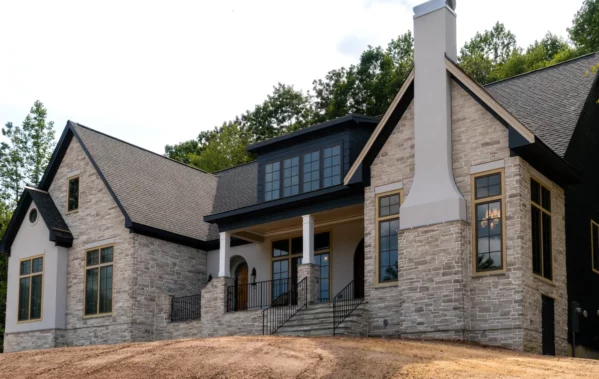
Adapting to change: How the residential construction economy is shifting
Our in-house economic expert Mathieu Dubeau, Ph.D., a staff applied scientist here at Buildertrend, is sharing updates builders need to know as we head toward the end of 2024.

3 ways your construction business can navigate the changing economy
Dr. Ernie Goss discusses what construction business owners can do to navigate the changing economy. Here are the biggest takeaways.