



Mind, body, build: Why self-care is critical for personal and professional growth
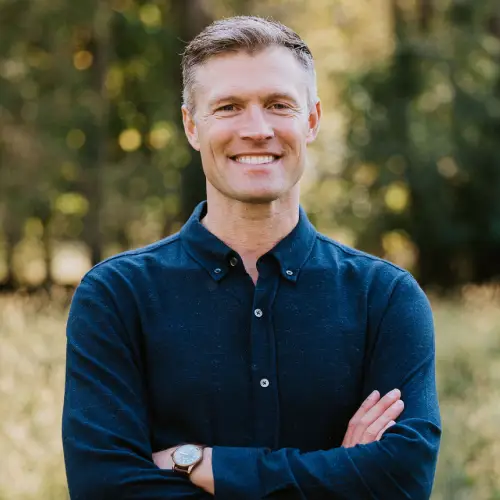
On this episode of “The Building Code,” Charley and Courtney are chatting with returning guest Mark Williams, founder of Mark D. Williams Custom Homes and host of “The Curious Builder” podcast. Mark is a third-generation, high-end residential builder in the Twin Cities creating dream homes through thoughtful remodeling and ground-up custom builds. He credits this success to his collaborative approach with trade partners and homeowners, and his nonstop quest to be a fun, trustworthy, highly skilled and creative.
Tune in to the full episode to hear how Mark has become an advocate for wellness and self-care to drive both personal and professional growth.
What can builders do to prioritize their wellness, so they can bring their best selves forward?
“I talk about all the time that boundaries create freedom. Setting a clear boundary, that’s speaking to make you a better builder, a better employee, a better spouse, a better everything. Because if our priorities get out of whack, and trust me, I’ve made many, many mistakes. But I just know that if we can all strive to create boundaries, whether it’s … if you can run or whatever your exercise is, sauna, yoga, meditation, reading a book, journaling, it doesn’t matter. It’s that time that you need to recharge to be your best self. That’s wellness, that’s health.”
What is your advice for how to get started with goal setting and focusing on self-care?
“I think the first step is, is taking a time out, clearing off some of your schedule, and devoting time to what are some goals that you want to do, and just write them down. I don’t think you have to have this grand plan. Just write a few down. Pick one, and just stick with it. The biggest thing is continuity. Step number two, determine the cost of what it will take to get it. And number three, don’t bargain over the price. Then just like we build a home, most people listening are in the building world, right? You don’t just go out with a shovel, and some hammers, and some lumber, and just build a house willy-nilly. You design the house. Devise a plan that you know you can stick with, and it’s the long game here. And so, pick a goal six months from now, and say, ‘This is what I would like to achieve,’ and then work backwards.”
Links and more
Learn more about Mark D. Williams Custom Homes.
Check out Mark’s podcast, “The Curious Builder.”
Register for Sauna Camp and Bootcamp.
Connect with Mark on Instagram, Facebook and LinkedIn.
Read “Atomic Habits” and “Happiness Hypothesis”.
Related content:
Listen to the last episode to hear from Lyle Crownover, owner and CEO of Crownover Company, Inc., to learn how he and his team are fostering better connections with their subcontractors and clients with the help of technology.
Subscribe here and never miss an episode.
Got podcast topic suggestions? Reach out to us at podcast@buildertrend.com.
The Better Way, a podcast by Buildertrend:
Looking to add construction tech to your daily processes? On the newest season of “The Better Way, a podcast by Buildertrend,” you’ll get best practices for implementing software and getting your team on board from other industry pros and our experts. Subscribe and stream today wherever you listen to podcasts.
Follow us on social:
Listen to “The Building Code” on YouTube! And be sure to head over to Facebook to join The Building Code Crew fan page for discussions with fellow listeners.
Charley Burtwistle (00:05):
What is up everybody? Welcome back to another special edition of “The Building Code.” I’m Charley Burtwistle.
Courtney Mattern (00:11):
And I’m Courtney Mattern.
Charley Burtwistle (00:12):
We are back. It feels good. We have a very special guest today, Mark D. Williams, Marky D., Mark Williams, the one and only, often replicated, never duplicated. Courtney, are you fired up?
Courtney Mattern (00:24):
I am actually feeling a little nervous that I’m going to be out of this conversation because you’ve been working out on social media with Mark. I don’t know what I’m going to bring to this conversation.
Charley Burtwistle (00:36):
Yeah, I feel you there. We are slowly and surely becoming best friends, but I guess you just went and hung out with him in Minneapolis.
Courtney Mattern (00:45):
I did. I got to check out his “Curious Builder” podcast.
Charley Burtwistle (00:47):
We’re both vying for his time a little bit here.
Courtney Mattern (00:50):
Yeah. I think this is a good topic though to kick off the new year because when is wellness not top of mind then right at the beginning of the year?
Charley Burtwistle (00:57):
Right, absolutely. This comes out January 2nd, so everyone should be one day into their New Year’s resolutions, so hopefully get them fired up about seeing those out. And yeah, really, really timely. We were both at the Contractor Coalition in Boston, and at the end, they did a live “Curious Builder” podcast recording, and they hit on some of these topics. I was inspired. We had just gotten done with a full day. I’m like, I’m going to go for a run right now. And then that’s actually where I ran into Mark, and the rest is history. Hopefully, we’re able to replicate some of that magic and talk through all the things that I was inspired about and give that information to our listeners as well.
Courtney Mattern (01:33):
Yeah, listening to some of the best builders in the industry, when you hear them talk about navigating what it takes to run a successful business, you hear that it’s stressful, it’s lonely, and a lot of our favorite builders and builders we know, like they go through health scares or periods of COVID time when business was stressful, and there were a lot of things that were unexpected. And their approach now to wellness that we’re seeing this trend. They’re finally putting themselves first, so that they can keep their business running strong.
Charley Burtwistle (01:33):
Absolutely.
Courtney Mattern (02:09):
Hopefully that will inspire you all as we dive in with Mark D.
Charley Burtwistle (02:13):
Mark D. Well, let’s get him in here without further ado. Hey, Mark, welcome to “The Building Code.” I am ecstatic to have you today, so I’m in a great mood, but how are you doing?
Mark Williams (02:24):
I’m doing great, buddy. It’s good to be back a second time and outside our daily tech strain.
Charley Burtwistle (02:29):
Yeah, absolutely. For those people that haven’t listened to the first episode, I would highly recommend you go back and check it out. But, today, you become a part of the distinguished two timer club here on “The Building code,” which is just setting you up for the three timer, which I’m sure to follow. But, for those people that did not listen to the first episode, always love to start with just a quick little intro, who you are, where you came from and how you got to where you’re at today.
Mark Williams (02:52):
Sure. My name’s Mark Williams. I’m in Minneapolis, Minnesota, and I own Mark WilliamsCustom Homes. We also started “The Curious Builder” podcast a couple of years ago. We build high-end homes in the two to $6 million range, maybe four homes a year, handful of remodels. And then, of course, the Curious Builder Podcast, we’re having weekly guests, and then, we’re starting to get into the wellness space. I’m sure we’ll talk about it today. Sauna Camp, Bootcamp collectives all over the country, and yeah, that’s the short intro under a minute. That’s shocking.
Charley Burtwistle (03:21):
Well, we have ample time to get into each and every one of those things. Courtney, you were just out at one of the collectives recently, right?
Courtney Mattern (03:28):
Yeah.
Charley Burtwistle (03:29):
By happenstance?
Courtney Mattern (03:30):
Yeah, I was in Minneapolis on vacation to see a concert with my family, and Mark caught me just in time to go check out one of the collective events. I got to sit in on the event at Emser Tile where they talked all about homeowner expectations. It was a great time. Thanks for having me, Mark.
Mark Williams (03:50):
Well, that’s great. What I really appreciate is that big part of what we do for sure is relationships, right? And we’ve known each other for a number of years now. And Charlie and I now, are all in after we got our contractor coalition morning runs in. Now he can’t stop me texting him and pushing him into a random group fitness therapy group chats. But, anyway, for Courtney, it was like, yeah, she’s like, “I’m coming to town.” And I was like, “We happen to have the collective that day.” And I said, “Why don’t you come in? You can represent Buildertrend. I’ll introduce you to all the builders.” And yeah, it worked out perfect. We couldn’t have even planned it as good as it went, actually, so thank you for coming in on your day off no less.
Courtney Mattern (04:26):
Yeah, it was a good time, and I feel like I had to make up for lost time because I did not join on those Contractor Coalition Summit morning runs, so I needed to get some face time with Mark, too, because you two are best buds now.
Charley Burtwistle (04:38):
Are we getting a little jealous?
Courtney Mattern (04:41):
Yeah.
Charley Burtwistle (04:42):
I don’t blame you.
Courtney Mattern (04:43):
You two are best buds now. You’re in a group chat working hard, working out, which brings us to the topic of this episode, which, when this airs, it’s going to be the beginning of the year. It’s a great time to do a reset on wellness. And the reason we asked Mark to come on is because you have such a great wellness mindset with the founding of your Sauna Boot Camps, and just what we know about you from the community you’ve built with other builders, wellness is a big part of what keeps you going every day.
Mark Williams (05:17):
Yeah, 100%. And maybe for those out there that don’t know what a collective is, I’ll just tell them real briefly that you guys have had Morgan, Brad and Nick on before from the various companies. I’ve attended a number of contractor coalitions, which are basically, there’s the builder twenties, which most of the listeners would know what those are, I’m guessing. And then, the Contractor Coalition, which meets twice a year to just talk all things business, just talk about everything you need. And I wanted to have something on a much more micro level, but it’s a combination of those two things. The collective is, here in Minnesota, we get together four times a year for four hours, and we’ll talk about just contracts or just marketing or just hiring in front, like a very specific parameters.
(05:55):
And then, we talk about all of that, and it’s gone so well that actually next year, we’re going into five other states. We’re going into Atlanta, we’re going to go into Phoenix, Austin, Seattle and Denver. And so, we’re really excited to unroll those collectives in those local states. There’ll be a lot more coming people that want to know more about it can check out thecuriousbuilderpodcast.com. We’ll have everything there, but we’re going to the Sauna Camp, so a lifelong athlete, love exercise, play every sport under the sun.
(06:22):
And I get so much of my mental creativity, a lot of my energy comes from exercise. And I think a lot of entrepreneurs, you find something that you love, you do it, and then your litmus test is like, does someone else like what I like? And if they do, then that’s a business. And if they don’t, I guess you got to find another business. And so, for me, especially with the podcast, I started The Curious Builder two years ago after being on Brad Levitt’s podcast, and I was like, “This is a blast. People get to talk to people on a regular basis across the country. This is crazy. This is so much fun.”
Courtney Mattern (06:50):
Don’t tell anybody how much fun it is.
Mark Williams (06:52):
I know.
Courtney Mattern (06:52):
We want to keep this job.
Mark Williams (06:54):
It’s so enjoyable. Well, there’s always more space, because everyone has a unique twist on it. And so, for me, I wanted to fight the stereotype. I was in Huntington Beach, California for Contractor Coalition Number Two, and it was 5:00 in the morning, and I went down to the lobby to go for a run on the beach, and Caleb McDonald from Toronto, Canada was down in the lobby. I’m like, “Hey, let’s go for a run.” And it was a miserable run. It was like 30-mile hour wind blowing the sand up into our eyes. But it was like that scene from Forrest Gump when you call this a storm? We were miserable.
But we commiserated with it, because it was so unique. We still talk about it years later. And my point was, it’s like, I think there’s a stereotype out there that builders are fat, lazy, flannel wearing, beer drinking, hairy, bad smelling, overcharging, all these stereotypes that exist and sure are there some out there? Sure. There are stereotypes for a reason of all kinds of things. But everyone that I meet has got some idea of what they want to change. They want to improve their business, they want to improve themselves.
(07:53):
And so, I really wanted to combat that. And I used to actually be a cross-country coach back in high school before I had kids. And if I hadn’t been a builder, I probably would’ve been a teacher or a coach. I just love interacting with kids. And so, I was like, you know what? I’m just going to throw this out there, and I get all my ideas. Every year, I go to the boundary waters, or I go camping. You leave your phone, you go canoeing with four or five of your cousins, and you’re just lost in the woods for four or five days. And I come back just absolutely invigorated, and ready to … I’ve got all these ideas just getting away from the daily grind of your phone.
(08:25):
And I thought, you know what? I want to do Sauna Camp, which is just, I guess we’ll talk about it right now. Basically, it’s in Minnesota, it’s in Chanhassen, Minnesota, about maybe five minutes from my office. And basically, we’re going to have a half-day event, and we just … Actually, it’s aired, I think, in the end of November. Dr. Mel Krug, she’s a somatic breath coach, so she’s going to lead everyone through. We bought out the camp, we have 60 slots available, and we’re going to do a half hour just talking about how breathing through stressful situations like your brother, your body basically has good stress and bad stress, and as soon as you recognize it, your breathing pattern will actually help you combat this. And then, we’re going to use those breathing techniques to go down into the lake, into the cold water in January, which yes, it’s going to be cold.
Courtney Mattern (09:07):
Brr.
Mark Williams (09:07):
But honestly, it’s your brain fighting that fight or flight method that allows you to control your environment. It’s wild. And then, you’ll go into the sauna, and then, back in the cold, back in the sauna. And I feel like in the home building space right now, saunas and cold tubs are having their moment. Everyone is talking about it in the wellness space, from Joe Rogan, to, as custom home builders, our clients are asking about it. I feel like it’s very relevant, but it’s really there for business owners to take a time out, do something completely different. It’ll probably be mostly builders, designers, architects, people in the space. It’s like other owners doing this with you, and I just want to challenge people just to challenge yourself, and yeah, we’ll see what happens.
Courtney Mattern (09:47):
I think you’re addressing two pain points that I’ve heard about working in this industry. One is that it can be lonely. And so, having a collective and having a group of builders that you can share advice with is one form of wellness and mental wellness. And then, the second is taking care of your health. We hear a lot of stories here at Buildertrend about people who they thank us like, “Oh, Buildertrend saved my life. I’ve had this many heart attacks because running a business is stressful, and your business doesn’t exist without you. Putting wellness first and foremost helps you be a stronger business owner.” It’s like you’re hitting two needs within the industry with this event.
Mark Williams (10:31):
Yeah, 100%. And the second part of that, and we can come back to Sauna Camp, and what … I guess, at the end of that, we actually have a Mediterranean style meal. And so, the blue zone, which for those that don’t know what the blue zone is, it’s basically that it’s a climate zone where the healthiest people or the people that live the longest live. And so, that would be traditionally the Mediterranean altitude. And so, we thought it’d be cool … We’re having a chef come in, cook a meal over an open fire and then there’s a lodge that we’re just going to eat in, and people want to talk about business, great, you want to talk about life, great. You want to talk about whatever you want, it’s just a way to spend a half day with other people that want to challenge themselves and discover something new.
(11:09):
And to piggyback on that, to double down, I was like, you know what? Last summer I trained for my first 50-mile trail race, and I’ve done a few other ultras, but that’s the longest one I’ve done. And I have a group of people probably anywhere from 10 to 20 people that I train with, whether it’s biking, running, swimming, whatever it is, and you end up at the end of the day, people say, do you like running? I’m like, not really. Why are you training for a 50-mile race? That’s crazy. I’m like, it’s the community. It’s the camaraderie. When you’re running for two, three hours at a time, you’re talking about life, you’re talking about business, you’re talking about your marriage, you’re talking about everything. You’re talking about what book you’re reading. And so, it becomes this really … What keeps you together is the social side of it.
(11:48):
And that is super, I think healthy mentally, and this is going pretty woo woo, but you look at people like longevity of life, and you hear all these crazy stats about … I actually just was at a funeral a couple months ago, and the person’s spouse had passed away a year ago to date. And I’m bringing this up that we are very social individuals, and that’s the way we were made. And when we lose contact with a social, and obviously, in this case, we’re talking about a bunch of builders, and people in the construction industry getting together, but it’s still social. A lot of what we talk about is health, and life, and where we’re at in our dreams or aspirations, and just talking about that you don’t need to solve the problem. I think even the podcasts actually can enter into that space.
(12:32):
And so, we’re doing something called Bootcamp in May out in Zion National Park, and that’s going to be much smaller. It’s 20 people only. You get off the airplane, you have to check in your phones, there’s no phones, no alcohol. And then, three days, we’re doing basically two workouts a day, having family style meals, and we’re just wandering the mountains of Zion National Park, and doing some canyoneering, and just spending time outside. And I wanted to do something that I was really enthusiastic and passionate about and share it with other people, and we’ll see who shows up.
Charley Burtwistle (13:01):
Well, I think what you’re hitting on is something that I just had the realization of probably about a year ago, and I’m sure a lot of other former athletes can relate to. I always used to think that I needed something to train for, and I thought that the reason I was in good shape growing up, and after that it was like I was training to be a better player and working out to get in better shape. And I was having a hard time getting motivated to work out and train because I thought I was missing the competition side of things, and really what I realized that I was missing was the community, and the team of it. I wasn’t training to be a great basketball player. That’s not what motivated me. I may have thought so at the time, but I was training to be a better teammate, and you had the other people pushing you.
(13:41):
And I think that’s what a lot of people miss or think that they are lacking is, “Well, I don’t have an ultra to train for. I don’t have a 50-mile trail run coming up to train for.” It’s like you don’t need to. You just need to have a group of people around you that want to get better and want to push each other. The group chat that we’re alluding to multiple times in this episode, that’s what gets me up in the morning. My alarm goes off at 4:30. I’m like, “If I don’t … I know Mike has already sent a message. I’m sure Mark’s going to send a message here pretty soon. If I don’t send him my picture from the gym in the next 30 minutes, then I’m going to start getting questioned, is Charley working out today?” And that’s what gets me out of bed and gets me going is having that group of people.
I think I love what you’re doing, trying to bring that to an industry that traditionally hasn’t had any lead in from the front there. I think it’s going to be really, really impactful. And hopefully, I’m a part of both the Sauna and the Bootcamp. We’re negotiating on our side of the table here of what things I get to come out to. But, I just think it’s inspiring. I came back from the Contractor Coalition more fired up, and on fire for work, and my life, and the industry than I ever had been before, so I appreciate you for doing that.
Mark Williams (14:44):
Well, I appreciate it. Ultimately, it’s mutually inspiring. And I think what you’re talking to or talking about for those that don’t know is it started with Brad Levitt, Brad Robinson, Mike Weaver and myself. We text each other an obscene amount of times of doing whatever we’re doing, and exercising or whatnot and harassing each other. And after the race in September, I needed … I actually do need something to train for, or I need the mental stimulation … I actually need … I think I’ve isolated it down. I need a challenge because it allows me to focus. And I hear people all the time that say that when they procrastinate or when they have a very limited window of time, they become ultra-focused. And I just needed a goal to focus on it. For me, it was bringing a community of people together. We did the 75 hard, which is essentially two 45-minute workouts that are broken, a gallon of water, no alcohol, following a diet and reading 10 pages in a book.
(15:39):
And so, it doesn’t matter. It’s more about mental discipline, but we made it fun because we’re just on this random group text where we’re texting each other whatever silly thing that we’re doing, and it ends up being this really sticky thing that is motivating because there are times … I think I’m on day 27. I think you guys are maybe just a day or two behind me. And the point is, there are days you’re like, I don’t really feel like doing it. You’re like, but sometimes that’s where you need the team camaraderie. It’s like, I’m doing it for the team. I don’t want to let the team down. I want to go. And that’s what it takes for to keep you going, great. And that’s the whole point of community. And I think the way it relates to business is, as an entrepreneur, we’re not alone. And our team, whether it’s our architect partners, design partners, our framers, our trimmers, our drywall, we are all part of the big team.
(16:24):
And if we as the leaders or the owners of, let’s say, the building company, in my case, as a leader, I want to empower my people to not only that, I’ll listen to them, but also that we’re in this together. This was something my mom and dad were builders for generations before me, or not generations, decades. And it was imprinted on me very, very early that this is a we, and this is a team. This is not I, and this is not me. And I found that, that has always … I think sometimes I’m a very small team, and when I was just one person doing it all, I used to refer to myself, not in the third person, but it sounded like I would always say we. And then, I remember one time I climbed to like, is there more than just you? And I was like, I don’t like saying I. I just don’t because I can’t build a house.
(17:07):
I joke like these calluses are from lifting weights, or falling down, or rock climbing, or doing something other than working on your house. That’s not my particular skillset, and I need my team around me. And so, really what all this is about is just empowering yourself to be creative at whatever you’re great at, but then, empowering other people. I get as much excitement about other people on the group text that are doing their thing and Bootcamp, I don’t care if you can run a 4:30 minute mile or a 20-minute mile, I could care less. All I care is that you sweat, and that you’re trying to improve yourself. That’s inspiring because at the end of the day, we’re only competing against ourself.
(17:43):
And I think what I took the most out of Contractor Coalition, Morgan Molitor says it all the time, so kudos to her. And maybe she heard it doesn’t really matter, but it’s collaboration over competition. It’s been a fricking bumper sticker on my brain for the last two years. That’s all I talk about. That’s what the whole point of the collective is. If you don’t want to share, if you don’t want to open up, that’s fine. There’s plenty of people that think they know it all. I feel sad for them because, ultimately, by sharing, you’re elevating yourself. You’re elevating those around you. And honestly, not only that, but it feels good. And so, life is just too short to just be alone. And being an entrepreneur is hard enough as it is. Why are we making it so hard on ourselves?
Courtney Mattern (18:21):
In the last couple of years, hitting the road for events for a Buildertrend, the thing I’ve been inspired by, whether it’s Contractor Coalition Summit, or trade shows, or your collective, is business owners taking accountability for their own success, and their own future, and deciding that it’s okay to pour into themselves first, be it, making an investment in learning, and joining a new community, or time, setting aside that time to take care of their health and wellness. Even for me, while I’m not a … I guess, I’m a former athlete, but wellness is a lot more just like if I move, if I take a walk, it’s good for me.
(19:05):
But, the builders that I’ve been around those last couple of years have inspired me to … I’m hitting the sauna, I’m making sure that I hit the treadmill, that I’m moving more because I can’t pour from an empty cup. It’s not selfish to take that time for yourself as a business owner because there are people whose their salaries rely on your success, too. What do you say to people who might think like, “Ah, wellness, that’s such a buzzword.” Some people can become cynical, right? Like, “Oh, they can lift some heavy weights, but what do their books look like?” What’s your clap back, Mark, to some of these cynical …
Mark Williams (19:44):
I’ve actually never had anybody ever say that. I would be able to combat it, no problem. But to be clear, I’ve never had a single person ever say anything even remotely hinting that. And I think if, like your vibe attracts your tribe, if you surround yourself with people that are trying to encourage each other, I think the opposite actually happens. I think you elevate the people around you. And I think it really has to come from a place that you understand you’re doing it for yourself. It’s one of those things. You train to do a marathon, or whatever distance, a 5K, it doesn’t matter again. But you have to run the miles, not the other person. Now, the fact that you have other people to do it with makes it more encouraging and more enjoyable.
(20:24):
And there’s other things to do. And some people are solitary creatures. My wife for instance, the idea of her running with another person is mortifying to her because to her, that’s her alone time. That’s her quiet time. She needs that. Great. Everyone is recharged differently. As a social butterfly that I am, I need social interaction. It gives me fuel. I’ve even said I often do podcasts in the afternoon because I usually tend to dip around 2:00 to 3:00 in the afternoon. I do my best work in the morning. But, if I’m talking to someone, it’s like jumper cables. That’s me though. I’m an extrovert. Everybody charges differently, right? Some people need to be alone or charge in a different spot. And to answer your root question, Courtney, if somebody said that, honestly, I’ve talked about this before. The podcast for me, as of two years ago, I had two very difficult clients, and I have a large amount of enthusiasm, energy and positivity, but they really took the wind out of my sails.
(21:18):
I think they weaponized my humanity against me, and I didn’t really know how to combat that. And I think I was carrying around the weight when I didn’t realize it. And honestly, the podcast, talking to other people, and that connection to other people, and understanding that you’re not the only one struggling with whatever it is you’re struggling with, honestly, it’s like therapy. It’s a way to put it out there, and leave it out there, and then be recharged. And so, for me, even if it … Let’s say, I’ll talk about specifically the podcast and exercise. You can honestly attribute it to whatever you want. Some people say, “Oh, you spend” … It’s a ridiculous statement for you to say, “Oh, I spend too much time with my family.” But I’ve had clients that want you to … A lot of people can relate to this, that clients would like you to sacrifice your time with your family to serve them.
(22:02):
And I talk about all the time that boundaries create freedom. And if someone is going to weaponize your own family against you, they’re not a client you want to work with. And setting a clear boundary that you prioritize them first and then that’s speaking to make you a better builder, a better employee, a better spouse, a better everything. Because if our priorities get out of whack, and trust me, I’ve made many, many mistakes. I just know that if we can all strive to create boundaries, whether it’s … I don’t care again, if you can run or whatever your exercise is, sauna, yoga, meditation, reading a book, journaling, it doesn’t matter. It’s that time that you need to recharge to be your best self. That’s wellness, that’s health.
(22:42):
And for me, I’ve been building for 20 years. If I burned out, and didn’t build for another 20 years, I didn’t dawn on it until you just said it, Courtney. I actually, I employ a lot of people that I never ever think about it this way. But, they are dependent, not exclusively on me. There’s other builders they work for, but I put food on their table, because I’m going to get … There’s a trickle-down effect of how we help other people by having a business. If I am unable to go for another 20 years, because I’m burned out, that does nobody any good, plus I got to find another job.
(23:18):
But, if you find a way to … And maybe you work less, maybe you work 80% of the time, you take a day off a week, or whatever you want to do with this analogy. But, it allows you to build 20 years. Well, 80% of 20 years is a whole lot better than 100% of nothing. And so, my point is, is even if you say, “You know what? I knew somebody once that they said they go home at 3:00 every day.” Great, no problem. I don’t have an issue with that. I know that as your, now, I don’t know what their position was or whatever.
(23:44):
You don’t have to apologize for the thing that you do that makes you, you. Now, we all have certain responsibilities. That particular person actually used to show up the job at 4:00 A.M. He was a trimmer, and the reason he left at 3:00 was he coached his daughter’s track team, and he wanted to be home with his family. No problem. We’re here to support families. And that’s one of the beautiful things about construction. I feel like it’s very nimble and very flexible. You can make it work for your schedule if you’re willing to modify certain things in your life.
Charley Burtwistle (24:12):
Yeah, I think what you’re hitting at, I know you did the live episode at the Contractor Coalition where you hit on some of this stuff as well, too, but Nick had a line in there. I think someone asked him, how do you prioritize your family, and your business with all the personal stuff you’re doing? Well, I’m able to prioritize them because I prioritize my personal stuff first. And I think, Courtney, to your original question, that’s the pushback I hear sometimes is like, why do you take an hour to go run over lunch, or why do you wake up early, time that you could be spent working on your craft or your business? And it seems like from an outside perspective, that you’re taking time to do a hobby or something. It’s like, well, people don’t understand what fills you is different for each person, what fills your bucket and what motivates you.
(24:53):
Like you just said, the podcast for the early afternoon, that could seem like a distraction, but you’re going to come back to your business, and be a better business owner, a better husband, a better father because you recognize that. I’m really excited about the air date of this episode. It should be coming out January 2nd. It’s like classic New Year’s resolution time. How do you … Listening to you, it seems like you have it all together. I’m sure that’s not always been the case. For people listening to this that are getting fired up and motivated, how would you suggest they figure that out? What is the right way to start if you decide, “Yes, I’m going to prioritize myself, I’m going to prioritize wellness, whatever that may be.” Is it just a trap shoot, or are you trying to anything and everything? Do you have any advice on where to start?
Mark Williams (25:34):
Ooh, that’s a big one. That might be a multi-series podcast. I’m not sure, I can only say what’s worked for me, so I wouldn’t even know … I think the one thing that the 75 … A lot of people have asked me what have I learned even from the 75 hard thing, and I think prioritizing and mental discipline is probably the biggest thing. I’ve never really thought about it in those terms before, because I think if you … The kind of the thing, if you love what you do, they say you never work a day in your life. I think you can find things that are challenging, like you can still find enjoyment in suffering, if you will, or that’s maybe an extreme version. You can find enjoyment in difficult things, and doing hard things is really good for you. I heard Alex Honnold is a world-famous rock climber. Many people recognize him because he free soloed El Cap with no ropes, and he was on the cover of National Geographic.
(26:21):
He had a quote recently that said, “Because as a society, we don’t do things that cause us true fear, we don’t understand true joy.” And challenging yourself will open up different things in your life. And we all face really challenging things, but it’s like stress, it’s marriage, it’s raising kids, it’s a business. That’s real stress, too. But find ways to get what are your fuel sources. And so, I would maybe, we’d love to jot down, I’m taking a day and a half to actually go up north with my dad, and just spend a day and a half planning the business, but also work on a lot of personal goals. I think the first step is, is taking a time out, clearing off some of your schedule, and devoting time to what are some goals that you want to do, and just write them down.
(27:03):
I don’t think you have to have this grand plan. Just write a few down, and I’m a hypocrite. They say pick one. Sure, sure, I’m going to pick 10. But, pick one, and just stick with it. The biggest thing is continuity in this 75 hard thing. One day is no problem, two days, no problem. You start getting onto 20 days, 22, 27, it’s pretty easy to be like, “You know what? I just want to go to sleep tonight. I don’t want to do another workout.” And so, I think I heard something really good. In fact, I’m going to look it up so that I don’t butcher the quote, and I think I sent it to the group, and it’s basically how you prioritize your mindset. A good friend of mine, Tony Kocanda, shout out to him. Run with him a lot.
(27:40):
Step number one is know precisely what you want. Step number two, determine the cost of what it will take to get it. And number three, don’t bargain over the price. I think this quote is amazing, and the way I interpret it, I’m sure everyone can interpret differently, if you decide that, you know what? I want to run my first 10K, or a marathon, we’ll just pick a marathon, and you say, “Okay, I’m going to do that in six months,” then just like we build a home, most people listening are in the building world, right? You don’t just go out with a shovel, and some hammers, and some lumber, and just build a house willy-nilly. You design the house. Devise a plan that you know you can stick with, and it’s the long game here. And so, pick a goal six months from now, and say, “This is what I would like to achieve,” and then work backwards.
(28:27):
What are the things that you think you need to do to get there, and then execute that? It could be, I want to be able to do … My daughter right now is in gymnastics. You want to do the splits, great. Honestly, anything is almost possible with the amount of time and dedication to it. You want to do 100 pushups, great. Actually, I haven’t even told to you this, Charley. I separated my shoulder when I fell on my road bike a couple of months ago and I haven’t been able to do any weights. And so, I decided, well, this is stupid. I got to be able to do pushups. Now, every morning when I come into the office, I drop down and do 30. Well, now I’m up to 50, and it’s like, now I want to do this thing every hour anyway.
(28:59):
It’s just stupid. I play these dumb games with myself all the time. But find something that motivates you, and stick with it. And reading books, I found books to be so helpful. There’s a really helpful book out there called Atomic Habits.
Courtney Mattern (29:11):
Yes.
Mark Williams (29:11):
And that book really is just about … To me, what I took out of it was habit stacking. Find something you’re really good at doing. Maybe you’re really good at going for an hour walk every day, awesome. But maybe you’re really bad at drinking water. Bring a water with you on your walk and make the goal of drinking that water before you’re done. There’s so many easy little stepping stones. And then, some books, like Born to Run might be one of the most inspiring books I’ve ever read, even if you’re not a runner. Anyway, I just went all over with this question.
Courtney Mattern (29:42):
We need to start a book club, a Building Code book club. I was going to mention Atomic Habits, too, by Adam Grant. It’s one of my favorites because it’s like your friend’s three steps, the third step of don’t bargain over the price. Adam Grant writes a lot. You have to be willing to adopt the behaviors of whatever your goal is. You can’t be a marathon runner if you’re not ready to run for hours every day. You don’t want that lifestyle. You really can’t bargain over the cost of getting to run a marathon without those steps that it takes. And the habit stacking is great. I wanted to journal Morgan Molitor. I see her every morning at 5:00, and writing down her thoughts, doing her prompts. I just stacked that in my sauna time. I was like, I’m sweating for an hour. It’s miserable. But now I do the journaling, and I drink 40 ounces of water at once.
Mark Williams (30:31):
You’re doing three things. Look at you go.
Courtney Mattern (30:33):
Three things at once, so look, I didn’t even know I was on my way to wellness, this wellness summit.
Charley Burtwistle (30:38):
Yeah, you guys are making me feel bad, because my habit stacking apparently is prioritizing fantasy football, because that’s all I do when I work out is research fantasy football.
Courtney Mattern (30:47):
I guess I do watch trash TV on the treadmill.
Charley Burtwistle (30:47):
But, I’m in three leagues, and I’m in first in all of them.
Courtney Mattern (30:53):
At least you’re not watching …
Charley Burtwistle (30:54):
You balance each other out a little bit.
Courtney Mattern (30:55):
Yeah, so I balance myself out, my vices and my good habits.
Mark Williams (31:00):
But I’ve even heard of people that are, when they take … Let’s say someone out there might be saying, I don’t have … The first thing we all say is we don’t have the time. But we all have the same exact amount of time, and how we prioritize our time, something has to give, whatever it might be. And sometimes sacrificing something that shouldn’t be sacrificed is a problem, and I think that’s where surrounding yourself with friends, family, spouses, people that will be real with you. And I think it’s okay to run your goals by other people, and be like, I tend to get a little grandiose in some of my goals. And so, sometimes I need someone around me to bring me down to earth, so that they don’t … They’re like, “Hey, you have three small children. How are you going to do all this?”
(31:43):
I’m like, “Okay, that’s probably a good point.” And sometimes you get so excited that you do all these things, so find something you can maintain. And it could be simple. Honestly, even over lunch, we all have to eat. It could just simply be walk for a half hour every time you eat lunch or make a schedule. I know someone in the appliance world that he schedules all of his calls at 2:00 to 4:00 on Monday afternoons, and he will mountain bike in the morning, and then, when he’s on his way back into work, he will make all his calls scheduled that. He’s prioritized the thing that recharges him, which is mountain biking in the woods. But then, he takes advantage of … He always schedules his time around making those calls when he’s moving.
(32:22):
But the opposite could be true, too. Just getting out for a walk is … That’s the other thing. I’ve been injured. I hurt my knee as Charley knows, and I’ve had to spend the last three weeks walking, which is brutal for someone who likes to move. But, forcing me to slow down has actually helped me understand A, what a gift it is to move. But two, actually there’s a part of walking early in the morning that’s peaceful, and I know lots of couples that the thing that they do is after dinner, they walk together. It’s a great husband and spouse thing. That’s wonderful. There’s so many things that we can do in this space. We’re just scratching the surface.
(32:55):
And so, I think just find people in your community. There’s people out there that either you could want to be with them, sign up for clubs. A lot of people need some community. There’s so many communities out there. I just talk about running. Honestly, my joke is, I don’t even like running. My wife is always like, “Why do you run so much?” I’m like, “I don’t even like running.” I like basketball, I like tennis, I like hockey, I like team things. But it’s a lot easier to find one person to run with than it is to find nine people to play basketball with. And so, it ends up being a little bit of a thing as you get older, how can you prioritize your time to get your workout in, get home, and be with your family? And so, everyone has to navigate that slightly differently.
Courtney Mattern (33:33):
What’s been the biggest win to your business because you prioritize your own wellness?
Mark Williams (33:42):
That’s a great question. I think attitude. I think my attitude. Even this morning, Charley knows, because he’s on the text. Today was the first day that I’ve run in three weeks, and I was flying high when I got home versus walking. I’m more energetic. It’s weird. By spending energy, you get more energy. And so, I am more present for my clients. On days that for me personally, if I don’t work out on a regular basis, I get crabby, and I don’t exactly know. I know I’m not alone. A lot of people get a little cranky. It’s a little bit like hangry if you’re not eating right or exercising. I just find that I’m less of a pleasant person, and I have less energy. And a lot of people will make comments about, oh man, he’s got a lot of energy, which sure, I get it. Baseline personality wise, I’m sure there’s some genetic components there too. But I think when you reinforce it with things that give you energy, it’s like a force multiplier, and so, therefore, you have even more. In fact, I have this coffee mug.
(34:42):
I should probably have given it to myself. I gave it to my dad years ago because I’m a lot like him. And it was a coffee mug that said, “Stop drinking coffee. Your enthusiasm is scaring people.” And so, anyway, the point is all these things do make you brighter versions of yourself, and I think that’s really what you are. You’re not going to change your personality, at least I don’t think you are. I think you’re just accentuating it. You’re giving it more color, you’re giving it more life, and I think it’s like a higher resolution camera. I think as you spend more time in your wellness, you become more attuned with who you are. And we’re constantly changing. We’re always changing.
Charley Burtwistle (35:23):
I think we could spend an entire episode talking about the parallels between operating and goal setting, and meeting those goals and accomplishing tasks in wellness and fitness and things like that and how you operate in your day-to-day job or workplace. There is nothing … That’s what I’ve noticed. There’s been a couple things going out and getting that run in when you don’t want to. The feeling of accomplishment, and just absolute overdose of serotonin that you have when you get back, is I’ve drawn parallels to big projects at work. It’s like, this is … Even tonight, I’m going to have to go home. I’m going to have to work from 5:00 until midnight probably. And it’s like I know that when I get done, I’ll feel good because of that and accomplishing that task.
(36:04):
And that’s something that just little things like going out and getting a run in that you don’t want to do has done. The other thing, I was going to say this earlier, I forgot. This summer, I’ve got into golf more than ever before. I would go head-to-head with this breath coach that we’re going to have at Sauna Camp that learning to golf may be just as good for dealing with fight-or-flight stress situations as anything else. I have a very quick temper. Just go out and learn how to golf, and that’ll solve your quick temper for you, for sure.
Mark Williams (36:31):
It’s funny, because you seem so even-tempered. At the time we went running, you seem like so happy-go-lucky.
Charley Burtwistle (36:38):
I didn’t know you yet, so I was trying to impress you, but in the background, I was like, “Oh, we should have turned. Thought this was going to be a short run. We’re going across another bridge.”
Mark Williams (36:47):
Oh, that’s funny. Yeah, when this comes out, we’ll be about two, three weeks away from Sauna Camp, so all the details will be at the curiousbuilderpodcast.com, and anyone that’s … We have a number of people flying in, not that if you’re local to Minnesota, obviously, come on up, or if boot camp is more your thing. You meet everyone where they’re at. The whole point, again, I hopefully stress that enough, it’s about community. It’s about encouraging each other to be the best version of themselves. And I think one of the things that has made all these things successful, Contractor Coalition, the collectives, the podcast is just being vulnerable. I’m actually next … We won’t have time to talk about it now, but I think we’re going to do it in Austin actually next third quarter of next year. We’ll see if Buildertrend can get down there, Courtney, but it’s going to be losers are winners.
(37:34):
I want to bring, and I’ve got several big names coming up on stage already. I have to figure out some of the logistics behind it, but I just want to talk about how we failed. I don’t want to hear your successes. I only want to hear from these well-known people of how they’ve stubbed their toes, broken their nose, knocked out their teeth, metaphorically speaking. And because being a business owner is really hard, we’ve all had to overcome difficult experiences, and continue to do so. The thing is you’d like to think you get to a point in your career where you stop learning. Nope. Turns out life is a journey, and you are constantly getting hit. In fact, I just did one recently about losing. We lost out on a couple jobs … Actually, this year has been … I’ve lost more this year than I have at any point in time since 2009.
(38:16):
But you hopefully can learn from it, and then improve. And so, the way to winning is honestly through losing, and understanding what that is. And I think that vulnerability, being open about it, is really what allows you to also connect with wellness and understand that not every day is your best day. Some days you don’t feel as good. Maybe when you do whatever, if it’s running, your time isn’t as fast. But, being okay with it, letting it be, and then, going and trying again, there’s something really powerful about that. And I think it’s really healthy.
Charley Burtwistle (38:47):
I love it. That is an absolute perfect note to end on, Mark. I should have known, I was looking at the clock here, we’re about 15 minutes longer than we typically go.
Courtney Mattern (38:55):
Oh, my gosh.
Charley Burtwistle (38:55):
But that’s also about 15 minutes longer than I would’ve thought we were going to go with you, so we’re kind of right in the sweet spot here. But, really, really appreciate your time. I’m fired up. I’m going to go home and get a run in. But, no, thank you so much for joining us today, Mark. I learned a ton. See you, Mark.
Mark Williams (39:08):
See you buddy.Bye.
Charley Burtwistle (39:10):
Well, Courtney, we just heard from Mark D. Williams. I’d say it lived up to the hype, but what did you think?
Courtney Mattern (39:16):
Oh, yeah, absolutely. I love how Mark is very self-aware. He’s got a lot of energy, right, and that’s what you hear about, him and his “Curious Builder” podcast. But, the lesson of this episode, and taking control of your own wellness is that you don’t have to be just like Mark. It doesn’t have to be something really extreme like running a marathon, or a 50-mile trail race. It’s finding what fills your cup, and what’s going to bring you joy. And that’s going to translate into your everyday, whether it’s your family, or hopefully, your construction business.
Charley Burtwistle (39:47):
Yeah, I really resonated, and I can’t remember the exact quote, but the challenge is, it doesn’t necessarily matter what that challenge is as long as you’re being challenged. And that’s something that I’ve learned for sure is I also hated running. I’m not a big reader. There are a lot of things that I set out to do with this hard 75 thing that I am realizing I am liking because it’s the challenge in me. I like accomplishing challenges, and tasks, and things like that. I think it doesn’t necessarily even have to be something that you enjoy doing. It’s something that you have always wanted to do, and always wanted to try. And I think a lot of people will be surprised if you do that every day for 14 days, how you start to lean into it and enjoy it a bit more.
Courtney Mattern (40:30):
Yeah. And we drop a lot of book recommendations on this podcast.
Charley Burtwistle (40:34):
Yeah, that episode was full of book recs.
Courtney Mattern (40:35):
We definitely got to start a hashtag on our TikTok. But, another book that comes to mind for me is the Happiness Hypothesis. And it says that humans, we get the most happiness through eating, and romance, and you can’t spend all of your time doing those things as a human. And the next best thing is a challenge, completing something that is tough. And it’s like if you climb a mountain, you get most of your joy going up the mountain, not reaching the summit. And so, it’s … I liked how Mark also talked about reflecting on failures or wins because just because you didn’t win at something, or maybe you failed along the way, there was still a journey. And there’s probably joy and lessons in that, too.
(41:17):
Hopefully there are a lot of good nuggets in there for people to carry on into the new year, and they won’t think that wellness is just a hype word because I truly admire all of the business owners that I’ve gotten to meet in the last couple of years who’ve even inspired me to make little changes in my day, who have reminded me that you have to take care of yourself, otherwise all the gifts that you have to give the world are pretty useless.
Charley Burtwistle (41:41):
Yeah, absolutely. I couldn’t have said it better myself, but I will always try next time, I’m sure. Until next time, I’m Charley Burtwistle.
Courtney Mattern (41:49):
And I’m Courtney Mattern.
Charley Burtwistle (41:51):
Peace.
Mark Williams | Mark D. Williams Custom Homes
Places You Can find us




We think you’d also like this

Connecting homeowners to the build: The power of a single communication portal
Don’t let communication gaps cause project delays and frustrated clients. Buildertrend’s Customer Portal is here to bridge the gap to keep everyone in the loop.
5 communication tips – and the new tool you need for boosting collaboration
Communication in construction can solve many issues. Here are five hacks you can use to implement processes effectively – with the help of tech.

How to save time and money with subcontractor management software
Discover how subcontractor management software can save time, improve communication and streamline project workflows for home builders.