Economic and industry news or trends
Adapting to change: How the residential construction economy is shifting now – and for the months to come
Our in-house economic expert is back on the blog sharing all the updates builders need to know as we head toward the end of the year. Mathieu Dubeau, Ph.D., a staff applied scientist here at Buildertrend.
In early 2024, I highlighted the challenges of three-decade high interest rates, increasing costs of labor, housing shortages and the affordability crises in residential housing. These conditions have made it difficult for small to medium-size businesses to find sustained success. However, more recently, we’ve seen signs of change. The labor market, which has remained strong, and stubborn inflation, are starting to soften.
The July jobs report, released on Aug. 2, showed unemployment rising to 4.3%. This was largely due to job losses in the information and tech sectors, while total employment inched up, particularly in construction, though at a slower pace than expected.
Despite these indicators, there are signs of resilience in the economy. Interest rate relief could arrive as early as September, marking the first decrease in nearly three years.
For savvy builders, this evolving economy may present more opportunity than we’ve seen the previous three years. Efficient business operations, attention to regional construction trends, partnerships with material suppliers and strong relationships with labor are key to maintain a competitive edge as economic tides begin to change.
The underlying strength of today’s economy
Despite recent volatility on Wall Street, other factors show a slightly more resilient economy – particularly in the residential construction industry.
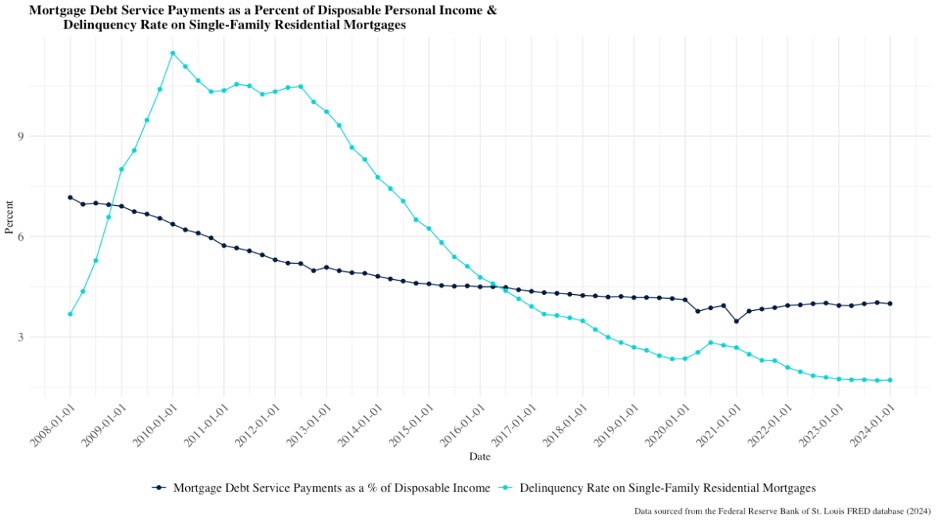
Consumer spending remains high, and key metrics like the delinquency rate on single-family residential mortgages, the housing affordability index and mortgage debt service payments as a percentage of disposable income are all declining or near historical lows.
Let’s dig deeper into why and how these macroeconomic factors play a crucial role in forecasting the future of residential construction.
Comparing financial health of current homeowners
Today’s homeowners are in solid financial shape, as shown by several key indicators:
- Low delinquency rates: The delinquency rate on single-family residential mortgages is at a historic low, indicating that homeowners are largely keeping up with their mortgage payments.
- Housing affordability index: The housing affordability index remains favorable, suggesting that many households have sufficient income to cover housing costs.
- Reduced mortgage debt service payments: Mortgage debt service payments as a percent of disposable income are also near historical lows, reflecting manageable mortgage commitments for most homeowners.
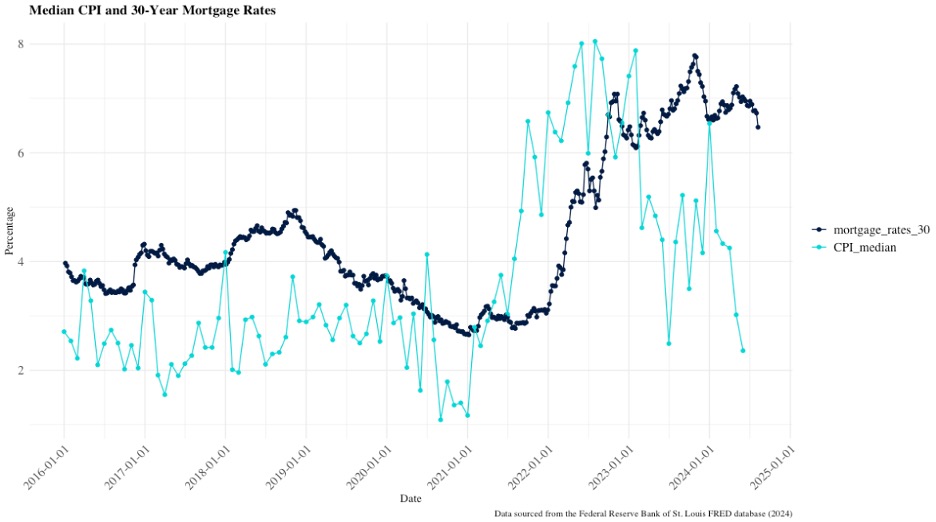
Interest rates, cooling inflation and the return of demand
The solid financial foundation among current homeowners contributes to the stability of the housing market. However, the prospect of lowering interest rates, while potentially beneficial, brings its own set of challenges:
- Potential inflationary pressure on home prices: Lower interest rates can increase demand for housing as borrowing becomes more affordable. This surge in demand may drive up home prices, creating inflationary pressure in the market. The Federal Reserve will need to carefully manage this to achieve a smooth economic transition.
- Affordability issues: As home prices rise due to increased demand, affordability may decline, especially for first-time buyers. This can widen the gap between those who can afford to buy homes and those who can’t.
- Speculative buying and overheating market: Lower interest rates may encourage speculative buying, where investors purchase homes with the expectation of price increases. This could inflate the market and risk creating a housing bubble. Although the risk of an overheated market is lower than during the peak of COVID, a rapid drop in interest rates could still lead to unintended consequences.
The ongoing impact of the lock-in effect
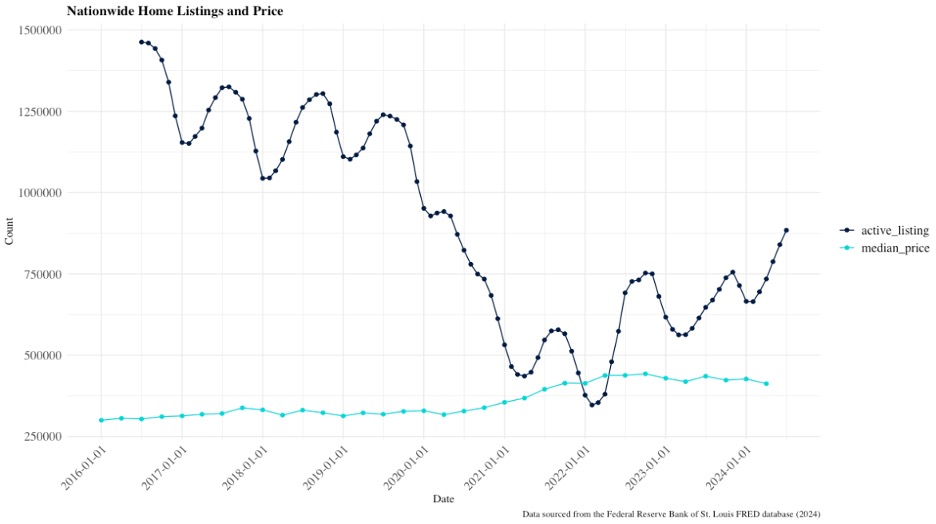
In addition to interest rates and cooling inflation, the housing market is still grappling with the effects of the lock-in effect. This happens when homeowners don’t want to move from their low-interest mortgages. As a result, there aren’t enough homes for sale.
As the chart below shows, while home listings have increased since interest rates began to climb, they still haven’t reached pre-pandemic levels. This trend of under supply keeps pushing home prices up – but at a slower pace compared to the rapid growth witnessed during the pandemic. Right now, more than 60% of all mortgages have rates below 4%. If interest rates drop at the right time, it might encourage more people to sell their homes, making more houses available.
How where you build might affect your bottom line
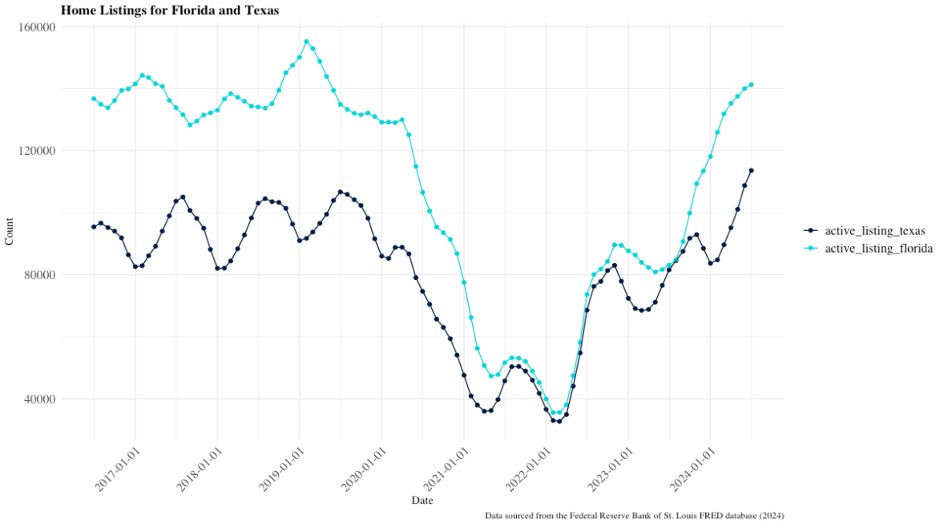
While the overall economy shows a tight housing market across the country, different regions can have different outcomes. For example, recent trends in states like Texas and Florida show how geography plays a big role in the housing market.
Regional differences in housing supply
Texas and Florida have seen bigger increases in the number of homes available and a drop in housing prices compared to many other states. Here’s why:
- Proactive construction policies: Both Texas and Florida have put in place policies that encourage new construction. These states have streamlined permitting processes and reduced regulatory hurdles, making it easier for developers to build new homes.
- Availability of land: This one is simple: Texas and Florida are bigger states with more land available for development. For more densely populated states, land becomes scarce and expensive.
Impact on housing prices
Because of these efforts, both Texas and Florida have increased their housing supply substantially. This has led to:
- Stabilized prices: The increased supply has helped to stabilize and, in some cases, reduce housing prices, providing relief to homebuyers during a national affordability crisis.
- Market balance: These states now have a more balanced housing market, where the supply of homes is closer to the demand, helping to avoid the extreme price jumps seen in other areas.
Rising insurance costs: A challenge for homeowners and builders
While there are some positive trends in regional housing markets, it’s important to also consider the challenges that come with these shifts. One major issue is the increasing cost of insuring homes, especially in states like Texas and Florida, where unpredictable weather events are common.
- Natural disasters: Both states face hurricanes, floods and other natural disasters. The increasing frequency and severity of these events have led to higher insurance premiums for homeowners and builders.
- Insurance premiums: As the risk of weather-related damage grows, insurance companies have raised premiums to cover potential losses. This increase in insurance costs adds to the overall expense of homeownership and construction, potentially offsetting some of the benefits of lower housing prices.
The impact of geography on residential construction highlights how important it is to consider regional factors when looking at housing markets. In states like Texas and Florida, proactive building policies and plentiful land have helped increase housing supply while stabilizing prices. However, the rising cost of insuring homes due to unpredictable weather remains a significant challenge. As the construction industry continues to navigate these regional differences, finding the right balance between supply, demand, and risk management will be key to achieving long-term growth and keeping homes affordable.
Keeping your competitive edge during changing economic tides
As the economy shows some signs of softening with potential interest rate relief on the horizon, construction companies need to focus on efficiency and building strong partnerships to stay competitive.
Using construction management software, like Buildertrend, and establishing relationships with material suppliers are two critical strategies that can help businesses thrive. By embracing these approaches, construction companies can not only navigate current challenges but also position themselves for sustained success in the future.
- Streamlined project management: Buildertrend provides a centralized platform for managing all aspects of a construction project, from initial planning and scheduling to resource allocation and tracking progress. This helps reduce errors and delays, ensuring that projects stay on track and within budget.
- Improved communication and collaboration: Buildertrend helps facilitate real-time communication and collaboration among all stakeholders, including contractors, subs and clients. Enhanced communication leads to better coordination and fewer misunderstandings, leading to higher levels of satisfaction for all involved.
- Enhanced financial management: Keeping track of costs and managing budgets are critical in an industry where margins can be thin. Buildertrend offers robust financial management tools, allowing businesses to monitor expenses, manage invoices and ensure financial transparency. This control over finances helps in maintaining profitability even when economic conditions are challenging.
Navigating the future of residential construction
The residential construction market is going through a period of significant change. Despite challenges like high interest rates, labor shortages and affordability issues, there are still strong signs of resilience and opportunity. The recent easing in the labor market and the potential for lower interest rates suggest a more favorable economic environment soon.
For construction companies, the key to thriving in this evolving landscape is focusing on efficiency, building strategic partnerships and leveraging advanced construction management tools like Buildertrend. By streamlining operations, improving communication and optimizing financial management, companies can maintain their competitive edge and achieve sustained success. As the economic landscape continues to shift, remaining adaptable and proactive is essential for navigating the future of residential construction.
Based on what you just read, we think you'd enjoy...
These suggestions are made by our team to help you find builders and stories that you relate to!
Back to all blogs