Economic and industry news or trends
The state of profitability in residential construction: What the 2026 data reveals about winning builders

A full pipeline can look like a healthy business. So can rising revenue, a busy schedule and plenty of projects under contract. But those numbers don’t tell the whole story.
Buildertrend’s 2026 data hub shows how difficult it can be for residential builders to turn activity into predictable profit. Nearly 1 in 4 builders reported no net profit in 2025 and only 5% consistently finish projects within 1% of their planned margins.
The difference comes down to visibility and discipline. Builders that protect margins are paying closer attention to job costs, budget variance and company-wide financial performance while there’s still time to make changes.
What the 2026 data says about builder profitability
The 2026 data points to a clear challenge: Builders are paying closer attention to financial performance, but maintaining predictable margins remains difficult.
As stated above, only 5% of builders report that their project margins consistently finish within 1% of their targets. At the same time, 91% of builders track job costs in real time on at least some projects and 68.1% monitor project gross margins monthly.
That gap matters. Tracking financial information is becoming more common, but collecting data alone doesn’t protect profit. Builders need to use that information to identify problems and make decisions while a project is still active.
Several numbers show where builders are focusing:
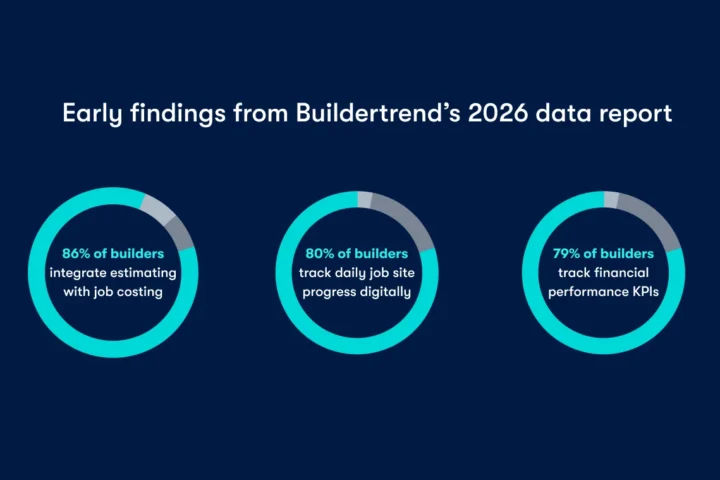
- Job costing: 86% integrate estimating directly into job costing.
- Labor: 33% identify labor costs as their biggest challenge to staying on budget.
- Budget performance: 28.6% report going over budget on projects.
- Gross margins: Builders and remodelers are targeting 29% to 30% gross markup in 2026.
- Business intelligence: 66% actively use dashboards or reporting tools.
These numbers point to the same opportunity: Better financial visibility can help builders act before small cost problems become margin problems.
Why margins are still difficult to predict
Residential construction has too many moving parts for profitability to stay fixed from estimate to closeout. Labor costs can change, material prices can move and client decisions can alter the scope or schedule.
A job can also drift financially when information lives in separate systems or teams don’t have the same view of current costs.
The most common sources of margin pressure include:
- Rising labor and material costs: Changes in pricing can quickly affect a budget built on older assumptions.
- Inaccurate or outdated estimates: An estimate creates the financial baseline for the project. If that baseline is wrong, every downstream decision starts from the wrong numbers.
- Untracked change orders: Work that changes the scope needs to be documented, approved and reflected in the budget.
- Delayed selections and decisions: Late decisions can affect purchasing, labor and schedules.
- Disconnected information: When project and financial data sit in separate systems, it takes longer to see the full picture.
- Delayed job-cost reviews: Waiting until a project closes to examine costs leaves little opportunity to correct course.
Buildertrend’s Job Costing Budget brings estimated costs, actual spend, projected costs and profitability into one view so builders can monitor financial performance throughout a project.
That shift from reviewing results to monitoring performance creates an important advantage.
What winning builders do differently
Financially successful builders aren’t relying on revenue growth alone. They’re building repeatable processes that connect estimating, project management and financial decisions.
That starts with a few fundamental practices. Builders can strengthen profit control by:
- Setting clear revenue and profitability goals: Company-wide targets give teams a benchmark for evaluating performance.
- Building estimates from current pricing: Accurate estimates establish a stronger financial baseline before work begins.
- Comparing estimated and actual costs throughout the project: Regular reviews can reveal where spending is moving away from the original plan.
- Documenting and billing change orders consistently: Approved scope changes should make their way into the project budget and billing process.
- Reviewing budget variance early: Small variances are easier to address before they become significant margin losses.
- Connecting project and accounting information: Shared data gives teams a more complete view of project performance.
Buildertrend’s 2026 data shows that builders are increasingly using connected systems and measurable financial information to manage their businesses.
The result is a more proactive approach to profitability.
Profitability is an operating system, not an end-of-year calculation
Profit is shaped by hundreds of decisions made throughout a project. Estimating affects the starting margin. Purchasing affects costs. Scheduling affects labor. Change orders affect revenue and scope. Job costing shows whether the plan is holding up.
That means profitability needs to be part of everyday operations rather than something reviewed after the final invoice.
A centralized financial view can help teams track:
- What has been spent
- What has been committed
- What remains to be spent
- Where costs are exceeding the budget
- How projected profit compares with the original estimate
The Job Costing Budget includes original budget costs, revised costs, committed costs, actual costs, projected costs and profitability in one view.
When teams have that information during the project, they can respond before small variances affect the final margin.
Questions builders should ask about their financial systems
A useful financial system should answer practical questions without requiring teams to piece together information from multiple sources. If your current processes make those answers difficult to find, that’s worth examining.
Ask your team:
- Can we see the current profitability of every active job?
- How closely do completed margins match estimated margins?
- Are change orders approved and reflected in the budget immediately?
- Are project and accounting teams working from the same numbers?
- Can we identify the source of a cost overrun before the project closes?
- Do we know which project types produce our healthiest margins?
These questions can reveal where your financial processes are strong and where better visibility could support better decisions.
The next competitive advantage is profit control
Strong margins come from the decisions builders make throughout a project, from the first estimate to final closeout. The 2026 data shows that builders are putting more emphasis on real-time job costing, margin tracking and connected financial processes.
For builders preparing to scale, the ability to spot financial problems early can become an important part of running a sustainable business.
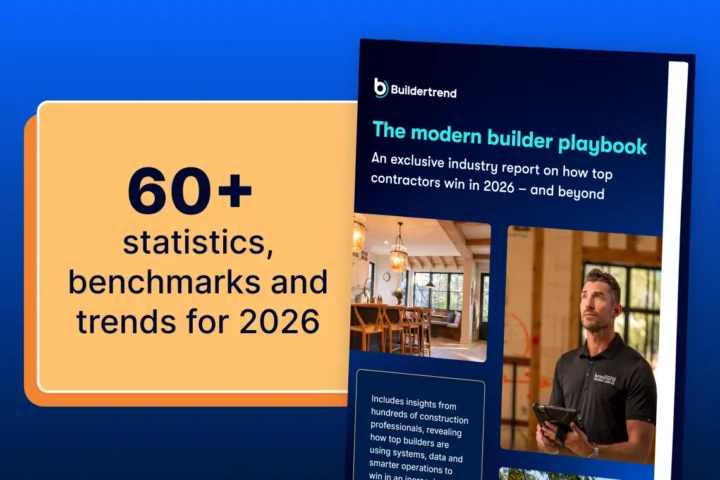
Explore the full findings in The Modern Builder Playbook 2026 to see how leading builders are planning projects, managing finances and building businesses designed to scale.
Frequently asked questions
Labor costs are a major challenge, with 33% of builders identifying labor as their biggest obstacle to staying on budget. Material costs, estimating accuracy, change orders and delayed financial visibility can also put pressure on margins.
Start by creating accurate estimates and then compare estimated costs with actual and projected costs throughout the project. Consistent change order processes, regular budget reviews and connected financial and project information can also help teams identify problems earlier.
Real-time job costing gives builders a current view of project spending rather than requiring them to wait until closeout. Buildertrend’s Job Costing Budget connects estimated, committed, actual and projected costs so teams can monitor profitability throughout the project.
Based on what you just read, we think you'd enjoy...
These suggestions are made by our team to help you find builders and stories that you relate to!
Back to all blogs