




What Top Builders Do Differently: Insights from Our New Industry Survey
Carly Ward sits down with Joe Christensen, founder and owner of Cardinal Crest Homes in Kansas City – and, as of this year, president of the Home Builders Association of Greater Kansas City. Cardinal Crest is celebrating 15 years in business, a milestone Joe built from scratch after moving to Kansas City in 2011, right on the heels of the housing crash, with no name recognition in a brand-new market.
This episode is built around Buildertrend’s newly released Modern Builder Playbook, a fresh look at what today’s top builders are doing differently than everyone else. The premise: top builders aren’t lucky, they’re patterned – and Joe is a real-world proof point. Rather than walk through the report page by page, Carly and Joe use his own 15-year journey to bring those patterns to life.
They cover it all – from slot scheduling and pre-construction planning that keeps Cardinal Crest from turning into “the hungry hippo” every selling season, to the hero mentality that keeps builders stuck in spreadsheets and binders long after they’ve outgrown them, to the lawsuit that exposed just how fragile an unsystemized business really is.
This episode is a must-listen for builders who suspect their current systems won’t hold up under real pressure – and want to know what the data says about the ones that do.
What separates top builders from the rest?
“When you really know your business, when you really know your overhead, you know how much you need to make and know what you want to make, there’s a relief a little bit, where you can just focus on those jobs in that phase of production.” – Joe
“Being diligent in what you need to make every year to cover your overhead, and what you want to make for your profit to take home, gives you such a good peace of mind to slot those clients in, and to be intentional through every step of the process, instead of running on fire.” – Joe
Where do builders get stuck in the hero mentality?
“Construction is so prone to human error because there are so many moving parts, it’s not if mistakes happen – it’s when.” – Joe
“Your processes and systems get exposed the moment you outgrow the one job.” – Joe
How has Buildertrend helped?
“I swear it was just like a Google search – ‘CRM, project management software tools for home builders’ – and Buildertrend came up.” – Joe
“My first lawsuit exposed even what I didn’t use in Buildertrend, because I was able to export everything from Buildertrend, which is a super cool feature.” – Joe
Links and more
Follow Joe and Cardinal Crest Homes:
The Modern Builder Playbook 2026 is out now!
- See the patterns separating today’s top builders from the rest
- Learn how documentation and reporting hold up when things go wrong
- Get a real-world look at how those patterns show up in a 15-year custom home business
Get your free copy – and see what’s shaping residential construction in 2026.
Related content:
Subscribe here, and never miss an episode.
Got podcast topic suggestions? Reach out to us at podcast@buildertrend.com.
The Better Way, a podcast by Buildertrend:
Looking to add construction tech to your daily processes? On the newest season of “The Better Way, a podcast by Buildertrend,” you’ll get best practices for implementing software and getting your team on board from other industry pros and our experts. Subscribe and stream today wherever you listen to podcasts.
Follow us on social:
Listen to “The Building Code” on YouTube! And be sure to head over to Facebook to join The Building Code Crew fan page for some fun discussions with fellow listeners.
Carly Ward:
Well, guys, welcome. Today’s guest is Joe Christensen, co-founder and owner of Cardinal Crest Homes in Kansas City, and officially, as of this year, president of the Home Builders Association of Greater Kansas City. This has been a big year for you, Joe, and the rest of the Cardinal Crest team. I know you guys are celebrating 15 years, which is such an impressive milestone in any industry, but especially in home building, knowing how much the home building industry is, how much they’ve weathered over the last decade and a half. So, true testament to you and your team. One of the things that really stood out as I was doing a little bit of research on you and your company was the timing of how you guys got everything started. You started your business back in 2011, coming off the cuffs of the housing crash, and you actually moved from Vegas and the Utah area to Kansas City, with not a lot of knowledge or experience in that market. And so, obviously you guys saw a great opportunity to capitalize and build something really great in the Midwest. And so, I want to fast-forward and look at today, and talk to you a little bit about how things have evolved for Cardinal Crest, and for some of the viewers that might not be familiar with you guys, just set the stage for us, high overview of what the last 15 years have been like and what’s happening lately.
Joe Christensen:
Okay. So, you want me to give a good overview of 15 years in two minutes?
Carly Ward:
Yeah. Easy, right?
Joe Christensen:
Two minutes. Easy, could do that. Well, you’ve summed up a lot of it… Yeah, moved here, I will tell you, I know the home building business has been through some rough times even lately because interest rates and volatility in the markets, construction costs, but in 2011, if you lived through 2007/08 and then up to 2011, I mean, it’s rainbows now compared to that. The great housing crisis was back then, and I’ll tell you, I was in college… And I was a little older, I’d gone back to school, I’d worked construction, different jobs. So, I was 20, I think 29… 28 when I graduated. But I remember being in a seminar in our construction management program around that 2007/2008… Well, I’ll back up. My summer internship that I was doing in Las Vegas, my last day in the job, I had spoken Spanish, I had learned it on a church mission, and so I learned Spanish, and he said, “Great, you’ve done a great job…” We had a little exit interview. And he said, “By the way, here’s 40 pink slips, can you fire all those framers because we have no work?” And I was like, “Yeah, we could do that,” because we had in-house framing. And this was for a company that had done a lot of production work in Las Vegas. And it was weird thinking back at that because that was a precursor to then 2008 when actually everything collapsed. And I bring that seminar comment I made back because we had this massive seminar hall at the BYU construction management program, and it was full of 200 kids. Students who were thinking about studying construction management, others who were just exploring or were in the program. After that semester when everything collapsed in the financial markets and all the home building just blew up, that thing cut in probably, I don’t know, a third, two thirds of the students just left the program. And so, I paint that picture because it can get worse and then there’s always light at the end of the tunnel. That time was really bad, I mean, everybody I knew that was in construction was having a bleak time, many people followed bankruptcies left and right, you look at the chart of bankruptcies leading up to 2008, and a lot of people told me and Adam, my business partner, “Get out of the industry. I don’t know if construction’s ever coming back, I don’t know if home building’s ever coming back.” And everybody was waiting for the next crash. If you remember back then, it was like, 2008 happened, we recovered in 2009, everyone was like, “Well, it’s going to happen again.” And 2011 when I actually graduated was the lowest year of permitting throughout the country. All the homes, the residual permits had all been washed out of the system, and it was by far the lowest. And so, Kansas City-
Carly Ward:
You’re like, “Adam, let’s go to Kansas City.”
Joe Christensen:
Well, let me tell you, looking back, Vegas was a war zone, it had been nuked. All these boom and bust cities, my wife is from Arizona, that looked no better. Utah was a shiny little star at that point, but it had some really weird permitting and licensing issues, and we thought about getting out of there. And Kansas City, I had family that had moved there, I had known the area from my parents who bought a farm out there. And so, we started doing some research, and long story short, it kind of all aligned, it looked like a great little spot to start. It hadn’t had as much of a bust. But we started in the lowest of time, and thinking like, you know what? This is what our life has dealt with us, we’ll just have to do something. Fast-forward, I really do look back and be like, holy cow, I did the hardest thing possible. Why did I pick somewhere where I knew nobody? And I say that because you really do get to see your roots, your competition roots run deep, especially if they’re multi-generational. I knew no one. So, I was business developing like no other. I had to meet people, church, sports, whatever it was, I had to be an extrovert x 10. And I mean, we ended up doing it, but we ended up… Part of life is lucking out. We ended up hitting the bottom at 2011, and we did slowly ride that wave up. And through the last 15 years, at first, it was just Adam and I, and we’ve always been design build. Adam and I studied some architecture as well in the construction management program, and learned from an architecture and Autodesk program, we liked interior design. And so, at first we did all of that ourselves. So, we did the architectural plans, we did the interior design, then as we slowly grew throughout the years, the projects kept getting more and more custom. We ended up hiring an architectural designer, permanent one in the office, hiring an interior designer, hiring superintendents, project managers, and slowly grew the company. And the company’s gone through 15 years of exponential growth, and then exponential contraction has been through… If you look at the graph, it would be up, down, like two steps forward, one step back, two steps forward, one step back. I mean, the progression has been everything that you read about entrepreneurship. You learn some hard lessons that you haven’t been through, where you lose money on a job, blah, blah, blah… Kind of goes up and down, up and down. And to where we arrive at today, where we probably want to do anywhere around $15 million of work a year in custom homes, that could be six to seven homes or less. Sometimes that number can bloom a little bit more, total revenue. We are highly custom home builders, so homes are very unique, and they range from three million to $5 million. So, when I say $15 million, we want to build that out. It can get up to $20 million that we’re building out, but there’s a difference… We can get into those details of how much work you have on your books, how much are you actually billing, and how much are you actually doing to close. In that timeframe of 15 years, we’ve dabbled in commercial construction, which we still do, we’ve done some huge projects, we’ve done little projects, and we’ve also got into real estate development. So, we’ve been busy and we’ve learned a lot of lessons, we’ve been blessed in other areas, in other area, we’ve been kicked in the teeth a couple times, and we’re still here to tell that story. And so, yeah.
Carly Ward:
No, I appreciate you painting that picture because your story definitely goes along with our theme today. We recently produced what we call the Modern Builder Playbook, and these are featuring builders pulling ahead today that aren’t just looking at specifically construction, they’re looking at the business as a whole. And like you had mentioned, being very intentional about everything from permitting all the way through warranty and creating a really repeatable process that isn’t naive to the struggles that can come with it and the challenges, but building processes that help prevent some of those.
Joe Christensen:
Oh yeah.
Carly Ward:
So, I want to get into it with you. Looking at your business and the last 15 years, and where you guys are at now, what would you say that you guys are the most excited for looking ahead?
Joe Christensen:
Ooh, that’s a great question. I think we’ve been fortunate enough to keep on building homes that are, I’d say, larger, more custom, and it is really awesome to be able to scale back a little bit, if you will, and focus on the work you have. And my business partner, Adam, has been really great at implementing what’s called a slot schedule. So, he’s pretty much looked at our capacity, and when we have clients that want to build with us and start the design process, we tell them, okay, here’s our current capacity. We can start the design in three months, four months. And by the time you work through design, that means construction isn’t starting, from start of design, you’re probably not starting for five months, six months at the end. And so, we have been really intentional about our pre-construction process upfront and our slot schedule. And what it does, it just allows you to focus on the clients in their different phases. During production, during when the house is being built, we can take the time right when it’s a process and a thing that we do, is once the home is framed up and it’s dried in, so the roof’s on and the shingles or whatever roof type we’re doing, go there with the whole team, the superintendent, interior designer, architectural designer, everybody in the team, the other supers even come that are not part of this job, and we mark up the entire house. Staple appliances, plumbing fixtures, lighting fixtures all on the wall. We get really granular on measurements, we inspect the entire house after it’s been framed to do a really good [inaudible] structurally, and then get it really ready for the MEPs, mechanical, electrical, plumbing. And I just share that, one, because there’s lots of those, but it’s been great to know… When you really know your business, when you really know your overhead, you know how much you need to make and know what you want to make, there’s a relief a little bit, where you can just focus on those jobs in that phase of production. The interior designer and architectural designer can focus on their pre-construction, what they’re doing before they start. The people who are in charge of warranty can focus on their phase. And so, I think scheduling is always a beast. It’s such a beast in construction, but being diligent in what you need to make every year to cover your overhead, and what you want to make for your profit to take home gives you such a good peace of mind to slot those clients in, and to be intentional through every step of the process, instead of running on fire. Because that’s the other problem is that I’ve done it for 15 years. Selling cycles are spring and fall. You could be the hungry hippo and just get all the work you can, then you’re like, well, great. Now I got to figure out how to start all this all at once, and it’s impossible. And we’ve done it over and over and over, and builders do it all the time. And there’s probably a time because of timing I’ll have to do it again, but I’ll hate it. And I try to avoid it. So, to your question, that’s what I really love right now.
Carly Ward:
Okay. Well, I want to go back a little bit. And looking at Cardinal Crest now, Joe now, versus 15 years ago when you guys just got into the Kansas City market, I imagine that mentality and some of those processes weren’t in place, and maybe you were running a little bit more chaotically, right?
Joe Christensen:
No. Yeah. Yeah, it was chaos. I still remember, the way I would do billing is I had, at first, the first thing I did, I had these plastic folders that were like a pouch, and I first started with the plastic folder and I put every billing, and I labeled that job, and I put all the billings in there. So, then all the mail, I’d open up the mail, just like people with controllers are kind of… I was the guy who did that. Put it all in there, organize it to each pouch, and then I opened up, at the time, Google Sheets [inaudible], it was still going on, but it was pretty rough, and I would try to organize it in my Google Sheets. And as you scale, that system might be good, but when you’re constantly, you’re in the middle of doing that, but then you’re also having to run to a job to answer a question to a subcontractor, go and line some other subcontractor out, you’re fixing mistakes. Then, you go back to your Google feed to do the bookkeeping, you forget what you do, and you’re going to make mistakes. You forget what you did pay or didn’t pay, and as we scaled or did more than one job, it just starts becoming a nightmare. That’s when it’s really manifested, your processes and systems get exposed the moment you outgrow the one job. It might work for the one job. And for us, the progression was, okay, instead of pouches, we’re going to do binders, and we did binders. And I have a whole slew of old binders in boxes in my warehouse, because we kept them from older jobs. And we actually kept the binders all the way through Buildertrend too because we always… And it worked because we wanted a manual system as well, like a backup because [inaudible]-
Carly Ward:
It can’t be broken unless there’s a fire.
Joe Christensen:
I’m 43, I guess, I’m kind of old, that I felt like… I mean, there was a time that everyone was like, “What if the system breaks? Digital…” And now no one could even contemplate if… I don’t think anybody that’s young even contemplates what if the digital world dies, but growing up-
Carly Ward:
You know what, some stuff don’t wash out, I still make a manual list on a day… I got boomer parents, I got it.
Joe Christensen:
Right. [inaudible], look at this, I still got analog. That’s what the kids call this, analog. I’m like, get the freak out, analog? Anyway, so at that time that we were worried, somehow the digital world would crash and so we had those backups. But as you continue to scale, and even when you don’t scale, when you’re just a one-man show, you’re being pulled in 1000 directions, or a two-man show with Adam and I, and you’re wearing so many hats, you start getting sloppy the less systems and processes you have, and the less you time block management for certain things. We saw that early on, it was really early on that we were like, dude, there’s got to be a better way. I know we’ve talked about that on other podcasts, and I’ve talked that with other people in Buildertrend. I mean, that’s what eventually led to researching. And I swear it was just like a Google, “CRM, project management software tools for home builders,” and Buildertrend came up. I still remember doing that call, we didn’t have an office, I was in my brother’s basement because we were building a house down the street from him, and he let us office in his basement. So, we’re in the basement doing that video call… I forgot the guy’s name. I know it, anyway. And we did that intro call. And get this, I’ll tell you, we were so poor back then, my brother supported us early, invested in us, and we paid him back. But I put the first Buildertrend subscription on my brother’s credit card.
Carly Ward:
He’s your favorite brother, isn’t he?
Joe Christensen:
Yeah. It was $250 a month, it wasn’t anything like it is now. But at the time it was like, holy cow, $250 a month? Geez. It was like all my groceries. Now, it’s like-
Carly Ward:
Please give me the Visa. Yeah. Well, I want to hit on something that you already touched on, your breaking point, or the spot where you’re like, okay, things are getting exposed, the spreadsheets aren’t working, the emails, the binders, the folders… You spoke generally about feeling that pain. But was there a specific moment or project where you’re like, all right, we got to pull the rip cord?
Joe Christensen:
Yeah. I mean, it was our first spec home that we did, and I thought I was pretty organized, and I believe that I was using Google Sheets for some accounting, but I was using a lot of Excel as well just for project management budget tracking. And my file got corrupted, and it crashed or whatever in Excel, and I had to rebuild my entire budget. I was using Google Sheets for accounting, Excel for… And Excel is super powerful, I mean, I used Excel every single day. But it got corrupted and I had to try to rebuild it all. So, I had to go back through, like, okay, what were the estimates and what was paid? I was reconciling the sheets with the Excel. And after that I was like-
Carly Ward:
I imagine those were dark days.
Joe Christensen:
I was like, what a nightmare. It took me hours to try to rebuild it and it really didn’t even get to what it was. And I was so frustrated, I mean, I spent all night long trying to get back to where it was. And that was the real clench point of like, okay, this sucks. But leading up to that, there was other things, like searching through emails. Email is so much better now even, but back then Gmail, I was using Gmail still, and even that, seeing what clients, okay, yeah, they signed off on this, or I got a verbal, I got to write that down… We didn’t have Dotloop back then, or DocuSign, such easiness. It was like, well, how do we get digital confirmation? “Hey, will you just send me an email?” Or I would send myself emails, like they approved this on this day. And so, I was trying to document as much as I could, and trying to… And it’s interesting because back then it was kind of, to use that word analog, which is funny, it was right at the cusp of things going digital. Paper was still leading the charge in so much. Paperless was such a thing, like, go paperless on your billing, that wasn’t really heard of. Everyone used paper still. So, as us being younger at the time, ultimately there was lots of different things, emails breaking down, not being able to find the right documentation, budgets, Excel sheets, just kind of realizing that there’s got to be a spot where it all funneled into one.
Carly Ward:
No, that makes a ton of sense, and it makes me laugh a little bit, this is a funny side story, but you talk about paperless and paper being such a big thing. Coincidentally, Dan Houghton used to work for, stick with me, my stepsister’s dad’s paper invoicing company before he started Buildertrend.
Joe Christensen:
Nice.
Carly Ward:
So, paper, thing of the past.
Joe Christensen:
He was inspired, he was like, this is… Paper invoicing sucks.
Carly Ward:
We got to do better. And he started out of his parents’ basement too. So, you guys have that in common.
Joe Christensen:
Basements are a beautiful thing.
Carly Ward:
You start from the bottom and you work up.
Joe Christensen:
What’s funny is we actually, we officed out of our model homes in the garages for probably 10 years, maybe nine. We put what’s called a little mini split in there, to heat and cool it.
Carly Ward:
I was going to say.
Joe Christensen:
But they were totally hot and they were totally cold, they didn’t really heat very well. But we officed out of every model home that we built because we were like, well, we’re already paying the money here, let’s do this. And it was funny, people would open the door from the house, if we left it unlocked, and they’re like, “What is going on in here?” And it was huge outfitted office, and we moved that office every six months. Hey, we sold it, onto the next.
Carly Ward:
That’s a fun project.
Joe Christensen:
Yeah. Yeah, it was fun.
Carly Ward:
Well, I want to quote something that you said in our Modern Builder Playbook, you had said, “Construction is so prone to human error because there are so many moving parts, it’s not if mistakes happen, it’s when,” and it just kind of brings me back to the story you were telling about the breakdown of your Excel budget. I know a lot of builders hear that, and they think personally what we’re doing is working, it’s not broken, the change management is going to be difficult. And so, I’m curious, in your opinion, where do builders get trapped in that hero mentality? And how do they break that mental cycle and move on to like, hey, this is something that we really need, it might be difficult, but it’s got to happen?
Joe Christensen:
Yeah, I totally get that. Well, so I would say for decades, work-life balance has been super hard for any type of blue collar construction worker, and I would say I put myself in that category. That it’s super hard at first to not want to do it all because you have what you feel like is control. But all it takes, the system, if your system is reliant on all these different apps, and what makes it, again, what exposes that is it is usually super fragile to all come crashing down like the Jenga tower. One problem on site, one legal problem that could happen, that exposes your documentation, that’s a huge one. I could see people have their own little stuck in their own little way that works, wait until one lawsuit… I’ve been in a lawsuit. Wait until one lawsuit happens, and your whole system is exposed on how good it is. You have to deliver a project file in a clean way, to train a lawyer who’s never done construction, who knows contracts, who knows a little bit about construction, what went on. And let me tell you, that process alone exposes how fragile your system usually is. Even using Buildertrend. My first lawsuit I was in was probably year 10, and it took four years to wrap up, and it exposed even what I didn’t use in Buildertrend because I was able to export everything from Buildertrend, which is a super cool feature. But lawsuits, for a lot of people that’s like, “Oh, that’ll never happen to me,” or, “I can’t believe you’ve been sued.” I’m going to tell you right now, it’s not a matter of if, it’s… What’s that saying? I couldn’t say it. Not a matter of if, it’s only a matter of when. It’s just prone for mistakes. The one I was in was not even, it was from a subcontractor, who, the owner contracted directly with them, I thought I was in the clear, and ended up being brought in. And so, I think what really comes down to it, people who are like, “Hey, I can do this all on my own, I can use all these different apps.” Yes, you can, you totally can, I think there’s just a more efficient way. And the learning curve is really tough at first, but the more flexible you are to make your systems like, okay… Just like Buildertrend. It’s just like QuickBooks, when you use QuickBooks. Like, listen, I know I want to do it this way, but the system says it’s more convenient or efficient to do it this way. You just have to bite the bullet and try it. And once you do, you start seeing, okay, I actually can be efficient doing this, I can actually have controls…
Joe Christensen | Cardinal Crest Homes
Places You Can find us




We think you’d also like this
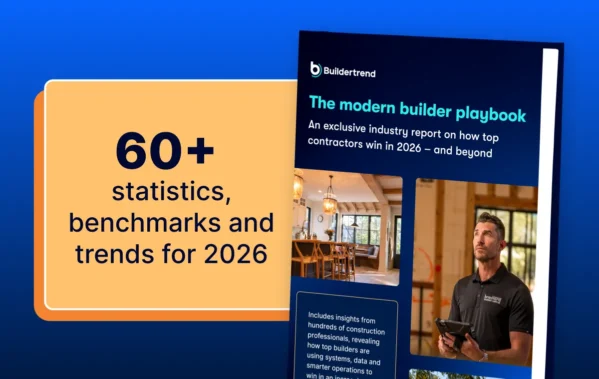
60+ construction statistics, benchmarks and trends for 2026
Explore 60+ construction industry statistics, benchmarks and trends for 2026, including housing demand, labor shortages, profitability, technology adoption and more.

case study
Aug 29, 2022Cardinal Crest Homes: Giving clients control of their budget with Selections
See how this custom home builder uses Buildertrend’s construction management software to promote efficiency and create a unique client experience.

Resilience in reporting: Future-proofing your business with tech
Construction software powered more possibilities for Cardinal Crest. The first in this five-part series shows how tech helped this team become an industry leader.