




Blueprints for tomorrow: The long-term impact of sustainability in construction
Today on “The Building Code,” Zach is spending his final episode of the podcast chatting with Jordan Duggan, general manager at Caprock Design + Build. Jordan began his career in construction over 15 years ago and has extensive experience in various areas of the industry. He’s continuously learning about advancements in building science, new product developments and installation techniques in order to build better, healthier homes for their clients.
Tune in to the full episode to learn more about sustainable building practices and how to educate homeowners on the value.
How would you define sustainability in construction?
“In a general summary, it’s a building approach that you’re minimalizing the environmental impact the construction process has throughout its lifecycle. So, there’s multiple ways of doing it, and it’s a really broad question, it’s not as simple as just, well, we’re using sustainable products, or we’re using a low VOC paint. In fact, it doesn’t even have to incorporate those two. It could be the details or the assemblies that you’re putting together that just last a lot longer. It could be the details and assemblies that you’re putting together to make the house healthier. It could be materials you’re using that are easily sustainable.”
How do you explain the value of sustainability to homeowners?
“It seems like the home industry is solely focused on ROI. And I understand that, and so, we try to accommodate to it. We do let the customer know like, ‘Hey, if you do this, this is an ROI feature. This is something that you’ll get a return on, it’ll pay off in X amount of years,’ or whatever that situation is. And there’s some features that are just strictly for comfort and health. No, you’re not going to get any more money out of this house when you sell it if you’re to do this, but you’re going to be healthier, and you’re going to enjoy it more, and you’re going to love it when you’re home. So, we really do try to decipher between those and present those options.”
Links and more
Visit their website to learn more about Caprock Design + Build.
Check out Jordan’s “BuildWise Podcast” where he and his guests explore the ins and outs of building a high-quality, high-functioning custom homes.
The 2024 State of the Residential Construction Industry report is live. Get builder insights and data from across the globe with best practices in marketing, sales, financials and operations. Download the report now and make it your most profitable year yet.
Related content:
Tune in to the last episode to hear more about how requesting client reviews and showcasing them on your website can help you win more jobs from Chris Meeken, owner of Black Tie Group.
Subscribe here, and never miss an episode.
Got podcast topic suggestions? Reach out to us at podcast@buildertrend.com.
The Better Way, a podcast by Buildertrend:
Looking to add construction tech to your daily processes? On the newest season of “The Better Way, a podcast by Buildertrend,” you’ll get best practices for implementing software and getting your team on board from other industry pros and our experts. Subscribe and stream today wherever you listen to podcasts.
Follow us on social:
Listen to “The Building Code” on YouTube! And be sure to head over to Facebook to join The Building Code Crew fan page for discussions with fellow listeners.
Zach Wojtowicz (00:03):
Hey everyone, Zach Wojtowiczhere for “The Building Code,” flying solo today, which is A-okay, we’re going to be just fine. I’m really excited to talk to Jordan Duggan, he’s general manager of Caprock Design + Build. He is down in Amarillo, Texas, where he is carrying the mission to talk about green and sustainable building techniques.
He’s really focused on educating himself and improving the products that he’s bringing to his customers around green construction, and he’s got a very fascinating story where he’s really spent a lot of different elements of his career and working his way up to a builder. So, I want to touch on a lot of the topics around green technique, but Jordan also is really interested in talking about business sustainability, so we got something for everyone today. I’m going to get him in here, let’s get it going.
(00:55):
Hey Jordan, welcome to “The Building Code.” It’s great to have you here today. How are you?
Jordan Duggan (01:00):
I’m doing great, I’m excited to be here.
Zach Wojtowicz (01:02):
I love it. Well, thank you so much for your time. I’m really excited for our topic today to kind of get into sustainable construction, as well as sustainable business. You kind of mentioned that in our little pre-read of some topics we’re going to go into, and that’s an interesting twist on that topic. We’ve had quite a few green builders or sustainable builders on, so I’d really love to get into that a little bit. Before we get to the tantalizing content, tell us a little bit about yourself, your business, your story. Just give us that context of your journey.
Jordan Duggan (01:31):
Sure. So, starting off as a kid, I was fundamentally curious about everything. I think my parents got tired of me asking the question, why. It was not a simple answer because it was followed up by another why, and when I was a kid, we didn’t have cell phones and easy information to pick up like we do now. So, that’s a difficult answer. Now, my kids ask me that question, it’s like, well, I don’t know, ask Siri, let’s look online, we’ll figure it out. That’s kind of where it starts with me.
(02:09):
My parents had a lot of, at an early age, we moved a lot, remodeled houses. So, again that, let me ask that question, learn those things early on. When I was younger, my dad was a bricklayer, so had my involvement in the trades. Right out of high school, went and worked, I did construction for our energy company here as a contractor doing dirt work. Then from there, I moved into what’s more localized is our trades, electrical, plumbing, HVAC, was a project manager for a company. Ended up getting my plumbing license and from there that moved to remodels. Those things all kind of go together and just made sense to collaborate all those things and take the whole project on.
(02:59):
Then we started doing new construction and that’s when just I had a passion that came about, a fire that was lit and realized, hey, this is what I really want to do. And then that fundamental curiousness that I had really took off and that’s where I delve into the education side of it and I’ve just loved it ever since.
Zach Wojtowicz (03:25):
That’s an amazing story. I get the privilege to talk a lot of different people in the industry. They’re not always so diversified in the experiences. Dirt work, all the way to the mechanicals, to actually now running with a GC business, that’s really interesting.
(03:44):
Where did the sustainability kind of focus start to come in? Was it right away or as you’ve grown your business and you’ve grown your focus over time, is that more of where that … And you mentioned you were always curious, so you’ve just really been into geology, into earth sciences, and it all just came together.
Jordan Duggan (04:03):
So, I’d say a big part of that started probably around that initial remodel phase. Every remodel you start with demolition, so you’re analyzing this building as you’re taking it apart. I’m wondering, how could this have been better? What caused the issue here? Why didn’t this last long or why did it last long? So, that was the initial start of it. From that point on, trying to educate myself further down the road, that’s when I came across the Passive House Institute, thought hey, this is a top tier or a really great way to get some really great knowledge. So, I enrolled in that, became a certified Passive House builder. That really opened my eyes up to a whole other level. There was things in that that had never even crossed my mind, as far as sustainability and the impact and importance that it can have.
Zach Wojtowicz (05:04):
Yeah, for those maybe that are a little less educated because I think that’s what it really comes down to, is educating people on what sustainability means. I think that term itself can have a lot of different connotations to it. So, how do you define sustainability construction? What does it mean to have the Passive House Institute? What are the philosophies and best practices that they’re promoting?
Jordan Duggan (05:31):
So, in a general summary, it’s a building approach that you’re minimalizing the environmental impact that construction process or that building has throughout its lifecycle. So, there’s multiple ways of doing it, and it’s a really broad question, it’s not as simple as just, well, we’re using sustainable products, or we’re using a low VOC paint. In fact, it doesn’t even have to incorporate those two. It could be the details or the assemblies that you’re putting together that just last a lot longer. It could be the details and assemblies that you’re putting together to make the house healthier. It could be that it’s also materials that you are using that are easily sustainable. They’re not dipping into our limited resources, or if they are, they’re doing it in a very modest way. So, that’s, I guess the generalization of it, what the people who do know a little bit about it would categorize it as.
Zach Wojtowicz (06:46):
Yeah, and how does that translate then into the decisions that you’re making when it comes to building a project? It’s like the cerebral, here’s the high-level headliner of why these institutes exist and these philosophies around the building science elements of using green techniques. I’m sure that then has to go into the reality of running a business and the operations and the real world and having that underlying philosophy obviously impacts how you run the business and how you design your project. So what is that experience like and what’s that look like to a customer, to you, to your team? I know it’s like, that’s a lot and then just opens the door up for some… you’re like, geez Zach, let me breathe.
Jordan Duggan (07:31):
Like I said, it’s a big topic. I think it gets dumbed down a lot to being oversimplified. Usually, the first thing that we’re looking at are the building assemblies. We’ll talk with the customer, and we’re doing all of our pre-construction upfront. Down to picking the last faucet fixture, we know what’s going to go in that house before we even break ground, but back to the assembly part of that, we have options that we do that we offer. Now, all of those are going to be focused toward making that building last longer than, let’s say the typical code built house next door built by somebody else. That’s something that we take pride on from the start, and so, we educate our customers up front.
(08:22):
In fact, the first meeting that we have, it’s not really discussing what exactly they’re wanting, it’s discussing what our process is going to be like and then taking a little dip into these details of, “Hey, these are what we offer and let me tell you why we offer these and what they’re going to do for you.” And going off that, one of the biggest kickbacks that we initially get when people hear what we’re trying to do with a high-performance building and being sustainable is, “Well, I don’t want to spend my money on that. That’s going to cost more than if I have option B, go build this house for me.” And that’s actually rarely the case. So, there’s a lot of education involved in that upfront to let the customer know that it is a viable option and the benefits that they’re going to be getting from that, it makes it a lot easier when we get to have that initial conversation to actually move forward with that project.
Zach Wojtowicz (09:22):
I love that, and as people that listen to The Building Code know, I am not from the construction industry originally, and so, I always find these opportunities for my own education just very beneficial to understand that. And I’ve gone and bought houses and built houses, and my parents have built houses, and I think it’s just interesting because I think that’s even maybe an assumption in the building industry, is that these green options will add costs and then people won’t want to pay for them and they don’t want to have that conversation or just generally think, when you think these types of conditions, there’s just going to be an added cost to it. So, your approach is to even just educate customers as much as it is even to really promote your brand and what you’re doing with your business.
Jordan Duggan (10:11):
It is, and don’t get me wrong, it is to promote my business, but I’m such an advocate of this field and the trades and what’s going on right now. There’s so many new products and so many new techniques that have been developed and tested, so not new this year, but last, I want to call it 10, 15 years. We’ve got code developments that have come in and really changed the game in the last few years, and that’s starting to sweep the country.
(10:43):
But I’m open to educate, and I tell my customers this, let me have this conversation with you and if you do want to take this information down to another builder because you hit it off, and you love it, that’s great. I feel like I’ve done my job, as far as passing that information on and making you more aware of what you’re getting into and how I can help you. So, it is for brand promotion for us, but it’s more of just, let’s share the knowledge.
Zach Wojtowicz (11:13):
Yeah, it’s really interesting, too, because even if there isn’t a slightly added cost to it, you’re talking about a lot of times longer term cost savings, whether you’re more passive on the grid, so you’re not paying for heating and air or even just the health benefits like cleaner air in the house, and if you have medical conditions, it’s just going to make you … health is wealth, and just live with yourself. So, it’s not even just about the structure, it’s also about your wellbeing because houses aren’t just assets and commodities that you buy, sell, and trade, they’re intended to fulfill a human need. Why not want to live in the best version of it? Because it just an investment to pass along to someone else someday.
Jordan Duggan (11:56):
Absolutely, I compare this to the automotive industry a lot because there’s a lot of relatable items in there. Everybody wants to know what the ROI is. Nobody really goes to the dealership and looks at a new pickup and is like, what’s my return on this investment going to be? Well, in a sense, some companies do, it’s a workhorse for them, and they’ll factor that in, but the general public doesn’t. The people that are buying that vehicle for themselves, they’re going to factor in that, “Hey yeah, I want the heated steering wheel, the heated seats, the air conditioned seats, the sunroof, the big rims.” It’s all these things that they add on, and they do it just because they want it, right?
Zach Wojtowicz (12:40):
Right.
Jordan Duggan (12:41):
Same with the gym membership. You can buy some weights, work out from home, it’s a one-time cost, or you can pay for that gym membership. It’s all about being healthy at that point but are you looking at the ROI on that? And it seems to be like the home industry is the one thing that is solely focused on ROI. And I understand that, and so, we try to accommodate to it.
(13:07):
We do let the customer know like, “Hey there, if you do this, this is an ROI feature. This is something that you will get a return on, it will pay off in X amount of years,” or whatever that situation is, and there’s some features that are just strictly for comfort and health. No, you’re not going to get any more money out of this house when you sell it if you’re to do this, but you’re going to be healthier and you’re going to enjoy it more and you’re going to love it when you’re home. So, we really do try to decipher between those and present those options out there.
Zach Wojtowicz (13:39):
I love it, and you kind of talked about this is infused from the design, pre-construction process throughout the building. What are some of those techniques that are your most popular or the ones that you’re seeing people naturally gravitate towards, or personally, what are the ones you really like to put in homes because you know it’s a great ROI in various ways?
Jordan Duggan (13:59):
Sure. So, one of probably my favorite one that I really focus on, it’s the air control layer of the house. We’ve been putting insulation in house for a long time, and if that house has wind blowing through it, that insulation is null and void at that point. It’s like putting on a fluffy fleece jacket when you go outside and the wind’s blowing 40 miles an hour, that jacket’s worthless, and it’s the same with the house. So, if you’re going to spend money on insulation, let’s make sure that it’s being installed correctly, and you’re protecting that insulation so it can actually do its job. The other part of that is you look at the mechanical side of it, you’re either pumping hot air or cold air into that house. Well, if that air is just leaking out of the house, there’s your efficiency, there’s your comfort. So, tighten that house up, all of a sudden your mechanicals get a lot smaller, they get a lot more efficient, and the house is more comfortable.
(15:00):
And then on the back end of that, the one that I really enjoy talking about, and it’s an extra benefit that’s not even really thought about. You take care of those two items that make sense on the financial side, but then the other side of it is, “Hey, now the house is really healthy. We can bring in filtered fresh air. We can take out stale air,” and I use this term a lot, air is the number one consumed. It’s a fluid that we have in our body in and out every single day, every single second of the day, throughout sleep. So, most of the things that are in air that cause health related problems, we cannot see, we have no idea that it’s happening. It takes a long time for it to happen, and then we have these side effects. If you know that we’ve got a HEPA filter or just say a MERV 13 filter, just a really good air filter coming into that fresh air that’s taken a lot of that out of the fluid that we’re ingesting. That’s got a very long-term health benefit to it. Though you may not consider it an ROI, it could be, but it’s definitely going to be more enjoyable ,and it’s got a big benefit that’s not really talked about very much.
Zach Wojtowicz (16:18):
Yeah, totally. I recently just got back from a trip to Michigan where we slept in a 130-year-old house, and let me tell you, I would love a little clean air and it was 100 degrees and no insulation, so it was like sleeping in a sauna at night. It was wild, and I was like, I need some building technology. We got to make this house forward a little bit. I need to pass along some choices to my family there.
Jordan Duggan (16:43):
It was a little more than a camping trip, huh?
Zach Wojtowicz (16:45):
Yeah, yeah, it was wild, but working in the construction tech industry, now, I was like, I know one of my builders can bring something and bring this house a little more forward, some fresh air sounded nice.
(16:59):
You kind of touched on this, or we talked about this in the preview, and I would love to get into this topic. A lot of our listeners are business owners and they’re looking for ways to improve their operations and the way they do things and you mentioned the concept of business sustainability. So, let’s talk about that. Educate me and our listeners, when you use that term, what are you referring to and what’s your philosophy on that side of things?
Jordan Duggan (17:29):
So, this is something that I’ve become more and more passionate about, as far as running this business has opened my eyes up to it quite a bit. I had always heard the stat that 80% of construction businesses fail in, you call it the first three years, first five years, the number always changes. So, I got curious about this and the Bureau of Labor Statistics say that only 56% of construction trades in general, whether it’s HVAC, drywall guys, plumbing, home builders, whatever it is, they’re lump summing that together. Only 56% make it three years. That’s a gamble, that’s kind of crazy to think about. Going on further, only 26% make it 10 years, and then only 17% make it 22 years or after. So, it’s like, you got a one in five shot that you can actually thrive in your business and either sell it, hand it off, whatever, but call it a successful business by the time your career is over with. What’s enticing about that?
(18:41):
There’s so many other jobs that people can do, and it’s like, okay, well, where it starts is, you’ve got a guy that’s working in a trade, let’s use a plumber for an example. He starts out with a apprentice card, moves to journeyman, gets his master’s. He’s like, you know what? I can do this, I can be a business owner. Well, that’s great. We’ve trained him to be a really good plumber, but nobody is ever talking about actually running the business. There’s very few schools that are designed for that, for the construction trades to help people along with it, and it’s not talked about very much.
(19:16):
We’ve got this push for the trades making a comeback, not necessarily taking the four-year path to college anymore and getting yourself into a big student loan debt that doesn’t necessarily even come into function when you do go get your job. So, that’s really picked up in the last, I don’t know, maybe the last decade, and I think it is making a comeback. We’ve had, I think for every five plumbers, we get the five plumbers that are retiring, we got two to replace them. So, we’ve had the shortage, and I think it’s starting to actually come back around.
(19:58):
But those plumbers or HVAC techs or framers or whoever they are, never really have a chance to succeed without a little bit of implementation of some sort of building knowledge. And so, that’s something I’m passionate about. I try to, I’m involved with our local builder association. We have a school here in town that’s for high school students that helps them learn trades and become even certified in some of them by the time they graduate high school. Our local college here is the same thing, but I’m really having a lot of conversations with them right now like, hey, let’s focus on project management and what it takes for that company to actually succeed long-term, to know that they’re going to make the margins that they need to make to survive and not just feel like they’re building out what they should be building out because it’s what they heard from somebody else or compared to the next plumber next door is only charging $150 a service call. Why? Why were they charging that and is it working and would it work in your model? How do you build that model? And that’s something that I think when we get that education out there, we’re really going to see a rise in the trades.
Zach Wojtowicz (21:12):
I totally agree. I think it’s just the culture shift around what people think of construction is a little bit reciprocal, even going back 100 years ago, people built their own homes and ordered it on the Sears catalog. It was part of life was figuring out a way to make that happen, and then it became a more professional industry and that generation is still in a lot of ways still working in construction. And so it takes time to get new blood into it and technology can certainly help facilitate some of that. But we’re still human, we still need people promoting the value of going into construction in the schools, in communities, in forums like this. So, that’s really amazing.
(22:01):
In Amarillo, do you know of other builders that also have a similar philosophy in your area? How far is your … what’s your dream of that reach? And I’ve had plenty of other guests talk about similar things like this too, there’s a ton of great organizations out there.
Jordan Duggan (22:19):
I mean, so we have a decent sized builder association for the size of Amarillo, and we do have a lot of the builders that are building around here that are involved. A lot of them are on the board, some of them are on our executive branch of the board, so they’ve got a lot to do with it, and they’re open to having that conversation and having that public outreach to where we are talking to the people that we can easily get in contact with, our colleges and schools where we can have a direct impact.
(22:56):
We haven’t branch out much outside of that. We’ve talked about maybe starting a builder association podcast, something like that where we can actually get some of that information outside of our face-to-face conversations. I think it’s a great way to be able to share that information to people who are looking into it. But yeah, I don’t know if that answers your question. It’s pretty localized right now, but we do have a pretty good tight-knit of people who are working toward that, that I’m excited about.
Zach Wojtowicz (23:33):
Yeah, and I think in a lot of ways, even things like green technology and the usage of that is localized, too. It’s a little bit of a grassroots thing, given the nature of the way housing markets work. There isn’t a national market of houses you can buy outside of the big guys like the DR Hortons of the world. So, it takes that kind of earnest focus on like, we need to find people in our communities that we can educate about best building practices as well as why you should go have a career because it isn’t just swinging the hammer either. It’s like having that high-level understanding of what good building is, how you use green techniques to build a great product, but also run a business, so you can continue to do that, and that’s really dynamic.
(24:15):
That was one of the things I’ve always admired about as I’ve learned, is that there is very few industries like construction because there are so many different elements that actually make it function and work. It’s business ownership, it’s marketing, it’s building, it’s skilled art almost, in a lot of ways. It’s just pretty incredible to see people like you day in and day out, really championing that cause.
(24:42):
Anything else from a business sustainability aspect that you have perspective?
Jordan Duggan (24:50):
We’re here, we’re talking about Buildertrend at some point, right? That’s …
Zach Wojtowicz (24:55):
Always loved the plug, right.
Jordan Duggan (24:56):
Something I wanted to touch on, yeah. It’s when I had the conversation with our local high school. We call it our trades high school here. So, we have several high schools throughout Amarillo, and these kids have an opportunity to get bused in and go to a really premier, it’s called Amtech, might as well give them a plug too because they do an excellent job. They let them come in and they learn whether it’s HVAC, electrical, plumbing, framing, machining, welding, paint and body. I mean, they have all kinds of opportunities that are excellent for these kids to get out of high school and go straight to the workforce. So, it’s really good for the community because we’re supplying talent that’s been trained and these kids are passionate about it because they’ve been introduced early on instead of trying to figure it out later on in life.
(25:56):
Through my story, you heard that it took me a while to figure out I wanted to be a home builder, and it’s because nobody told me I could do that. I didn’t know I could be a project manager or superintendent or it just wasn’t even offered. It wasn’t even an option, but what we’re proposing to them, I was like, hey, let’s take Buildertrend and let’s teach these kids. It’s an excellent business learning opportunity to be able to take the software run, simulate a project through it, look at what our potential costs would be, what our profit could be, how to schedule something out. At this point, now, we’ve got takeoff on there. There’s so many attributes that that software offers that it’s huge for these kids to learn and it’s not industry specific. It’s like you learn the way that the bits and pieces of this work, and you can take it anywhere you want to go. So yeah, maybe you are studying to be an electrician or studying to be a framer and Buildertrend is great, and it could help you start your business, but you can take that skillset and completely pivot and go do something else like IT management, and it’s the same type of concept.
Zach Wojtowicz (27:10):
Yeah, totally. It’s so many doors open when you acquire those skills.
(27:17):
We’re about up against the clock. So the thing I wanted to ask, back on the green building techniques. I think in the last even I’ve been working at Buildertrend for over half a decade at this point, and early on it didn’t come up as much, but more and more it’s become more prominent. People are coming to us with this perspective on green building and building science and building code, right? Nice plug for the pod there. What’s the next five to 10 years look like? Does this snowball keep on rolling? Do you … What’s that growth trajectory on the green technique and building trends?
Jordan Duggan (27:58):
So, product wise, I think manufacturers are going to take care of themselves, if they’re not finding sustainable resources, they’re not going to last in the game. That’s where we’re moving. Most of them are doing a really good job. You hear the bad, you don’t often hear the good. I mean, our lumber here is actually really sustainable, and we’re doing really innovative things with it to minimize waste and make it more efficient, more durable and have more uses. I think that our codes are also pushing for this.
(28:39):
Something I see in the near future, I don’t know if it’ll be the next five years, I think we’ll have a lot more houses that are not these expansive 5,000 square foot houses, maybe they’re downsizing to something that’s designed well and fits their needs. We’ve done remodels on houses that are 4,500 square foot and by the time we start to do the remodel on it it’s like, “Hey, what do we do with the other 1,500 square foot because we’ve met all your needs?” And so, I think design will have some changes that help sustainability. Yeah, that’s my best answer, it’s a really broad question of where it’s going to go and nobody really can see into the future, but I think between products, codes pushing where we’re going and design changes, that’s going to have a huge impact on sustainability in the future.
Zach Wojtowicz (29:39):
Yeah, and the reality is, is there’s a lot of economic opportunity in these evolutions, too. And so, as the housing industry has the shortages that make it hard to get into the housing market, and you look at ways that you can start to innovate in the construction industry, it’s like finding these sustainability things over time will create new jobs, new economic prospects for individuals going into construction, to your point about business sustainability, bringing talent.
(30:14):
But I think it’s also really exciting to see how things will become a lot more technologically impressive in what they can do. There’s, who knows? AI running your thermostat based on the weather patterns, and we already got, we’re kind of there, but your imagination runs wild. So, it’s kind of hard to know, what’s five to 10 years look like? It’s like honestly, who does know? Nobody, but I’m really excited to see what builders are saying because they’re the ones closest to it day to day, and I think the best part about it is I know we’re going to see some incredible things that people build that are going to last for decades, centuries, but also are benefiting the people living there and the planet, which is really, really exciting.
Jordan Duggan (31:03):
Absolutely.
Zach Wojtowicz (31:05):
Jordan, last question in the thunder dome today, just been hitting you. What advice would you give other construction professionals when it comes to their sustainability, both building and business?
Jordan Duggan (31:23):
I think first and foremost, I think passion runs this world, if you’re passionate about it, hang in there, things are going to come and be good. That’s the driving force that makes things work. But my advice would be, educate yourself as much as you can. It’s so free. I mean, my phone here, 98% of the world’s known information is accessible on that phone within seconds. So, to not be constantly educating yourself and upping your game, that’s a grave mistake. You’ve got all the opportunity in the world to do whatever you want to do with that information, and that’s new technology. That’s just like you were talking about. Where are we going to be in five years? Well, there’s no telling because of what we’re capable of doing with this. So, that’s my advice to everybody else. Educate yourself as much as possible. Try to implement those practices you learn and don’t stop.
Zach Wojtowicz (32:29):
I love it. Jordan, thank you so much for being on “The Building Code” today. It was a pleasure having this conversation with you.
(32:37):
Word on the street is you may be dabbling in your own podcast world. Do you want to tell anybody who want to learn more about where they can maybe listen to more of these topics and guests that you bring on?
Jordan Duggan (32:48):
Yeah, so we’re working on it. We’re very new to the podcast world. However, the passion that I have, that’s a way I get to get some of that information out there and potentially reach a client that’s not face-to-face with me. So, we have the BuildWise podcast, it’s also on YouTube, it’s on all the main channels. But we’ll bring in special guests and have the ideas to have weekly topics. Of course, running a construction company starts to get in the way of that a little bit.
Zach Wojtowicz (33:24):
You’re just a little busy.
Jordan Duggan (33:26):
But I do, I enjoy it, I love it. We’re on Instagram, Facebook, our website’s, caprockdb.com, if somebody wants to reach out, was interested in being on the show, we’d be happy to have them. But yeah, Zach, thank you very much. I’ve been so excited to be a part of this and love what you guys do. I know you’re well into the 200s on podcasts for “The Building Code,” and I think I’ve listened to every one of them. Doing a great job.
Zach Wojtowicz (33:55):
Thank you so much, we really appreciate it and definitely would appreciate our listeners out there checking out your podcast as well. Jordan, thank you so much for being on “The Building Code.” We will see you again, I’m sure.
Jordan Duggan (34:09):
Thanks.
Zach Wojtowicz (34:10):
We just had Jordan Duggan, General Manager at Caprock Design + Build, talking a little about all things in construction. We kind of went, we hit everything. We talked about how you get into construction, why talent should join the construction industry. Talked about green energy and green sustainability, best business practices, something for everybody in today’s episode.
(34:28):
And it’s always really interesting to hear people talk about these things because there are a lot of different ways that you can operate your construction business and every decision that you make about how you do that, ultimately, feeds into ways to acquire customers and the different customers you’re looking to serve. And then there’s this higher level of really being an industry leader on the leading edge of what a great construction company looks like. And so, Jordan, down in Amarillo is absolutely crushing it, and I found it really inspiring to hear, it’s bigger than even just the building process. It’s about creating the economic opportunity for people to come into the construction industry, to grow their skillset, so that they can do whatever they want in life, but also impact things like the planet’s long-term sustainability with net-zero building and passive building techniques. And it all kind of ties together and it really creates this amazing opportunity to change the way the world builds, which is ultimately Buildertrend’s entire mission statement as a company.
(35:34):
So, I really appreciate you Jordan, joining us today, getting into your perspective. Make sure you check out his podcast, the BuildWise podcast, and you can also find them on www.caprockdb.com. Thank you so much, Building Code listeners. I know it’s flying slow solo today, so I really appreciate hanging with us. We’ll be sure to have other people with us here on “The Building Code” to make sure the banter keeps on flying but for now, I’m going to leave it. Like comment, subscribe, “The Building Code.” Thank you so much for being listeners. We’ll catch you next time.
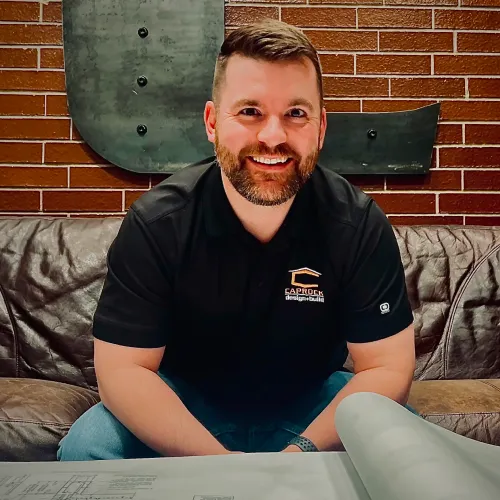
Jordan Duggan | Caprock Design + Build.
Places You Can find us




We think you’d also like this
podcast
Nov 16, 2023Creating an identity: Why your brand is more than just a name
Listen to the full episode to hear about the power of your brand and how it impacts your qualified leads and the overall client experience.

How to build your construction brand with video
Lights, camera, action! The power of video marketing is undeniable. To harness some of that power for your construction company, follow these three steps.
10 ways to improve residential construction project management
Keep your residential construction projects on task and organized with Buildertrend’s project management software.