




Building homes, changing lives: The power of giving with Habitat for Humanity
On this episode of “The Building Code,” Zach and Charley are joined in studio by Kyler Goodwin, senior construction supervisor, and Drew Lier, construction director, at Habitat for Humanity of Omaha. Habitat for Humanity is a nonprofit organization that helps people in communities around the world achieve homeownership through building, renovating or mortgage preparedness. Kyler was born and raised in the Omaha area, got his construction management degree and has been working for Habitat for over eight years. Drew worked in high-end commercial and residential construction before making a change to work at Habitat, where he’s been for eight years.
Tune in to the full episode to hear more about Habitat for Humanity, their mission and their contributions to communities in Omaha and across the U.S.
Can you share about how volunteers make a difference?
Kyler: “I think our approach to how we partner and engage with volunteers has really kind of evolved over the years. We’re able to re-engage volunteers in a way where we can recognize at what points in the building process we can use eight to 10 extra hands to help. We’ve really been able to kind of chop it up in different ways and make sure we’re maximizing the contribution of each volunteer, whether they’ve got no experience at all or they’ve been working in the industry for 30 years.”
Drew: “Just to jump on the back of what Kyler just said, I think what’s more impressive about the fact that there are unskilled volunteers every day on our job sites is the fact that Kyler and the team are able to deliver a house from start to finish in 90 to 120 days. From the time we dig a foundation to when a family can purchase that home, it’s 90 to 120 days, which is pretty incredible when you compare that to the for-profit side. It’s a testament to the staff we have and their leadership qualities on site.”
What are some ways builders can get involved and give back to their communities?
Drew: “I think whether you’re in a large municipality or you’re in a small town, there’s a Habitat affiliate probably within 50 miles of where you live. Having skilled labor out on job sites is a huge blessing for a lot of those smaller Habitat affiliates as well. For us, we love having any involvement from the for-profit development world of construction. We have a lot of really great healthy partners that it’s a great opportunity for people if they have a lull in work and they need something for their people to do. Send them to do that, instead of laying them up for a week.”
Kyler: “We get a lot of questions from industry professionals that are saying, ‘Hey, let me know next time you’re framing a house. I’d love to come out and help with that.’ And really at any given time, we’ve got between 20 to 30 projects going, so there’s not a time in the year where we’re not framing multiple houses at the same time. So, just helping to educate everybody that, if you want to get involved, and even if you’re more apt toward a particular area of construction that you want to help in or send your employees out to help with, we can usually accommodate. We’ve got it all going on at all times.”
Links and more
Get involved with Habitat for Humanity of Omaha or look for opportunities in your area by visiting Habitat’s national website.
Learn more about Home Journey, Habitat’s mortgage preparedness program.
Scheduling is the first step to a successful project for Cardinal Crest Homes, a business that’s making eight-plus figures a year. Download this free scheduling milestone template to simplify your project planning process.
Related content:
Tune in to the last episode to learn more about what content marketing is and how to implement strategies that fit your construction company’s needs and goals.
Subscribe here, and never miss an episode.
Got podcast topic suggestions? Reach out to us at podcast@buildertrend.com.
The Better Way, a podcast by Buildertrend:
Looking to add construction tech to your daily processes? On the newest season of “The Better Way, a podcast by Buildertrend,” you’ll get best practices for implementing software and getting your team on board from other industry pros and our experts. Subscribe and stream today wherever you listen to podcasts.
Follow us on social:
Listen to “The Building Code” on YouTube! And be sure to head over to Facebook to join The Building Code Crew fan page for some fun discussions with fellow listeners.
Zach Wojtowicz:
What’s up, everybody? I’m Zach Wojtowicz.
Charley Burtwistle:
And I’m Charley Burtwistle.
Zach Wojtowicz:
It’s “The Building Code,” and today we’ve got in-person guests.
Charley Burtwistle:
Which is always our favorite.
Zach Wojtowicz:
If you’re on YouTube, that’s why we’re sitting there.
Charley Burtwistle:
That’s like the pro-tip. That’s how you know.
Zach Wojtowicz:
You know before 15 seconds early before we pan over, but we’re very excited to be in person. We have a couple of great guests today. Kyler, Drew, welcome to “The Building Code.”
Kyler Goodwin:
Yeah, thanks for having us.
Charley Burtwistle:
We always ask, well, I’m starting more and more. First time on a podcast or veterans? Veterans is more than once.
Kyler Goodwin:
First time. First time on any podcast.
Zach Wojtowicz:
Yeah?
Drew Lier:
This is my second or third time.
Zach Wojtowicz:
Oh.
Drew Lier:
I would hardly call myself a veteran.
Zach Wojtowicz:
I sensed some confidence.
Drew Lier:
Yeah, no. We’re not going there.
Zach Wojtowicz:
Yeah, we can always tell in the studio who’s the newbies or who’s like, “Ah, I got this.” Scripts. We don’t need that. What are the questions for anyway? Well, you two are from Habitat for Humanity, which is a well-known name, so no real introductions about Habitat for Humanity, but for you, tell the listeners who maybe don’t know, what do you guys do in the construction industry with Habitat?
Kyler Goodwin:
Yeah, go ahead.
Drew Lier:
Yeah, so Habitat for Humanity, we build homes, we renovate homes, and we work in the community to help people in the community get a hand up, not a handout, is how we like to call it. People that may not have access in the open market to achieve home ownership or to get critical repairs done on their homes. We basically, provide access for those members of the community to come to us, enroll in our program. There’s lots of things that they have to do to show they’re willing to really partner with us, but we basically provide that avenue for home ownership and stability in a home environment that people may not otherwise have access to.
Zach Wojtowicz:
And I was just going to say, it’s an amazing mission, obviously with home affordability. You hear in the news a lot and low inventory, so there’s a lot there. We were just talking before we jumped on that you guys are crazy busy. How many remodels at homes are you guys doing in the Omaha community?
Kyler Goodwin:
Yeah, so on an annual basis we slice and dice it a little bit different. Total number of homes that we’ll do and complete this year for families to occupy and purchase is around 64 houses. That includes all of our new construction activity, all of our light-touch renovations, and then full gut rehab houses as well, so that feed that total.
Drew Lier:
And then one of the things that’s not captured in that 64 that Kyler mentioned is getting access for people to homes. So, whether it’s our inventory that we’ve built and renovated, we do that, but one of the other exciting things we do at Habitat is we work with individuals to get them mortgage ready, so they can access homes on the open market, purchase those, whether it be through us as their financial agency or through a traditional financial agency.
Charley Burtwistle:
Gosh, that’s awesome. Yeah, like Zach said, incredible mission. Also, Habitat very prominent in the Omaha community, giving back in multiple other ways as well, so very fortunate to have you guys in the office today. Another question that we always love to ask is how did you guys individually get your start in the construction industry?
Drew Lier:
Yeah.
Kyler Goodwin:
Yeah. I have been with Habitat a little over eight years now. I am born and raised in the Omaha area, went off and got a construction management degree and came back to Omaha and had applied to work at the Restore. We’ve got two restore locations in the area if you’ve ever been to those, open to the public retail locations for lots of different things, and the manager there said, “You’ve got a construction degree. Are you sure you don’t want to work for our construction department?” I said, “You have a construction department? What are you doing in that?” Got an interview there and I started out on site leading volunteers, and then kind of just slowly worked my way into some more kind of project management roles. And then, I’ve been the senior project manager for the past two years there. It’s been really enjoyable, a really kind of cool connection to get through to Habitat that way. A lot of people will see our public facing things and then get connected to it that way.
Drew Lier:
Yeah, I’m just going to say this of Kyler, too. When Kyler started at Habitat, came straight from college, very young man, still trying to figure out, and Kyler really kind of keeps the rubber on the road for all of our activity that we have from a day-to-day operation standpoint, too, and that’s one of the exciting things that drew me probably to Habitat, not knowing this when I first came on, but I came from the construction world, worked for high-end commercial residential builders for custom home opportunity. I always worked around construction when I was in high school and college, and then my wife’s situation with her career changed, which meant I had a little bit more freedom to pick and choose what I wanted to do and applied to Habitat on a whim, and then that’s been eight years ago now.
Zach Wojtowicz:
Wow. That’s awesome. I know Kyler and I met at the Builder Bond where we talked quite a while. Kyle’s quite the handyman. He’s out here making his own furniture, building his own house. I was like, “Wow, I am an absolute loser, actually.” I can’t do any of this stuff.
Kyler Goodwin:
I keep busy.
Zach Wojtowicz:
Yeah. I was like, “Can you teach me? Can we hang out?” I need to pick up these skills. I’m starting to be a little jealous here. You’ve got a lot going on at Habitat. We’ve covered what you’re looking at. When you entered the construction industry, did you have a desire to be in the nonprofit space or is that just what came to you later?
Drew Lier:
Yeah, I’ll say for me, I did not. I was in the for-profit side of things for a lot of years. One thing I always valued was relationship and interaction with homeowners or potential homeowners or clients or however that may look, and one of the things at Habitat that has kept me there is the innovation that continues to occur, of how do we provide more access? How do we do more for the community that we all live in, whether you live in West Omaha, South Omaha or Northeast Omaha, how do we do more? I’ve always loved the opportunity to be innovative in that regard and watch people grow and thrive, whether it’s the families that we serve or individuals that are coming to us for internships that are with us five years after the fact. My intention was not to join the non-profit world. I think what keeps myself and a lot of people in that sector is seeing the good work every day and the feel good that comes along with that.
Kyler Goodwin:
Yeah, definitely. I think I had that kind of notion from when I was young that I knew I wanted to do something in the community that was giving back that wasn’t just dollar driven, and attending the first home dedication at Habitat where a family is getting handed the keys to their house just really solidified it for me. It was just so fulfilling, and I knew it was a great place to be.
Charley Burtwistle:
Yeah, that I genuinely can’t imagine, but what an incredible feeling, an incredible mission as you guys have talked about. Kyler, I think you mentioned that you oversee volunteer work. Could you talk a little bit about that as well? I know Buildertrend has …
Zach Wojtowicz:
I feel like we’re supplying a steady state of people who cannot actually build, and we’re using Habitat to be like, “Hey, we got to get handy,” like we were a contractor, so it’s like a real thorough internship.
Kyler Goodwin:
We’ll train you. No, that’s a great point. Volunteerism is really a big part of what makes Habitat, Habitat, and shout out to Buildertrend for being a sponsor with us and sending out volunteers to work on job sites. It’s really one of Habitat’s biggest assets and can also be one of Habitat’s biggest challenges, is how do we manage a production home building environment and schedule when the majority of our workforce is typically unskilled volunteers. We’ve got volunteers that are all across the range from season trade professionals that are coming nearly every day to volunteer with us or once a week at least, to corporate groups that are coming out maybe once a year. It can be kind of difficult to navigate. How do you keep to a schedule when you’re not sure? You might have some Zach and Charleys showing up to swing a hammer in the morning.
Charley Burtwistle:
Yikes.
Kyler Goodwin:
And you got to get something done, but no, it’s …
Charley Burtwistle:
Go hold that.
Kyler Goodwin:
Dig a hole here. Now, fill it in. No, but we’ve really, I think our approach to how do we partner with and engage with volunteers has really kind of evolved over the years and COVID was something that really kind of forced us a little bit to re-evaluate how we do that. We were able to kind of come out of that and start to re-engage volunteers in a way where we could recognize where and at what points in the building process could we use eight to 10 extra hands to help with this, that or the other, and then what points does it make sense for us to maybe relax a little bit with that and have our skilled staff do these parts?
We’ve really been able to take that and kind of chop it up in different ways and make sure that we’re maximizing the contribution of each and every volunteer, whether they’ve got no experience at all or whether they’ve been working for 30 years in the industry. It’s a huge help to Habitat, and it’s always our goal and our field staff’s goal to get more done in any given day than they could by themselves. Even if they’ve got people that need to be taught what a hammer is in the morning, then we still want to get more done that day than we could have by ourselves, and we do a pretty good job of it, I think.
Drew Lier:
Just to jump on the back of what Kyler had just said, I think what’s more impressive about the fact that there are unskilled volunteers every day on our job sites is the fact that Kyler and team are able to deliver a house from start to finish in 90 to 120 days. From the time we dig a foundation to when a family could actually purchase that home, it’s 90 to 120 days, which is pretty incredible even when you compare that to the for-profit side. It’s a testament to the staff that we have and their leadership qualities out on site. Again, just we’ve done some things in-house, too, where we want to control more of our schedule, too, where we rely on our own in-house MEPs to perform certain activities such the main one being plumbing.
We do a lot of our own utility and rough in work on the MEP side of things. That just helps us control and compress that schedule even more. I think the other thing with the volunteer numbers, it’s allowed us, Kyler had mentioned it, COVID allowed us to have a breath to step back and kind of revisit how we engage volunteers on active job sites because at the end of the day, we want it to be a valuable experience for you individuals, too, so you’re not digging a hole and refilling it or picking nails up out of the yard for the fourth time. We want that to be impactful, so that people see that work and the effort that everybody’s putting in and what homeowners are doing to become homeowners.
Zach Wojtowicz:
That’s really funny. I did a Habitat my first year at Buildertrend, and the last two I’ve done have felt more difficult or more like, oh, I’m actually working on this house.
Kyler Goodwin:
That’s the goal.
Zach Wojtowicz:
And it gave me a lot of appreciation. It also made me think, if I was a subcontractor, was using Buildertrend, the last thing I would want to do is upload daily logs after the day, which then created this whole other pain point of how do I convince people to want to use our software more when they were just like, I just did eight hours of work. The last thing I want to do is send pictures, but it was a really great experience the most recently one because I wanted to learn how to frame, and that’s what we did. It was awesome. It was so much fun. Go ahead.
Charley Burtwistle:
I was going to say, that has to be a really interesting skillset you’ve developed. I can’t imagine that was taught in construction management degree, is how to manage volunteers. How has that, you said you’ve been at Habitat eight years. How has that experience been for you, not just learning how to build a house, which obviously you knew how to do, but learning how to teach other people how to build a house?
Kyler Goodwin:
Yeah, I think there’s a lot of people that have one or the other of those skills, and we’ve, at Habitat, really had to be careful with who is a good fit for the team, knowing that there are a lot of people out there less and less unfortunately, that know how to build a house or know how to nail some boards together, but do they have the skills to teach that every single day to somebody new? It can be a challenging thing to do, but really, really rewarding when you take the time to spend with somebody and show them how to do something they didn’t know how to do before, and they take pride and ownership in that, and then they go, and they’re able to take that and replicate it.
It’s a really neat thing to see. I’ve seen a lot of examples of that from, whether it be family partners in our program that are working towards their own house that are learning how to do something they didn’t know how to do before, or I’ve even seen it work the other way, too, where I’ve learned or someone has pointed out to me like, “Hey, is that supposed to be that way?” And I’m like, “Oh, you’re right. You barely know how to read a tape measure and here you’re showing me up in terms of,” they just have a different perspective on things because not doing this day in and day out. It’s really neat. You’ve got to have a lot of patience, but it can be really fulfilling and rewarding for everybody involved.
Zach Wojtowicz:
I’m thinking about the scenario you mentioned of having someone who doesn’t know anything and then the guy who’s been in the industry for 30 years. Does that happen? Do you get people that?
Drew Lier:
Yeah, I think one of the hardest things that we have to do is field and hire those positions, and that’s one of the great things, too, about our team. We have really low turnover when you look at what the construction industry does.
Zach Wojtowicz:
Yeah, for sure.
Drew Lier:
Our crew leads, our site supervisors have been with us for some time. A lot of them have transitioned from internship roles into full-time employees, which is great. It’s perfect for Kyler and team to be able to have those individuals on a part-time basis. You can get a feel for what the attitude and what the ability is going to be there, and then they end up being long-term, full-time employees, which is great for us. But yes, there are a lot of very skilled people out there that may hate the idea of having to teach somebody new every day, something new every day, so that’s a challenge. We’ve had people that have had excellent experience, 30 years as a framer and within a week they’re like, I am going to lose my mind if I have to continue to do this.
You just never know. I think it goes back to, again, the styles that people have in the groups. The groups are what provide the energy and the life to habitat and what our mission and objectives are a lot of times, and some groups you get that are very skilled, and you get a lot of guys that know exactly what they’re doing, and you can get a whole house framed in a day. Other people, it may be their first time on a job site. I think you kind of get both of them, and the team gets a little bit of a reprieve now, so they’re not every day of every week, that site supervisor has a new group of new people every day, so that helps significantly as well.
Charley Burtwistle:
Obviously, we’ve talked a lot about volunteers out there for the first time learning what a hammer is, but you also mentioned you have very skilled trade professionals and other people come out to volunteer, too. We have a pretty decent sized builder audience that listen to this. What are some ways that they can get involved not just with Habitat, with their communities and help give back?
Drew Lier:
Yeah. Yeah, I think whether you’re in a large municipality or you’re in a small town, there’s a Habitat affiliate probably within 50 miles of where you live. Having skilled labor out on job sites is a huge blessing for a lot of those smaller Habitat affiliates as well. For us, we love having any involvement from the for-profit development world of construction. We have a lot of really great healthy partners that it’s a great opportunity for people if they have a lull in work, and they need something for their people to do, and they don’t want to send people home for a week and say, “Hey, you’re not getting paid this week. There’s nothing for you to do.”
Send your people to go do that, instead of laying them up for a week. If there’s gaps between when one schedule’s going to start or a project’s going to turn and you got some gap, send people out to just be out there. It’s a really good opportunity. I think you two can probably speak to it a little bit more than we can. For team building, too, so just comradery and collaboration with people you’re around all of the time doing the same mundane task. I think those are all ways. And then of course, I’d be remiss if I didn’t mention monetary. There’s always, as nonprofits with the rising cost to construct and developed land and what labor rates are doing, there’s always the monetary route as well.
Kyler Goodwin:
Yeah, definitely. We get a lot of questions sometimes from industry professionals that are saying like, “Hey, let me know next time you’re framing a house. I’d love to come out and help with that,” and really at any given time, we’ve got between 20 to 30 projects going, so there’s not a time in the year where we’re not framing multiple houses at the same time, so just kind of helping to educate everybody that, if you want to get involved, and even if you are kind of more apt toward a particular area of construction that you want to help in or send your employees out to help with, we can usually accommodate. We’ve got it all going on at all times.
Drew Lier:
I think one of the other great opportunities for contractors as well as a lot of, our concrete guy, our foundation guy, they do a lot of work with us, and they also do gift in kind, which is, “Hey, I’ll rough this house in for free. This is donated. I’m not charging you guys for this rough in. I’ll give you one of those a year.” We have other people that aren’t even subcontractors of us that want that same arrangement, so roofing contractors, siders that are like, “Hey, I want to donate a roof every year to you guys.” We’ll plug them in accordingly based off of our schedules and utilize them in that way, too.
Zach Wojtowicz:
That’s so cool. I want to also talk about a topic you brought up, which is the mortgage preparedness program. Has Habitat always done that, or is that a newer thing that you guys have folded into your buyer experience?
Drew Lier:
It’s something new for us to access and serve more families. We know that as Habitat, we alone aren’t going to be able to scratch the surface for the housing crisis, whether it’s affordable or just housing in general. Contributing a hundred houses a year is great and pretty incredible, but it doesn’t touch the surface of people that need assistance or help. One way for us to touch more families without physically handling more property is to get them mortgage ready and prepare them for a purchase, and an acquisition on the open market.
Inventory is still really difficult to come by as you look at what is affordable, and you’re starting to see that affordability touch more people than it ever has. For a lot of years, everybody always focused affordable housing on that 30% to 80% AMI range, and now you’re seeing it more on that 30% to 140% AMI range, so you’re starting to see more teachers negatively impacted, more nurses, just a lot more people are being touched by the crisis of housing, and what is truly affordable. I think there’s been a new open-mindedness around it as well, and for us, that program, which we call Almost Home, is just another appendage that we can serve and optimize and leverage Habitat’s brand to get people access to housing.
Zach Wojtowicz:
Is this something that other chapters are also doing, or is this something that the Omaha market started?
Drew Lier:
Yeah, so there’s a couple other affiliates that do it as well. I’d lie to you if I gave you a number because I’m not exactly sure who. I know we’re one of the first few to do it and roll it out. We’re our own CDFI as well, so we act as our own banking and financial institution.
Zach Wojtowicz:
Wow.
Drew Lier:
We have a lot of banking partners that fund our mortgage capital for the year that allow us and provide that opportunity for families.
Zach Wojtowicz:
That’s amazing. It’s all tied together. It’s like not just building, but how do you manage your finances? How do you actually get into the house and live your life? And income security is part of that.
Drew Lier:
Agreed.
Zach Wojtowicz:
That’s awesome. We’re kind of coming up on time, so I want to give you guys an opportunity. Do you have any favorite memories of working in the nonprofit community that you’d like to share with our listeners?
Drew Lier:
Yeah.
Kyler Goodwin:
Yeah. I think some of my fondest memories are in my early years of Habitat being out on the job site. I’ve been out on job sites with some of our church coalitions, sending out members of their congregation to work alongside individuals from the community correctional center that are out there to work, alongside families that are in the program working toward their own house, alongside the HVAC guy that’s working on that Saturday that’s donating the entire HVAC system to this house. Everybody out there all at once, and then the church community bringing food for everybody to feed on the job site, and those crazy, hectic days and moments are some of my fondest memories.
Just seeing all the interactions, everybody’s there working toward a common goal. Those are some of my favorite memories to see what does that community transformation look like on the ground level? Even the neighbors in the areas that we’re working in, coming out to talk and to give us history of the neighborhood and express that they’re happy that we’re here because they’ve lived there for 40 years or more, and they’re really happy to see kids coming into the neighborhood, and people taking pride in ownership in their homes and in their communities, so that’s what’s been really cool for me to see, I think.
Zach Wojtowicz:
That’s awesome.
Drew Lier:
Yeah, picking just one memory is probably tough for me, but just the overarching feeling that I get when I hear people say it all of the time when you’re at their home dedication or when they’re at our office for their closing opportunity is, they were provided an opportunity that they thought they would never have, and that’s pretty incredible. That’s pretty special. When that’s a consistent message that you’re seeing in people’s lives and how it can transform them and their family’s lives. That’s the power of it for me. The personal nuance in all of the other individual stories are there, too, but that’s probably the most consistent one that is resonating on a weekly basis in our building or out on job sites.
Charley Burtwistle:
Gosh, just incredible. Thank you guys so much for coming in. I know when Zach and I go back to our desks after this, we’re definitely going to be more motivated, so appreciate that, guys, and always welcome back and to come on as guests again. You can have your second ever podcast after this.
Zach Wojtowicz:
We’ll make you a veteran.
Charley Burtwistle:
Then you’ll be in no time.
Drew Lier:
There we go.
Zach Wojtowicz:
I got way better at my third habitat than the first two.
Kyler Goodwin:
There you go.
Zach Wojtowicz:
It’s the same thing with podcasting.
Drew Lier:
Now that you have to actually work, you never come back out ever again.
Zach Wojtowicz:
That’s right. I was like, ooh, yeah.
Charley Burtwistle:
We crossed the threshold.
Zach Wojtowicz:
I got a medical exemption. They said I can’t frame houses.
Kyler Goodwin:
Hey, we got a finish crew. Hey.
Zach Wojtowicz:
Oh. Oh, dang. That sounds awesome.
Drew Lier:
All right. Thank you guys for having us. Appreciate it.
Zach Wojtowicz:
Thank you guys so much, and thank you for what you do in our community.
Drew Lier:
Absolutely.
Zach Wojtowicz:
Truly, it’s really special.
Drew Lier:
Yep.
Zach Wojtowicz:
All right, everybody, well, another great episode of “The Building Code.” Charley, it’s good to see you, man.
Charley Burtwistle:
Good to see you, too.
Zach Wojtowicz:
Any closing thoughts before we close it out today?
Charley Burtwistle:
No. We had a great episode. Thank you guys, again, very much for coming in. Everyone listening, make sure to like, review, subscribe, and we’ll see you next time. I’m Charley Burtwistle.
Zach Wojtowicz:
I’m Zach Wojtowicz. Thank you.
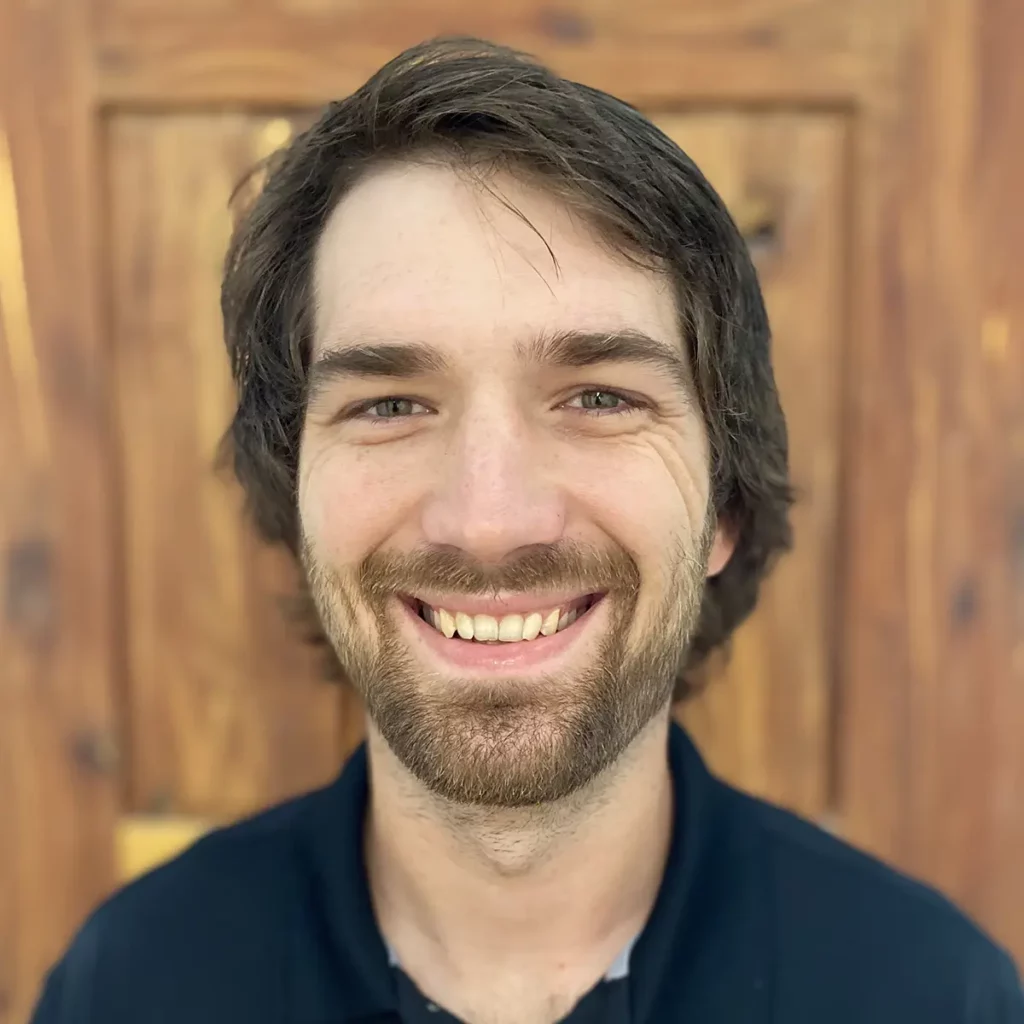
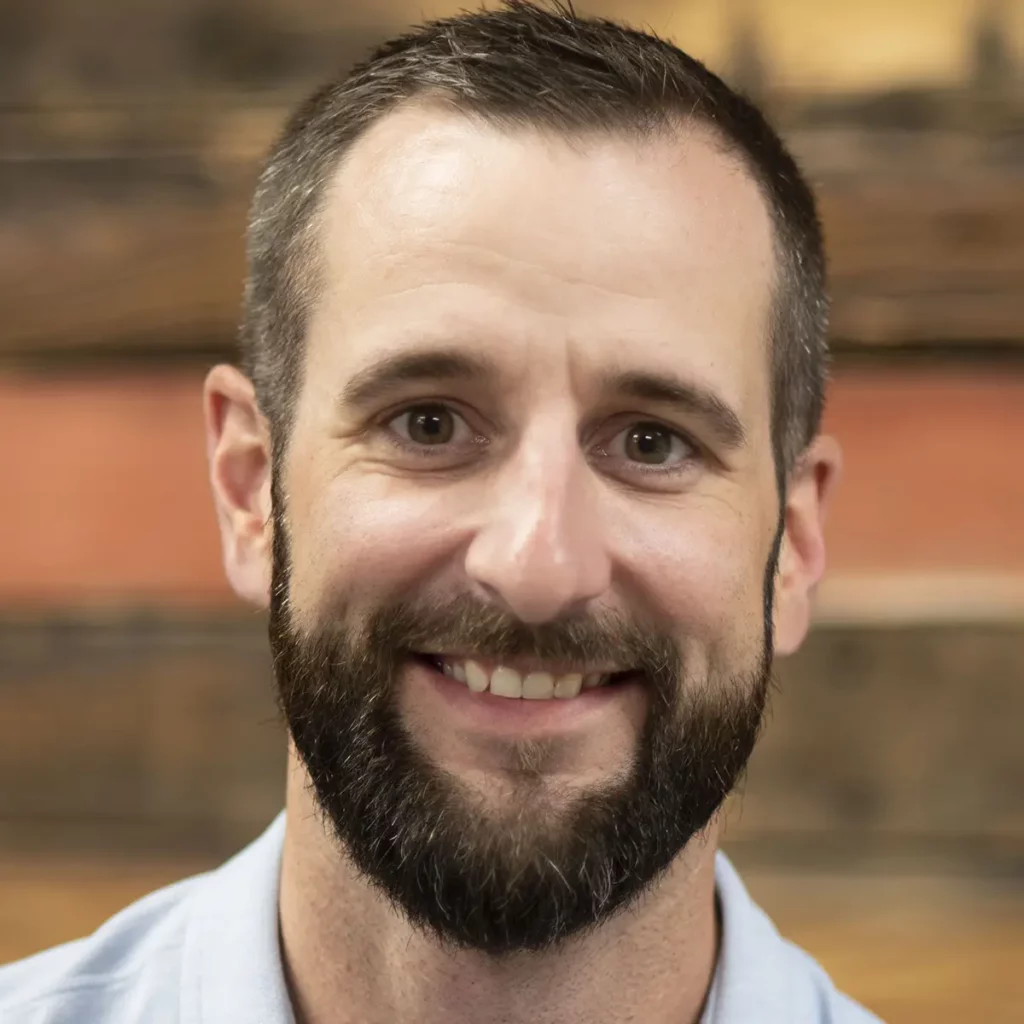
Kyler Goodwin and Drew Lier | Habitat for Humanity
Places You Can find us




We think you’d also like this
podcast
Dec 15, 2022Doing more good: How giving back can bring your construction team together
Tune in to the full episode to hear more about the importance of managing your construction team with grace and how to prioritize giving back to your community.
podcast
Jan 6, 2022Scaling a nonprofit to do more good with tech
Listen to Lynette Farthart share how construction project management software helped a nonprofit better serve seniors and support fundraising.
podcast
May 23, 2019Habitat for Humanity of Omaha
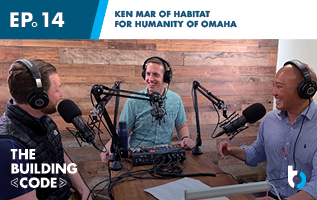
On this episode of The Building Code, we’ve got Ken Mar from Habitat for Humanity of Omaha. Habitat for Humanity of Omaha has been around since 1984, Ken has been a part of their team since 2010.