Economic and industry news or trends
2025 builder outlook: Economic pressures the construction industry can’t ignore

Our in-house economic expert is back with an important update. As we move through the second half of 2025, Buildertrend staff applied scientist Mathieu Dubeau, Ph.D., breaks down the major trends shaping the residential construction landscape. From interest rates to inventory shortages and commodity prices, here’s what builders need to know to navigate today’s evolving housing market.
Ask many builders on the job site, and they’ll tell you: business feels both busy and sluggish right now. Some projects are moving. Others are stalled. Leads are coming in – but fewer are converting. It’s a confusing time to be in construction, and for good reason.
For the first time in five years, home sellers outnumber buyers by a striking 34%. It’s the widest gap in over a decade. But here’s the catch: both buyer and seller activity are down overall.
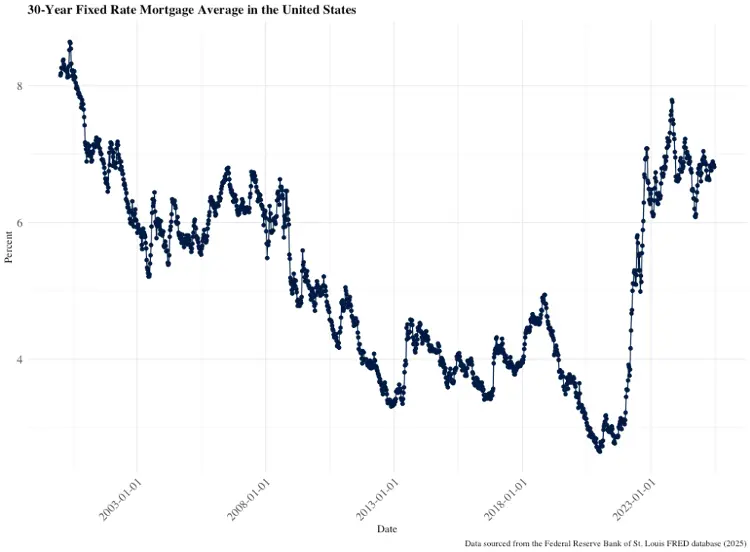
Meanwhile, mortgage rates are hovering near their highest levels of the 21st century. You’d have to go back to the early 2000s to find comparable rates.
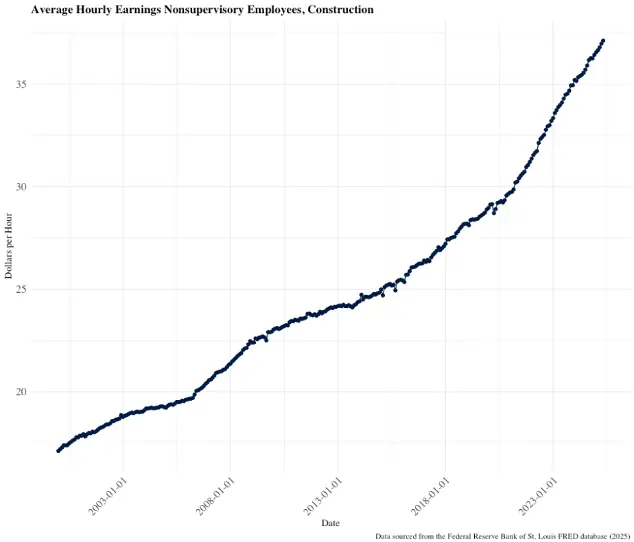
Then there’s the issue of tariffs. Globally, the threat of new tariffs continues to push material prices higher. Lumber is now 26% more expensive than it was in June 2023. And if you were hoping for relief on the labor side, think again – average wages for residential construction workers hit a new record high in May 2025.
In short: The cost to build and buy a home keeps climbing, while housing affordability remains historically low. And yet, despite these headwinds, the U.S. is still grappling with a major housing shortage. That’s the paradox builders are up against.
So what does this mean for residential construction professionals heading into the second half of 2025?
Let’s break it down.
A market shift driven by demand, not supply
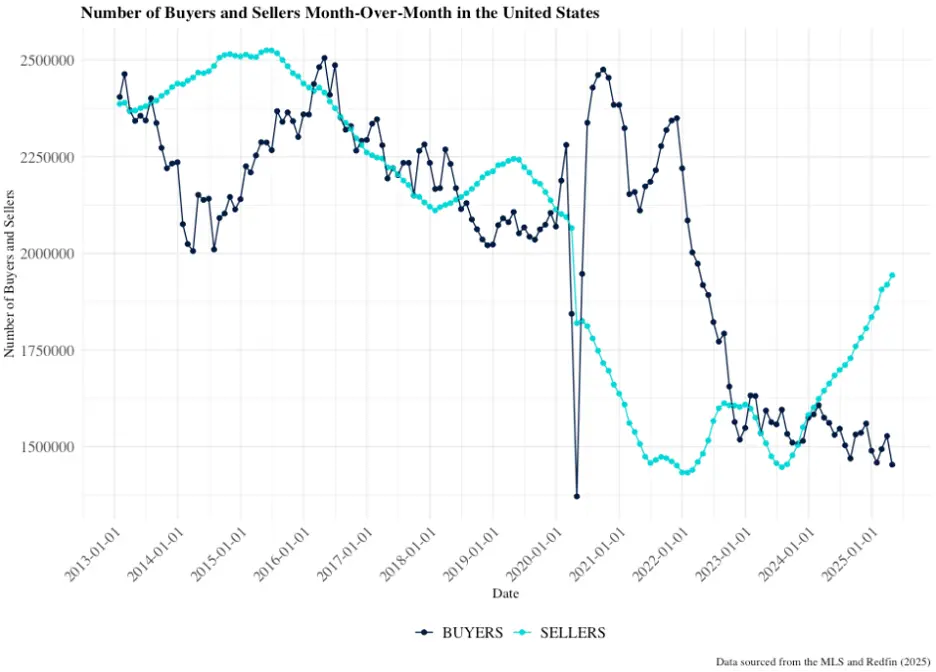
While it’s true that sellers now outnumber buyers by a considerable margin, that doesn’t tell the full story. Active listings are still well below pre-2020 levels. The bigger shift has been on the demand side, where buyer activity has dropped sharply due to:
- Soaring mortgage rates
- Persistent economic uncertainty
- Declining affordability
In other words, the current shift isn’t driven by a flood of new listings, but rather by a pullback in demand. The result? Homes are sitting on the market longer. Price reductions are more common. And regional differences are widening:
- Texas and Florida: Inventory has rebounded and even exceeded pre-pandemic levels in some cities.
- West and Northeast: Recovery is slower, and supply remains tight – with affordability issues compounding the challenge.
The troubling reality is this: the regions most affected by the housing affordability crisis are also the least likely to see relief anytime soon.
How high mortgage rates are slowing homebuilding in 2025
The average 30-year fixed mortgage rate is hovering around 7%, pricing many potential buyers out of the market or pushing them to wait it out. Even just a 1% increase in interest rates can add hundreds of dollars to a monthly mortgage payment. It’s not just buyers who are feeling the pinch.
What’s happening:
- For builders, that means fewer qualified buyers are coming through the pipeline – and more deals are stalling mid-process. That adds pressure across the board, from slowing job starts to increasing the cost of customer acquisition.
- Many sellers are staying put, having locked in low rates during the pandemic and reluctant to take on significantly higher borrowing costs.
- This rate lock-in effect is limiting turnover and keeping homes off the market.
- Again, where you’re building or buying makes a difference. In high-cost areas, like the West, trading up simply isn’t financially feasible.
Construction material and labor inflation: What’s squeezing builder margins in 2025
A year ago, framing packages that cost around $30,000 are now inching closer to $38,000. And that’s before labor. Across the country, builders are watching costs rise from all sides. Material quotes expire quicker than ever, subcontractors are booked out further and every delay or price hike chips away at already-tight margins. What’s this all lead to? A building environment where every estimate feels like a moving target.
Key factors:
- Tariffs on steel, aluminum and lumber are pushing up commodity prices.
- Lumber in particular has surged 26% year-over-year due to both global supply pressures and domestic demand
- The construction industry is facing a persistent worker shortage, and wages have climbed to record highs. The average construction worker earns more than ever before with pay up 28% since 2020.
Why It matters: Whether you’re running a custom home build or managing multiple residential remodels, staying profitable in this environment takes precision. With higher prices for everything from lumber to labor, even minor delays or budget overruns can cut deep into margins – rising input costs and declining affordability for buyers. The truth of the matter is managing margins is harder than ever.
What’s causing the 2025 housing shortage? A look at supply-side constraints
Perhaps the most puzzling element of today’s market is that, despite slowing demand, the U.S. still faces a housing shortage – estimated by some analysts at 3 to 4 million units.
Especially in high-growth metros, supply can’t keep up with demand. Contributing factors include:
- Higher costs for labor and materials
- Zoning restrictions
- Permit delays
The result? Prices in many markets remain elevated even as fewer people can afford to buy, simply because there aren’t enough homes to go around. Until this supply gap is addressed, affordability is unlikely to improve in a meaningful way.
How builders can stay competitive in a disrupted housing market
The U.S. may be facing a housing shortage of 4 million units, but construction companies can still get ahead and thrive – it’s all about building smarter, faster and more efficiently.
Maintaining a competitive edge in this environment requires embracing technology, building cost-saving partnerships and operating with discipline. Tools like Buildertrend are not just a nice-to-have – they’re necessary strategic assets to navigating this complex moment in housing.
Here are five ways residential contractors can conquer the 2025 housing market:
Accelerated project delivery through streamlined management:
In a market that urgently needs more housing, speed matters.
Buildertrend offers a centralized platform to manage every phase of a project – from scheduling and permits to daily logs and completion timelines. By streamlining workflows and reducing administrative friction, builders can complete more homes, faster – meeting demand without sacrificing quality.
Better collaboration in a fragmented workforce:
With labor still tight and subcontractor availability inconsistent, strong communication is critical. Buildertrend’s real-time messaging and document sharing improves coordination between general contractors, trades and clients. This reduces delays, improves accountability and helps keep crews aligned – even across multiple job sites.
Improved cost control in a high-inflation environment:
From lumber to concrete, material prices remain volatile. Buildertrend’s financial tools help teams track every dollar in real time – preventing budget overruns and identifying cost-saving opportunities early. Builders can manage invoices, change orders and customer payments in one place – ensuring tighter control over project finances.
Smarter decisions backed by real-time data:
Buildertrend Business Insights enables companies to track KPIs across projects – helping them spot inefficiencies, forecast trends and make data-driven decisions. With housing affordability at record lows, the ability to optimize processes and reduce unnecessary costs is not just helpful – it’s essential.
Lower material costs through strategic supplier partnerships:
Final word: Volatility is the new normal
The current housing market is caught in a complex bind: supply appears to be growing relative to demand, yet both remain historically weak; mortgage rates and material costs are rising, yet construction still lags behind what’s needed to close the national housing gap.
These opposing forces create a market that is simultaneously cooling and overheating – cooling in terms of transaction volume and buyer engagement, overheating in terms of prices and production costs.
For policymakers, builders, and buyers alike, the takeaway is clear: Solving the affordability crisis will require more than just rate cuts or tax incentives. It will demand long-term investment in housing infrastructure, zoning reform and a more stable policy environment that supports both supply growth and cost control.
This moment demands creativity and long-term investment. Smart builders who embrace innovation, tech and cost-efficiency will be best positioned to weather the volatility – and help lead the market toward greater stability.
Based on what you just read, we think you'd enjoy...
These suggestions are made by our team to help you find builders and stories that you relate to!
Back to all blogs