




The Building Code: Year in review
On this special episode, we revisit some of our favorite moments over the past year to celebrate the one-year anniversary of The Building Code! Thank you to all of our guests and listeners who have been a part of this journey. We couldn’t have done it without you. ‘Preciate ya!
Featured Episodes
Latest and greatest in construction in Australia: Beyond Build Constructions | Episode 12
How solar energy is impacting the industry: Ipsun Solar | Episode 18
Building science: Matt Risinger | Episode 20
Behind the scenes with Tad Starsiak of Good Bones | Episode 28
Improving work culture with Rob Carlisle: Carlisle Classic Homes | Episode 39
I quit Buildertrend with Ryan Hay Oakman Building Company | Episode 46
Live from IBS with Brad Leavitt: A Finer Touch Construction | Episode 51
Live from IBS with Nick Schiffer: NS Builders | Episode 52
Links and more
Subscribe here, and never miss an episode.
Got podcast topic suggestions? Reach out to us at podcast@buildertrend.com.
The Better Way, a podcast by Buildertrend:
Looking to improve how your team plans projects with the top residential construction management platform this year? Pick up Buildertrend project planning pro tips on the newest season of “The Better Way, a podcast by Buildertrend.” Subscribe and stream all six bingeable episodes on your favorite listening app now.
Follow us on social:
Listen to “The Building Code” on YouTube! And be sure to head over to Facebook to join The Building Code Crew fan page for some fun discussions with fellow listeners.
Tom Houghton:
Hey, hey, hey Building Code listeners. “The Building Code” is one year old now. We’re so excited to celebrate this milestone with you. I’m Tom Houghton.
Paul Wurth:
I’m Paul Wurth.
Tom Houghton:
We thank you so much for listening and tuning into our podcast. Of course, dropping every week to your phones, devices, wherever you’re listening. Every Thursday. Don’t miss an episode. Don’t forget to rate, subscribe and like our podcast. Again, we appreciate everyone who’s been a part of “The Building Code” for this past year. All of our listeners and guests, and we thought what better way to celebrate one year than to take a look back at some of our highlights from the last year. So we’ve got clips from 10 episodes coming at you and we’ll kick it off here with Episode No. 1, where we started at all with the founders of Buildertrend. That’s right. Steve Dugger, Jeff Dugger, and Dan Houghton. So take a listen to this clip and hear from Steve Dugger who shares his thoughts.
Steve Dugger:
The lesson learned is recessions are actually a great time to build a business, because to Dan’s point, if you do things right and you do put your foot on the gas in sales and developing your product, you can really emerge as a leader when your competitors are taking the foot off the gas.
Tom Houghton:
Sure, definitely. Yeah. If you want to hear more about the origins of the podcast and the origins of Buildertrend, make sure you check out episode one. Our next clip comes from the first recording that we did live at Buildertrend University. This was back in March, 2019, and here’s a clip from Episode 6, with Brown Haven Homes.
Speaker 3:
So the first time I visited Buildertrend with Brad, we were actually about to change CRM systems, because we thought that one of the other two that we were looking into offered a lot more options than what Buildertrend could do and we needed those options. After my first day here, Brad and I were sitting on the Buildertrend patio, we were both sitting with our beer and I called John. And he said that we sounded like kindergarteners. We were just so giddy and so happy and I told him right there on the phone, the first thing I said was, this place is awesome and we’re not changing CRM systems. And he was like, “What do you mean we’re not changing CRM systems. You said that these ones do all these great things.” And I said, “Well, guess what?” And he said, “What?” I said, “Buildertrend does too. We just didn’t know it.”
Tom Houghton:
Yeah. We have a ton of great companies that come visit us every month at Buildertrend University. We had no shortage of them that first time we were recorded. So we wanted to share in another clip from another episode, Episode 7, with Trunk Bay Construction.
Speaker 4:
So this was something that I think my dad came up with a few years ago. He’ll tell this to them from the first meeting. He says, “Hey, I’m going to promise you a lot of things and deliver on every single one of them and more. If I do all of that, I’m going to spin your shoulders around and say, ‘Go tell people.’” He’ll tell him that in the first meeting. And then when we close a house, when we have our walkthrough the day it closes, he’ll say, “Hey your house is beautiful. We’ve loved it. We’ve loved getting to know you guys. The best thing you can do for us is, if anyone’s asking about moving, buying property, selling property, we’re also real estate agents, so that helps as well, but just tell them that we try to serve people the best as we can. That’s really our …
Tom Houghton:
That’s amazing. That’s great. That is a great little tip. Buildertrend users come from all over the world. And we were so excited to have our first Australian on the podcast in Episode 12. Here’s Jason from Beyond Build.
Jason:
Well, as we expanding and more and more guys are coming onto the team and my roles not directly hammering in nails, standing frames and hanging doors anymore, we realized that we’re trying to become more of a volume builder. So we’ve got to invest in our marketing and build the brand as well. We find videos very engaging. They’re quite popular over, especially, in Sydney. So we’ve got a great guy that comes out post job and got the drone going and they’re all on our socials and website as I’m sure you’ve seen, but we find the great feedback from the videos.
Jason:
And it just is that point of difference between every other building company in Sydney. But yeah. We sort of found the value in investing a bit and get the website up and running to bring in more leads and socials that are super important in this day and age. And we found that sort of niche in the market now that we feel like if you’re not doing it in five or 10 years, you’re really going to be left behind.
Tom Houghton:
We talk a lot about emerging technologies on the podcast. And one of those of course is solar panels. So in episode 18, we were joined by the owner of Epson Solar to share his experience in the industry.
Speaker 6:
And now solar panels are so much cheaper and the price of a solar project is just labor and insurance and design work. It’s not the solar panels anymore. So now I’ve got that solar panels to that are East facing, West facing and we start even installing North facing, which just a few years ago was, if you did that, you were a moron, you don’t know about the solar industry. That’s the no-go, you don’t do that. But not that solar panels are so cheap that once you take on a project, once you start construction, you’re on the roof. If you do one side of the roof and you are the one who’s facing North and not like a steep line, I might as well put them on the North face. So the industry is changing rapidly. Yeah.
Tom Houghton:
Matt Risinger joined us in episode 20 to talk about Building Science.
Matt Risinger:
It’s a pretty common misnomer that houses need to breath, and people talk about that all the time. But in fact, houses don’t need to breathe, people need to breathe. And so when we talk about houses that need to breathe, or the people that say, “Your house needs to breathe.” They usually say, “Well, why don’t you just go out and build people with a window in the house that will never close?” Because building a leaky house is the same as building a house with a window that will never close. Would you build a house with windows that only went within one inch of shutting, but never actually shut? That’s the same as building a leaky house. Now we want to build very, very airtight houses and we want to control the airflow on our terms, not when the wind is blowing.
Matt Risinger:
So a leaky house, you never can shut the windows, whereas a tight house, we want to seal it up really, really tight as tightly as we can on the envelope, the exterior skin, the valves. That’s the windows and doors. That’s the framing. That’s all the penetrations, whether it’s electrical outlets that poke through or plumbing vents or whatever it is, we want to see all of that really, really tightly. And then we want to bring fresh air in on our terms. Just like your car when traveling on the highway, you press the button, you hit the fresh air button, the car has a mechanical system that can bring that air in, it can heat it and cool. It can drop the humidity. And it can remove the pollen before that air enters your car.
Matt Risinger:
Our houses have the same ability to do that for not much money, really, and for very, very high efficiency so that we can make our houses very, very comfortable there with very, very clean air. And then we can bring fresh air in on a measured filtered basis, and we can bring it in when we want it to be brought in. And by the way, we want to bring it into the important places. 40% of your lifetime is spent in your bedroom. So wouldn’t we want fresh, filtered, dehumidified, cooler, heated air in our bedrooms? Yes. We would. And we can do that for not that much money, really in the scheme of building a house. That’s my rant on air tightness.
Tom Houghton:
Our next clip features Rob Carlisle of Carlisle Classic Homes. And he’s talking about company culture. Let’s talk about your culture a little bit, because you were voted in the top 100 best companies to work for by Seattle Business Magazine. What would you say is the thing that sets you apart in that?
Rob Carlisle:
Yeah. Whether it sounds cheesy or not, I tend to try and look at the company as a family. As that, if I treat everyone that works here as an owner, that they have the ability to speak into the company’s direction, our policies, what type of projects we’re going to do, what type of clients we’re going to work for, what type of benefits we’re going to have, and that they feel their voices heard, in the end, that creates a better experience for our clients. And that experience for our clients is what sells our company. It’s just like, contractors can get in a downward spiral really quickly. You’re going to pay people as little as you can. And then you’re going to have subs that underperform and people that underperform.
Rob Carlisle:
And clients, they’re going to see that. And they’re going to be hesitant to trust you with their money. And then you have less money to pay subs and your employees what they’re worth. And it’s kind of like, you can just see this spiral go down in to oblivion, whereas we’re trying to build it in the other direction. Take really good care of our people, build this culture of something that they want to be a part of. And then they’re going to take great care of our clients. They’re going to interact well with our subs and treat our subs well. And then to have policies that pay your subs promptly and treat them well and treat them fairly. And you’re going to create an environment that people want to be a part of, whether they’re the employees, whether they’re the subcontractors and then that in turn attracts clients that want that.
Rob Carlisle:
And so it’s been something that we’ve been working on since day one. And it was really fun to be noticed and recognized for that effort. We do a few things out of the box. Like one of the things we have it’s called greed for reviews. So every year when it comes time to sit down and do the yearly employee review, they have to read from a select list of books. And so the first year they have to read Good to Great, there’s no choice. And then the next year they can read different books like “Boys in the Boat,” “Outliers,” “How to Win Friends and Influence People.”
Rob Carlisle:
And the list goes on and on with more books that are in there. A huge part of it is just personal development. And if you read the studies, people often leave and the number one thing they say is, “I’m leaving because I’m not paid enough.” But if you actually have studies that dive into the reason they left, it usually has very little to do with pay. It really means I’m leaving because I’m not being paid enough to put up with your BS.
Tom Houghton:
Don’t forget to check out the entire episode. It’s episode 39. Ryan Hay of Oakman Building Company shares his journey with Buildertrend and how he quit in Episode 46.
Ryan Hay:
After about eight months, we started like, hey, I don’t feel like we’re using this software. And we had a team meeting about it. And we said, is this worth it? One, do we need it? There’s four of us in the room and the admin wasn’t even there at that time. So it was the bookkeeper who we weren’t doing the budget stuff through there. So it’s like, is this worth it? And we came to the decision that, hey, maybe we can go back to our rudimentary third hodgepodge of apps and softwares and do it that way. Our clients weren’t really using it, probably because we weren’t pushing it. We can do our daily communication through email. We can do our file storage through Google Drive or Dropbox or something.
Ryan Hay:
Selections can go back into Excel, that sort of thing. And so we pulled the plug and we turned it off and we built a Google Drive. We transferred our schedules over to Microsoft Project and then stopped with the daily logs. During that period that we were off, we tried to do daily logs in an email. To me, it worked for while. And then during that time, we just got back in old habits and everything fell off. We started dropping the ball more on plans. Clients would ask us, how do you communicate with us? Where can we see all of this documentation? And I’d think to myself, I’d be like, dang Buildertrend would have been perfect. Shoot.
Ryan Hay:
But it’s like, we have this Google Drive that we’ll share a link to this folder. And that’s where your plumbing fixtures are. And it just kind of felt, I don’t know, rinky-dink and amateurish of how we were trying to sell our process. And we’re trying to be an elite, luxury, high performance home builder, who prides ourselves on being the most attentive team in the city. And yet we’re using this hodgepodge group of things and there’s different pieces of information everywhere. And so we were sitting same thing like, hey, now this isn’t working. And one of my project managers is like, “Let’s go back to Buildertrend, but let’s do it right.”
Tom Houghton:
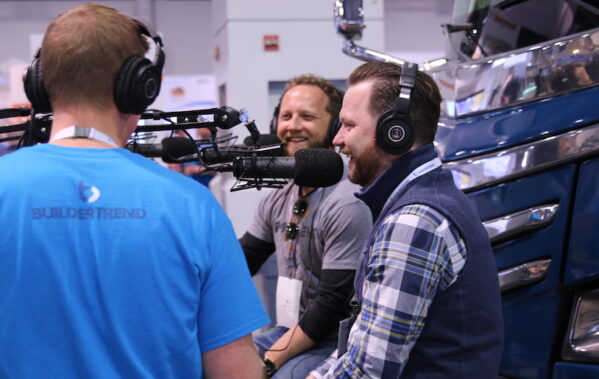
Our last two clips are from the International Builders’ Show this year in Las Vegas. First up is Brad Leavitt of AFT in Episode 51. This healthy home thing, this is a new trend that we’re seeing. I like this trend. I think it’s a good trend.
Paul Wurth:
Well, the people who live there live a healthier lifestyle because of the air quality, whatever all the things we do.
Brad Leavitt:
When you think about it, one of their big pitches is, you think about it today, humans for a long time were outside and now 90% of our times inside. We’re at work in our office, we’re in our home, in our car. And so we’ve worked on the energy efficiency, the home and the billing side, but we haven’t really figured out what this tight home, how does that impact us? Because the minute you start putting in furniture and the VOCs from all the fabrics that are in their paints, the VOCs and those chemicals, that are the things that affect that. So it’s really important that we start to understand, OK, how can we continue to push that envelope and just be healthier as people, especially in today’s day and age.
Paul Wurth:
What’s a VOC? So VOC is I’ll have to look it up [crosstalk], but it’s the off gassing.
Tom Houghton:
And it’s like particles …
Brad Leavitt:
The particles that come from paint. It’s like a freshly painted room, the VOC starts that fume, and in same as like from furniture, the same thing. Some of the furniture, toys we buy right it has inherent chemicals that come into the air and particles we breath.
Tom Houghton:
We’re all family guys here. When we had one of our kids, we brought a camera that had a VOC monitor in it. So anytime the heat would kick on at night to heat up the room for the kids, the VOCs would just spike through the roof. And so this is-
Brad Leavitt:
Moving all the particles and…
Paul Wurth:
Yep.
Tom Houghton:
Yep.
Brad Leavitt:
Yep.
Tom Houghton:
So definitely interesting to see where that space is headed.
Brad Leavitt:
Yeah. It’s exciting.
Tom Houghton:
For sure.
Brad Leavitt:
The more we know, the better it is.
Tom Houghton:
Absolutely.
Brad Leavitt:
And that’s why we’re here at the Builders Show. To see some of these new technologies and new products and see how that affects and how we can use it to help strengthen our business. So…
Tom Houghton:
Nick Schiffer joined us again for his second appearance on the podcast in Episode 52. You mentioned a full circle in the communication. I haven’t actually talked to a lot of people about this, but recently we had this guy on our podcast, tattoo fly guy, and he’s part of this corporation for fly fishing for veterans. He was on our podcast for a couple of minutes talking about his. It’s for Veterans Day we had him on. And a week later in the mail, I get a thank you note for having him on the podcast. And meanwhile, I do a pretty good job about email follow ups. Thank you’s. Thanks for the opportunity. Hey, I heard I lost the job. It’s okay. Thank you. I’m pretty good about that. Stopped it. I ordered a thousand branded postcards and every person I meet with like architect or just anyone, past clients, I get to my office. I write a note, I throw it in the mail.
Nick Schiffer:
Huge.
Tom Houghton:
And it’s because, I remember opening that and I never even reached out to him. And I think about that fact that I should be reaching out to him.
Nick Schiffer:
You should send him a thank you note.
Tom Houghton:
I should schedule coffee with him to say, thank you for the thank you note.
Nick Schiffer:
Well, maybe you guys have a thank you off and it’s just like-
Tom Houghton:
Thank you. No, no. Thank you. No, no. Thank you. But I remember the way I felt opening it, and you’re absolutely right, we’re so digital that you are losing this personal touch where now I send it in there. A few people reached out and was like… We just reupped the lease on my wife’s car. And I sent a thank you note, hey, thanks for making that process easy. Look forward to working with you in the future. He was like, dude, no one in my entire career has ever thanked me like that.
Nick Schiffer:
Thanks me. Yeah.
Tom Houghton:
Right. And I was like, go, man.
Nick Schiffer:
That’s huge. I totally hear that.
Tom Houghton:
Coming soon to Buildertrend, the ability digitally create this, and then physically send it out. We’re going to partner with somebody and …
Tom Houghton:
You are going to have 400 kids writing 170 thank you notes. Our product team is going to hate me for this.
Nick Schiffer:
Our intern program’s going to be bad. We need more stamps. Sorry for the [inaudible] it was a 17 year old.
Tom Houghton:
What an amazing year of podcasts we’ve had. We are so thankful again to all of our guests for joining us. And of course, you the listener, thanks for listening. And we look forward to sharing all the great content we’ve got planned for year two of “The Building Code.” Love what you heard? Don’t forget to rate and subscribe to our podcast so you can hear from more guests that will benefit your business. Also, please check out our show notes page for more information on what we discussed on this episode. You can find it at buildertrend.com/podcast. Thanks for listening. And we’ll see you next time on “The Building Code.”
Paul Wurth:
Appreciate you.
Tom Houghton | Buildertrend
Places You Can find us




We think you’d also like this
Introducing The Building Code, a Podcast by Buildertrend
Our goal for The Building Code? To provide construction professionals with high-quality interviews, best practices, and tips and tricks from their peers.
Top 5 episodes from Buildertrend’s podcast, “The Building Code”
It’s the “The Building Code” podcast’s first birthday, but here’s a gift for you: A list of the top 5 episodes, filled with construction tips and tricks.
podcast
Mar 3, 2022Anniversary Edition: Top 3 Takeaways
Zach and Charley celebrate memorable guests who’ve shared their construction insights over the past year as the podcast turns 3.