




Beyond the hype: Where AI pays off for builders
On this episode of “The Building Code,” we sat down with Ruhaab Markas, Buildertrend’s vice president of product AI, to get past the sales pitch and talk about where AI is actually paying off for builders right now.
It’s almost Black Friday, so expect every tool out there to promise it’ll change your business by Monday. Ruhaab breaks down two features already saving builders real time, Client Updates and Smart Bill Capture, what actually separates working AI from AI that just demos well, and the first move a team with zero AI in place should make.
“So you already have all of this data you’ve been gathering throughout the course of the week, and the AI Client Updates really just brings all that data in, generates that initial report that you can review. So what we saw is, on average, a 97% reduction in time spent of creating these client reports. So roughly five minutes or less on a process that could take somewhere between 30 minutes and an hour – or hours.”
“When it comes to AI and science, it’s a highly experimental field, so oftentimes you have to be okay with early failures. It’s a break something, fail-fast kind of mentality. But there are definitely ways that you should not approach using AI. The first is not knowing the outcome or output that the AI model should produce, and not having the right way to check it. So if you’re producing something where your team doesn’t have expertise, how can you be sure on whether it’s accurate?”
Links and more
Subscribe here, and never miss an episode.
Got podcast topic suggestions? Reach out to us at podcast@buildertrend.com.
Running commercial work alongside residential?
- See how Buildertrend keeps commercial projects, budgets and client communication on one system
- Learn what separates purpose-built construction software from general project tools
- Get a real-world look at how a fast-scaling builder keeps multiple business lines on the same page
See how Buildertrend works for commercial contractors.
The Better Way, a podcast by Buildertrend:
Looking to add construction tech to your daily processes? On the newest season of “The Better Way, a podcast by Buildertrend,” you’ll get best practices for implementing software and getting your team on board from other industry pros and our experts. Subscribe and stream today wherever you listen to podcasts.
Follow us on social:
Listen to “The Building Code” on YouTube! And be sure to head over to Facebook to join The Building Code Crew fan page for some fun discussions with fellow listeners.
Carly Ward:
Well, everyone, welcome to The Building Code. I’m Carly Ward, your host, and really excited about today’s conversation ’cause we’re tackling one of the biggest topics out there right now in construction and globally, quite frankly, AI. No shortage of promises when it comes to what AI can do, but figuring out what’s genuinely useful for builders and what’s just hype is a lot harder to do than we think. So that’s what we’re going to get into today. And joining us, we’ve got Ruhaab Markas, who is our Buildertrend’s VP of Product and AI. Welcome to your first episode of The Building Code. We’re pumped to have you.
Ruhaab Markas:
Thanks. Great to be here.
Carly Ward:
So, you’ve been with Buildertrend for four months now?
Ruhaab Markas:
It’s three months. I’m still counting in months. That’s how new it is, but it’s been phenomenal so far.
Carly Ward:
No, and we’re seeing a lot of really amazing changes, and a lot more that’s going to come in the future, but you’ve got a pretty impressive background in AI. And before we get into all the nitty-gritty of today, just breezing through a little bit of your background, you’ve spent a lot of time building and scaling AI products at huge companies like Amazon, Google, and then you founded BizJet AI, which Buildertrend acquired earlier this year.
So you’ve got a ton of perspective from the tech side, but you’re not just a tech guy. You actually have worked in the residential construction space, and so you’ve got a really, really unique perspective to bring to this conversation, and as Buildertrend starts to evolve and their functionality and AI. So I want to dive in a little bit of your journey to how you got here, and then also talking about how did you go from building AI for some of these big huge companies to coming to the residential construction industry?
Ruhaab Markas:
Yeah, it’s very, I would say, unpredictable journey, technologist turned real estate developer and then combining those two passions together. So as you mentioned, I started working AI in 2012, where I was applying early data science and statistics to really do some, I don’t want to say simple things, but trying to automate loan approvals into financial services. We didn’t call it AI then, it was just data science and early machine learning.
And it was one of those days where it was a very esoteric and complex field, so you need extreme specialization. The people who built AI systems were locked away in a basement. No one knew how to talk to them because everything they said was just like… You just didn’t understand what they were saying, but saw very early how powerful data science and AI would be when applied to software and product management.
So very early, I said, “That’s where I wanted to play.” Moved to Silicon Valley, San Francisco in 2016, worked at a variety of different companies, Apple, Salesforce, Amazon, Google, all basically building zero-to-one AI platforms, and saw this evolution from data science to machine learning, deep learning, generative AI, and where we’re now at is agentic AI.
So, while I was at Google, and to bring it back full circle, I started a residential construction company. We started with remodeling. One of my oldest childhood friends who’s been in the industry, building homes for over a decade, was ready to venture out on his own and then just needed a little bit of help on the business and the back office side where a lot of our customers often have the biggest pain points. They’re phenomenal at building homes, but it’s all that administrative work and work behind a computer, that it’s not-
Carly Ward:
“We’ll kick that can down the road if we can.”
Ruhaab Markas:
Yeah. Yeah, exactly. So, we started this company, and my first goal was to… The first version of BizJet was actually to automate the back office work for that construction company. And so very quickly, I realized that there’s such a opportunity to use AI in a industry-specific way, because the best systems, the more specific they are, the more you can tune them to be extremely accurate. So that was the birth of BizJet AI. And then obviously, after speaking with Buildertrend, we realized that we have the same vision, we have the same view on how AI should be adopted responsibly and with humans at the center of decision-making. And the decision to join was it just made sense. Yeah.
Carly Ward:
Amazing. Well, obviously, you have a ton of extensive background. We’re going to get into it a little bit further. Before we do that, I want to pivot and do something a little fun. We’ve got Black Friday around the corner and we’re all about to get flooded with deals telling us what we can’t live without. And honestly, AI feels a little bit like that already. So we’re going to play a quick game called Hype or Help. What I’ll do is I’m going to give you a few AI claims and I’ll have you tell me whether it’s hype or whether it could actually help a builder. You can defend your answer if you want, but definitely just give me the Hype or Help first.
Ruhaab Markas:
Let’s do it.
Ruhaab Markas:
Oh, okay.
Carly Ward:
Perfect.
Okay. Sorry, actually.
Carly Ward:
Okay. So before we dive into it, I want to have a little fun with this. Black Friday is right around the corner, so we’re about to get flooded with a ton of deals of telling us what we can’t live without, and honestly, AI feels a little bit like that already. So we want to hear from you. We’re going to play a little game called Hype or Help. What I’ll do is I’m going to list off a couple of AI claims and I’ll have you tell me whether it’s hype or whether it actually can help a builder in their day-to-day. And you can defend your answer if you want, but we’ll go ahead and dive into it. First one, “Our AI will run your entire business for you by Monday”?
Ruhaab Markas:
By Monday is hype, but I do believe we’re going to get to a point where that becomes possible. Right now, AI systems are very powerful, but it still requires human judgment. And if you’re expecting to just do everything automatically, for sure it’s hype, but I see a world where that will certainly become possible.
Carly Ward:
So, in today’s current state, just a quick question off of that, how long do you think it takes for AI to really start making an impact in your business, depending on how you’re using it?
Ruhaab Markas:
Yeah, I think it’s making an impact already. And there’s, I think, a spectrum of complexity, where you could have it running automatically, right? Writing meeting notes for internal teams, writing things like that are for sure something you could do now, and have it running automatically. But imagine having an AI system do a full cost estimation that gets sent to a client and you’re committing to that cost. No, you’re not going to want that running automatically. You’re going to want human judgment reviews and double-checking the work from AI.
So, I would say that there’s this complexity spectrum that also is split by work that your internal teams are doing and client-facing work. And you have to be a little bit more careful on, obviously, client-facing stuff than you do internal. Sometimes you’re just like, “Okay, if my assistant or my PM sees some funky things, they’ll know how to fix it and it’s okay,” but you have to have a higher quality bar when it comes to clients, and especially financial commitments.
Carly Ward:
No, that makes a ton of sense. Definitely involve the QA in the customer-facing stuff.
Ruhaab Markas:
We call that human-in-the-loop. And so you have to figure out what is the criticality of that output and how could it impact your business or relationships if it’s wrong. And when that’s medium or high, you definitely want to create that human-in-the-loop check.
Carly Ward:
I think that’s such an important thing to touch on ’cause I’m sure we’ve all received something that we can almost always tell is AI-generated.
Ruhaab Markas:
Slop. Yeah.
Carly Ward:
Yeah. And you’re like, “Well, that’s not true.” So, I think that’s a really important call out, especially at this stage of the game. The next one we’re going to go into, “It can turn a blurry photo of an invoice into a bill that’s ready for approval in seconds”?
Ruhaab Markas:
Help. That’s happened today. It first started with something called OCR, which is basically the ability to read images. It’s character recognition, basically. So yeah, AI could read handwriting, a blurry image, and then get that data into a nice clean system, so definitely help.
Carly Ward:
Okay. Amazing. “Powered by the same AI that writes poetry and plans for your vacation”?
Ruhaab Markas:
Oh man, that one is right in the middle, because I do think models are getting good at doing a lot of things, but I’ll still say hype because I do believe that the best AI systems are purpose-built. So they understand the domain, the industry, the messiness of construction. And I probably would not want a model that I’m using to do everything to also do the most critical business work. So I would say hype because I believe in purpose-built AI, but I do also see that people are using ChatGPT to do many, many things and that will only continue to improve. So hype, but kind of in the middle.
Carly Ward:
No, that’s a good one. And we’re going to dive into that a little further once we get past this game. “It can draft a client update using your jobsite notes so you’re not sitting there writing it yourself until 9:00 PM at night”?
Ruhaab Markas:
Help. That is the most, I think, obvious use case in AI, is just data capturing, organizing your thoughts, your meetings. And we’ll talk about that a little bit later, and things that we’re already doing in Buildertrend today, but that’s definitely help.
Carly Ward:
A good brain dump and organize your thoughts, ’cause there’s a lot going on up here, so being able to have it-
Ruhaab Markas:
Yeah. I’m constantly doing that myself. I think that use case just really hits home for me.
Carly Ward:
Powerful. “Our AI has thoughts about your schedule”?
Ruhaab Markas:
Help. I would say AI has ability to not only help you create the schedule, but inspect it, instrument best practices. When we create project schedules, we often have varying levels of robustness. So, the most simple schedule, we’ll just have tasks with start and end dates.
But then, if you think about how really disciplined schedules are made, they’re following Project Management Professional, PMP-type practices, Slack, float, different kind of dependencies, finish-to-start, finish-to-finish, start-to-finish. This is where AI can bring expertise that sometimes might be missing from the team’s skill set. So this one is definitely help.
Carly Ward:
It seems like it has that additional oversight of maybe poking holes where the team might, “Oh,” whether it’s just an oversight or depending on skill set, it might just not be there yet. So powerful, especially in regards to construction schedules, we know how critical it is to keep those connected and continue to move, and so I want to get into that a little bit further, too.
Ruhaab Markas:
Yeah. And I’ve seen schedules that are maybe just a few dozen tasks and I’ve seen schedules that are thousands of items with sub-tasks. And this is where AI becomes truly useful, is it understands your working style and it mirrors the level of detail that you like to operate at. And yeah, I could talk about this one all day, but we’ll say help and move on.
Carly Ward:
Last one we’ve got, “It can flag a cost overrun before it starts eating into your margin”?
Ruhaab Markas:
Help. That is absolutely one of the most important things in a construction company, is running a project on budget. If you look at the major axes of project management, it’s on time, on budget, and quality, right? And if you run a project over budget, not only are you, A, eroding your profit margins, but they can also erode trust with your client, ’cause if you’re coming back with change orders or cost overages, that’s just not a good place for anybody. And the ability to detect that as early as possible is something AI is extremely good at now, and we’ll talk a bit more about road map and other items later, but definitely help.
Carly Ward:
No, this is super helpful, ’cause again, there’s just so much noise out there, and we’ve established there’s a lot that AI can do, but I think the bigger picture is where it really adds value to a builder and how do you make that call? And so my next question, when you and your team are looking at Buildertrend and thinking about where AI best fits in the program, how do you decide which problems you’re actually solving for with AI?
Ruhaab Markas:
Yeah, there’s a saying in the industry, in the AI industry, which is, “You can build a model and go find the right problem that fits the model or you can find the right problem and solve that in a variety of different ways.” AI just being one of the ways that we can solve that.
So for us, that just means always working backwards from our customers. And this is where Buildertrend shines, is that we have over two decades worth of experience of understanding residential construction, understanding the workflows, understanding the challenges.
And for me, it’s about using AI to solve the most important challenges for our customers, ’cause at the end of the day, we want to make it easier to understand your profitability, drive a project forward, and really go from start to finish in a very easy and seamless way. So, it’s all about finding the right customer problems and solving those first.
Carly Ward:
So you had mentioned when we were just doing our game that you’re a big proponent of value-first approach AI instead of just using it just to. So, what does value-first actually mean for a builder running a business every day?
Ruhaab Markas:
Values just simply means outcome, like what is the outcome that you’re able to achieve? Is it time savings? Is it cost savings? Is it just a more delightful way of working? All those things are critical and they all are ways that you can start to quantify the outcome, right?
We’ll talk about where we spend time at work, but value is really just the outcome that you can achieve. And again, finding the problems that help you achieve the greatest outcome, the most time savings, the most dollars kept in your pocket, or the least amount of hairs that you’ve pulled out because you just hate doing something behind a desk. So, values is just outcomes.
Carly Ward:
And I’m curious, in your experience, when you talk about the wanting to rip your hair out, what do you think the biggest thing that AI changed for you in regards to minimal hairs being pulled out?
Ruhaab Markas:
Yeah, I would say the biggest thing that’s changed for me is just knowing that an AI system can actually solve a very wide set of tasks. If you look at old-school, I call it traditional AI, data science, machine learning, you built these really powerful systems to do one thing. So you build a powerful model and you do one thing like predict revenue, or you build a really powerful model and you do something like pull out the data from a bill or an invoice.
And what really changed for me is this idea of reasoning of a model, for it to think through problems in a logical way and then apply that same reasoning ability to many, many different tasks. So that’s what really changed, is seeing how easy it was for AI to just do a whole bunch of different things. And I still feel like we’re in the early innings of pushing those boundaries.
Carly Ward:
Well, let’s talk a little bit about what AI looks like in practice today because we already have a few examples inside Buildertrend. Client Updates is probably one of the biggest ones that’s come out that I know I hear time and time again from our builders, the fact that they don’t have to stay up late at night doing those, or a couple of hours at the end of the week to pump those out on a Friday. What was the problem builders were dealing with there and how is AI actually making that process easier for them?
Ruhaab Markas:
Yeah, so Client Updates is basically an end-of-week-type report we send to a client, what work got completed, what’s the schedule, what’s next. And the key problem there is, one, it just takes a lot of time, and it’s just work that is not a lot of fun. It’s like status reporting. No one likes to just do, “Write the TPS”-
Carly Ward:
“I need your TPS reports.”
Ruhaab Markas:
The TPS reports, exactly, right? Literally, it is the TPS report, but it serves such a critical role because clients want to be informed. You want to communicate proactively, so it’s a better experience when they’re not having to ask these questions and you’re being proactive about this communication. So, the problem is it just takes time. The problem is that it’s not always sent out in a predictable date and time. So, what we did is really understand the workflow for our builders, which is they’re logging all progress in their daily logs.
So you already have all of this data that you’ve been gathering throughout the course of the week. And the AI client reports really just brings all that data in, generates that initial report that you can review. And again, part of that human-in-the-loop is, especially if it’s something client-facing, you want to give it a little bit of extra QA or scrutiny before it sends something goofy. So what we saw is, on average, a 97% reduction in time spent of creating these client reports. So roughly five minutes or less on a process that could take somewhere between-
Carly Ward:
Hours.
Ruhaab Markas:
… 30 minutes and an hour, or hours. And so if you think about a client report only taking five minutes, times the number of weeks a project will take, times the number of projects, you’re talking about a pretty significant amount of savings. And while client reporting is just one piece, when you start to add up all of the other pieces, which we’ll get into next, you’re talking about a fairly significant amount of time saved.
And then when you look at it more at a macro level, like across the industry, we’re generating hundreds of thousands of these client reports annually, so you’re talking about potentially millions of hours saved for the industry, right? So, I like to always look at like, “How are we improving the lives of builders, but also what is that macro impact that we are having on the industry?” And it becomes pretty significant pretty quickly.
Carly Ward:
I mean, it’s impactful just from an individual business standpoint, but when you put it in that big picture, and thinking about all the time across this industry that now we have dedicated to do other things, whether it’s focusing on our clients or building better business processes and better estimates, things like that, like you said, that’s where you see the savings. So, I want to talk about Bill Capture ’cause that’s been another big one in Buildertrend, which is solving a completely different problem from the Client Updates. But walk me through the before and after there, and what does that process look like without AI versus with it?
Ruhaab Markas:
Yeah. So, Bill Capture is pre-AI, you’re getting tons of bills from your vendors, subcontractors, et cetera. And obviously, to keep a project predictable in terms of your margins and committed costs, you have to log all that data, right? So it becomes like this data entry nightmare, where every bill you have to review, you have to take out all the line items, you got to enter in the dates, the time, the vendors, all that. So it’s just this data entry problem that is really critical to have the right hygiene in the business, both from a financial data integrity standpoint and as well as just an SOP adherence standpoint. So, it’s just a very annoying thing, and no one really wants to be doing that, right?
And so with the AI Bill Capture, which is live today in Buildertrend, and we’re seeing just incredible adoption, you don’t have to do that data entry, right? You’re just uploading a bill, a single bill, a bunch of bills at once, and we can just take all that, extrapolate all that data out, the line items, the cost. So, writing that data into your financial system, and ultimately that flows into your job cost budgeting, we’ve just removed this, probably, in my opinion, one of the most annoying things that you would have to do on a computer. And we’re seeing incredible results here.
We’re seeing hundreds of thousands of bills being processed through this every month, right? We’re talking about millions and millions of bills on an annualized basis. And again, as we talked about with AI client reporting, you’re saving potentially hundreds of thousands, if not millions of hours for the industry there. The same thing is true with AI Bill Capture, and you keep adding all these automations in and you create just such an incredible experience where the computer and the AI is just doing the annoying work.
Carly Ward:
The brunt work.
Ruhaab Markas:
The brunt work to start. And then it starts to climb this complexity ladder of just helping you find value in other ways. The grunt work is the most obvious place to start. And I define grunt work as highly predictable, high-volume work, because that is just where a lot of hours are spent and that is where AI can also be extremely accurate. So, seeing tremendous adoption, I think we’ve solved a very annoying problem, and it’s just the start.
Carly Ward:
And I have to believe working as a former onsite consultant and with some of our accounting and bookkeeping partners, and knowing what the reality of how true your financials are because of missing bills and things like that, I have to believe that this is probably getting people closer to what true accuracy is because they’ve eliminated so much of the tedious data entry, and the process of getting those in there is so much easier now.
Ruhaab Markas:
Yeah, that’s exactly right. It’s like you don’t know if you’re on track to hit your profit margins if you don’t track the data. And if you don’t log the data, you can’t track the data. So I would say you can’t measure what’s not recorded, and that recording is just so annoying. And we’ve mostly automated it, so I think it’s a good start.
Carly Ward:
So I want to go back to the hype side for a couple of minutes because I think this is probably where a lot of builders are getting stuck today. Everyone says that their product is AI-powered now. At some point, those words really stop meaning a whole lot, but knowing what things look like behind the scenes, you have an amazing perspective to provide to our builders. You’ve talked about the difference between AI that’s really built around the business and the tools versus the ones that are a little bit more general AI models with a nice interface on it. So, as a builder, how do you really tell the difference between one that’s really built for their business and systems versus one that’s a little bit more general?
Ruhaab Markas:
Yeah. So, certain things are invisible and certain things will be evident. If you take away the model from the AI feature, what’s left? If all that’s left is just a really fancy system prompt that you’ve used to instruct the AI, that’s really just, in my opinion, vaporware. It’s something that is not durable, it’s not industry-specific, and it’s something that you could probably do on your own. So, ways to tell on is something just a over-prompt-engineered model versus an industry-specific item is look at what that tool is doing, and can you with a simple prompt recreate that yourself in ChatGPT or Claude? If the answer is yes, that means that is not a custom-built tool. It is really just a general-purpose tool.
And the second is how well does it handle your data? Is it actually using messy, dirty data that exists in construction? Or are the examples really, really clean and very, very structured? And the reality is, that’s not the world that we live in. We’re working with images and audio and engineering documents, all sorts of highly unstructured data. And so, this is just something that I fundamentally have a different opinion on, which is it’s easier than ever to build anything now, software, even AI. But AI that is custom-built for an industry, meaning that it has unique data sources, unique data, unique workflows, a deep understanding of domain problems, it’s trained and instructed on a wide variety of use cases, it becomes very, very clear on what will work in the wild versus what just gives an awesome demo.
Carly Ward:
Yeah. Speaking of demos, let’s say I’m a builder and I’m on a demo with an AI vendor. What should I be asking them to show me what would tell me pretty quickly, “This thing really understands construction,” versus, “This is just a pretty decent demo”?
Ruhaab Markas:
Yeah. What I do always is I try to break something as quickly as possible to see does it hold up? So, see how obvious the demo examples are, ask it to do something different. Try to think of scenarios that you have to work through in your business and look at just how clean, again, I think you mentioned this earlier, how clean are the examples and data? It’s just like, “Hey, I’m using…” Let’s just say I’m trying to understand an engineering plan, but what if the engineering plan is two pages and it’s a very simple diagram note? Usually, there are dozens if not hundreds of pages and have a tremendous amount of information. And so I would say just break it, try to break it, ask questions that are real, try to work through scenarios that you are encountering every day, and see how it holds up.
Carly Ward:
So in that same vein, I’m a builder listening and I’m thinking, “Yes, this all lands. It all sounds great and I want to move forward, but I’m starting at ground zero.” So, if I’m running a construction business, my team hasn’t touched it, what’s the first thing I do?
Ruhaab Markas:
Everyone is at a different stage of their adoption and a different stage of maturity in terms of their ability to use AI. And if you’re still in the earliest days, it’s okay. I’ve talked to builders all day and there are people all over that continuum, really advanced and just starting out.
If you’re just starting out, the simplest way to get going is use something that we’ve already built. We talked about client reports, we talked about Bill Capture. There’s several other examples and many, many more coming. The easiest way is to use something that we’ve already built and start to find values in ways that we have already proven it for thousands of builders. So yeah, that’s what I would say.
Carly Ward:
Yeah, not recreating the wheel. That makes a ton of sense. And I’m curious, on the other side of things, is there a wrong way to get started?
Ruhaab Markas:
Yeah, I would say for me, when it comes to AI and science, it’s a highly experimental field, so oftentimes you have to be okay with early failures because it’s like break something, fail-fast kind of mentality. But there are definitely ways that you should not approach using AI. The first is not knowing the outcome or output that the AI model should produce, and not having the right way to check it. So if you’re producing something where your team doesn’t have expertise, how can you be sure on whether it’s accurate? Let’s say that you’re a project manager, but you’re not an engineer, you’re going to ask engineering questions from an RFI, from an AI system, and it just gives you an answer. If you can’t verify it and if you don’t have the ability to really double-check it, then that can be a dangerous thing. Oftentimes, AI is right and oftentimes it’s wrong. So, I would say the ability to verify its output is one.
The second is not having a strong opinion on your workflows or SOPs. And so, if you don’t have a clear view on what are the steps that you would take, or how your business would like to operate, you don’t know whether the AI is adhering to that process, right? Let’s say that you have a accounts payable process, and you might have reviews or checks or thresholds that alert certain people, and AI is not going to know those outputs. If you just try to have it go and run wild and do this thing, it’s not going to follow a process. It’s going to create these steps dynamically, we call at inference time.
So anytime that you call the model, it’s going through something called a reasoning or chain-of-thought loop. So it’s thinking about this problem, breaking down the steps. And those steps may or may not follow your SOPs, but if you have clear SOPs and you can instruct it, it becomes much more predictable. So, I would say the two things are make sure that you have somewhat of a reasonable way of verifying the outputs. And second is have a clear point of view on your operating model and your SOPs. Otherwise, it’s going to basically invent it in some creative way.
Carly Ward:
And I’m just thinking about from an adoption standpoint across the breadth of a team, would you suggest it’s better to start off with a couple of key players or try and get your whole team to start to dip their toe in the water?
Ruhaab Markas:
Yeah, I think the answer on that will depend on your risk appetite. I like to take a bit more risk, so I would say, hey, have everyone start experimenting, but put some light governance in terms of review, what gets sent out automatically. I would say have a higher quality bar for client-facing work. You can maybe have a little bit of a high-risk tolerance for internal items. So, in my opinion, anyone in an organization should be using AI and will be using AI.
Carly Ward:
Or they probably are or don’t realize it.
Ruhaab Markas:
Yeah, and they are and they don’t realize it. And that’s why I’m so excited about what we’re doing at Buildertrend, is because irrespective of your adoption journey or how mature your processes are, or how you’ve thought about reviewing AI, we’re building all these foundational pieces into the platform to make it easier to navigate this change and to have a starting point that really levels the playing field, right? So for me, I fundamentally believe that people should not have to worry about how to build the best AI system.
I want to figure that out for our customers and for our builders, and I want to unlock our customers’ ability to do the more human things, right? Spending time with your team, spending time with your contractors, spending time with your clients, ensuring the physical product that you’re building is high quality. And everything else, while there’s a lot of really great experiments happening and a lot of creativity being applied, I fundamentally believe it’s my mission to solve that problem for everyone. And I think we’re on a really good track to do that.
Carly Ward:
Well, you clearly have a ton of passion behind it, and I want to start to poke some holes in what you had mentioned earlier, the road map, which I’m sure everybody is anxious to hear about. And obviously, don’t want you to give away too much away, but without giving too much, what’s a problem in construction that you are personally super passionate about getting ready to solve?
Ruhaab Markas:
Yeah, I would say the pre-construction process, specifically estimation. Estimation ends up being a choke point for many businesses in their… It just takes too long. It takes too much time. And sometimes the volume of estimates is something that you just can’t go through that with enough quality to be able to actually send an estimate out.
So, I would say without giving too much away, there’s multiple pieces of this problem, but that pre-construction and cost estimation problem is one that I think impacts every builder. It impacts everyone’s ability to close more deals, and ability to do it accurately enough to predict your margins and profitability more accurately. So that is one area I’m really excited about and one that we’re actively working on.
Carly Ward:
Excellent. And thinking about where we’re at today and in the future, the next time you’re on The Building Code, in a perfect world, where would you see AI functionality sitting in Buildertrend?
Ruhaab Markas:
In a perfect world, and I’m going to say something and it’s actually not going to be too far from the distant future, everything that happens behind a computer will have an AI-assisted nature to it. Some might have a human review, some may be happening in a more automated, autonomous way, but my vision is that anything that can happen behind a computer will have some agentic kind of nature to it. And we’re really working towards that vision now, and I honestly think that we’re not too far away from that happening. So yeah, I’ll leave it at that.
Carly Ward:
And before the end of the year closes out, ’cause we’re rapidly getting there, is there anything exciting that our builders can be looking forward to?
Ruhaab Markas:
Yeah, I would just say we are going to be announcing a lot of new capabilities over the coming weeks, months, and quarters. Some pretty transformational things that many of our builders have been asking for, some new things that are going to open some eyes. So I would just say stay tuned, lots more to come, and you will be hearing about that from Buildertrend soon.
Carly Ward:
And something tells me this won’t be your last time on The Building Code.
Ruhaab Markas:
I hope not. Yeah. So yeah.
Carly Ward:
Well, we’ve talked a lot, covered the full spectrum today. So if there’s one thing that a builder’s listening to today that you want them to remember or walk away from, whether it’s a sentiment, a specific tool, what is it?
Ruhaab Markas:
Yeah, so it’ll be more of a sentiment. I will say Buildertrend is absolutely going to be the platform that helps our customers navigate this wave of AI. We’ve already built four or five really critical capabilities, and I will just say that there are so many more in the road map and pipeline. This will be the platform that allows any customer to truly say that they’re an AI-first construction company, and I can’t wait to make that happen.
Carly Ward:
And my last question before we wrap up, in your opinion, what’s one thing AI is already doing for builders today that you think is genuinely worth being thankful for, and something that’s making a huge benefit and impact at this moment?
Ruhaab Markas:
Yeah, I would say one thing that it’s already doing that sometimes just even blows my mind is this idea of multimodal reasoning. And what I mean by that is many of the models can take a variety of different inputs, text, images, video, audio, understand it, reason about it, and then also produce multimodal outputs out. So it can also produce images, also produce text, also produce audio.
And so this ability to dynamically handle multiple data types as an input and as an output is something that just unlocks so much possibility for us because our industry in construction is multimodal by nature. We talked about it a little bit earlier. You’re capturing photos on the jobsite, you’re capturing videos, you’re talking to your phone to capture meeting notes. You have tabular data where your financials are being stored. So, we are a multimodal industry, and the model’s ability to handle that data both as inputs and outputs, I think just it unlocks infinite possibilities for us.
Carly Ward:
I appreciate all that perspective. And obviously, again, you have so much passion and perspective behind this from both sides of the coin, and we’re really grateful for you giving us a peek behind the curtain and obviously giving us a breadth of knowledge to be able to take back home.
So, like I said before, I know this isn’t going to be your last time on The Building Code, and I know we’ll have a lot of exciting things to talk about the next time, but appreciate you being here with us and helping us cut through a lot of the AI noise. And for everybody listening, appreciate you being here and we will catch you next time.
Ruhaab Markas:
Cool.
Carly Ward:
Boom.
Ruhaab Markas:
Sweet.
Carly Ward:
Excellent.

Ruhaab Markas | Buildertrend
Places You Can find us




We think you’d also like this
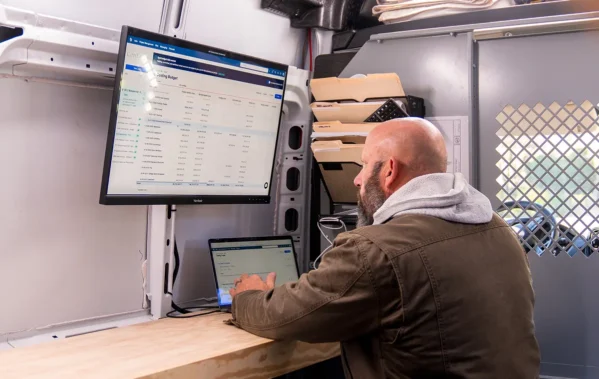
Why AI works better when it sees your whole job
AI works best when it sees the whole job. See what separate AI tools miss and how Buildertrend’s built-in AI works from one connected platform.
Industry-leading AI: What Buildertrend’s newest acquisition means
Buildertrend acquired BizJet AI, Inc., adding two AI leaders to build more of the industry-leading AI already in your workflows. See what this means for you.

How to 10X your building company’s productivity with AI
Don’t think AI is right for your construction business? Think again! Discover how you can strengthen your team with AI and stand out against the competition.