




Built by mentorship: How passion, precision and people lead to success
This episode was recorded in 2025. Because Buildertrend continues to improve and expand its platform, some features or services mentioned may have changed.
Today on “The Building Code,” Charley is sitting down with Elias Rhett, owner of Luxe Builders. With a passion for the construction, Elias took the opportunity to learn from some of the best in the industry, including Joe Christensen and Adam Shaeffer at Cardinal Crest Homes, before setting out on his own to establish his own company. Today, his dedication to client satisfaction and attention to detail have earned him a reputation for excellence.
Listen to the full episode to hear Elias’s inspiring story and how his relationships with other leading builders in addition to the adoption of technology led to the success of his own construction business.
Why did you end up choosing the path of construction for your career?
“Coming from the rough situation, I had very low self-esteem, low self-worth, and there was something special about construction that at the end of the day you could see what you built. You could see that you did something, a room was different, or a wall was different, or a house was different than when you started that day. And I got addicted to that feeling. And I never thought I would be in the field I’m in necessarily, but I knew immediately after just the first week working with my hands and feeling accomplished, that construction was it. That was the goal. And so, I’ve been in some form of construction for about 20 years now.”
How has mentorship played a role in your success and starting your own company?
“I got super lucky. I’ve been able and blessed to work with some of the most amazing builders in not just my area, but my very first job managing construction I was hired by Cardinal Crest, who you guys are familiar with. I had a really good situation with Cardinal Crest, I loved them to death and loved learning from them. After a few years, I felt like, ‘okay, I’m early in my career, let’s go try commercial.’ So, I got a job working for an amazing commercial builder out here and in Utah. I worked for them for a few years and realized that my passion was custom homes. I went from there to another large builder out here, Millhaven Homes, and then from there to another large builder, Raykon, and kind of just learned the best practices. And each one was such an amazing learning experience. From there, that’s when I started getting my license, getting everything lined up, finding some potential projects that could be my segue into starting my own business.”
Links and more
Learn more about Luxe Builders.
Follow along with Luxe Builders on their Instagram.
The latest State of the Residential Construction Industry report is out now!
- Learn systemized processes for driving profitability
- See why financial literacy is an opportunity for growth
- Understand how prioritizing planning leads to long-term success
Get your free copy – and see what’s shaping residential construction in 2025.
Related content:
Listen to the last episode to hear from Jana Brost, chief operating officer at myCOI, on how AI is streamlining insurance compliance and risk management for construction businesses.
Subscribe here and never miss an episode.
Got podcast topic suggestions? Reach out to us at podcast@buildertrend.com.
The Better Way, a podcast by Buildertrend:
Looking to add construction tech to your daily processes? On the newest season of “The Better Way, a podcast by Buildertrend,” you’ll get best practices for implementing software and getting your team on board from other industry pros and our experts. Subscribe and stream today wherever you listen to podcasts.
Follow us on social:
Listen to “The Building Code” on YouTube! And be sure to head over to Facebook to join The Building Code Crew fan page for discussions with fellow listeners.
Charley Burtwistle (00:05):
What is up, everybody? Welcome back to another episode of “The Building Code.” I’m Charley Burtwistle, and today, we have Elias Rhett, owner of Luxe Builders on, talk a little bit about his journey both in life and in construction. It is incredibly inspiring. I’m super excited to talk to him a bit more and how they have kind of grown their company learning from the best, working with a ton of different builders across the nation to ultimately founding and scaling Luxe Builders over the past two years. It is an awesome story, and it’s going to be an awesome interview. So, I will not delay it any further, let’s get him in here.
(00:43):
Hey, Elias, welcome to “The Building Code.” Really appreciate you joining us today, making the time. Super excited to talk to you. How’s it going?
Elias Rhett (00:50):
Good, good. Thanks for having me. Really excited, this is my first official podcast I’ve ever been on, so really excited about it, and wanted to preface my inexperience here. So, don’t have too high of expectations for what we get out of this.
Charley Burtwistle (01:05):
Hey, well, this will be my 146th, and don’t have too high of expectations for me either, deal. We can get out of the way early.
Elias Rhett (01:12):
You’ll make up for my lack of experience.
Charley Burtwistle (01:15):
Something like that. Well, awesome to have you. I was doing a little bit of research before we hopped on, going through your website and everything, but for the people joining us listening, we always like to start with just a quick kind of who you are, where you came from, and how you got started in construction.
Elias Rhett (01:29):
Yeah, yeah. So, I actually have a pretty unique start into construction. I grew up in South Carolina and I grew up in a pretty rough situation, in a home with some domestic violence and some substance abuse and some child abuse. And I actually wound up being fostered by a construction family, a family that had a commercial plumbing and HVAC company in South Carolina. And instantly fell in love with construction.
(02:02):
Coming from the rough situation, I was very low self-esteem, low self-worth, and there was something special about construction that at the end of the day you could see what you built. You could see that you did something, a room was different, or a wall was different, or a house was different than when you started that day. And I got addicted to that feeling, and I’ve been chasing that high that my estrangement from my biological family. They actually, I wound up being abandoned by them at the age of 15 and fostered by this construction family and just started working with them immediately.
(02:43):
And like I said, it’s been 20 years now of every day going in and just wanting that, built that my own self-confidence and self-worth, and using my hands and working and just something about that structure of construction and the hard work and everything about it just drew me in a gravitational pull. And I never thought that I would be in the field that I’m in necessarily, but I knew immediately after just the first week working with my hands and feeling accomplished, that construction was it. That was the goal. And so, I’ve been in some form of construction for about 20 years now.
Charley Burtwistle (03:27):
Wow. Well, first of all, obviously, extremely sorry you had to go through that, but what an awesome ending to it, I suppose.
Elias Rhett (03:36):
Well, it’s one of those things where the hard things turned out to be the best things ever happened yet. Really, the life that I have now wouldn’t have happened without the estrangement from the biological family. And so, it’s all been one lucky turn of event after another, and so, everything is how it intended to be, so.
Charley Burtwistle (03:58):
Yeah, well that’s an incredibly inspiring perspective from you because I’m sure it didn’t feel like that at the time.
Elias Rhett (04:04):
For sure.
Charley Burtwistle (04:05):
But the comment you made of, even just in the first week and working with the construction, you started to have this sense of ownership and seeing what you’re building, I think is definitely … My dad taught building instruction for 25 years and he has some pretty cool stories about that as well, too, of traditionally the people, at least in the small town I grew up in, the people that took the shop classes were just, it’s something to fill up their schedule, not something they’re super passionate about. And seeing those aha-moments and connecting, he has so many students that have gone on to do such great things, is definitely a very overlooked part of the more holistic construction world.
Elias Rhett (04:41):
For sure.
Charley Burtwistle (04:41):
Regardless of where specifically you’re in there. But yeah, that’s a super inspiring story. So, first week, you’re like, this could be something that I could see myself doing. And then what were the next steps after that?
Elias Rhett (04:55):
Just immediately, yeah, like you said, just that first week or so, I knew that I had found something that I was good at, something that brought me that confidence, that self-worth, the structure that I lacked in my upbringing. And just that principle of every day, every brick at a time, every step at a time, amazing things can be built and renovated just through that process of, “hey, let’s just see what we can get done in an hour.” Okay, and now we stack that over a full day’s worth, over full week.
(05:33):
So, from there, I kind of clung to that family that they wound up adopting me, and I went and finished high school and then went on a two-year mission for the church that I attend.
Charley Burtwistle (05:48):
Awesome.
Elias Rhett (05:49):
Wound up serving a mission in Arizona, Spanish speaking, which helped with construction. And then I came out to Utah for school, UVU, and went construction management. And yeah, I had met the father figure of this family that adopted me, and I had just seen exactly what I wanted out of my life. He was hard working, he had a really dope truck, jacked up truck, beautiful house, beautiful wife, amazing kids. And there was nothing innately special about the situation, but to me, coming from my situation, I thought that was the dream. I thought he was living the dream and that was what I wanted to chase. And so, as soon as I met him, I felt like my life path kind of got carved out for me, and from there it was just following the steps. Right? So, the man who wound up adopting me, he kind of had the same path. He finished school, went to UVU, construction management, and then just started working in construction and took kind of job after job and project after project, and I just kind of followed that same trajectory.
Charley Burtwistle (07:04):
That’s awesome. I mean, I could see why our producers wanted to bring you on, this is a super cool story and definitely untraditional from a lot of the people. Nothing wrong with this, but a lot of the guests that we have on is, dad owned a construction company, and I always worked in it and always knew that was going to be the plan.
Elias Rhett (07:04):
Right.
Charley Burtwistle (07:22):
From this very untraditional upbringing that you had to get to where you’re at today is definitely inspiring. So, after the construction degree in college, was it first job out, just kind of take what you could get, or how long before you actually started your own company with Luxe Builders?
Elias Rhett (07:41):
So, I’d been managing construction for about eight years before I started my company. I got super lucky. I have been able and blessed to work with some of the most amazing builders in not just my area, but my very first job managing construction I was hired by Cardinal Crest, who you guys are familiar with.
Charley Burtwistle (08:03):
Big fans.
Elias Rhett (08:04):
Joe and Adam, and so, I started managing construction with them and it was the most amazing experience going and working for them. And the structure that they had and the way that they built, and they were big fans of Buildertrend, this is back in 2016, 2017 maybe, or maybe 2015. Yeah, somewhere in that time period and just started working with them. And they were a pretty small company at the time, I think I was their fifth employee. And it was Adam and Joe, they kind of divided the projects between them and then they had two project managers, me being one of them, and it was a fire hose of information. It was hey, here we go, because my background’s more been in the trade work. Like I said, I was adopted by plumbers and HVAC, a mechanical company. And so, in college I worked for framers, and I did some tile work, and some odds end jobs to help pay for college. And then working for them, it was okay, here’s the other half of construction, here’s the managing side of it.
(09:15):
I worked with them for a few years and then from there, I got the advice to dabble in residential and go and try commercial. And everyone said, “Hey, the money’s in commercial.” I had a really good situation with Cardinal Crest, I loved them to death and loved learning from them. After a few years I felt like, okay, I’m early in my career, let’s try residential for a few years, let’s go try commercial. So, I got a job working for an amazing commercial builder out here and in Utah, sorry, that’s where we’re at. And worked for them for a few years and realized that my passion was custom homes. My passion was custom homes, custom renovations. Commercial was great and we still do a little bit of commercial, especially renovations and more personal projects, because what I really loved about custom homes was that bond, that relationship that I felt like you don’t get as much in the commercial space.
Charley Burtwistle (10:17):
Yeah, well, just from the nine minutes I’ve known you now, you don’t seem like some of that would necessarily be super driven by money.
Elias Rhett (10:23):
No, no.
Charley Burtwistle (10:24):
You’re more of a, what’s the legacy I’m leaving on? What are the connections?
Elias Rhett (10:28):
For sure.
Charley Burtwistle (10:28):
Which is always my favorite thing about … I was actually just in a leadership lunch the other day with some of our new hires and someone asked the question, “You’ve been at Buildertrend forever, why do you stay at Buildertrend?” I’m like, I am inspired by our customers and to get to be such a small part in what they are building for the world, building something that’s going to stand for 100 years, and multiple families are going to grow up in and raise their children. I couldn’t work for a company that didn’t have some tie to making a bigger impact in the world. So, for us to get to enable people like you to carry on that mission, that’s what motivates me.
Elias Rhett (11:01):
That’s awesome.
Charley Burtwistle (11:01):
I just think it’s super. Nothing against getting a paycheck and getting paid for sure, and I don’t want … Sorry, Dan, plug my laptop in. Obviously, there’s a lot of very, very cool things about the commercial space as well, too, so it’s not a knock on that, but I’m the same way. That’s what motivates me. So, I could see why you chose that path. So, then you took a jump and started your own company?
Elias Rhett (11:26):
So, from there, I went and worked. Well, I felt like once I found the niche that I wanted to be in, that I needed that 10,000 hours of building experience to really in that arena to really say, “Hey, trust me with your home. Let me build your home.” And so, I went from there to work for another large builder out here, Millhaven Homes, and then from there to another large builder, Raykon, and kind of just learned the best practices from some of the best builders. And each one was such an amazing learning experience. And like I said, some were heavy into structures and softwares, and some were a little light on it, and I was really able to get a sense of the pros and cons of all the companies that I worked for.
(12:16):
And then from there, after I felt like I had that 10,000 hours of experience, that’s when I started going, getting my license, getting everything lined up, maybe finding some potential projects that could be my segue into starting my own business.
Charley Burtwistle (12:31):
That’s super cool. I’m sure this is a super loaded question and not a quick answer, but what were some of the biggest differences that you saw going as you described them, and they all sound very successful and well established, but what were some of the differences going across the kind of two or three different companies that you had worked for?
Elias Rhett (12:47):
Yeah, and I won’t name specifically which ones did things well or did things better, but the number one thing that I saw that I took away was, you had some companies that were really, they were heavy on structures and that allowed their project managers to do more projects. And then you had some that were light on software and structures, and they were really one project manager for one home. And these are large, 10,000 plus square foot, $400 a foot and up in their price point, so they were really detailed homes.
(13:29):
And so, sometimes the too much structure, I think some companies might overload, tend to overload their project managers, which is something that I don’t want from my project managers that I currently have. And then I think that there is on the flip side, that you can do more, my guys can get more experience if we do more projects, and the ability to have softwares and structures opens the door to say, “Hey, yeah, we’re doing great with these jobs, but we can expand, we can do a little bit more, we can have …” And not necessarily for the financial benefit of doing more, but just for my project managers, they’re like me, they’re young, they’re just getting started in their careers and I want them to be exposed to more.
(14:18):
And I would say, not to toot Cardinal Crest’s horns too much, but I would say they had an amazing balance of both. They had not too many projects where I didn’t feel like I had a great relationship with my clients and the people that I built for, and they had the structure to make it feel like it was all manageable. And so, I think that is kind of where I got started, was with a really good situation and then as I went to the other ones, I kind of saw how everyone did it a little different and the pros and cons of both. And so, what we’d like to do is take the best practices from both and kind of merge them into the experience that we’re trying to provide.
Charley Burtwistle (15:02):
Yeah, that’s the perfect way to do it, and I think the way you went about this was very intentional of recognizing, I don’t know everything. I want to go learn from the best first, take the pieces that I like and get rid of the things I don’t like before starting my own thing. I think that’s a lot of things that, or a lot of times what young entrepreneurs will skip over. It’s like I know everything, I know exactly how I want to do it, I’m going to go do it. And then they’re going to figure out those problems eventually, might as well figure them out from before you start your own thing.
(15:31):
So, I guess, tell me a little bit about Luxe Builders today. What did the scaling look like? Was it just you out of the gate? Did you hire a few people right away? Or how’d you get to where Luxe is at today?
Elias Rhett (15:43):
Yeah, so, we’re still very young in our age. Right? Like I said, I wanted to have the building experience as a project manager for companies, so that I could say, “Hey, I’ve got the experience to build. I can build these homes. Here are some of the homes that I’ve built for other builders, the scale of it.” I even used some of the old clients as references to call and say, “Hey, when Elias built your home, what was the experience like?” Right? Because when you’re the project manager of a house, you really are the face of the company, right? And that’s what I took upon when I worked for these other builders, is I never wanted to be a bad mark on the company’s name. That when I had their name on my shirt, that’s who I represented. And so, I tried to provide the best experience for all of my clients and even when I worked for other builders or with my own company. So, I found a couple of projects, some remodels to get started.
(16:41):
Out here, the high-end custom market is a really tough market to crack into. There are so many amazing builders. I could name 15 of them off the top of my head, that if someone built a 10,000 plus square foot home with them, they’re going to get a great product. And it going to vary in, maybe some, the quality’s a little better, some schedules a little better, some costs might be a little better, but it’s going to be an amazing home. And so, we started in the remodel renovation industry, and I’m seeing that there and this isn’t a judgment on any company out here that’s in the renovation game, but from what I’m seeing, is there’s not really a king of the hill in the renovation game. And so, I love renovations, it’s kind of a symbolism for my life, right?
Charley Burtwistle (16:41):
Yeah.
Elias Rhett (17:34):
From going from single-wide trailer park in South Carolina with substance abuse and domestic violence, to the life that I’ve built, is all one big renovation. Right? And it’s a process, and it takes amazing people all along the way to get me to where I am, just like a home. It takes amazing trades and it’s not a one person does the remodel, it’s a team effort and a group effort. And so, I loved remodels right out the gate, taking a space, seeing the potential and what it could be. And so, we started in that. We still do a lot of remodels. We have a couple new builds going. But right away we started with just me, and almost immediately saw the need for help. Not only software, but project managers.
Charley Burtwistle (18:23):
It’s a good problem to have out of the gate.
Elias Rhett (18:26):
For sure, for sure, for sure.
Charley Burtwistle (18:27):
So, you had mentioned before we hopped on the interview here that you’d used Buildertrend kind of at multiple companies before. Obviously, I know Cardinal Crest are big fans of the program and we’re huge fans of them as well. Was this something that you adopted right away then when you started Luxe, or did you wait a while until you got it more up and going? And what did the early adoption of Buildertrend look like?
Elias Rhett (18:47):
So, the answer is, as soon as I could. So, I think we’ll technically be a company, it’ll be two years in May. Yeah, two years in May.
Charley Burtwistle (18:57):
Oh, it’s right around the corner.
Elias Rhett (18:58):
And it’ll be a year with Buildertrend. So, we grind through the first year without you guys, and then just as soon as I could justify the costs with the projects that we had, and that’s about the same time we hired our first employee. And so, as soon as communication wasn’t just somebody telling me what to do and me telling the trades. As soon as there was a telephone game involved in there, it was instant that we were like, okay, one of the first calls I made with Buildertrend, let’s get this going, let’s get this up and running.
Charley Burtwistle (19:32):
I love that. Well, I’m glad this episode’s launching May 1, this will kind of be a kickoff to your month of celebration for your two-year as a company, which is awesome to hear. That’s also really good, people ask us all the time when they’re starting new companies, “When is the right time to bring on something like Buildertrend?” I feel like that description was a pretty good one. Soon as a telephone starts to become involved on a consistent basis …
Elias Rhett (19:55):
100%.
Charley Burtwistle (19:55):
… there’s a better way to do things. What’s your bread and butter when you’re utilizing Buildertrend? What are some of the features that you really dive into or get a lot of value out of?
Elias Rhett (20:05):
That’s funny that you asked that. So, when I was signing up for Buildertrend, obviously, you guys have different stages and platforms that you can purchase this and it just comes with these aspects, and you purchase this … And I went back and forth with the sales rep to try to help get my costs low, and you guys are awesome.
(20:23):
You were able to make it work for me as a new builder, you guys seem very understandable about what my costs were, what my needs were, but I wasn’t settling for anything less than all the features because you need them all. That’s just the truth that they go so hand in hand and so integrated between clients, trades, and the builder, that if you take some of the features out of there, you’re adding hundreds of hours to your month of work. Because if you don’t have the financial tab in Buildertrend that’s tracking along with the selections and with everything, then you’re having to do that manually and update a spreadsheet and send it out to your clients to give them a projection of where they’re trending spending-wise. And so, really, and it all works with the schedule. So, there wasn’t any aspect that I … It’s like dominoes. You pull one out, it’s going to stop somewhere along the line and you’re going to have to manually keep it going. So, I wanted all of it. I saved up, we got all of it, and we immediately started to implement all of it.
(21:30):
I would say my favorite things would probably be the things that impact the client the most. As a builder, and again, not a knock on other builders. We want to be the best, we want to be the best builder. And I think that if you have a company, a custom home company, you would be lying if you said you didn’t care to be the best. Right? And that’s not in a way of like, we’re gunning for anyone, or it’s not in a competitive way, it’s just our personal, us. When we look ourselves in the mirror, we want to be the best. And maybe it’s be the best builders we can be. And for us to do that, we set apart in our company some time to carve out what we wanted to focus on. And we decided that at the end of the day, who decides who’s the best builder?
Charley Burtwistle (22:24):
The client.
Elias Rhett (22:25):
The client, 100%. The builders can say it all they want, and yeah, we have some parade of homes and some awards, but at the end of the day it’s a word-of-mouth thing. Who’s the best remodel company? Who’s the best builder? Who’s the best? And so, if that’s who decides who’s the best builder, and we want to be the best builder, we want to have the best client experience, we want to have the happiest clients. And that’s been our focus as we got started as a company.
(22:51):
And so, everything that includes the client that helps them know how their job site looks, the state of their job site, the schedule, the timeline of the progress updates, what’s going on in their job site, and their budget. Those three pillars, we’ve kind of broken it down to time, quality and money, are kind of our pillars of things we focus on. And if the client is up-to-date and happy with those three areas, they’re happy. Right? And so, those are kind of my, anything in Buildertrend, the schedule, the daily logs, the job costing, tracker, and budget, those things I love interacting with the clients on it. And I love them seeing it and commenting back, “Oh, awesome, thank you. This is great.” Those things really at the end of the day make me feel like Buildertrend was one of the best decisions we made, as I get that feedback from the clients.
Charley Burtwistle (23:53):
Yeah, and I also think that you made the comment, who decides builds the best house, the clients, right? But it’s not even the end product as much as it is the experience. There are a lot of great builders out there that build awesome homes that clients would not recommend, due to the experience that they had through the 6, 9, 12, 16, 18 months that they had to work with them. Right? It’s so much more than just what the end product is, and I think that’s oftentimes overlooked, not by the people I’ve had on the podcast. Everyone I’ve had on has been great, but there’s a lot of people that are just so focused on the end product, they forget about middle point, and that’s what the experience is. That’s what you’re selling to your client, that’s what they’re paying for …
Elias Rhett (24:37):
Totally.
Charley Burtwistle (24:37):
… is to be …
Elias Rhett (24:38):
Well, and that goes to us as a company, and here’s a free tip for anybody out there who really wants to focus on client happiness. Most, if at all, most builders, if they do send a survey, it’s at the end, right? And there’s this juke stat that goes into at the end of the project when it’s done and it looks good, and they finally get the move in, that they’re going to say, “Oh, great, great, great, great. Five star, five star, five star.” Right? And it’s not a real statistic of what they provide. And I’d love to see if I could get Buildertrend on board with this kind of a tweak or this feature on Buildertrend.
(25:22):
But what we do is, what we started is we started a monthly survey that we send out to our clients that asks them three questions every month on the build, as opposed to the end of the project. And let me preface this by saying, you’re signing yourself up to jump over some high hurdles when you do this, because if your clients aren’t happy, you better do something about it. Right? So, if you don’t want to sign up for the headache, don’t do this, but if you care about having happy clients. We like to have this survey that they can fill out that says, “How would you rate the status of your job site, the current status?” So, obviously, it’s a construction zone, but is it clean? Is it organized? How comfortable do you feel with the amount of progress updates you get, and how comfortable do you feel with the management of your finances? And they can rate all of those one through five, and at the end of the day, we actually get a metric that we can track client happiness month over month.
(26:19):
I get to ask my guy who manages that department and say, “Hey, how’s client happiness?” And he can say, “93%, 95%,” right? Hopefully 100%, but if it’s 80%, 70%, we get to go back and see, “Okay, they need a little bit more understanding of their budget. We need to do some more job site cleans,” but it’s month over month as opposed to a year later you’re saying, “Hey, how did we do?” Right? You really get to check in with them. And like I said, client happiness, if we can keep clients happy, then we’re going to be a pretty good builder. Right?
Charley Burtwistle (26:52):
That’s so awesome, but you shouldn’t have brought that up because now we’re going to do another 30 minutes just on that survey alone.
Elias Rhett (26:58):
Let’s do it.
Charley Burtwistle (26:58):
So, it’s just those three questions?
Elias Rhett (27:01):
So, it’s those three questions, and then we follow up with a couple not mandatory ones to answer. One is just, if you answered less than five in any of them, what critiques? What could we do better to improve your experience? And then the other one is just if there was a highlight moment between a project manager or a trade or something, there’s a space to give that that says, “Hey, if you had a good experience this month, please let us know.” So, those are the two kind of follow up questions after the three major ones.
Charley Burtwistle (27:34):
That’s so cool. I love the recurring consistent nature of it, too, to track that on a month-over-month view. Do you guys see kind of consistent trends during certain aspects of the project? Maybe the first month everyone’s still super excited, gung ho, month two, they get that second bank draw out, they’re a little less happy.
Elias Rhett (27:53):
Yeah, so that’s the thing, is it’s individual to each client. It’s what the client cares about more. And as you do more projects and you meet people, it almost becomes this game of like, you ever watch criminal investigators where they’re trying to profile people?
Charley Burtwistle (27:54):
Yeah.
Elias Rhett (28:10):
It feels like a game like that. When you meet a client, some are so focused and care a lot about budget. Some care, a lot about, is their job site locked up? Some care about the details, the quality details like, pinpoint must be perfect. And so, as you get to know your client a little bit more, it’s more individually based on them. And a client who’s really focused on budget, even though you do a good job updating it, and you send them out projections along with their draws every month, you’ll still see that they want to understand more. So, they might give you a four out of five, which isn’t … This isn’t a fluff survey to just get, “Hey, give me five stars.” We could have done yes or no to help us have a better track record. But someone can give an 80% in your budget and not feel like they’re insulting you. They just want to know a little bit more. They want to understand why they’re over. They want to understand where they’re trending a little bit better.
(29:06):
And so, we set it up so that it’s not just so that we can say, “Hey, we have 100% client satisfaction right now.” No, we want a 60 or a 70 or an 80, so that we can go and catch it in the moment and say, “Hey, I saw your score. Let’s talk about this. What can we do to get things better for you?” And so, it’s been an amazing bonding experience relationship wise, between clients to say, “Well, we want to build your project, but we also care about your experience.” Right? We don’t want to just check in with you at the beginning and the end and say, “Hey, how was the roller coaster ride?” Right? We want to get you at the peak and the valley and kind of say, “Hey, how are we doing? How are we doing?”
(29:47):
And I think you’ll see that as people understand and as they get started, they start understanding expectations a little bit better, and you start, it forces you to have these real conversations that set those expectations. And expectations are like fences with neighbors. The better the fences, the better the neighbors. The better the expectation, the better and the more realistic expectations, the better the relationship’s going to be.
Charley Burtwistle (30:13):
Yeah, it’s just tackling any and all uncertainty in the moment of the uncertainty. The worst thing that you could do is say, “Well, guess what? You got another six months of not knowing.” Yeah.
Elias Rhett (30:22):
And you just pretend like it’s not happening, right?
Charley Burtwistle (30:23):
Yeah.
Elias Rhett (30:23):
Pretend like they’re not happy or pretend like they are happy and just turn a blind eye to it and say, “Well, they’ll be happy when it’s done.” I feel like there’s a major miss for builders that just say, “Well, all is well that ends well.” It’s like, yeah, that’s not not true, but I feel like you’re missing a major point, where if someone calls a reference of mine and says, “Hey, how was it?” And they say, “He checked in with me every month to make sure I was happy.” That sounds like someone you’d want to build with, right?
Charley Burtwistle (30:53):
Yeah.
Elias Rhett (30:53):
So …
Charley Burtwistle (30:53):
Well, and you’re using it on a customer to customer basis as well, but I’d have to imagine on the aggregate with all the feedback that you’re getting, you’re probably tweaking your processes and learning from it for the next customer as well, too, right?
Elias Rhett (31:04):
For sure, we’re super young. As far as, I’ve got building experience, but as far as running projects and being this role where I’m in the office a little bit more, and I’m doing numbers, and I’m using Buildertrend and the more financial sections of it, that’s all new to me. And so, we’re trying to avoid as many tree branches on the way by setting ourselves up. Like I said, we set ourselves up for headaches. At the end of the month when we’re sending out these surveys, you better believe our Buildertrend better be up-to-date. Our schedules better be on point, we better have sent them a message, and I better have their budgets pretty tied in for them. Right? And so, we set ourselves up for that, but at the end of the day, it also gives us more peace of mind to enjoy our weekends knowing that we did those things.
Charley Burtwistle (31:52):
Yeah, it’s like the forced accountability aspect of it. That’s something I always talk about on my team that I manage your Buildertrend all the time is like, “Oh, why do we have to have this meeting just to read out to the exec team? They should know what’s going on.” I’m like because it’s going to force us to make sure that everything’s good.
Elias Rhett (32:05):
Exactly. No, that’s great term. I like that. Forced accountability.
Charley Burtwistle (32:10):
Yeah, it’s annoying at the time, but it forces you to do what you need to do and live up to your promises.
(32:15):
Yeah, I honestly don’t think I’ve ever heard of anyone sending recurring surveys. I’ve talked to a lot of people that send them at the end or ask for a five-star Google review and all the kind of fluff metrics as you alluded to, but the intra project surveying is definitely an awesome area to get into.
Elias Rhett (32:32):
Yeah, let’s get it on Buildertrend. I’d love to open it up and say client happiness is at 93%.
Charley Burtwistle (32:35):
Yeah. Well, I will say, maybe the biggest fan of this podcast is our CTO, so if he’s listening to this right now, you have a direct line straight to him. If you got anything else.
Elias Rhett (32:43):
There we go, call me there, let’s talk about it.
Charley Burtwistle (32:46):
Absolutely. As expected, we are well over time here. Maybe a couple more questions before we kind of wrap up here. Gosh, you already did … I will say, if you ever want to moonlight as a Buildertrend salesperson, I think you’d be great at it. I think you already covered most of that.
Elias Rhett (33:03):
There’s honestly one more really important feature about Buildertrend that I want to touch on from my perspective, and it is how it has helped me with sales. I am not a salesman. I have zero sales background. I’ve never gone and sold solar or done door-to-door or read a sales book on how to sell people. But it is my role now as head of this company to land projects, right? And I’ll tell you, the biggest selling point is to open up my laptop with a potential client, go to a home, and show them exactly what the client sees.
(33:43):
I was meeting with a potential client who called me to come do a renovation for his personal house, and this gentleman is a developer out here, a lot of really cool big projects going on, and he has plenty of contractors that he’s worked with, but he called us to come look at his renovation. And I was wondering because I knew who he was, I knew he had worked with other builders. I know some of the other builders that he’s worked with, and I was like, why is he calling me? It was just interesting. But as I got talking with him a little bit more, I did the same thing that I always do. I open up my laptop, I show him, “Hey, here’s your estimate on Buildertrend. Here’s where once you become a client, you’ll have access to this, the schedule, the daily logs, the updates, the projected budget.
(34:26):
And he just stopped me, and he was like, “I wish my other builders that I’d used for these commercial projects had something like this.” And he’s like, “I get to see all this,” and I saw his eyes light up, and I just realized like, oh, this is doing the job for me. This is showing them exactly what the experience will be. And I just go through any random project, I pick a project, and I show them, here’s the weekly message that you’ll get. Here’s the schedule, here’s what you’ll see, here’s how your budget’s tracked, here’s where your invoices are paid, here’s what … And everything is just, it makes my job easy because like I said, zero sales. I’ve never sold anybody on anything, ever. And so, to have it up and running the way we want it to run, the selections tab showing them how they can kind of build their own budget by choosing certain selections and seeing how that adjusts the budget. Everything about it makes selling people on using us as their builder so easy.
Charley Burtwistle (35:28):
Well, that’s awesome to hear, and it’s awesome to hear for a couple of reasons. One, is our job at Buildertrend is to make your life easier. But two, our product team has put a ton of work into the Client Portal over the past couple years. I’m sure you’ve seen it just in the past few years that you’ve been using it. It’s night and day difference than how it used to look. And I think we’re seeing more and more people use that as leverage in these sales conversations to ultimately close more deals. So, it’s fun to see a lot of the internal work and meetings that we’ve had come to fruition through the kind of testimonial that you gave there.
(36:00):
Last question, just where can people learn more about Luxe Builders follow your work? Anything that you want to plug here?
Elias Rhett (36:07):
Yeah, I mean like anybody, we’re on Instagram, it’s Luxe Builders with the period in between Luxe, L.U.X.E. Builders. And then we have a website, luxbuilders.co. .co, not .com. And yeah, follow along on Instagram and social media, get to know us a little bit better. And we’re building that up as well, trying to get a little bit more personal, get the guys out there, show the project managers a little bit more, and yeah, we love it.
Charley Burtwistle (36:42):
Well, perfect. We’ll definitely link both of those in the show notes. We’ll also drop a ton of clips from this episode on our Instagram and tag you in those as well, too. I will say, you had about 50 quotable moments in this episode. Typically, we’re lucky if we get like two or three, but as you kept talking, I’m like, oh, it’s going to make a great clip, so I’m sure we’ll flood in your Instagram feed with those.
(37:00):
Elias, thank you so much for joining me today. Awesome conversation.
Elias Rhett (37:06):
No, I appreciate it.
Charley Burtwistle (37:06):
It was great to meet you.
Elias Rhett (37:06):
Yeah, no, no, likewise. I hope we can do this again.
Charley Burtwistle (37:08):
Absolutely. I think we got a second recording in our near future if I were to guess.
Elias Rhett (37:13):
Okay, love it.
Charley Burtwistle (37:14):
Have an awesome day. Talk to you.
Elias Rhett (37:15):
Hey, you, too.
Charley Burtwistle (37:17):
Well, we just heard from Elias Rhett, owner of Luxe Builders. Definitely, I’ll let you guys know a little trade secret from the podcast world. There are two types of interviews. One where you stick to the questions exactly, two, where the, which is not bad, it’s what they’re here for. Or the second type is when you just have an organic conversation and just ask questions because you genuinely want to learn more, and that was this episode. Elias was a fantastic guest. I thought his story, which I actually didn’t know a whole lot about before the interview, was incredibly inspiring. Obviously, an incredibly difficult and tragic upbringing, but his perspective and way of looking at life to take that away and learn from it and understand what he wanted to be, make the best out of a horrible situation, was a super motivating and inspiring perspective for me to hear from. So, that was great.
(38:11):
And then obviously as a business owner, he’s just world-class as well, too. It’s crazy hearing him talk that Luxe has only been around for two years, but some of the builders they had worked with before, getting that 10,000 hours in that he alluded to. You can tell that he learned what he needed to learn, and I’m super excited to watch their journey. I’m sure he is going to do nothing but great things. And honestly, it was super humbling just as an employee of Buildertrend, to hear someone speak so highly about the product that we’re creating and think that we can change the world with. That was a world-class testimonial right there, and Elias is just a world-class guy. So, super awesome interview from my perspective. Hopefully all your listeners out there enjoyed it as well.
(38:52):
As always, make sure to like, review and subscribe if you haven’t already. Check us out on The Building Code Crew on Facebook, check us out on YouTube, Instagram, TikTok, all the different things. But otherwise, until next time, I’m Charley Burtwistle. Peace.
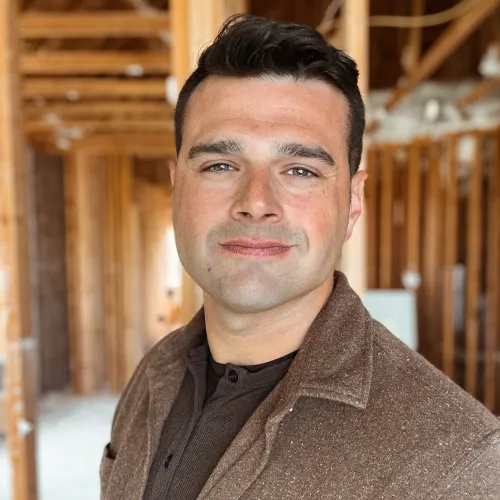
Elias Rhett | Luxe Builders
Places You Can find us




We think you’d also like this
podcast
Jan 16, 2025Breaking glass ceilings: The power of representation in construction
Breaking glass ceilings: The power of representation in construction Tammie Ross | Residence by Ross We think you’d also like this

The power of connections: Building a strong construction network with software
Build a stronger construction network with software like Buildertrend that connects you to suppliers, subcontractors and industry experts.

Behind the business: Creating a positive company culture
Toxic work environments are to blame for low employee retention. Cardinal Crest Homes shows how having fun during a build is part of their company culture.