




The art of communication: Maintaining strong relationships with your team, clients and subs
On this episode of “The Building Code,” Charley and Courtney are sitting down with Lyle Crownover, owner and CEO of Crownover Company, Inc. Lyle is a fifth-generation builder whose great-great-grandfather started building homes in the Twin Lakes area since 1942. Building is in his blood, and he’s learned over the years that technology and trends come and go, but quality craftsmanship and solid relationships never go out of style.
Tune in to the full episode to hear about how Lyle and his team are fostering better connections with their subcontractors and clients with the help of technology.
How did you go about introducing communication through software with your subcontractors?
“Subcontractors are the biggest hurdle to get them to adapt. Trying to reach out to more of a seasoned player in the game like, ‘Hey, man, I need to download the software on your phone, and I need you to start communicating with me. That’s how we’re going to get business done from here on out.’ You can imagine the stone wall that I was presented with there. You’ve got to have finesse. You can’t force-feed it. You’ve got to show these guys through example of what it could be. ‘Literally the second you drive that last nail, you could submit that invoice instantly, and my CFO can release a check. I can have you a check within five minutes of the job being done.’”
What does communication in your pre-sale process look like and how do you set the proper expectations?
“As far as clear lines of communication and setting expectations, we communicate very, very clearly before we engage in a partnership with our clients. We’ve asked the question, ‘Have you ever built before? Have you ever worked with the builder?’ But we are very, very transparent about everything. We let the client and trade partners know that ‘Hey, we do not have an option here. If you want to use us as the premier builder in our region, it comes with a certain degree of strings attached. We have to download this app on your phone.’ And so, we just let them know on the front end that this is a part of our business model. In this partnership, for it to be harmonious and successful, they’ve got to buy in. So, we paint that expectation before we ever move forward with the first date of the relationship.”
Links and more
Learn more about Crownover Company on their website.
Hundreds of construction business owners are seeing an average of 40% net profit increase using this construction budget template created by Breakthrough Academy. Download your free template today.
Related content:
Listen to the last episode to hear how Kirk Hopkins and the team at National Restoration Technologies prioritize the client experience to help make the loss after natural disaster just a little easier.
Subscribe here, and never miss an episode.
Got podcast topic suggestions? Reach out to us at podcast@buildertrend.com.
The Better Way, a podcast by Buildertrend:
Looking to add construction tech to your daily processes? On the newest season of “The Better Way, a podcast by Buildertrend,” you’ll get best practices for implementing software and getting your team on board from other industry pros and our experts. Subscribe and stream today wherever you listen to podcasts.
Follow us on social:
Listen to “The Building Code” on YouTube! And be sure to head over to Facebook to join The Building Code Crew fan page for discussions with fellow listeners.
Charley Burtwistle (00:05):
What is up, everybody? Welcome back to another super exciting episode of “The Building Code.” I’m Charley Burtwistle.
Courtney Mattern (00:12):
And I’m Courtney Mattern.
Charley Burtwistle (00:13):
I labeled today as a super exciting episode, which is a distinction. All of our episodes are exciting and some of them are ultra exciting. Some of them are very exciting. Today’s super exciting. I’m super excited to talk because we’re going to be talking about communication, which I think is a very, very under-communicated aspect of … see what I did there?
Courtney Mattern (00:32):
Yeah.
Charley Burtwistle (00:32):
Communicated aspect of the construction industry. Some would argue maybe the most important aspect though, so I’m excited to get into the weeds.
Courtney Mattern (00:39):
Well, I agree because I mean, I’m a communications professional. I have a journalism degree, a marketing masters, and this title of the episode is aptly titled the art of communication. It is an art. I think people underestimate the importance of it in the day-to-Day, because everybody does it. But not everybody does it well, that’s the kicker.
Charley Burtwistle (01:00):
Well, it’s so oversimplified and understated, and people are constantly worried about, “Okay, how do I budget correctly? And how do I make sure my schedule is dialed? And how do I make sure that I’m appropriately job costing? And how do I make sure I have the right subs?” Very, very important pieces. But all of those ultimately tie back to how are you communicating? And I think that it’s something that you do have to be intentional about. It’s something that you can get better at. It’s something that you can improve on. It’s not something that you’re just, “Oh, I’m a good communicator.” It’s like, is your team? Are the people that you’re working with? How do you take your skills or improve your skills and really apply them across your entire business?
Courtney Mattern (01:39):
Yeah, and are they understanding the message that you’re sending and how you’re sending it? So today we have Lyle Crownover, CEO of Crownover Company based in Northwest Arkansas. And Lyle’s been in the construction industry for a couple decades now. He’s a fifth-generation builder. And I bet even since his great, great grandpa was building, people still had to communicate to build a great house. The difference now in 2024 is that we have so many different tools to communicate. So, Lyle’s going to share a little bit about the tools his company uses. And I’m excited for all of our listeners to get some real-life advice on can you really just rely on text, and phone calls and messages? Is it easier?
Charley Burtwistle (02:21):
Let’s find out. Hey, Lyle, welcome to “The Building Code.” Really appreciate you making the time to join us today. How are you doing?
Lyle Crownover (02:28):
Absolutely. I’m doing great. Thank you for having me here. I’m here in North Central Arkansas, clear sky, 60 degrees, beautiful day here in the Ozarks. So, yeah, I’m looking forward to this.
Charley Burtwistle (02:38):
Wow. I’m sure myself, and Courtney, and most of our listeners are jealous of that weather forecast. We are not as fortunate here in Omaha, Nebraska, but happy for you. Thanks for having the shades close, at least, so you’re not like blinding us with jealousy.
Lyle Crownover (02:50):
Gotcha. Exactly. I may give you peak later.
Charley Burtwistle (02:52):
Appreciate that. Well, Courtney and I obviously were doing some research on you before this, but for those that have not had the opportunity to meet you, we always like to start with just quick little intro, who you are, where you came from and how you got to where you’re at today.
Lyle Crownover (03:08):
Yeah, absolutely. So, like we said, my name’s Lyle Crownover. I own and operate Crownover Company, an ultra-custom residential construction firm here in North Central Arkansas. Actually, to say this is in my blood as an understatement. My family has been building custom homes in the Twin Lakes area here in the Ozarks since 1942. And so, I’m a fifth-generation builder in my family. I just turned 40 this year. I’ve been running this organization since I was 20. So, yeah, I’ve got a couple decades of experience. And yeah, we built ultra-custom homes here on North Fork in Bull Shoals Lake, in the Ozarks.
Courtney Mattern (03:46):
That area is beautiful up in Northwest. And Northwest Arkansas is beautiful. I have to make a plan. I lived in Little Rock for a while after college, just more central. But driving through the Ozarks, it was always my favorite part. I think people really underestimate the beauty and the opportunity to build a great home there.
Charley Burtwistle (04:07):
Well, it sounds like you need to connect with Lyle after this and he can build you. You can just move there.
Lyle Crownover (04:11):
Yeah.
Courtney Mattern (04:11):
Yeah, how close are you to Bentonville?
Lyle Crownover (04:14):
To Bentonville, we are two hours east. So, just imagine the state of Arkansas dead center on the Missouri-Arkansas line.
Courtney Mattern (04:22):
Bentonville’s the mountain biking capital of America.
Lyle Crownover (04:25):
It is.
Courtney Mattern (04:25):
All the trails in the Ozarks, so I can only imagine Mountain Home’s got some cool spots, too.
Lyle Crownover (04:30):
We do, yep. Come check it out some time.
Charley Burtwistle (04:32):
I feel like we should just pivot this podcast from being construction-focused to geography-focused. You guys can just keep telling me fun facts. I’m a learning a ton.
Courtney Mattern (04:39):
I’m always excited when I meet someone from Arkansas because it’s the natural state. Totally underrated. Kind of like Omaha.
Lyle Crownover (04:46):
It is. It’s a hidden gem for sure.
Courtney Mattern (04:48):
So, tell us more about, I love that your great-great-grandfather started building homes. How has the business changed? What do you think is the biggest difference between what he was doing in the ’40s and what you’re doing today?
Lyle Crownover (05:03):
Oh, man, I could speak for hours on this. I mean really it obviously it’s similar, but it’s nothing like essentially my ancestors. So, essentially, back then it was a family. My grandparents and their children, essentially, they were out there with shovels digging the footings and putting shingles on with hand-driven nails. And so, it was all manual labor. There were no subcontractors. Communication obviously in 1942 was nothing other than face-to-face communication. So, communication has changed exponentially as far as how much internal work that they, essentially the family members would do, the mom and dad and the kids, they would do all the work. To now today we have obviously employees, internal external subcontractors, trade partners. So, yeah, if my great-great-grandpa could see what we were doing today, he would probably be intrigued and probably admire some of the things. But also, probably would hate to see some of that and that intimate, just having the family do the work, he would probably have different perspectives to say about it. So, yeah, it’s changed exponentially in a nutshell.
Courtney Mattern (06:23):
So, when you drive around the area, the Twin Lakes, do you see homes that your great-grandpa, or your grandpa or your dad built?
Lyle Crownover (06:31):
Yeah. Yeah. Honestly, that’s one of the coolest things. And it drives my kids crazy because anytime we drive around our hometown, it’s like, “I built that. I built that. My grandpa built that. My great-grandpa built that.” So, yeah, everywhere we drive here, it’s coming on a hundred years of Crownover performing construction in a couple of counties here in North Central Arkansas. Yeah, very, very cool. Very proud of that.
Charley Burtwistle (06:52):
That’s awesome. Is it too soon to start planning the centennial celebration?
Lyle Crownover (06:57):
It’s on my mind. Yeah, it’s going to be a big deal for sure.
Charley Burtwistle (07:00):
That’s awesome. Courtney and I we’re definitely going to have to come out.
Courtney Mattern (07:03):
Yeah, we’re going to have to come mountain biking.
Lyle Crownover (07:05):
Yeah, we’ll send you guys an invite. Absolutely.
Charley Burtwistle (07:08):
One of the things, and the reason that we wanted to have you on today was talk a little bit about communication. Obviously, a very, very important part of the construction process and definitely a buzzword around our office, at least right now as we are trying to streamline that process for our builders as much as possible. And I was thinking as you were giving the history there of how drastically the communication styles would’ve had to change from when your ancestors were building versus where you’re building now. And we’d love to get super into the weeds throughout the course of this interview. But at a high level, just to level set the rest of this interview, explain to us how important communication is to you and your business, and if you have overarching themes or things that you really try to focus on and inside of Crownover Company.
Lyle Crownover (07:54):
Yeah, great topic. Probably the most important topic in construction in 2024, quite honestly. My blanket statement on how we manage communication, the most important attribute of construction, here’s a blanket statement for you. If the communication is not on Buildertrend, it does not exist. How about that? My internal team, external team, what we do to keep everyone aligned is we communicate in Buildertrend. We’ll have conversations in the field, and those are important, and they’re healthy, with clients and with fellow employees and fellow trade partners. But when you get to a computer or you get to a cell phone, you document it and Buildertrend. So, to basically summarize communication in our organization, 2024, if the communication does not live and Buildertrend, it didn’t happen.
Courtney Mattern (08:47):
Five gold stars for Lyle.
Charley Burtwistle (08:49):
Yeah, I was going to say. Our social team always does promotional clips for different podcasts, and the most important 15 seconds of an interview or something, I always like to try to pick out live when it happened. And I think that line right there may have just been the live line that they’ll use for the 15-second promo of this. Something I’m curious on, and I promise there’s no wrong answer here because we don’t like this podcast to be salesy about Buildertrend, but I’m genuinely curious. So, do you handle all of your communication with your subcontractors, and trade partners, and clients as well, too, through Buildertrend? Or is it pretty much exclusively just your internal team?
Lyle Crownover (09:26):
Absolutely. So, I’m a decade in utilizing construction management software. We started with CoConstruct and then migrated to Buildertrend. We started out just dabbling our foot in the water with a little bit of communication and Buildertrend a little bit, in text, a little bit here, a little bit there, absolutely not. Across the board, everyone plays in the sandbox that we call Buildertrend. Our clients, our trade partners, our employees. Now, don’t get me wrong, that comes with a certain set of challenges. It’s not easy to tell a client, “Hey, you know what? We are a concierge level of construction company. We are here for you 24 hours a day. However, here’s what I need from you. I need you to utilize Buildertrend to access my team and I because if you text or you call or you send smoke signals, we may or may not get that, but if it comes across from BT, we’re here for you.” And so same overall overarching themes at all stakeholders.
Charley Burtwistle (10:23):
I love that. And I love the way you framed it. It actually segues really nicely into the next question that we had on here, is, there is a certain level of expectation and relationship building that you have to do before you can just blanket ask someone to use a brand-new tool. And I think that’s what we miss a lot as a Buildertrend ourselves and how we teach our clients to use it, is you can’t just go to someone that you’ve been working with for years or someone that you’ve been working with for weeks, if it’s a client and say, “Hey, this is this new tool,” you do have to foster that relationship first, right?
Lyle Crownover (10:51):
Baby steps. Baby steps. So, man, take it from a veteran construction management software power user. Early on, 10 years ago, I was just turning 30. And so, working with the subcontractors … so subcontractors I guess is the biggest hurdle to get them to adapt. So, 29 years old, at that point, no gray hair, trying to reach out to maybe more of a seasoned player in the game by way of a framing contractor or a drywall contractor, “Hey, man, I need to download the software on your phone, and I need you to start communicating with me. That’s how we’re going to get business done from here on out.” You can imagine the stone wall that I was presented with there. Yeah. So, no, absolutely, man. You’ve got to have finesse. You’ve got to show, you’ve got to paint the portrait of what things could be. You can’t force-feed it.
(11:41):
You show your framing contractor like, “Hey, you know how it takes you forever to get your invoices into me. Sometimes you’re like six weeks after the job is done. Hey, man, if you would come in to my company, let my staff show you how to submit an invoice on your phone, literally the second that you drive that last nail, and our project manager says, ‘Yes, you’re golden. We’re ready to pay you,’ you could submit that instantly, goes to the cloud, goes to our system, my CFO can release a check. I can have you a check within five minutes of the job being done. As opposed to you, the subcontractor, being the weak link because they have no support staff,” paint that like how good could this be for you? What can we do for you? Not what can you do for us? So, that’s how we have to convey and get full buy-in from those trade partners. And honestly, it’s taken years. It’s not something that’s going to happen overnight. You’ve got to show these guys through example of what it could be.
Courtney Mattern (12:35):
That’s like another lesson in communication because one, there’s communication on the project. You want your team, you want your subs, you want your clients to use Buildertrend to communicate. But before you can get them to do that, you have to use your communication skills to talk about the pain points. What’s the value to them? Why are you asking them to do that? And I think we hear from a lot of builders who are like, “Well, there’s no way. Everybody’s going to say it’s so much easier to just get a text.” But I mean, I’m sure you have a horror story of getting pinged and getting texts and emails when you’re trying to just enjoy your life. So how is that easier, right?
Lyle Crownover (13:11):
Sure, absolutely.
Charley Burtwistle (13:13):
And another thing you hit on there that we constantly preach is you have to have your own house in order before you invite other people into it. And I think a lot of times people burn their bridge with getting their subs or clients to use Buildertrend because they’re like, “Hey, I got this new tool add in,” and they’re like, “Okay, how do I submit that invoice you were telling me about?” It’s like, “I don’t know.” It’s like, “Okay, well, you lost your chance to get them to buy in.” You had a very clear plan of this is what you’re going to be able to do, how you’re going to be able to do it. You even said, “Come into my office, let us show you how to do it first.”
Lyle Crownover (13:42):
Right.
Courtney Mattern (13:41):
Or there’s the people who say, “Well, just email it or text it to me,” and then all of a sudden, you’ve already broken your own rule.
Lyle Crownover (13:49):
Don’t ever say those words. Another thing to expand on there is you got to be very careful about information overload. Because once again, we’re potentially dealing with demographic that has not been exposed to as much technology as maybe some of the younger generation in the industry. So, you got to be very, very careful about how much technology touches them.
(14:10):
So, here’s an example. Early on in my endeavor to get into the construction management software realm many, many years ago have a Gantt schedule turned on to these same subcontractors that you’re trying to get buy-in with, and you forget to turn your schedule off when you’re making adjustments to the schedule, and you get a phone call at nine o’clock that night after they’re done doing their job, they’ve been working 12 hours a day, and they’re like, “Hey, man, I bought into this thing that you called Buildertrend, and I got 943 messages of you moving your schedule around today. I could tell you were bored today working on the schedule, but please, do not do that to me again.” So, you got to be careful about the technology when you’re trying to get full buy-in from these trade partners that are a challenge to get to buy in.
Charley Burtwistle (14:56):
Yeah, I think that’s a very specific example we’ve definitely heard before. This is a little bit off script here, but in the tune and of communication, another thing that we talk about a lot and that we’re hearing in the industry is just setting proper expectations. And so, I’m curious on what your pre-sale process looks like or beginning of the construction phase looks like of just setting the proper expectations with how you’re going to communicate, how you’re going to run the job, where they need to look for up-to-date information and making sure everyone’s on the same page before things kick off.
Lyle Crownover (15:31):
Yeah, yeah, that’s a great question. So essentially, as far as clear lines of communication, setting expectations, we communicate very, very clearly before we engage in a partnership with our clients that if… obviously we’ve asked the question, “Have you ever built before? Have you ever worked with the builder?” But we are very, very transparent about everything, but specifically we let the client know and the trade partners know that “Hey, we do not have an option here. If you want this us as the premier builder in our region, if you want this, it comes with a certain degree of strings attached. We have to download this app on your phone.” And so, we just let them know on the front end that this is a part of our business model.
(16:14):
And honestly, we have had to disengage in potential partnerships because the client’s like, “No, absolutely not. The last builder I worked with, he showed up with a cell phone, a handshake and a dog in the front seat of his truck, which was his office assistant, and the project went smoothly.” And “You know what? No hard feelings, and I’m so glad that worked for you guys previously and go find someone else like that for this project because that’s not us.” In this partnership for it to be harmonious and tranquil and successful, they’ve got to buy in. So, we paint that expectation before we ever move forward with the first date of the relationship.
Charley Burtwistle (16:53):
I love that. We were at a conference in Boston a few weeks ago and one of the people presenting, I think they even had a chart that they showed. It was a little line chart over time. It’s like, this is what point of the project you’re going to really, really like me, and here’s when you’re going to get really, really frustrated with me, and here’s where you’re going to say, “Why is this taking so long?” And question what I’m doing. And then ultimately, here’s the final walkthrough where you’re going to be ecstatic, that’s a built house. But I mean building home is probably the most stressful thing that people ever go. It was the biggest investment they’ve ever made for sure. So, setting those expectations of this is going to be a process. And a lot of times people aren’t going to like what you’re presenting them, and they could walk away, but at least they’re doing it then as opposed to halfway through the project when you know things are going to be tough.
Courtney Mattern (17:38):
They come in with a clear expectation of how you’re going to communicate. And then along the way during the project when you’re communicating with your clients because you have all of your communication happening in one place, what do you think that does for the client’s experience and your relationship over time?
Lyle Crownover (17:58):
Yeah. Okay, that’s quite a dynamic question. I think that it could be viewed from multiple perspectives. I think it shows a certain degree of professionalism and being a steward of your business model. So, I think that for our appropriate avatar, the type of clientele that we like to partner with, it’s a feather in our hat. Yeah, absolutely, that’s what I would say about that. So, if it’s the right fit for our organization, then they would perceive that as a positive for us.
Courtney Mattern (18:35):
And it’s almost like, I don’t know, building up success for a future you because the client comes out the other side, they’ve had a good experience, and they can refer you to someone else who is going to come in, and I guess play by your rules, and know what to expect going in, too, because they were referred by someone who had such a good experience.
Lyle Crownover (18:56):
Exactly.
Charley Burtwistle (18:57):
Yeah, would you say a large majority … I would guess probably, so based on the types of homes that you’re building, that a large majority of your incoming leads is word of mouth.
Lyle Crownover (19:08):
Oh, I would say 80%, 90%.
Charley Burtwistle (19:10):
Yeah. So, you don’t really get the opportunity to burn bridges?
Lyle Crownover (19:12):
No, we do not burn bridges. Absolutely.
Courtney Mattern (19:16):
I feel like I talk to a lot of builders who go as far as you who say if it’s not in Buildertrend, it’s not happening everything through Buildertrend, but then they’re still taking calls and texts from their clients as if calls and texts and chats aren’t also part of Buildertrend. And one of our newer features is an instant Chat feature. Has your team had experience with this? I mean, what’s your experience been and can you really get by without a text? I guess you’re the use case. Let’s prove it.
Lyle Crownover (19:46):
Yeah. Once again, another dynamic question, so I could answer this from multiple perspectives as well. So, I’m the owner of the company and I like to communicate with our clients. And so, I will tell you that is one of my … personally, one of my biggest hurdles is practice what I preach. I tell my staff, you’ve got to stay in Buildertrend. However, I’ll have a client phone call, want to call me, want to text me at night. And so, I’m very, very apt to just accommodate that. And so, you got to get that put back over into Buildertrend. I will say in the BT Chat, BT Chat absolutely has been a game changer for us. We are so proud of the chat coming on board. We were able to reduce our tech stack. We had Slack. Slack’s a great software as well, but we were able to reduce some of our overhead by getting rid of one of our tech solutions and not having so many people utilize so many tech stack solutions. So, Buildertrend’s amazing.
(20:50):
There’s a time and a place for BT Chat, however. We use it for, we’ll call it the down and dirty information exchange. Hop on the chat, “Hey, project manager, I need you to bring attend to before to this project.” Boom, done. Nobody needs to reference that data ever again. It’s actionable, instantaneous, and it goes away. It’s just data in, data out. And once again, we literally use BT Chat in our organization. We probably average 30 messages an hour. It is just constant BT Chat all day. So, I cannot sing praises enough for the BT Chat platform. However, once again, to clarify, we have not brought clients into BT Chat yet, and I’m not certain that we will because it’s almost like maybe robbing Peter to pay Paul. You’re trading one set of bad habits for another. Okay, we won’t text you, but we’re going to let you BT Chat, and we’re going to talk about everything all the time pertaining to anything and everything under the sun.
(21:57):
So, our rule in our organization is you communicate the proper type of communication in the proper platform within Buildertrend. So, if you’re talking about something in BT Chat that has something to do with the chronological duration of time, no, no, no, you need to transfer over to the schedule, talk about drywall, when drywall is going to be done. If you’re talking about drywall in BT Chat about what type of color of paint you want in the drywall, no, no, no, no, get out of chat, go to the selections process where we talk about how things are pretty and what color they are, and we formalize that process. So, BT Chat probably one of the most awesome tools in Buildertrend. But I think it’s got to be harnessed and utilized to the proper way that we see that it was designed for it.
Courtney Mattern (22:47):
I think you’re hitting on the nose like a communication problem in 2024 for everyone. We have chats, we have emails, we have texts, we have phone calls. And I think people in any role, it happens here in our marketing team of what do you say when and where? When’s the right time to send someone a chat versus when’s the right time to give them a phone call? So, I’d love that you have some standards with your team about when’s the right time to do a chat, making sure that information goes in selections when it needs to. And to your point too about being the business owner who does want to nurture your relationships when the right time and place, then to have a phone call is going to be, or a face-to-face meeting, and how much meaningful is that going to be when it’s either a big celebratory meeting or maybe you have something really tough to talk about, the customers are going to know like, “Oh, yeah, he took time out of his day to come out of his way and talk in person.”
Lyle Crownover (23:39):
Oh, so for sure. I’m so glad that you brought that side of the spectrum because I do want to expand on that. In 2024, yes, it’s interesting because the paradigm has completely flopped. Lack of communication 20 years ago and now today it’s overloaded communication. Where do we communicate? When? Something that I emphasize to our staff literally on a daily basis is, okay, we have all these powerful communication platforms in Buildertrend, and we have all this data that we can query, and we can ensure we’re serving our clients properly. But guys, something you cannot forget … and we have systems and protocols in place to negate this, is that we are humans serving humans. We have to have that face-to-face, interpersonal communication to show that we do have emotions, and we do care, and we are here to serve.
(24:28):
So, we have systems and processes in place to where we have a minimum of a phone call once a week because most of our clients do not reside here while we’re building, but at a minimum, we speak on the phone verbally to our clients once a week. We require a face-to-face meeting monthly, Zoom calls, etc. So, yes, so important that us as a society in this realm of construction, do not forget that we’re not AI, we’re not robots, and we still have clients out there, and we need to exchange the emotion and the relationship. It’s a very crucial and vital aspect to a healthy relationship, is not forgetting that we have the interpersonal face-to-face communication. Thank you for touching on that, Courtney.
Courtney Mattern (24:28):
Yeah.
Charley Burtwistle (25:08):
Yeah. Fantastic job, Courtney.
Courtney Mattern (25:10):
Well, I think it’s so interesting that we communicate more than ever before, but yet we can still feel so disconnected. And then for you as a business owner, you can actually make a bigger impact on your communication by choosing the right tools in the right time and place, like you’re protecting your business by documenting certain communications. But then how much more meaningful it is when those face-to-face conversations where there’s phone calls get to be something that’s special, and it’s planned, and it’s used in a really strategic way.
Lyle Crownover (25:43):
Agreed.
Charley Burtwistle (25:43):
I mean, the types of conversations are just drastically different, too. You can sit down with someone face-to-face and instantly tell if something’s wrong. As opposed to messaging them and be like, “All good? Yep, all good.” Something we struggle with internally, Buildertrend is always just like, should it be a chat, or should it be an email or do I need to set up a meeting? It’s like, just walk over to their desk.
Courtney Mattern (26:04):
They’re right there. Do you see them?
Charley Burtwistle (26:06):
That’s something I’ve been doing lately. All my one-on-ones, we just do walking meetings now. Having that informal, what seems as informal will allow you to have a much more beneficial conversation.
Courtney Mattern (26:16):
And a deeper relationship too at the end of the day, which is the benefit of communicating.
Charley Burtwistle (26:21):
Yeah. Courtney and I only communicate on the podcast because we don’t want to waste good content talking when we’re not being recorded. So, this is as far as our communication gets.
Courtney Mattern (26:29):
This is all content. Everything has to be recorded.
Lyle Crownover (26:34):
Got it.
Charley Burtwistle (26:34):
Lyle, I think we could easily talk for another hour, just that last question. We could have gone down another 30 minutes on just face-to-face versus technology-based communication.
Lyle Crownover (26:45):
For sure.
Charley Burtwistle (26:45):
But we do probably need to wrap things up here pretty soon. Thank you so much for your time.
Lyle Crownover (26:45):
Absolutely.
Charley Burtwistle (26:50):
I’d say maybe a good note to end on, we always like to end on advice to other builders out there. Your perspective is so interesting because you said you’ve been using construction management software for over a decade and by far a super user, which is an apt way to describe it. If someone’s listening to this, and they’re like, “I struggle with text, I struggle with emails, I get phone calls constantly. I can’t get myself to use Buildertrend,” where would you say is the best place to start? Or what advice would you give someone that is feeling overwhelmed, and is listening to you and is inspired and said, “Okay, I’m ready to take the step there?”
Lyle Crownover (27:22):
Absolutely. So, my advice would be to pick a construction management software solution. I will say Buildertrend is the premier, the best software. We have analyzed and assessed many solutions. Buildertrend is the best. But pick a software, embrace it. Fully embrace it. Like don’t halfway. That was the mistake that we made very early on in our experience with the software. It’s like, well, we’re going to dabble in this portion. We’ll maybe do POs and maybe think about using the schedule. It doesn’t work that way. That’s my advice. Like pick a software, pick a solution, stick with it, fully embrace it, and you have to have 100% buy-in from all parts. I think if you do that, you’re going to be successful.
Charley Burtwistle (28:10):
I love it. That was a perfect note to end on. Lyle, thank you so much for your time today. I thoroughly enjoyed talking to you, and I know all our listeners are going to enjoy listening from you as well. So, appreciate you.
Lyle Crownover (28:19):
Likewise. Thank you, Charlie. Courtney, it was nice to meet you as well.
Courtney Mattern (28:22):
Thanks, Lyle.
Charley Burtwistle (28:23):
See you.
Lyle Crownover (28:23):
All right, y’all have a great day.
Charley Burtwistle (28:27):
Bye. Well, we just had Lyle Crownoveron “The Building Code” to talk about communication and boy, was that a treat. Gosh, he’s good. We have to get him involved in some webinars, some coaching. I feel like our clients would appreciate that perspective so much, and our internal employees here at Buildertrend. I definitely, as always, took a page of notes. But Courtney, what’d you learn?
Courtney Mattern (28:47):
No kidding. I think it’s funny how there’s so many parallels between our industry here working in tech and the construction industry and probably all industries right now. We talk every day like, “Should I send a Teams message? Should I be sending an email?” And I think one of my biggest lessons with Lyle is, there’s still a time and place for face-to-face communication. We are a tech company, and we talk about tools, and we have all of these channels. And if you’re a builder using Buildertrend or another software, you have email, you have all these tools to communicate with, but you still sometimes need to have a face-to-face conversation. It’s all about time and place. But the thing is, with these options, you can make a bigger impact, you can save your time, you can save your energy, you can save those in-person interactions for a time where it packs the most punch and not in the middle of your dinner with your kids, and it’s just someone saying, “Hey, this project’s done. Talk to you about it tomorrow.”
Charley Burtwistle (29:44):
Yeah, and I think the expectation setting around communication was really profound from Lyle’s perspective. And he said that he goes above and beyond 24/7. They cannot contact them as long as it’s through Buildertrend. That’s the expectation that he’s set. But I’ve heard other very, very successful people set the expectations. I’m strictly 8:00 to 5:00, and if you want to talk to me, message me during those times. But setting that expectation regardless of what that is, is going to improve that relationship down the road, and having your client, or your sub, or your employees knowing when they can reach out, what they can expect, and how that process is going to go. So, Lyle was great. This episode was great. It was super, if you remember from my intro, but …
Courtney Mattern (30:25):
Did it live up to the hype? You were so, so, so excited for this episode.
Charley Burtwistle (30:28):
It lived up to the hype 110%.
Courtney Mattern (30:31):
You know what we should tell them about? We should drop again if they haven’t already, is talk about extra channels to communicate. You can communicate with Charley and I on “The Building Code” podcast now on our own dedicated Instagram channel at “The Building Code Pod.” Or you can hop over to TikTok, I know we’re finally on the TikTok train, and watch clips from the episodes, send us messages. We just have so much great content that we knew that we needed to have a dedicated channel. Thanks to all of our wonderful guests like Lyle, who are providing nuggets and knowledge …
Charley Burtwistle (30:31):
Nuggets and knowledge.
Courtney Mattern (31:07):
Nuggets and knowledge.
Charley Burtwistle (31:07):
I was actually going to mention that, but I figured at this point when this airs, that would’ve already been out for a couple of weeks. So, I’m sure everyone listening is …
Courtney Mattern (31:15):
We’ve already hit a million followers, I bet.
Charley Burtwistle (31:17):
Exactly. Manifest it. We’ll check in on the next episode on where we’re at. Until next time though, I’m Charley Burtwistle.
Courtney Mattern (31:30):
And I’m Courtney Mattern.
Charley Burtwistle (31:30):
Peace.
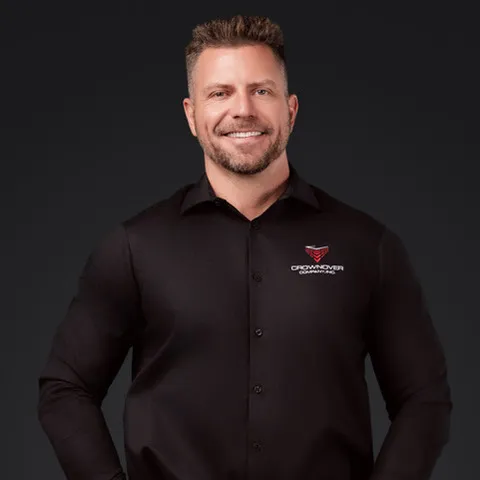
Lyle Crownover | Crownover Company
Places You Can find us




We think you’d also like this

Connecting homeowners to the build: The power of a single communication portal
Don’t let communication gaps cause project delays and frustrated clients. Buildertrend’s Customer Portal is here to bridge the gap to keep everyone in the loop.
5 communication tips – and the new tool you need for boosting collaboration
Communication in construction can solve many issues. Here are five hacks you can use to implement processes effectively – with the help of tech.

How to save time and money with subcontractor management software
Discover how subcontractor management software can save time, improve communication and streamline project workflows for home builders.