




Trends vs. timeless: How to find balance and create cohesive design
On this episode of “The Building Code,” Zach and Charley are joined by Katie Kath, partner and interior designer at Jkath Design Build + Reinvent. Katie and her husband Jesse run the business as a team, and they share a love for historic homes in the Twin Cities. They specialize in making older homes functional for modern life while honoring each home’s unique details.
Tune in to the full episode to hear more from Katie on trends, timeless design and how to find a balance between the two while managing homeowner expectations.
What is a current trend you’re seeing and how do you incorporate it while maintaining a cohesive design?
“Wallpaper is a big one. It was maybe one room, maybe the powder room or maybe an accent wall in a pantry. We could be wallpapering up to four or five rooms per house right now. I think that’s a challenge for us – to really help balance when is it too much? When are we starting to clash? Do we feel like the pantry is visible from the dining room? Do we have competing patterns? So, we sometimes have to rein in a little bit of what’s enough, while having a tasteful moment. At the end of the day, I think it’s about creating a really collected space.”
What advice do you have when it comes to managing client expectations?
“Yeah, it’s the hardest part of what we do. With our portfolio, we’ve attracted a client who wants what we have. The conversation is usually pretty easy early on. I think where it gets tricky is once we get down the path, and we may be between a few different options. It’s very easy for homeowners to say, ‘I want some of this and some of this. Let’s put it in a room together.’ We just try to use the word recommendation. ‘It’s a Jkath recommendation to do this. However, if you really love this, and this is what makes you feel good about your space or brings you a lot of joy, let’s do it.’”
Links and more
Learn more about Jkath Design Build + Reinvent on their website.
Connect with Jkath on Instagram.
Read about Jkath’s journey with Buildertrend.
The 2024 State of the Residential Construction Industry report is now live. Get builder insights and data from across the globe with best practices in marketing, sales, financials and operations. Download the report now and make it your most profitable year yet.
Related content:
Listen to the last episode to hear Nikolas Scoolis, manager of economic research at Zonda, talk about how to navigate high interest rates and an evolving economic climate.
Subscribe here, and never miss an episode.
Got podcast topic suggestions? Reach out to us at podcast@buildertrend.com.
The Better Way, a podcast by Buildertrend:
Looking to add construction tech to your daily processes? On the newest season of “The Better Way, a podcast by Buildertrend,” you’ll get best practices for implementing software and getting your team on board from other industry pros and our experts. Subscribe and stream today wherever you listen to podcasts.
Follow us on social:
Listen to “The Building Code” on YouTube! And be sure to head over to Facebook to join The Building Code Crew fan page for discussions with fellow listeners.
Zach Wojtowicz:
Well, hello everybody. Welcome back to “The Building Code.” I’m Zach Wojtowicz.
Charley Burtwistle:
And I’m Charley Burtwistle. I appreciate the different voice inflection on the intro there.
Zach Wojtowicz:
Trying to mix it up for our listeners, don’t ever want them to get …
Charley Burtwistle:
Bored.
Zach Wojtowicz:
Complacent.
Charley Burtwistle:
Or complacent.
Zach Wojtowicz:
Keep them on their toes.
Charley Burtwistle:
Absolutely.
Zach Wojtowicz:
Surprise the people.
Charley Burtwistle:
Yeah, surprise the people with awesome guests.
Zach Wojtowicz:
Though, that’s an expectation. We always have awesome guests.
Charley Burtwistle:
Expectation.
Zach Wojtowicz:
It’s us. We got to keep it fresh. We got to keep this ball rolling.
Charley Burtwistle:
You’re right. We are the ones that are lagging. We got to keep it up.
Zach Wojtowicz:
That’s right. If we’re not careful, they’ll replace the host again.
Charley Burtwistle:
Yeah.
Zach Wojtowicz:
No, no, no. Just kidding. Who we got today?
Charley Burtwistle:
Today we have Katie Kath, partner and interior designer at Jkath Design Build + Reinvent.
Zach Wojtowicz:
That’s right. Big friends of the Buildertrend and “The Building Code.”
Charley Burtwistle:
We’re big friends of Jkath.
Zach Wojtowicz:
Yeah.
Charley Burtwistle:
So, a mutual friendship here. Super excited to have her on. She has been on before, close to a couple years ago, so a bit of a hiatus, but excited to have her back. Always a pleasure talking to her on the design side of the house, which is not an area we spend a ton of time on the podcast talking to. So, when we do, we make sure we bring in the big guns.
Zach Wojtowicz:
They’re always some of my favorite episodes though because they just have such passion for the artistry. I just have grown to really admire the process and how much care goes into it, to making a home more than just a home. It’s almost like a portal, a gateway to an experience when you go to see some of these spaces. So, she’s an absolute professional. She’s an expert. Let’s not waste any more time. Let’s get her in here. Hey Katie. Welcome back to “The Building Code.” It’s been a while, we were just recapping. It’s been a couple years, which is crazy. How are you?
Katie Kath:
I’m really good, thanks. Thanks for having me back. It must’ve went well a couple years ago.
Zach Wojtowicz:
That’s right. That’s right. We ran the tape, and you’re like, “You know who we need? What’s Katie Kath up to?”
Charley Burtwistle:
Yep, we got to get her back.
Katie Kath:
Right, right.
Charley Burtwistle:
For the listeners that we’re not fortunate enough to hear that first interview, would love for you to just do a quick debrief on who you are, where you came from, where you’re at now, a little bit about Katie Kath.
Katie Kath:
Yeah, thanks. So, I’m a partner at Jkath Design Build + Reinvent. My husband and I own our higher-end residential remodeling company here in Minneapolis, Minnesota. We do quite a bit of work here within the Twin Cities, if anyone’s familiar with what the Twin Cities is and what that means. Then, we also own a custom cabinetry shop. That’s really the foundation and the roots of how we got started. We have a design arm as well, so we do a good portion of architectural planning internally until we get into major structural issues. Then, we will bring in the right people, but we also work closely with structural engineers.
Then, we do all the designs. So, we do all interior selections and then we do that for … Primarily our focus is current renovation projects, but our design team can get out quite a bit ahead of our field crews. So, we are doing a lot of design out of state that we will never touch construction on. So, we’re trying right now to close the gap on, if we’re doing … For example, we have a project in Pennsylvania right now and we really know that our cabinets need to be in that house, so how are we going to make that happen? We do have a retail line with our cabinetry, but it’s not quite as big as a whole kitchen, a whole house. So, we’re dabbling in how to scale that, what do we want to do with it, where does that go and what does that mean?
Zach Wojtowicz:
It’s really interesting. I can’t recall. Did you guys start out as a design build? What was the evolution of Jkath as far as moving across state lines and having your cabinetry line? What was the origin?
Katie Kath:
So, it started as a cabinet shop.
Zach Wojtowicz:
A cabinet shop.
Katie Kath:
Back in 2010, that didn’t last long. I actually was not here or part of Jkath in 2010. I came around few years later, but by the time I came in the picture, my husband had already branched into the build piece. So, I should say early in the early days it probably … Yeah, so I won’t get into all the details, but cabinet shop first, then into the design build. I came into the picture, then we started adding in the design pieces. From there the company has grown just based on the skill set or the needs that we meet. Architectural planning has been a huge one.
We do not have a licensed architect on staff. That’s a good qualifying question people ask, but if that’s a deciding factor, we will bring in said licensed architect to create some comfort zones around that, but we know enough. We, our team, I should say, I, Katie Kath, don’t know all the details, but our team, our field crews, my husband who’s very knowledgeable, knows enough about what we’re doing from a floor plan perspective to be able to get a good portion of that done in-house. Then, our design team is all really skilled in the drawing as well. We use CAD for all of our drawings, so we can get pretty close to where we need to be by doing a lot of internal sketches to do new layouts and, really, which is …
I’m getting off track, but to really assess early on what is the scope and therefore what is the budget and then can we align to move forward? We have a whole separate pre-construction process to really dive into are we really even a fit for this homeowner? And so it’s worked really well for us as we’ve scaled to bring that in-house so we can manage the timeline of how much of that space planning do we really need to develop upfront just to be able to set a budget? And then decide how we’re going to proceed, or maybe it’s not a fit for us or maybe it’s not a fit for the homeowner at this time are a couple of the options that we’ll run into.
Charley Burtwistle:
Yeah, that makes sense. Well, first of all, you said you’re getting off track. I’ll let you on a little secret. There is no track.
Zach Wojtowicz:
I was going to say the same. No, this is great.
Charley Burtwistle:
So, we’re always on track and at the same time always off track it. So, don’t worry about that.
Zach Wojtowicz:
That’s our brand.
Katie Kath:
Perfect.
Charley Burtwistle:
Always on and off track. Yeah, I was excited to talk to you again today because the design side, specifically, of the design build is always really fascinating to me. Specifically, in the past year, Zach and I have both bought a new house. Not together. We both bought separate houses.
Zach Wojtowicz:
Announcement, Charley and I moved in together. We’ve got a commune, the whole thing. No.
Charley Burtwistle:
But I love looking, I love buying a house. I love shopping around for the houses. In Omaha, it’s a really cool combination of the older houses that were built in the ’30s, ’40s, the older feel and obviously, constantly expanding, so you have the newer feel as well. I love looking at them and seeing the differences between the two and so, I go through phases where I’m really hyper-focused on design. Then, I don’t think about it again for a long time, but I remember our last conversation with you was really informative and interesting to me, so excited to have you back.
I know one of the topics that we want to talk about today, kind of a broad topic, but interesting to hear your perspective is just how do you fluctuate or how do you sustain a steady state through the fluctuation of design trends? So, what is a passing phase versus what is a tireless element, as it were? How do you navigate staying on top of where the trends are at? I need to formulate a question here, because I’m just rambling.
Katie Kath:
Yeah, that’s okay. Got it. I can go off track a little bit and fill in.
Charley Burtwistle:
Perfect. Thank you.
Katie Kath:
So, it’s a great question, and I think the cliche answer would be there are no trends, but there are. I think there just are, and so, we lead with a lot of our new client inquiries with customized interiors. It’s what we do well, it’s our niche. It lets us have both feet into potentially older homes, homes with an architectural interest. Maybe not, we love a newer home, too. They’re easier to work on. It’s a good break for our team, but then how can we add some of those character moments within the home?
If we lead with that, we’re not necessarily looking at the most trendy or latest and greatest fashion, if you will, for the home. We’re already prioritizing customization. Our cabinet shop is a huge piece of that, architectural millwork, classic, timeless, natural stone elements. Where can we use a marble or stone tile, soapstone? People might call that trendy, but soapstone’s been around longer than any of us, and our ancestors for that matter. It’s been around for one of the longest materials in the market.
So, if that’s what we’re leading with, then we’re looking at what are the hot must-have items that people are really excited about? Wallpaper is a big one. It was maybe one room, maybe the powder room or maybe an accent wall in a pantry. We could be wallpapering up to four or five rooms per house right now. I think that is a challenge for us is to really help balance when is it too much? When are we starting to clash? Do we feel like the pantry is visible from the dining room? Do we have competing patterns?
So, we sometimes have to rein in a little bit of what’s enough, but while having a tasteful moment. All saturated tones or color drenching would be another way of referring to it as just painting everything in the room one color, the walls, the millwork, the cabinetry, maybe your window treatments, your furnishings might lean in that same color. It could be really rich and moody, dark black, browns, olive tones, or it could be really bright and cheery, red, pink, yellow. I think those are really fun. That could be a moment that we could see in a smaller space, which feels a little bit safer, but really at the end of the day, I think it’s about creating a really collected space. Within some of that space, we’re going to find a few trends. I think it’s just fashion. Do you guys know a lot about fashion?
Charley Burtwistle:
Fashion?
Zach Wojtowicz:
Can’t you tell? What do you mean? What do you mean?
Charley Burtwistle:
Yeah, pants and a quarter zip is not fashion.
Zach Wojtowicz:
How do you feel about golf polos?
Katie Kath:
Yeah. Well, I give my husband a hard time because he’s in his early fifties, and it’s all 50-year-olds wear three-quarter zips, especially 50-year-olds in construction. So, next time when you guys go out to the builder show, pay attention to the floor. I hope I’m not offending anybody, but it’s … The construction uniform is to wear a three-quarter zip probably with a company logo on it as well. So, I always laugh because it’s very predictable, but at least we know how to gift around here. We know what the guys think.
Zach Wojtowicz:
Speaking of timelessness, consistent, right? Always. Don’t have to think too hard about the right thing to get someone. That’s a huge benefit. One thing I was going to play off of, it’s interesting hearing you talk about your process and the way you go through. There’s got to be some education that happens for your customers. What’s that dynamic? Are you telling them this is a timeless design and they’re like, “Oh, that sounds great?” Or do they come to you and they’re like … They have a very strong vision and they’re like, “This is what I want.” You’re like, “Is that what you want? Are you sure that’s …” And you have to find that balance. What is your perspective on that?
Katie Kath:
Yeah, it’s the hardest part of what we do. Thankfully, we’re not new into the business. As I mentioned earlier, we’ve been in it since 2010, but the design piece has really evolved in the last probably seven to eight years. With our portfolio, we’ve attracted a client that wants what we have. The conversation is usually pretty easy early on. I think where it gets tricky is once we get down the path, and we may be between a few different options. It’s very easy for homeowners to say, “I want some of this and some of this. Let’s put it in a room together.”
Well, that doesn’t always work, but also design is very subjective. So, it might work in their eyes, but maybe not in mine or one of my team members. Inevitably, I’ve edited down some of the work a team member has done, and I have said, “No, I feel like if we make these few changes, it feels very Jkath.” Sure enough, they’ll present it, and the homeowner will undo everything I did and go right back to where my team member started.
So, I think just having awareness that this is a very subjective process, but definitely exercising the muscle on not super easy conversations. That’s generally what I do for our company anyway, be it design or communication breakdown on site. Are we having issues with a plumber? Is it a Jkath team member? I’m usually the one that steps in and resolves a lot of those conversations. So, it’s easy for me, but I’ve learned that is not easy for most people to help guide people on a path, but we really just lean into…
We just try to use the word recommendation. “It’s a Jkath recommendation to do this. However, if you really love this, and this is what makes you feel good about your space or brings you a lot of joy, let’s do it.” Then, we decide in the end when we do some marketing assets. It isn’t so much that we wouldn’t capture marketing assets. Sometimes there’s a very Jkath branded moment that we still won’t capture because maybe we’ve already done a version or two of that. So, we’re also having a different lens on what do we want to capture that we feel great about, that we’re proud of. That also may be a little bit different than something we’ve already done that feels very on brand for our company.
Charley Burtwistle:
No, I love that. As you were talking, I had just Jkath.com pulled up and I was scrolling through your portfolio there. That’s a good point that I’d never really thought about of how do you cater towards your clients while at the same time maintaining a brand that you want to showcase to future clients as well, too? Just from an outsider’s perspective, I think you do a really good job of that, from a marketing perspective. Each one has a different feel to it, but you sense the commonalities across all of them. It feels very conjoined from a product perspective, which I think is, I’m sure, a very difficult line to tow.
Katie Kath:
Thank you. One thing I’ll add, just to be real because the listeners are probably all saying, “Well, what if you just need the cash flow?” The reality of running a business is sometimes we just can’t be that particular and we have to just say yes, especially as we’re getting going. We just have to say yes to the work and that’s okay. Sometimes we just need to say yes because it feels good. The homeowners are the right fit. It might align with everything, but potentially the aesthetics may be a little bit dis-aligned. That’s okay. We’re not too proud to do it. If everything else feels great, the budget’s there, the homeowner feels like a great fit for us, we might need to layer in some work to keep crews busy. Our cabinet shop is a big component. We need to keep that busy. We need to keep the machines on and the lights on 40 hours a week, but that doesn’t need to be reflected in every visible asset that we create.
Zach Wojtowicz:
One of the things I want to circle back to, because I’m really interested in your personal perspective. You brought up fashion. Do you use other areas that are adjacent to construction design to inspire your design language, if you will?
Katie Kath:
Well, so a lot of our brands that we work with, the manufacturers, they all rely fashion as their early intuition for what’s… A lot of the plumbing companies do. A house of Rohl, Brizo, Delta, GE. The Cavas portion of the builder show, you see fashion everywhere. In this past year, fashion was everywhere, the colors, the texture. So, it isn’t so much that we’re bringing in fashion to our conversations. Occasionally, it hasn’t been out of the question for us to create a design board and put in some fashion. We’ll read our homeowner a little bit and see if that’ll check off or not.
But I think just personally as an interior designer, and I’m not a trained interior designer, so I didn’t go to school for this, but it’s been a calling of mine my entire life. I’ve always been interested in garments and wearables and fabrics. I’m an avid knitter. I knit all the time. It’s like I love the texture of wool. That translates to what we’re putting into homes. I’m a big fan that all carpeting should be 100% wool. Some people say, “Oh, this feels scratchy.” I’m like, “Yeah, you’re the guy that can’t wear a wool sweater.” My husband’s one of them. He literally just crawls in his skin when he puts a wool sweater on.
So, there are different components, I think, that carry through. Not only is it a visual space, but it’s very much like how does it feel? Same thing with countertop materials and tile. How does the tile feel on your feet in the shower? Some of the artisan tile or handmade tiles can have a different … The install pattern can have a varied height or the grout lines could fit in differently. Textured walls are a huge. We love doing textured walls and I feel like that’s a very timeless trend and that can vary.
So, every decade the textured wall might evolve, depending on what’s in style. It’s like shiplap, paneled walls. We’ve seen a lot of those. Go horizontal, it feels a little more farmhouse. If we go a little more vertical, does it feel a little more coastal? Painted shiplap walls, wallpaper is a textured wall. Now, we’re seeing a lot of wood. Everyone’s going back to just a lot of wood paneled walls and ceilings, which is really fun to see. It doesn’t need to be paneling. It can be applied moldings. It could be a plastered wall, as plaster’s coming back too. Again, going back to the saturated tones, we’re seeing a lot of primary bathrooms with plastered walls and everything, just being very monochromatic throughout, not just a plaster kitchen hood, which is what is a little bit safer for some. It’s just putting one toe into the plaster arena. Yeah.
Zach Wojtowicz:
Really interesting. You mentioned something else, different sources. I have two questions that are not related and they’re not on the script, so I’m just going off the wall here.
Charley Burtwistle:
Here we go.
Zach Wojtowicz:
Yeah, just buckle up everybody.
Katie Kath:
I’m here for it.
Zach Wojtowicz:
The first one is geographically, how much does that influence the design process? So, in Minnesota, are you seeing a lot of historical neighborhoods that they want to maintain that feel and vibe? Or are they looking for those, like, I’m in Minnesota, but I’d really love to be in the Hamptons and they’re trying to bring that into their area? What is that experience like for the way design gets influenced by where you live?
Katie Kath:
Yeah, great question. So, here in the Midwest, we’re a little far behind. So, it takes a little bit longer to get out to what the coast or even the bigger cities are doing. We can go just down to Chicago, which isn’t far, and see things a little bit quicker. I would say we have not a huge historical area here in the Twin Cities, but we have a pretty decent sized one. We do a lot of work in homes that are approaching 100 years old, and that has become our niche. We do get a lot of inquiries for that type of work.
Interestingly enough, a little bit off-topic, we at the end of each year do a deep dive on where all of our traffic is coming from. Then, not only traffic, but how’s that converting? We have a big marketing campaign that we invest into in Pinterest, and so, I could geek out on that all day long, but our intention of writing blog posts isn’t really so much that we can put a newsletter out there with it. We do because we have the content, so we’re trying to repurpose it in multiple different facets, but putting it out in Pinterest is getting that larger national audience, and not only that, but a longer audience.
A pin on Pinterest can live, have a really good life for six months. Well, we all know Instagram might be 24 hours, if even that, and so our content is just … It’s having just a longer shelf life in Pinterest, but when we look at what’s happening on Pinterest and what it’s converting to, the two ways it can convert is through a purchase through our vanity collection, which we sell online or hiring us to do design only work.
We are targeting, for whatever reason, Northeast. So, that’s our … Then, we just did a graphic. We did little pins throughout the United States, and we drew the lines on where we’re going, and it’s a heavy flow out to the Northeast. I haven’t done the exercise to figure out what does that mean, but I just keep thinking it’s that historical component of the homes. Whatever decor or style we’re putting here in the Midwest, our friends out east are taking notice to it, probably because the style of home that there’s predominantly out east.
Zach Wojtowicz:
Yeah, yeah. So, then the other thing that popped in my head in relation to the design trends and how does that work? You mentioned the vendors and the people supplying the materials. What is your influence on them? If they’re influencing you, do you have relationships with your vendors in that, even what materials are they bringing to market?
Katie Kath:
So, we have had some opportunities. We’ve done some close work, again, with Brizo. I was super lucky a couple years ago to go out and do their New York Fashion Week with them. It was probably an experience of a lifetime. We did a lot of research and development, and they rolled out a lot of prototypes for items coming to market or still in ideation. There’s a group of us nationally, a design team, and we came together and did a lot of pencil and paper and writing down thoughts and ideas and helped to weigh in on their next few releases. So, it was really fun going out to the builder show now or KBIS and seeing some of those designs evolve.
Other than that, we have close relationships with a number of appliance companies. There’s a few other plumbing companies, and they are all very generous and do a lot of trainings on location. So, they’re usually getting us on a plane and flying us to wherever their headquarters are located. Then, we’re doing a deeper dive into those, but they aren’t … I would say a think tank opportunity doesn’t arise as often as it would be really fun for that to happen, but not as often as it does.
Charley Burtwistle:
It sounds like Zach and I need to go out to New York Fashion Week.
Zach Wojtowicz:
We would fit in so well. We’d just be a huge hit.
Charley Burtwistle:
This whole time, I’ve been thinking. When you’re comparing the design elements to fashion, I’m like, “Am I decorating my house in a way that’s a little too quarter zip? Do I have a quarter zip house?” Now, I’m rethinking every purchase I’ve made in the past year since I bought it.
Zach Wojtowicz:
Yeah.
Charley Burtwistle:
I needed Katie Kath to maybe sign off on this first.
Katie Kath:
It would be appropriate …
Zach Wojtowicz:
We just start sending you pictures, like, “How does this setup look?” You’d be like, “It looks like it was a …”
Katie Kath:
It’d be appropriate for you to hang artwork in your house at the height of a 6′ or 6’2″ human being, so everything’s at 72″ off the ground. We do that. We walk into homes, and we’re like, “Oh, there’s the artwork.”
Charley Burtwistle:
Yeah, that’s a little too real. That has happened, actually, where I was going to be a good fiancé and hang some stuff up for Audrey. Then, she came down, she’s like, “Why is it so high?” I’m like, “What are you talking about? It’s eye level.” She’s like, “For you.” I’m like, “Well, yes, I’m the one looking at it.” I guess she just won that argument if she’s listening to this.
Katie Kath:
Yeah, good for her.
Zach Wojtowicz:
Hanging pictures has got to be a top five divorce reasons for America. Everybody I’ve talked to it’s led to some sort of conflict of … We need a Katie Kath arbiter just to save Charley’s relationship. Don’t. Just keep your mouth shut, Charley.
Charley Burtwistle:
Yeah.
Zach Wojtowicz:
Just do what she wants. Katie, it’s so much fun to talk to you about this. Whenever we talk to designers and design build firms, it almost feels more like art is probably the closest descriptor of it because it isn’t something that … I’m very analytical. It’s very like, I don’t know. I have a bookshelf. It does what I need it to.
Charley Burtwistle:
It holds books.
Zach Wojtowicz:
Yeah, it holds books. What’s the problem here? Whereas this whole experience of designing and having the eye for it, for our listeners out there that are not part of the design build community or are interested in getting into it, what’s the core philosophy around design build that maybe someone should be thinking about when getting into this type of construction?
Katie Kath:
Sure. So, that’s evolved for us. Originally, I don’t think my husband knew what design build meant when he started. I think it was just … I don’t even know, to be honest. I’ve asked him. He’s like, “I don’t know. I was just told that was the name and that’s what we did.” It was 15 years ago before design build became as redundant as we see now, but certainly our focus is to spend that pre-construction time, and probably longer than most construction companies, on the design process, which if you don’t have it in-house, a lot of companies will outsource it, right? Some don’t. I think as people are getting up and running and still grassroots, they’re letting the homeowner make the decisions.
That’s when I came into the picture. Homeowners are making a lot of the decisions, and that’s a great place to start. I don’t think you have to start with the design piece doing it in-house, but that’s just become the value add of what we provide. Our client isn’t necessarily doing their first renovation project. We actually are in a season of life a lot of our homeowners are potentially doing their last renovation for homes that they’ll be in for retirement, and their kids are grown and moving on. So, it’s just a different stage of life, but again, it’s developing the scope as it aligns with the budget. It’s really hard to do that without having so many placeholders who are trying to get those allowances really tightened up.
So, we might be within 3% of the total project cost. Then, so it’s a lot of work. It could be 6, 8, 12 or more months depending on the project going back and forth on all those selections. When we’re done with that pre-construction process, we’re delivering a full resource guide. The homeowner owns all of that data. It could be a floor plan, all of our full-detailed, 2D drawings specific to all the cabinetry that we build and design. But really the homeowner could take all of that data and have a different builder, which is how we can work out of state as well, or a different cabinet team build from those plans. Then, a resource guide, so everything is source linked.
So, if we end up being their chosen build team, we can easily just purchase everything for them, which is our model. Or if they turn it over to a different build crew, they or their builder can click through and purchase everything. Then, we’ll get as detailed as to how many square feet they need. We’ve got the grout figured out, we’ve got shower drains, we’ve got Schluter. Every single thing you would need to go into that space. We’ve thought of it, and we’ve sourced it and linked it.
We’ve become so processed in that, almost to a point, now, we’ve swung the pendulum so far that our field crews can sometimes get paralyzed in moving forward because they might be missing a detail. Now, we’re trying to have conversation internally about how to unwind that a little bit and create some flexibility around … You also know the answer to this. We’ve created a plan for you, but we’re a team, and we’ll all own each other’s decisions. If you’ve got white Schluter in the rest of the house, and it was missed in one bathroom, it’s pretty good assumption there’s going to be a white Schluter in that bathroom, too. That’s a bad example. We actually don’t use a lot of Schluter, but it’s a good product.
Charley Burtwistle:
That makes a lot of sense.
Katie Kath:
Are they sponsors?
Zach Wojtowicz:
No, I love that evolution story of every business is very unique. You try to get to this point of everything systematized so much that it actually ends up on the people doing the job, make them question. Their critical thinking goes away a little bit, right?
Katie Kath:
Exactly, exactly.
Zach Wojtowicz:
I know we’re not focused too much on the business process in this episode, but I think they’re all interconnected. It’s like you’ve grown so much, you’ve got this great process. You’re a power user of buildertrend, but every business, no matter their maturity, is going to have a problem with something that needs to continue to be optimized or grown.
Katie Kath:
That’s right.
Zach Wojtowicz:
We’re about out of time today. We really appreciate it. It was a great conversation. I think, actually, that last kind of where we were going with that is perhaps episode three where we talk about how your guys’ business process evolved as you grew and changed your business priorities. It was great having you on today. It was a fantastic conversation. There’s a lot for us to recap. For what it’s worth, we have a case study on Jkath on our website that we’ll link in the show notes, but where would be the best place to check you guys out otherwise?
Katie Kath:
Website’s a great place to start, Jkath.com, otherwise Instagram is where we focus a lot of our daily time and energy. So, that’s Jkath Design Build.
Charley Burtwistle:
Love it. Well, thank you so much again, Katie, for the time and the perspective, really beneficial and a great episode. So, appreciate it.
Katie Kath:
Great. Thanks. You guys have a good day.
Zach Wojtowicz:
Mr. Burtwistle, we just had Katie Kath, Jkath Design Build + Reinvent. What are your thoughts?
Charley Burtwistle:
Well, Zach, I have a lot of thoughts other than I am having a bit of an existential crisis that my home is a golf polo or quarter zip equivalent, but no, she was great.
Zach Wojtowicz:
It took someone to tell you that, huh?
Charley Burtwistle:
Yeah, it did, and now it’s all I’m going to be thinking about. No, I actually think you said it really well on the intro, on these types of episodes are just, I don’t know, motivating, inspiring. It’s just a different type of attention to detail and thought process that we typically think about when hosting this podcast or designing a home or building a home where you have to just think at a higher level and be one step ahead into what’s really popular right now, what’s going to be popular. Listening to the customers and what they want, but also providing … What she’d say, recommendations? The Jkath recommendation on what they think would look best in the house. It’s an area where I have absolutely zero expertise, so listening to someone like Katie talk about it is always extremely informative for me.
Zach Wojtowicz:
Yeah, I’m guessing she’s not filling the house with stuff from Target, so we start there, right?
Charley Burtwistle:
Well, Target does great work. It’s not …
Zach Wojtowicz:
I’m not hating. Trust me, we’re a big Target family. I’m just saying.
Charley Burtwistle:
Yeah.
Zach Wojtowicz:
So, one of the things that I was thinking about, I read a book a few years ago, it was called Home. It discusses the evolution of how houses came to be, going back to the original first shelters. It started with a fireplace, a hearth, and over time, every room has a story. I always feel like with designers, and when we talk about trends and design and the things, there’s always a story of how these things came to be. When you look at houses 100 ago, why are some things consistent and always timeless, and why are others just temporary but then they come back around? We didn’t get into the eras that we’re in right now and what influences we’re seeing. I’d love to have her back to …
Charley Burtwistle:
Got to have her back.
Zach Wojtowicz:
Of course, to talk more about that. It would be fun to have like Katie Kath and Piper Stromatt and Morgan Molitor come in and just educate us on what good design is, but really educate our listeners, but really us.
Charley Burtwistle:
Yeah, that’d be sweet.
Zach Wojtowicz:
Because there’s so many little threads you can pull on about how things came to be. Design is at the cornerstone of how that translates into your home.
Charley Burtwistle:
Everything, yeah.
Zach Wojtowicz:
It’s just so cool to dig into an expert’s mind about it. So, thank you so much, Katie.
Charley Burtwistle:
Yeah.
Zach Wojtowicz:
It was amazing.
Charley Burtwistle:
It was amazing. Definitely appreciate the time and Zach, thank you.
Zach Wojtowicz:
Oh, Charley, no, the pleasure is all mine.
Charley Burtwistle:
Thank you. Great episode, great guest. As always, this is “The Building Code.” I’m Charley.
Zach Wojtowicz:
And I’m Zach.
Charley Burtwistle:
We’ll see you next time.
Zach Wojtowicz:
He said it. We’ll catch you next time.
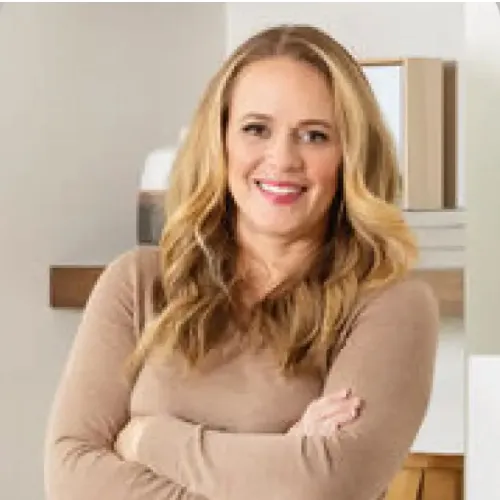
Katie Kath | Jkath Design Build + Reinvent
Places You Can find us




We think you’d also like this
podcast
Sep 28, 2023Reputation is everything: How client experience and timeless design ensure success
Listen to the full episode to learn how going above and beyond for clients to create a custom experience with timeless design leads to success for 20 years and beyond.

Exterior home design trends 2023
We asked five home builders and remodelers their expert opinion on what home exterior design trends are most requested by their clients in 2023.

Bathroom spending habits and trends for 2023
Homeowner spending habits fluctuate, and design trends dictate the market. Here’s a breakdown of what’s to come for the bathroom remodeling industry in 2023.