




Planning for production: How to get a $150 million development off the ground
This episode was recorded in 2024. Because Buildertrend continues to improve and expand its platform, some features or services mentioned may have changed.
On this episode of “The Building Code,” Zach and Charley are joined by Terry Paterson, president and CEO of Paterson Project Management, Inc. Terry is originally from Cape Town, South Africa, where he built his first couple houses at the age of 20. He then made the move to the U.S. at 23 and got involved with the development of a small luxury hotel. This eventually led him to start his own company that focuses on property development and new construction.
Tune in to the full episode to hear more about the behind-the-scenes planning and processes required to bring a 43,000-square-foot development to life.
Can you tell us more about the large-scale project you’re currently working on?
“We’re about to start construction on our brand-new Lighthouse Point Yacht Club. It’s a phenomenal development. There’ll be a 43,000 square foot clubhouse building. Then inside that is a massive gym, locker rooms, jacuzzi, saunas, steam rooms and outside jacuzzi. Then there’s a conference room for members. There’s a banquet hall that can hold 300 people. We even have a bridal suite in there for brides, for weddings. We have two member-only restaurants and two member-only bars as well. It’s quite an undertaking, but we’ve spent seven years to get to this point that permits are literally being issued as we speak.”
What processes and planning go into a project this massive?
“Seven years ago, we started. A lot of people see developments come up, but they don’t realize what happened behind the scenes for years and years just to get to that point. You first need to locate a piece of land that you feel that you really want. But before ever buying a project, always make sure you can actually do what you want to do. What we went through here was a total land use change with the county, a zoning change with the city. We had to rewrite a new building code for this kind of a property in the city. You’ve just got to go through the motions. I advise to anybody trying to do this to take the time to meet one-on-one with whoever you’re going to do a public presentation to, including the naysayers. We did and got all the entitlements approved by February 9th, 2022. We then moved forward with engineering.”
Links and more
With a dwindling workforce continuing to affect the construction industry, business owners are turning to technology to increase efficiency. Download our free guide for tips on how to combat the labor shortage and increase productivity by 50%.
Related content:
Tune in to the last episode to hear insights about profitability and get a look at Brad Leavitt’s panel discussion for this year’s International Builders’ Show.
Subscribe here, and never miss an episode.
Got podcast topic suggestions? Reach out to us at podcast@buildertrend.com.
The Better Way, a podcast by Buildertrend:
Looking to add construction tech to your daily processes? On the newest season of “The Better Way, a podcast by Buildertrend,” you’ll get best practices for implementing software and getting your team on board from other industry pros and our experts. Subscribe and stream today wherever you listen to podcasts.
Follow us on social:
Listen to “The Building Code” on YouTube! And be sure to head over to Facebook to join The Building Code Crew fan page for discussions with fellow listeners.
Zach Wojtowicz:
What’s up, everybody? I’m Zach Wojtowicz.
Charley Burtwistle:
And I’m Charley Burtwistle.
Zach Wojtowicz:
I can hear that “The Building Code” music in my head, bringing us in hot.
Charley Burtwistle:
Actually, we were doing a holiday party, this is not this last month but a year ago, and I was playing music, and I just pulled up the intro for “The Building Code,” and I played it like three times in a row.
Zach Wojtowicz:
You would.
Charley Burtwistle:
Yeah, it was awesome.
Zach Wojtowicz:
You would. Charley’s, if you’re looking for insider baseball about, are we local celebrities? That depends on which host you ask, because I don’t talk as much about “The Building Code.” Charley will absolutely plug it in any meeting or opportunity.
Charley Burtwistle:
If you don’t promote yourself, who’s going to?
Zach Wojtowicz:
That’s right. Not that I’m not proud of “The Building Code.” I love being the host. I’m not a self-promoter.
Charley Burtwistle:
Well, that’s what I’m here for.
Zach Wojtowicz:
That’s right. Yin and yang.
Charley Burtwistle:
Yin and yang. Wow.
Zach Wojtowicz:
Same page.
Charley Burtwistle:
… finish each other’s sentences. Well, enough about us. Someone far more famous than us, and much more intelligent than us, and better content than us …
Zach Wojtowicz:
President and CEO …
Charley Burtwistle:
… Of Paterson Development in Lighthouse Point, Florida, we have Terry Paterson to talk about how he got into the development space. They are doing some very exciting moves with a yacht club, which we’re going to dive into.
Zach Wojtowicz:
I’m intrigued.
Charley Burtwistle:
Yeah, it’s going to be fantastic. I don’t think we’ve had a developer on the podcast before, or at least talking about these large development projects.
Zach Wojtowicz:
I’ve had experience working with some in the past, and I always learn a ton. There’s all these things that go into how the land gets developed, and I’m really interested to learn and dig a little bit deeper about the process. I can only imagine what a yacht club would take to stand up.
Charley Burtwistle:
Well, let’s find out.
Zach Wojtowicz:
Let’s get Terry in here. Hey, Terry, welcome to “The Building Code.” It is wonderful to have you. How are you doing today?
Terry Paterson:
Excellent, thank you. Wonderful to be here. I love Buildertrend, and I’m looking forward to talking to you guys.
Charley Burtwistle:
Well, that’s what we love to hear. For our listeners out there, wondering if you could just … We always like to open up with just a little bit about yourself, your career and how you ended up in construction.
Terry Paterson:
I’ll try to keep it brief. I’m from Cape Town, South Africa. Built my first houses when I was 20, 21 years old in Cape Town. Came to the U.S. when I was 23 and got involved with a small luxury hotel development, and that boosted my involvement in that, and then ended up running that hotel. Ended up boosting my construction company very fast because I had almost a built-in clientele where people coming down south to Fort Lauderdale to stay and could see what I had done and could see the service that I’m able to give, and the size project that I had built. I was given this instant trust, and they would hire me to renovate their houses back in 2000, 2001, 2002 when there was just tons of renovations going on and that just grew from there.
Something about construction is, you can’t just start by building the kind of houses we built today. It doesn’t matter what experience you’ve got, how much money you’ve got. Unless you’re doing it as a development for yourself, you can’t get clients to trust you with these massive $10, $20, $30 million waterfront and estate homes that we build today. We just built it slowly from renovations, 200,000 and the next $400,000, then $800,000, then one and a half million dollar renovations, until someone trusts you to build them a new home, which happened reasonably quick in my career. Small house, and then you’re able to show that house, and if you do a good job and get good references, and win awards from City of Fort Lauderdale, which helped us a lot for community appearance awards, and then just build it from there. From $1.5 million projects, houses, to $2 million, to two and a half million, you carry on going up and up and up until today we’re doing, we have builds of $9 million, builds of $10 million, one build of $13 million and that’s construction costs. I think we have about eight houses under construction right now from Miami Beach to Palm Beach.
Most of them are Broward, East Broward and South Palm Beach area, but we do have a house in South Beach that we’re building, and we do have a house in West Delray, a very big 20,000 square foot estate home. We have Lighthouse Point Yacht Club, which is going to be about $160 million development right in the heart of Lighthouse Point. It’s actually a 78 slip marina, but we have about 69, 70 yachts in it because we tend to put larger vessels in it. It has five tennis courts, mini-Olympic swimming pool, big clubhouse that … We’re about to demolish all the existing, which was built in 1961, and been through a number of renovations. We’re about to demolish all of it, and start construction on our brand new Lighthouse Point Yacht Club.
Zach Wojtowicz:
Yeah, I’m looking at some of your stats here.
Terry Paterson:
That’s the short synopsis.
Zach Wojtowicz:
Yeah, you mentioned that there’s going to be a few structures. I see the 43,000 square foot clubhouse, which is really interesting. That’s the same size as my personal home in Omaha, really. No, that’s insane, Terry. I can’t even imagine the scope of this project. You said it’s $140 million?
Terry Paterson:
We’re building 21 townhouses. They are $3.2 million to $4.2 million townhouses, which we already have half sold. We’re building one big single family home, which will probably be around a $9 to $10 million home, and it’s all in a gated community, in a yacht club on the water, and with the amenities of a five- star hotel, because you’ve got the yacht club, which when we fully staffed, we’re at about 120 staff who are taking care of all these people living within the community.
They are living in a condo building or a high-end hotel, basically. It’s a phenomenal development. There’ll be a 43,000 square foot clubhouse building. Then inside that is a massive gym, locker rooms, jacuzzi, inside saunas, saunas, steam rooms, outside jacuzzi in the building as well. Then there’s a conference room for members. There’s a banquet hall that can hold 300 people. We even have a bridal suite in there for brides, for weddings. We have two member-only restaurants and two member-only bars in that building. It’s quite an undertaking, but we’ve spent seven years to get to this point that permits are literally being issued as we speak.
Charley Burtwistle:
Well, it sounds like the next time you come on “The Building Code,” we need to do a live interview from the steam room out there. I feel like we’d get a little better conversation going there.
Zach Wojtowicz:
It’s a whole tour, honestly. A live episode …
Charley Burtwistle:
A little walkthrough.
Zach Wojtowicz:
… Walk through the property. Maybe we’re at the hotel as well.
Charley Burtwistle:
That’d be a great inaugural travel trip for me and Zach.
Zach Wojtowicz:
That’s right. Terry, we’re actually talking to our marketing team right now. I’m sure you’ll agree, but we just got to get the …
Charley Burtwistle:
We’d love to come help you show it off. We won’t charge you anything either.
Terry Paterson:
We’ll get you to come for the ribbon cutting as we open for the first time.
Charley Burtwistle:
Yeah, that sounds great.
Zach Wojtowicz:
We’ll get down.
Charley Burtwistle:
I mean, it obviously sounds incredible. My small little brain can’t even comprehend what all goes into that, but if you could help me understand, you mentioned you started five years ago of working on getting everything ready to go. What does, in layman’s terms, the planning and process that goes into a project? You have this idea one day, you’re approached by an investor, you notice a location? Walk me through the A to Z to get to where you’re at today. Obviously, the build process is an entirely different thing, but getting ready for that, what does that look like?
Terry Paterson:
Seven years ago, we started. A lot of people see developments and they come up and they go, “Wow, that went quick.” They don’t realize what happened behind the scenes for years and years just to get to that point. You first need to locate a piece of land that you feel that you really want. I was very lucky that I found this yacht club was for sale. I tried to buy it a couple times, and other people beat me to the punch, and they pulled out. They didn’t follow through with the sale, and so eventually, I got to the point where I made an offer, and my letter of intent was accepted. I then immediately started working on the financing, and at the same time my schematic designs or site layouts that I could present to the city.
Before ever buying a project, always go make sure with the local city, and planning and zoning, if you can actually do what you want to do, because what we went through here was a total land use change with the county, a zoning change with the city. We had to even rewrite a new building code for this kind of a property in the city. It was huge. That takes time. If you get involved in a project that you’re going to have to do that amount of work, that literally took five years just to get the entitlements, that was before, then completing the plans and engineering to submit for another 18 months for permits. That’s just to get the entitlements done. 28 public hearings, you can see them online, two to three to four hours of me standing there having to argue, fight, answer, listen, adapt, change, and that just went on and on and on.
You go into a project like this, see if the zoning works. I did that. I thought that the city was open to changing the zoning. I was told by the head of planning and zoning that they were, and then I went and closed on the property and then to found out that the city didn’t want to change the zoning. I had to then go in to convince the members of the club, convince the surrounding community to help me convince the city commissioners, to then override what the initial will of the city was, was not to change the zoning, but when you get the people on your side, and you get the commissioners on your side, then you can eventually be given the green light to move forward with baby steps. “Okay, well let’s see what this will look like.” That’s what happened. Well, then they say, “Well, let’s see if the county will give you the land use change.”
You’ve always got naysayers as a developer, something you just have to … It’s just a part of the territory. It needs to roll off, like rolling off a duck’s back. Everybody’s saying, “You’ll never get this done. The county will never give him the land use changes.” It’s a yacht club, which is trying to do a commercial property and add all these residences into the heart of an existing residential neighborhood. You’ve just got to go through the motions. Submit, go meet with as many county commissioners as you can, convince them that this is the right thing to do. Show them personally, one by one, who you are. By the time you get to these public hearings and you’ve got the naysayers coming up and trying to speak against your project and giving their reasons why, you’ve already gone through these one-on-one hour or two hour meetings with county commissioners or city commissioners, giving them an idea of what it is, so they know what it actually is, as opposed to listening to what people standing up at a DS in these public hearings who don’t actually know what it is.
That’s the process and I advise … Well, actually then it goes into, once we got that approved, which was out of 19 county commissioners, it was 14 to 14 yeses to five nos, so that’s overwhelmingly approved. The city then allows us to move forward with their process, go through community appearance board, let’s see if they agree with it. Then we figured out we had to write a whole new building code. That takes time. You’ve got to get that approved through all those same processes, planning and zoning board, then commissioners. You have to then go do your zoning change. Once you get your land use change with the county, you then are allowed to apply for a zoning change in your neighborhood.
Well, now you’ve got all the neighbors who live around the area wanting to stand up and say whatever they want to say. Luckily for me, there was a handful of people trying to fight against it and hundreds and hundreds of people for it. But it’s always the handful of people, maybe two handfuls of people who are against something that are the loudest and the ones that tend to like to write the letters, show up at commission meetings or planning and zoning meetings, and try to talk against it.
The city has to follow a very strict process, let everybody say their piece, and show the community that they are making me adapt to whatever their needs or the city’s needs are, which happens. That takes time. There’s no quick way around it. But again, you go meet with planning and zoning board members individually before you go into these hearings. You go meet with commissioners individually, present your case to them before you go into these meetings because you’re very limited in the meetings. You can only show so much.
That’s what I advise to anybody trying to do this is, take the time to meet one-on-one with whoever you’re going to do a public presentation to, including the naysayers. When those naysayers stand up, what they’re actually doing is they have to stand up there, give them their name, where they live, who they are, and it allows me to now be able to go and talk to them and show them one-on-one, “Listen what you’re thinking I’m going to be doing, that’s not the case. Here it is.” You do that. You go, hat in hand, and just try to make everybody happy. That takes time. It takes time. But we did, and got all the entitlements approved by February 9th, 2022.
We then moved forward with engineering. Took us about six months to complete that. Well, less than six months. Then by June of 2022, we then submitted all seven of our master permits for townhouses, clubhouse, and all the auxiliary buildings on site. That’s how it goes. It’s a long process. It’s millions and millions of dollars.
Zach Wojtowicz:
Yeah, I was going to say, it sounds cheap. Honestly, seven years, I can’t believe that’s all it took. I feel like this feels like a 15-year process, easy. Kudos to you for getting it down to seven.
Terry Paterson:
Most people have to go through it. You don’t realize when you’re seeing a dilapidated shopping center or a dilapidated property, and you wonder why it’s sitting there like that. Well, the owners are going through this process in the background.
Zach Wojtowicz:
Actually, now that you say that, that’s what I was thinking. I was like, “Why does anyone go into commercial development?” It just sounds like an absolute headache.
Charley Burtwistle:
Well, it sounds like you have a very promising career in politics when you’re done …
Zach Wojtowicz:
That’s what it sounds like.
Charley Burtwistle:
… With what the development side of things. A ton of practice there.
Terry Paterson:
Yeah, no. No, thank you.
Zach Wojtowicz:
Quick answer on that one, Charley. That’s a no.
Terry Paterson:
Yeah, well listen, you do all of this for money, not for prestige. Look, who was it? Chip LaMarca, he is our Republican State Rep of Florida right now. He said at a speech last year, he said something that resonated. He said, “If you’re in big development, you’ve got to be in politics. If you’re not in politics, you’re not going to get big stuff like this taken care of and approved.” It’s just making people happy, and that’s what politics is, I guess. Finding where the problem areas are and solving them, appeasing people.
Zach Wojtowicz:
I am interested in, you immigrated from South Africa, and came to the United States. Did you envision you’d be doing these large community developments from the beginning? I’ve met a few developers, and I always find none of them really went out to be a developer. They found themselves in it, but then it’s fascinating to me. I just have never understood how these big projects come into existence. How did you decide, or did you decide, “I’m going to be in large developments someday,” and that was always the vision? Or is it something you fell into?
Terry Paterson:
Yeah, I don’t know if fall into it is the right word, but you build yourself up into it. I’m 25 years in the United States now, and 23 years ago started my construction company, formally. You just start small and as opportunities arise, you take them. As Kenny Rogers says, “You’ve got to know when to hold them and know when to fold them, know when to walk away and know when to run.” That’s a skill. As you’re growing and things come across your plate, what other people say is, “Business is part luck and part knowing when to say yes, when to say no, when to give up on something as you’re starting it and realize this is not going to work and when to just run.”
That starts by while you’re building, people often come to you and say, “Hey, can you do this for me? Can you do that?” Do I say yes? Do I say no? Someone will come to you with a smaller project. Somebody you might decide, “Hey, I see this amazing piece of land. Let me buy it.” You start to figure out, you think you have this idea what you can do with it. Half the time you find out that’s not what you can do with it, so you adapt and then you get stuck with a smaller project, and then somebody sees that and they say, “Hey, I’ve got this project over here. Do you want to partner with me and you be the builder, and let’s build this six unit development, 12 unit development?”
It just grew from there into, eventually we just finished a 29 unit development, about a $65 million development with 24 yacht boat slips in Lauderdale-by-the-Sea. That was another one where you don’t realize you’re going to get into something as big until you’re in it. I said, “Yeah, let’s take on this land. Oh wow, this plan’s completed. Let’s have a look at these plans. Yeah, okay, well, let’s do it.” Didn’t realize how this would turn out into three city blocks, two entire streets, rebuild FBL power underground, new city fire lines put in. It just happens.
The same thing happened here at the yacht club when I initially bought it. I initially just wanted to renovate, do a huge renovation on this club, own a marina, and sell off the 10 parcels of land that other people, or me, build them a house on the land. But that evolved, and evolved into this $150 million development. Yeah, sometimes it just happens, and you’ve just got to go with it.
Charley Burtwistle:
I think this has been an eye-opening episode for me already, just from the planning process, the politics, all the different intricacies of people you have to talk to, and get approval from, and get to back you. I don’t think we’ve ever had anyone like this on the podcast before.
Zach Wojtowicz:
For us. We took over about two years ago. I don’t think we’ve had a developer on “The Building Code.” It’s a very interesting perspective. You have such a, much more global, end-to-end picture of how the land gets to the place to where you can even build on it, which is a totally different ball game, in my experience.
Charley Burtwistle:
I think we’ve had builders that build developments, but we’ve never had the front end point of view before.
Charley Burtwistle:
I’m curious on a project this large, then, how does the actual build … Now it’s time to do the work, right? Well, work. Some would argue the first part was easier.
Terry Paterson:
That’s the easy part.
Charley Burtwistle:
Yeah, I was going to say …
Zach Wojtowicz:
The construction part, you’re like, “I can do that in my sleep.”
Charley Burtwistle:
It’s a breeze. I’m guessing, maybe not Zach, because he talks to more customers than I do, but what does actual project development look like now when it comes time to build? You’d mentioned that you use Buildertrend and some technology on the backend to help facilitate. There’s a lot of moving pieces coming in here. You have architects, you have designers, you have builders, you have subcontractors that you’re working with. I’m just curious how that functions, and is it as chaotic as the front end, or did you say it’s a lot easier from here on out?
Terry Paterson:
Once we start building, we’re following a set of plans, engineering drawings, shop drawings. We have set structures, set schedules, and it’s what we do every single day. It’s very different to getting to this point. Getting to this point, you’re dealing with opinions, politicians. You just need to be able to adapt as everything, as things change. Once we’re at this point … Should I share my Buildertrend with you and show you some things?
Zach Wojtowicz:
We’d better not because we put the episode on YouTube. As much as I’d love to show the world your Buildertrend account, it’s probably better that we don’t.
Terry Paterson:
What I wanted to show you was the schedule. We put together a big phasing plan on Buildertrend schedules, with all the links and predecessors and everything that you would normally do for a typical build schedule. But the phasing plan, we’ll start with, OK, we have seven master permits that need to go in first. We have these multiple sub-permits that need to go in. They’ll all be on that phasing plan and all linked to, once you get all of that, then you start construction. But the phasing plan is very broad, and it starts with, OK, we’re going to be building a yacht club building, then the townhouse, building one, building two, building three, building four. We’re building a tennis center. Then we’ve got to do site work.
But before you can start with any of this, you’ve got to start with demolition. You’ve got to get your underground civil work done, sewer, water, power. You’ve got to fight with FBL to actually show up, and get their wires in underground. Then you start your vertical construction, and you start following another schedule, which is, each building has its own Buildertrend schedule that’s extremely intense, right down to when and how you call inspections, right down to checking the burn on the steel, right down to ordering the material. Really intense schedule that I’ve spent eight years perfecting your Buildertrend schedules.
Zach Wojtowicz:
I’m a little afraid to look, actually. I bet it’s …
Terry Paterson:
It’s intense.
Zach Wojtowicz:
Rock solid. Yeah, intense.
Terry Paterson:
It is, and it’s huge to the point that I’ve had to call you guys and say, “Hey, I’m trying to do some changes, but it keeps on …” It used to hang up on me and I was told because it’s too intense, there’s too much, but it’s no longer the case. Whatever you guys have done has solved that problem.
Zach Wojtowicz:
“Get Terry more bandwidth. We need to juice this schedule.”
Terry Paterson:
But it’s that intense that it actually can teach you how to build one of these big $10, $20, $30 million homes. One of these big two, three, four story townhome developments. It’s that intense. We follow a schedule, and we stick to it. We have a meeting once a week with my project managers and supervisors and all my staff. We have a look at the schedules, and we have a look at if anything’s changing and why. We discuss it. We figure out the problems, and we move forward. That’s how construction goes. We utilize Buildertrend, I would say, pretty intensely. We then get into your to-do lists and your choice items, and we use that to be able to send those to-do lists and check sheet checklists out to all of our subcontractors.
It really helps to follow through, Buildertrend, because once we set those to-do lists, and I as the owner, check on my staff once a week and see what they’re doing. But then Buildertrend keeps emailing them and annoying everybody saying, “Hey, you haven’t done this yet. Haven’t done this yet.” It’s awesome. The construction side’s going to be pretty easy. We have a 10-acre property, and seven and a half acres of it is going to be under development at one time. It seems like a lot, but it’s really not. You do have to plan around when you’re pouring concrete, or when you’re doing underground work because you need to be able to get trucks in. You need to be able to also keep fire lanes open and emergency lanes open. That gets a little hairy, but all that stuff is pre-planned.
You don’t even get your entitlements approved until you prove that you have a plan, and phasing plans, for all those things. Now, all we have to do is literally follow the phasing plans that have been presented to the city, follow the drawings, follow everything. It becomes easy now to build. That is the plus side when you do a big development, and commercial. Most of the stuff is thought out upfront, whereas when we’re building the big residential homes that we build, homeowners do not have the ability because they don’t have the experience to be able to think about everything upfront.
Even if they do, and they get a great set of plans, and they get a great set of designer drawings, inevitably we’re halfway through. We’re constantly throughout the project, changing, changing, changing, changing, changing, changing. Which is why residential homes take a lot longer to build than commercial projects. It’s purely because commercial projects, nothing’s going to change. If you change anything, you have to go back to the city, back through planning and zoning or community appearance board, back to planning and zoning, back to the commissioners. It’s a nightmare, so you absolutely don’t. You’ve got the plans, you follow the plans. That’s it. That allows you to plan ahead. We can plan months ahead on what’s going to happen, what we should order, who’s going to be here at this time. Residential homes, you do that, but those always go sideways because of the vast amount of changes that happen.
Zach Wojtowicz:
Yeah, I thought you were going to say, “Homeowners can’t control themselves.” They go to Amazon, they’re like, “Oh, I actually want this.”
Terry Paterson:
Yeah, no, it’s not that. It’s when I’m doing a plan, or dealing with interior designers, looking on a piece of paper, I can see what the finished product’s going to look like. I know what it’s going to look like, just from looking at a 2D, black and white interior design drawing or plan or engineering drawing. Homeowners cannot do that because that’s not what they do. They have their own jobs. They’re all a lot more successful than me, the people that we build houses for, but they got their own jobs that they’re probably excellent at. You have to expect that. But for this development, that can’t happen. You get given some strict timelines by cities on how quick you have to build things, and you have to stick to those timelines.
Zach Wojtowicz:
That makes a lot of sense.
Terry Paterson:
Plus, you want the commercial side of the development to open as quick as possible. Plus, you want to finish the residential side, so you can get paid, get the money for it, pay down your debt. In fact, that’s something that we have to focus on as well with large-scale development, is the massive construction loans that go into it. That’s a huge, huge part of being able to do this. Can you qualify for the kind of construction loans you need? Do you have enough cash that’s required to be able to do these things?
In today’s banking world, that’s a little tough. I’ve luckily resolved it, but from a year ago, you can get a 75% loan to value on a big development. Until today, banks are 50% to 60%, if you’re lucky. Commercial lenders right now, people are saying they’re not even closing any commercial loans because we have a massive office building problem that’s already started last year and bound to get worse this year. That’s going to leave a lot of banks in a lot of trouble, so they’re being real careful.
If you want to get into doing a development, when you start a development and you buy a property, you should never look at what’s happening in the world today. Most people say, “Oh man, economy is terrible right now. I don’t want to go and buy a project just because you never know.” No, that’s when you should be buying the project because these things, there are multiple cycles that you go up and down while you’re just trying to get through the entitlement and permitting phase. You don’t know what it’s going to be four years, five years, six years, seven years later when you actually start to build and need to get the sales done. Just start, and adapt as things change. That’s what we’ve done, and it’s worked out great.
Charley Burtwistle:
Yeah, it’s worked out incredible. This has been an absolutely fascinating conversation for me. I think we may have to add you to our short list of people that we need to bring back on. We’re already over time, and I feel like we could talk for another two hours, hopefully in the steam room of the new yacht club, but we’ll save that for next time. Got to …
Terry Paterson:
You’ve got to have your clothes on in the steam room, please.
Charley Burtwistle:
Oh, of course. We joked about doing …
Zach Wojtowicz:
It’s a family program. Don’t worry.
Charley Burtwistle:
Yeah. This is PG-rated program here. But thank you so much for your time, and for enlightening my questions. This was truly fascinating. I appreciate you coming on today, Terry.
Terry Paterson:
Yeah, it’s only a pleasure. Anytime. Great meeting you guys. Thank you.
Charley Burtwistle:
Absolutely. Have a good one.
Zach Wojtowicz:
Charles? No response.
Charley Burtwistle:
Hey, Zach.
Zach Wojtowicz:
He’s just not with us today, ladies.
Charley Burtwistle:
Well, were you going to ask a question?
Zach Wojtowicz:
No, I just wanted to see what you would do. Keep you on your toes a little bit. What’d you learn about development from Terry?
Charley Burtwistle:
I learned a ton. I learned that I would be very bad at it having to …
Zach Wojtowicz:
It’s about eliminating the options as much as finding which ones fit.
Charley Burtwistle:
Yeah, absolutely. I can knock that one off. But a ton of respect for the work that he does. I’d say that was an eye-opening experience for me, which I said in the interview multiple times. Just a ton of work, a ton of planning. I could tell both of us when he said, “Oh, when you drive by that mall, you’re wondering why no one’s doing anything with it. Trust me, they are.” I’m like, I’ve definitely done that before.
Zach Wojtowicz:
Me too.
Charley Burtwistle:
The place has been empty for years.
Zach Wojtowicz:
As recent as yesterday.
Charley Burtwistle:
Yeah, exactly. I thought it was fascinating. I would love to see the Lighthouse Point Yacht Club that they’re building. That sounds like it’s going to be incredible. But also, I just love his journey, and talking about how to build up and how to scale your business and better on yourself, I thought was motivating and inspiring for anyone listening, regardless of what profession they’re in. Really enjoyed talking with Terry, and definitely learned a lot.
Zach Wojtowicz:
Yeah, that was a really good talk shop episode, is what I call it. We got deep into the construction process, the nitty gritty, what you have to do when you start talking about permitting and inspections and all the …
Charley Burtwistle:
City Council.
Zach Wojtowicz:
City council. And you know me, background. In another life, I would’ve been an urban planner. I was like, “Yeah, this is it. I’m actually really enjoying this.” It’s really interesting to learn about how society, just, how these things happen. You live in your neighborhood and you’re just like, “The building’s always been there.”
Charley Burtwistle:
Exactly.
Zach Wojtowicz:
There’s a story that some poor developer had to go fight the city for years in order to make it come to life for people to enjoy. I would love to have Terry back, dive deep into that, other areas, since he has just all types of things. I am interested to check out his Buildertrend account.
Charley Burtwistle:
Yeah, I think as soon as we hang up here, yeah.
Zach Wojtowicz:
That’d be a fun series.
Charley Burtwistle:
Oh, wow.
Zach Wojtowicz:
We dive deep.
Charley Burtwistle:
That would be a fun series. Just, we give them our own very subjective ratings. We don’t just pull up all-star accounts.
Zach Wojtowicz:
Yeah, just live coaching out here on “The Building Code.” Terry inspired us.
Charley Burtwistle:
Yeah, well, that will not come to fruition, I’m sure, but as always, a fun idea to have. If you want to hear more fun ideas, join us again next week on “The Building Code.” I’m Charley Burtwistle.
Zach Wojtowicz:
I’m Zach Wojtowicz.
Charley Burtwistle:
And we’ll see you soon.
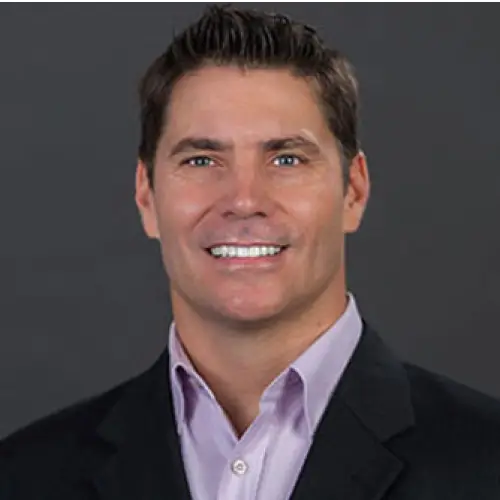
Terry Paterson | Paterson Project Management, Inc.
Places You Can find us




We think you’d also like this

Construction project planning explained
Improve your project planning for construction jobs to save time and increase your profits. Learn how Buildertrend can help.

Preconstruction explained and best practices
Preconstruction is the phase of a construction project that happens before actual construction begins. Learn more here.

Project management tips for growth
Buildertrend and the Breakthrough Academy hosted a webinar to teach industry pros how project management can help quickly scale your construction business.