




Live at IBS: How Brightwater Homes plans to be net zero by 2025
On today’s episode of “The Building Code,” Zach and Charley are live from IBS with Steven Sanders-Myers, general contractor at Brightwater Homes in Sandy Springs, Georgia. While waiting tables, Steven was offered a construction job after a simple handshake – and hasn’t looked back. He then got his degree in construction management and joined the team at Brightwater Homes where he shares their passion for economical building.
Listen to the full episode to hear more about Brightwater Homes’ sustainable building practices and how they’re implementing technology and group purchasing to ensure continued success.
What are some of the sustainable methods you’re currently implementing?
“Sustainability is one of our founding principles. And about five years ago, we committed to start putting solar panels on homes. It’s not all of them, but we believe in it. We lead by example, so we started doing that. We want to go net zero, and the beginning of last year, 2022, our owner Charlie came and said, ‘we’re doing this. We’re all in on net zero energy, let’s do it.’ So, we’ve got a 10-home development, and it’s all going to be net zero energy this year. And then each development after that, we’ll roll into it. So, we’ll be 100% – we’ll hit it before 2025.”
How have you used Buildertrend to leverage your operational efficiencies?
“I’m a huge advocate and believer in process. You’ve got to have a process. And so, you can have a great process using Excel or something like that, but your efficiency is going to hit a ceiling. Buildertrend allows us to really maximize the efficiency in our different processes through purchase orders, communication, daily logs, tracking the flow of our projects and just keeping everything more accountable as a group. A collaborative approach.”
Links and more
As home builders and residential remodelers begin to wonder what an impending economic downtown means for their business, one thing’s for certain: the more prepared you are, the more resilient you’ll be. Consider this your guide. We surveyed hundreds of home builders and spoke with economic experts for insights on where the industry stands now – and how you can be ready for whatever comes next. Read our recently published 2023 construction outlook to learn more.
Related content:
Listen to the last episode of “The Building Code” to hear more about the reason for Buildertrend’s recent rebrand and how our customer-first mindset is driving all company initiatives.
Subscribe here, and never miss an episode.
Got podcast topic suggestions? Reach out to us at podcast@buildertrend.com.
The Better Way, a podcast by Buildertrend:
Looking to improve how you run your construction business? On the newest season of “The Better Way, a podcast by Buildertrend,” we’re exploring how our software calms complex processes and allows you to work simpler. Subscribe and stream today wherever you listen to podcasts.
Follow us on social:
Listen to “The Building Code” on YouTube! And be sure to head over to Facebook to join The Building Code Crew fan page for some fun discussions with fellow listeners.
Zach Wojtowicz:
What’s up, everybody? Welcome to “The Building Code.” This is a big day for our audience here, which is a little unusual here at IBS, the International Builders’ Show, for those of you who are listening and don’t know what that is in construction, that’d be weird. Charley Burtwistle, here, is my esteemed co-host, and if you’re a long-time listener, you know that we don’t let him out of the building at Buildertrend, and we finally got him onsite. Charley Burtwistle, how are you doing in Vegas?
Charley Burtwistle:
I’m doing fantastic.
Zach Wojtowicz:
You look great.
Charley Burtwistle:
Thank you. Thank you. I hit the desert for a run this morning, got my tan. No, first time at IBS. Very, very exciting. We got some laughs in the crowd already, so this is electric.
Zach Wojtowicz:
That was generous, so …
Charley Burtwistle:
Yeah, so it’s fantastic. I’m here. But more importantly, we have Steven Sanders-Myers here. Steven, welcome to “The Building Code.”
Steven Sanders-Myers:
Thank you.
Charley Burtwistle:
Thanks for joining us live in front of the live studio audience here at International Builders’ Show. Have you ever done a podcast before?
Steven Sanders-Myers:
I have not. First one.
Charley Burtwistle:
Yeah? Brave.
Steven Sanders-Myers:
I listen to quite a few, but …
Charley Burtwistle:
I love it. And you’ve listened to “The Building Code,” we’ve confirmed.
Steven Sanders-Myers:
I have, yes. Very much a fan.
Charley Burtwistle:
You want to give us a live review in front of our audience here?
Steven Sanders-Myers:
Sure. Sure.
Charley Burtwistle:
Maybe we don’t do this right now.
Steven Sanders-Myers:
I’ll give it thumbs up. It’s 30 minutes, impactful. It’s great feedback. I mean, some of the best things in the industry is just collaboration to hear from other builders. So, getting that data is great.
Charley Burtwistle:
Fantastic. Well, let’s talk about you, Steven. Obviously, you’re a builder. You’re here to talk about your experience in the industry. Why don’t you give us a little rundown of your backstory?
Steven Sanders-Myers:
Sure. So, graduated college, a degree in biblical studies. Didn’t go out with the career path I initially thought with that. I was waiting tables and introduced myself to a table, sat down and shook his hand. He put his hand out, shook my hand and said, “That’s a great handshake. Do you want a job?” I was like, “Yeah.” So, shortly after I’m framing houses.
Charley Burtwistle:
So, that’s a real story. You were waiting tables …
Steven Sanders-Myers:
That is how I got in, I was waiting tables …
Charley Burtwistle:
The firm handshake, and …
Steven Sanders-Myers:
Yup.
Charley Burtwistle:
That led to a job.
Steven Sanders-Myers:
He loved my handshake, let’s start, let’s go.
Charley Burtwistle:
That’s amazing.
Steven Sanders-Myers:
I’m on a construction crew, framing houses, siding, roofing, just learning all of it. And I dove in and absolutely fell in love with it. So, I did that for a year and then got a job in construction management, and then I’ve just continued to grow the career and learn. And through the recession and different things, I’ve continued to learn project management, remodeling, just having to be nimble and pivot as the market goes. And then six years ago started with Brightwater Homes.
Charley Burtwistle:
You, I’ve heard a lot of backstories of our customers. You might be the first one that had a biblical studies background. But we need to start keeping track of all the backstory of our customers. And I get why, we were talking beforehand, and I said I wanted to learn something about you, but not too much about you and wasting content. I’m glad you held on to that story until we were recording because that’s fantastic. So, now, you mentioned you’re at Brightwater Homes. Tell us a little bit about the company. You said you’ve been there seven years?
Steven Sanders-Myers:
Yeah, six years, seventh year now. So, it’s a 12-year-old company founded by Charlie Bostwick, and we’re committed to architectural design and sustainable building. So, it’s something that we’ve continued to grow our brand and rapport in the market, by being a leader in what we do, by following through on what we believe in. We build in Atlanta, in north and south metro Atlanta. We build in Charleston and Bluffton, South Carolina.
Charley Burtwistle:
And what type of construction are you doing?
Steven Sanders-Myers:
So, single family, mostly detached. We do a couple of town homes and because we have in-house design and architecture, we can vary our product a good bit. But I would say average home is around 3,200 square foot, move off homes, maybe $1.3 million average. But we have the flexibility and have done larger homes and smaller homes. We’ve done over 5,000 square foot, and we’ve done 1,200 square foot.
Charley Burtwistle:
How many projects a year are you running then?
Steven Sanders-Myers:
40 to 50.
Charley Burtwistle:
40 to 50, wow. And now you were telling us earlier … I think Zach ran off to go do something important, probably …
Zach Wojtowicz:
Well, I actually contribute to the IBS show …
Charley Burtwistle:
Zach has real jobs. We flew this guy out to …
Zach Wojtowicz:
Yeah, this is my half an hour of time. This is why the …
Charley Burtwistle:
We’re shipping him right back. But you were telling me that you made a commitment, or Brightwater Homes did, to be fully net zero building by 2025, right?
Steven Sanders-Myers:
That’s right. That’s right.
Charley Burtwistle:
Could you talk to us a little bit about what drove that decision, and what you’re doing on your roadmap to get there?
Steven Sanders-Myers:
Sure, sure. So, we have a passion for sustainability. So, what drives our company, we believe very much in the outdoors. So, have you heard of what a cairn is?
Charley Burtwistle:
No.
Steven Sanders-Myers:
So, cairns are a stack of stones that kind of is a trail marker and show you along your way. So, it’s our cairn that drives us. So, it’s C-A-I-R-N-S, a collaboration, architecture-design, impact, respect, nurture and sustainability. So, sustainability is one of our founding principles. And about, let’s see, five years ago we committed to start putting solar panels on a home. It’s not all of them, but we believe in it. And so, we lead by example, so we start doing that and the conversation has always been there. We want to go net zero. And then beginning of last year, 2022, our owners, Charlie, came and said, we’re doing this. We’re all in net zero energy, let’s do it. So, we’ve got a 10 home development and it’s all going to be net zero energy this year. And then each development after that, we’ll roll into it. So, we’ll be a hundred percent, we’ll hit it before ’25.
Charley Burtwistle:
There’s a ton of builders that we’ve interviewed on the podcast. This is a trend in the construction industry that is just booming. I mean, you’re here at the International Builders’ Show, is this where you do a lot of your exploration and these material vendors that are getting into more of this emission-free building?
Steven Sanders-Myers:
It’s a great place for it. I mean, there’s so much innovation here of seeing new products, just everything that’s coming out. I mean, I try to keep a pretty good pulse on what is out there, but coming here it’s like, man, I’ve scoured the internet, I didn’t see it and now I see it here. So, I’m excited to see what’s coming up.
Charley Burtwistle:
So, for the people out in the crowd or the people sitting at the table right here that this is their first ever IBS, you were telling me a little bit about the schedule that you have written out. What were some stops you have to hit or what’s your plan for the remainder of the next kind of three days here?
Steven Sanders-Myers:
Sure. So, if you haven’t made a plan, stop right now. Get the app out, make a plan, get intentional with that. Otherwise your head will be spinning, and you’ll miss what you want to do. I’ve got a couple of educational sessions each of the three days and then I’ve got some dedicated booth time. So, we’ve got, I’m with CBUSA, so I want to see a couple of our national vendors. I want to talk to just a couple of new ones that I keep tabs on for some of the new products coming out around sustainability. And then allow myself some free time, but an intentional hour and a half of free time, just to see what I come across.
Charley Burtwistle:
If you see a random podcast being recorded, you can come in and sit down, listen a bit.
Zach Wojtowicz:
That’s right.
Charley Burtwistle:
We see you on another podcast, we’re going to be terribly betrayed. Can’t let that happen.
Steven Sanders-Myers:
That’s right. That’s right. It won’t, it will not happen.
Charley Burtwistle:
Yeah, great. Well, we’ll hold you to that. Well, obviously, you’re a Buildertrend customer, you’ve used us since you started at Brightwater.
Steven Sanders-Myers:
Yes.
Charley Burtwistle:
I’m really interested about how you have used that system to leverage your operational efficiencies. What are the things about Buildertrend that improve your business, and what are you hoping to continue to grow into over the next year or two years, five years?
Steven Sanders-Myers:
Sure, sure. Yeah, so we’ve been using Buildertrend about eight years. When I started with the company, it was basically just for the scheduling aspect.
Charley Burtwistle:
Very common.
Steven Sanders-Myers:
Yeah. So, since then we’ve kind of grown with Buildertrend of rolling out and utilizing new features with it. So, now we have fully built out selections, daily logs, a hundred percent purchase orders, warranty. We’re about to roll out the buyer portal. So, just a bunch of the different pieces with it. And as far as how it helps us, I’m a huge advocate and believer in process. You’ve got to have a process and then executing it helps out. And so, you can have a great process using Excel or something like that, but your efficiency is going to hit a ceiling. And so, Buildertrend allows us to really maximize the efficiency in our different processes through purchase orders, through communication, through daily logs, tracking the flow of our projects and just keeping everything more accountable as a group, a collaborative approach.
Charley Burtwistle:
So you mentioned, you run the purchasing department of Brightwater, right? And you mentioned the purchase orders in Buildertrend a lot. You’re also a member of CBUSA, right?
Steven Sanders-Myers:
That’s right.
Charley Burtwistle:
And our friends over at CBUSA are sitting over there, Phil and Ryan and Alyssa, I don’t know if they’ll turn around or not. But can you talk to the listeners a little bit about when did you join CBUSA, and how that’s helped from an operational standpoint, but also from a just raw dollar amount?
Steven Sanders-Myers:
Sure. Yeah. So, we joined CBUSA in 2019. It was actually after the 2019 IBS. I saw Bill Smithers at the booth here and got plugged in right away with Phil and then Jimmy. And it has been awesome, just the collaboration of our group in Atlanta and Charleston to share experience. I mean, yes, it is group buying, but the collaboration and just relationship that’s there is probably first and foremost. So, it’s given us access to national contracts, to a leg up on local negotiations. So, while I’ve got a ton of hats that I wear and what I do today, it takes some of that pressure off for me to have to go negotiate a deal, ’cause it’s already been negotiated.
Charley Burtwistle:
One of the benefits, too, of CBUSA that you’re touching on is also seeing how other builders run their process. And you talk about using Buildertrend, and that’s a tool to enable your business and be able to do the things you want to do. But then there’s just construction processes, even independent of the software. And so, I think for any builder who, and I’ve talked to builders all the time, who feel like “I can’t talk to another builder, I feel disconnected.” These types of group purchasing organizations have other benefits that help you learn other people’s perspective on how they run their businesses. And you just never know what’s going to be the thing that changes how you do things, that helps you save, in this case, thousands of dollars over the course of the lifetime of the year, right?
Steven Sanders-Myers:
That’s right. That’s right. Yeah, we actually about four months ago, got a group, I think it was eight builders from our CBUSA group got together and just round-tabled how we’re using the purchase order and accounting side of Buildertrend. And we made up a list of what we needed. And that’s why I went to Andrew and said, “Hey, here’s some stuff there where we do use it and maybe some little tweaks,” and that hit it off well with them and well received.
Charley Burtwistle:
Yeah. I do have, this is a curve-ball question, but we have a lot of customers here talking about, we talked to customers about the product and their process. And people get stuck, they get hung up on the details. When you were adopting Buildertrend, you were getting the software up and running. What was your game plan to roll that out to your team? Did you have a lot of resistance internally? How did you get people to really buy into adapting your process? That’s reality, it’s a software. You have to make concessions to make it work, but ultimately, the end result is consistency and scalability and be able to take on more work and more money ultimately. So, what was your implementation like?
Steven Sanders-Myers:
A lot of it’s just education and repetition in the immersion of it, say, “Here’s what we’re going to do. We believe this is the best product and process for us.” And then you share it with the different teams that are going to utilize the different features, and then just follow up. You continue to support them and show them how to use the products. We support our building team, our purchasing team, design team and so on. And it’s something where if I need Buildertrend support help, we’ll get them on to do a call with the building team or whatever, to go through stuff. And then personally, I’ll create screen, get the app. ‘Cause a lot of our building guys are on the app. I’ll do screenshots and then put little red arrow. So, click here, click this. Yeah, because some of them maybe the initial concern is that it’s imposing, or it’s scary because there’s so many options with it. But when you look at the functionality of what you need to do and know where to go with it, it’s really pretty simple to use.
Charley Burtwistle:
I think we need to get Steven over at one of our training booths over there. If you got a couple hours free, I’m sure we can pay you by the hour to do some trainings for us. Get a couple of little lead action.
Steven Sanders-Myers:
I need some extra gambling money.
Charley Burtwistle:
Yeah, that’s right. Las Vegas baby, there you go. Actually for current customers, if you are a current customer at Buildertrend and listening to this, you can go over and get a little scratch-off ticket. We made a custom Buildertrend scratch-off tickets, chance to win money. So, before you leave, remind me, we’ll go over and grab one of those. Something that you mentioned about with CBUSA was just how much you can lean on them for advice and learning from each other and rising up as one organization within a certain area. The past couple years, I’m sure you’ve had to lean on that. You said you signed up in 2019. So, talk about perfect timing as far as COVID hitting and material shortages and labor shortages and things like that. Can you give some of some examples of maybe some things that you’ve struggled with that you’re able to bounce off of and learn from people, and maybe some things that you’re excited about now? Hopefully we’re kind of over the hump and heading into ’23.
Steven Sanders-Myers:
Sure. So, I think just the perspective around a buying group is balancing or walking the line of the existing relationships you have with trades. And then going to new, based on a committed buy. Like there’s a group, we decided we’re to go to a different supplier for something, and we’ve been working with this other supplier, walking the lineup and the awareness, and I guess, learning the impact of that and the importance of that has been really great for me to just open my eyes to that side of it. Somebody won the …
Charley Burtwistle:
Live audio, that’s right.
Steven Sanders-Myers:
And through the past couple years, it’s just been crazy. I mean for ’20, ’21 and ’22 have all had their unique challenges. And like you had mentioned earlier, just getting the experience from other builders of how they’re tackling labor shortages or ordering ahead because supply chains are so out of control, has been just really impactful to what we do day to day.
Charley Burtwistle:
Yeah, we hear a lot of the news about the macroeconomic environment. I would love to hear what you guys are anticipating for your forecasting of business. Are you seeing any trends and your job starts? And we had Mark Bow on the podcast a couple weeks ago, and he had a pretty positive read and the jobs reports just came out from the Department of Labor just a couple days ago. And the economy group, 2.3%, construction’s a big part of that overall macroeconomic results. So, how are things in the Atlanta market?
Steven Sanders-Myers:
So, the Atlanta market’s been relatively insulated. I mean, we definitely have seen it slow down on some of the more attainable homes or affordable homes. And with the market that we are building, there’s been pretty consistent flow. I mean, traffic has come down some, but there’s still, inventory is still way low. New starts are down, so we’re not backfilling the need that’s there. So, from our perspective, we see it to continue on. I mean, I think we all need to breathe a little bit after the last three years of the building industry. So, it’s a good time to do that. So, we’re expecting maybe some plateau this year, but at the worst just plateau, not much dip.
Charley Burtwistle:
Well, this is one of the rare opportunities where my data science career and my podcast career overlap.
Zach Wojtowicz:
Did you feel how excited he’s getting? Because whenever this pops up, he’s like, all right, where’s my Tableau report?
Charley Burtwistle:
Yeah, I’m actually, as soon as I get done here, I’ll go work on it. So, Buildertrend as a whole did a macroeconomic report. We have some stats up top that we’re going to share, but we’ll also link the entire report in the show notes. So, if people are listening to this, they can go out and check that out. But basically what they do is, they interview Buildertrend customers and non-Buildertrend customers, ask them to same answers and see where the results lie. And actually across the board here, so “do you have more or less work than you can handle? Are you understaffed versus overstaffed versus perfect? Are you seeing increased profits?” You see Buildertrend users come in at higher percentages.
And I think that just goes to point to what you were talking about earlier, is establish your processes, get things standardized, know what’s coming in the door, know what’s going out the door. And then even if you’re seeing some of the same issues, you feel more comfortable about it because you have everything written down. You’re not going through emails, you’re not going through Excel, you’re not trying to figure it out. So, like I said, we’ll link that macro report in the show notes, but really, really interesting stuff. And I think just points to why you need an all-in-one solution and why you need to sign up for a company like Buildertrend.
Steven Sanders-Myers:
Nice.
Charley Burtwistle:
Thanks. That was my sales pitch right there. I’ll be over here signing up people …
Zach Wojtowicz:
Get this guy on demos right now, immediately.
Charley Burtwistle:
Getting back to some of your perspective on things, we’re touching on the economic environment, you talk about IBS. You mentioned having some of your employees go and talk about how to deal with clients and all those things. What are some of the things that you’ve learned over your years, mistakes that maybe you could give some advice to builders who are looking for someone that has been there, done that has kind of seen everything, had every level of employment positions in construction? What would you tell a builder, the number one priority that could help optimize your business?
Steven Sanders-Myers:
Sure. I’d go with, know your strengths and work through those. So, one part of my history I didn’t go through is I owned my own company for six years, 2009 to ’15. And probably the biggest lesson I learned from that is trying to do too much myself rather than delegating out. And I get it, when you start a company, you have to do a lot. But probably where a lot of young businesses fail is the entrepreneurs and the owners try to take on too much and then overextend themselves. So, I would just encourage, lean on the teams around you. I was in a session yesterday, I talked a lot about getting a mentor and a coach, and I can’t stress the importance of that enough. Lean on those around you to help you grow what’s there. Don’t try to do it all on your own.
Charley Burtwistle:
And then maybe specifically, just because we were talking about this beforehand, in the net zero world, maybe for people looking to get into that industry or just curious more about it, what are some of the things that are on the cutting edge that you guys are excited about to start implementing? That other people here, there’ll be educational sessions, there’ll be booths set up. I think getting out that now will give them an opportunity to explore on their own a bit.
Steven Sanders-Myers:
Now I’m getting excited. So, net zero energy is really, really where my passion lies with how we’re building and where I see the industry going. I mean, we’re in the southeast, so Atlanta and the southeast is slower to adopt, but great things with … They’re simple to do. They’re simple little changes that we can make with our building practices that are hugely impactful. Your building envelope, your insulation, your air seal, the little steps you’re doing that if you’re just building the code, you’re not quite there. But it doesn’t take much to get up to the point where you need.
And when net zero energy, you could put a hundred solar panels on any house or whatever and be like it’s net zero. But the whole thought is, let’s take the generation side out. What do we need to do to build the energy efficiency of the house, to bring down the energy need that’s there by building a better house, by building a tighter envelope, by being smarter and utilizing the new technology that’s out there in construction? And then the solar panels, that’s the icing on the cake. That’s just the last bit that we need to get the HERS score down from 43 to that zero.
Charley Burtwistle:
And tell Zach a little bit about, just ’cause I was fascinated by this when you were telling me, the concept of microgrids in some of the residential areas that you’re looking to establish those in the next couple years.
Steven Sanders-Myers:
Sure, sure. So, yeah, microgrids are really new on the residential side. There’s a few on the commercial, I think there’s only two that I’m aware of residential side on the southeast. But you look at the main grid, it’s really taxed. You lose essentially 40% of your energy when it comes from where it’s generated through the transmission lines to your neighborhood. So, let’s say we take a 50-home development, we put solar to, we’d put storage in that community, we create a microgrid. Those homes are sharing the energy that’s on each other’s homes, the rooftops and the batteries that are there. Maybe you have a battery pack in addition to create some surplus, then you can still connect to the grid. So, you’re collaborating with the grid, but it’s standalone. So, if there’s a power outage in that neighborhood, you’re free and clear, you’re staying powered. And then you can sell some surplus back.
Zach Wojtowicz:
That’s incredible. I mean, there’s a lot of emerging amazing stuff happening in construction that it blows my mind every day, of just getting a chance to talk to people who are thinking about the sustainable of the long term. We’re always going to need houses, we’re always going to need shelter for people to live in, but we could do it in a more responsible way. That’s incredible. That’s right. Well, we’re probably up against time here, Steven, and this was a great conversation. We really appreciate you sharing with us. Normally we do the outro. We’re going to do it live here, Charley. All right. You’re always welcome back on “The building code.” As always. It was fantastic getting to chat with you. Charley, what were your takeaways here today?
Charley Burtwistle:
I mean, this is all just a dream to me still. The fact that I’m here in Vegas at IBS. No, it was awesome. I was pleasantly surprised because Steve and I talked for a good half an hour before this. I was like, oh, we’re going to run out of content, but you got in your bag and brought out even more once we started to go here. Fascinating stuff. And I think the thing that I’m most excited about is that there’s builders like you out there that want to be on the cutting edge. You made a commitment to 2025 to be net zero in an industry that is predominantly, I would say they’re more conservative, they know how to build a house. It works. They make money doing it. Why change?
And then there’s builders like you and a lot of people in the crowd, I know IBS is actually home to a lot of people that are looking to improve their businesses and grow and learn new things. And so, it’s just refreshing to hear, and it gives me a lot of faith in the industry and where it is heading in general. So, I’d say for our first ever IBS recording of the podcast, this was fantastic, and you were a great guest to have on. So, I really, really appreciate your time.
Steven Sanders-Myers:
Thank you very much. This has been great.
Charley Burtwistle:
I guess we’ll tune out. This is another episode of “The Building Code,” I’m Charley Burtwistle.
Zach Wojtowicz:
I’m Zach Wojtowicz.
Charley Burtwistle:
And we’ll see you next time.
Zach Wojtowicz:
See you next time.
Charley Burtwistle:
Thank you, guys.
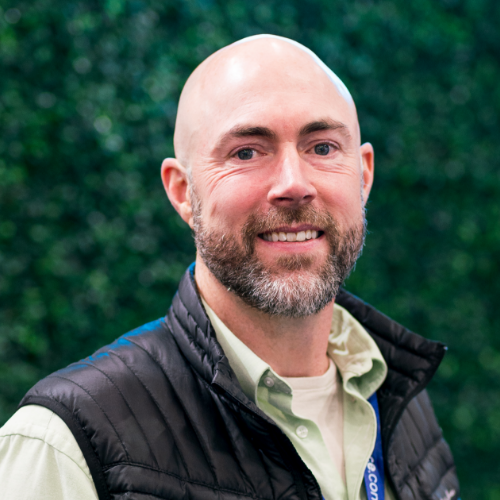
Steven Sanders-Myers | General Contractor at Brightwater Homes
Places You Can find us




We think you’d also like this
podcast
Oct 13, 2022Building the green way: How to make jobs more sustainable
On this episode of “The Building Code,” Zach and Charley are chatting with Matt Hoots, owner of SawHorse design build in Atlanta, Georgia. Matt has over 20 years of experience in green building and dedicates a lot of his time to educating fellow builders and clients on the importance of using sustainable methods.

Why green builders need construction software
Part two of our Future of Construction Series: Learn from a green builder and remodeler why Buildertrend is a simple but powerful tool for success.

Green building and sustainability in construction
Are you looking to make your construction business more sustainable? See how green building is evolving to bring positive change.