How to accurately allocate overhead costs to maximize profit in construction

In construction, managing your overheads is absolutely vital if you want your enterprise to be profitable. Including all the costs that are required to keep your organization up and running – rather than those expenses that are directly linked to specific projects – can quickly get out of control in the construction industry.
That’s why you need to know how to accurately allocate your overhead costs and ensure you keep all your projects under budget. You can then start to maximize your profits.
Allocating overhead costs in construction can be pretty complicated. That’s why we’ve put together this practical guide for calculating and understanding these expenses.
Why is it important to accurately allocate overhead costs?
Budgeting accurately is an essential part of a successful project in construction. You wouldn’t dream of starting a project without knowing the costs of the materials or labor hours. However, it’s easy to forget about the overhead costs that also go into a project, such as IVR systems in your office and hiring site trailers. These expenses can’t always be clearly attributed to an individual project since it’s not as buying raw materials.
Failing to attribute the indirect costs when calculating overall cost of a project essentially means you’ve budgeted incorrectly which may lead to under-charging your clients. This can massively impact the profitability of your company.
Accurately allocating overhead costs will also give you a better understanding of your organization’s expenses. You’ll be able to more efficiently use your resources as you identify and optimize areas with high overheads. With the FP&A definition, including the use of accurate financial data, allocating your overhead is crucial to financial planning and analysis.
What goes into overhead costs in construction?
Overhead costs in construction are similar to the overheads you see in most companies. They include:
Administrative costs
These costs include the running of the business in general, such as office rent, utility payments, office supplies and the cost of salaries for administrative staff.
Job site costs
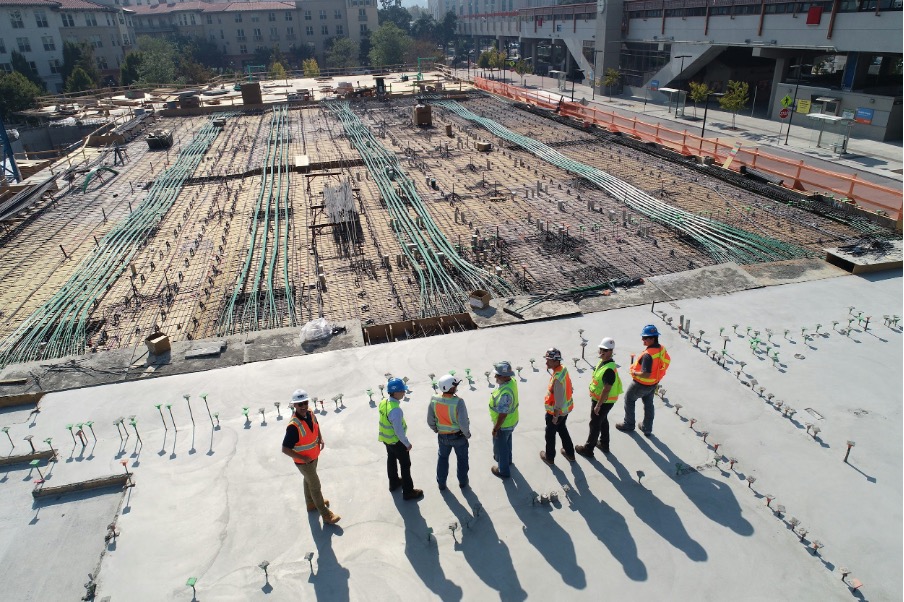
When you’re temporarily moving to a site, this also incurs overhead costs. Expenses will be made on temporary facilities, such as trailers, safety equipment and security.
Project management costs
These expenses include the additional costs that come with hiring project managers, as well as the investments that you have to make in specific project management software.
How to identify overhead costs in construction
When it comes to allocating your overhead costs, you’ll first need to calculate your all your expenses. Here are two of the most commonly used approaches to start the overhead allocation process for construction businesses.
Historical analysis
You can use historical analysis to calculate your future overhead costs by reviewing previous financial statements to predict future expenses.
Begin by breaking down these overall expenses into the different categories that you need to identify such as utility payments and administrative salaries. Using several years of financial statements will allow you to be able to calculate the average expenses of your recent financial past.
These numbers will then need to be adjusted for inflation and business growth. This will help adapt them to the specific context of your business and projects you have coming up.
Zero-based budgeting
You could also use zero-based budgeting. This method identifies the real expenses you’ll be incurring by calculating them from scratch. If you choose this strategy, the numbers are usually more accurate, and they allow you to evaluate each expense independently. However, zero-based budgeting is more time-consuming than using historical analysis.
Methods of overhead allocation
Simply identifying overhead costs is not enough if you want to have a truly accurate understanding of your organization’s financials. Instead, you should allocate your overhead costs to help you find out the real cost of every construction project.
There are different ways that you can achieve this. Here are three of the most effective overhead allocation methods to allocate your indirect costs accurately.
Labor costs
This method focuses on the labor expenses associated with each project. These expenses come from either the number of direct labor hours worked across the duration of the project or the direct labor cost that the project incurred. It assumes that direct labor hours on a project are proportional to the overhead costs incurred by the project.
You’ll start by identifying the overhead allocation rate (such as 15%) from your historical analysis. This rate can then be applied to the overall expenses on labor across the organization. For example, if your total overhead costs were $200,000, then a rate of 15% will mean an allocated overhead of $30,000.
Direct costs
Using the direct costs method – also known as the percentage method – will allocate overhead costs as a percentage of the direct costs incurred by each project. This uses your existing budgeting for direct costs like materials, equipment and direct labor to identify the overheads related to a project.
Begin by using the overhead rate that you calculated earlier. This rate is then applied to the overall direct expenses that come with the project. For instance, a project with $150,000 in direct costs and an overhead rate of 5% would allocate the overhead costs as $7,500.
Square footage
This final method uses the size of the project. Usually used in projects related to building or renovation construction jobs, it allocates indirect costs according to the square footage involved in the project.
Divide the total overhead expenses by the square footage for all your projects. This manufacturing overhead rate can then be applied to each project according to the project’s share of the overall square footage.
Let’s say, over a year you work with 300,000 square feet of projecr with an overall overhead expense of $200,000. This gives you an overhead rate of $1.5 per square foot. If an individual project involves 30,000 square feet, it will therefore incur an allocated overhead of $45,000.
Machine hours rate
While the square footage method might be particularly suitable for construction companies that work with large building projects, organizations that primarily complete machine-intensive jobs will benefit from using the machine hours rate.
This completes overhead allocation according to machine hours used by each project and ensures that overhead expenses such as payments for contact management software are accurately allocated according to your machine use.
Begin by dividing the total overhead costs by total machine hours across the year to get your overhead rate. Then multiply this rate by the machine hours for the project.
For example, if your total overhead costs are $50,000 and your total machine hours are 5,000, you’d have an overhead rate of 10. If the project uses 1000 machine hours, the allocated overhead would be $10,000.
Final thoughts

Allocating your overhead costs is crucial for understanding the indirect expenses that go into each project’s success – from administrative costs to office rent. This helps you with everything from quality control to financial planning and allows you to identify areas to improve.
While the right method for calculating overhead costs will depend on your organization’s specific context, you now know all your options.
But you don’t have to do it alone. Buildertrend’s construction management software gives you the tools you need to track your business finances in one spot.
Schedule a demo today and start taking control of your finances.
Based on what you just read, we think you'd enjoy...
These suggestions are made by our team to help you find builders and stories that you relate to!
Back to all blogs