5 construction risks that can tank your business (and what to do about them)

Construction companies can experience many different types of risks throughout the project life cycle. More often than not, these risks lead to problems like delays, increased costs and poor client satisfaction.
Although construction project risks vary, there are five common types that home builders and remodelers often face. Understanding and managing these is necessary to reduce construction risk and complete a successful project.
What are the types of risks in construction projects?
To minimize and prevent risk, you must first recognize the different forms it can take. Five common construction project risks include:
- Financial risks, such as budget overruns, inadequate financing and payment disputes
- Labor risks, such as worker shortages, low productivity and employee turnover
- Environmental risks, such as natural disasters or changing regulations
- Project planning risks, such as inadequate planning, communication and scheduling errors
- Supply chain risks, such as delayed deliveries, supplier shortages and quality issues
- What are the types of risks in construction projects?
- Construction risk No. 1: Financial
- Construction risk No. 2: Labor
- Construction risk No. 3: Environmental
- Construction risk No. 4: Project planning
- Construction risk No. 5: Supply chain
- How to mitigate supply chain risks
- Reduce risk with Buildertrend
- Construction risk FAQs

Construction risk No. 1: Financial
The overall finances of a construction project are complicated. You must have cash reserves and cash flow to be able to pay your subs and obtain big-ticket items, like equipment rentals. There are added complexities around when you can realize revenue. On top of that, construction projects often involve significant financial investments and unforeseen expenses from cost overruns and project delays.
Many construction companies take on financial risk with every project they agree to. Here are some common areas to keep an eye out for – along with strategies to lessen the risk.
Examples of financial risks
Cost overruns
These occur when a project’s actual expenses exceed the estimated construction project budget. These are often caused by change orders, rising construction material and supply prices, site delays or permitting issues.
Time overruns
These overruns occur when a project is delayed due to unforeseen circumstances of resource availability, such as a labor shortage. Time overruns typically result in cost overruns, as construction companies overcompensate in categories like overtime to keep timelines on track.
Market fluctuations
This type of financial risk is derived from economic and industry trends, which affect a construction project’s finances and can occur even after an estimated bid is approved. Changing interest rates and inflation are prime examples of this, and they in turn affect anticipated profits.
Payment disputes
These disagreements commonly involve clients, contractors or suppliers and can pose financial risk to a construction project. Nonpayment or delayed payment can prevent a construction company from being able to meet its own obligations.
How to mitigate financial risks
Accurate planning and risk assessment
It’s important to conduct a thorough cost estimation and budget for each project you undertake. During this process, consider potential risks and contingency plans – including fostering a change management mindset in your workplace. Through systematic risk assessment, you can identify potential financial pitfalls where your company would be liable – and avoid them.
Effective contract management
It’s important to develop robust contract agreements that outline specific understandings between all applicable parties. This can include payment terms and approval processes and even detail processes for dispute management.
Continuous monitoring
The best way to identify and resolve financial risk quickly is through continuous financial monitoring and reporting. This should include actively comparing estimated and actual budgets, identifying areas risk of overspending or spotting unfulfilled payment deadlines.
Construction risk No. 2: Labor
Labor costs, shortages and loss of talent can be a major risk for construction companies. According to the recent State of Residential Construction Industry Report, absenteeism has also affected construction companies’ ability to meet needed tasks. In many cases, this has even led to business owners resuming onsite duties, just to keep projects on schedule.
Although a construction company’s workforce can be one of its biggest assets, it can also be a liability. Here’s how.
Examples of labor and employee risks
Labor shortages
A shortage of construction workers can impede project progress and lead to increased labor costs, as the company tries to attract applicants to fill open positions.
Employee turnover
High turnover rates can disrupt project timelines and lead to the loss of specific skill sets required to finish the job. Reasons for this might stem from poor compensation, work conditions and growth opportunities.
Workplace safety
Failure to prioritize a safe working environment can result in accidents and injuries, leading to legal and financial risk.
Employment compliance
It’s important to uphold necessary employment regulations to protect both your company and your workforce. This can include wage and hour laws, worker classification, harassment policies and more. Failure to comply can result in penalties and fines – and a loss of company reputation.
How to mitigate labor and employee risks
Workforce planning assessments
To better anticipate labor needs and address potential shortages in advance, conduct workforce planning assessments. This should include an external look at your market, as well as your own internal hiring and employee engagement efforts.
Talent acquisition and retention
To counteract labor market challenges, think outside the box for talent acquisition and retention. Specific strategies to solve employee turnover could include investing in training and development programs, offering long-term contracts and leveraging technology to attract applicants and keep current employees engaged. This can lead to improved retention and a more reliable workforce.
Workplace safety and risk management
Prioritize workplace safety by implementing thorough – and understood – safety policies and procedures. This should be supported by regular safety trainings, inspections and assessments to minimize risk.
Legal compliance
Stay updated on relevant employment laws and regulations to ensure consistent compliance. This might include regularly reviewing and updating employee contracts, payroll practices and benefit offerings.
Construction risk No. 3: Environmental
Construction sites can impact the surrounding environment, and inadequate measures to mitigate these impacts can lead to environmental risks and regulatory compliance issues.
Mitigating environmental risks is crucial to ensuring sustainable and responsible construction practices.
Examples of environmental risks
Soil conditions
Construction activities are dependent on conditions at a project’s worksite. Soil can erode, be contaminated or sediment, which can lead to improper erosion control measures, grading and sediment barrier accommodations. Depending on the details of the contract, a builder could be liable for damages stemming from these issues down the road.
Unforeseen “Acts of God”
Any construction project has the possibility of being derailed by emergent events, like natural disasters or extreme weather conditions. These pose risk to the project site as well as construction equipment, supplies and timelines. These kinds of events can also delay a project.
Conservation and other environmental conditions
It’s important to understand all stipulations relevant to a project’s worksite. In some locations, this might include conservation efforts limiting your ability to build or disturb areas that might have protected species or habitats. While conservation seems like a topic less likely to crop up in suburban settings, this can extend to things as seemingly simple as ensuring the right landscaping as required by an HOA.
How to mitigate environmental risks
Testing, analysis and other site prep
Depending on the details of your contract, you may be responsible for ensuring proper soil conditions of a worksite. This could include conducting soil testing and analysis, as well as using erosion control measures like soil blankets or barriers to prevent deterioration over time.
Risk assessment and emergency preparedness
It’s important to develop contingency plans for all areas where a project might be delayed – including if the cause is a natural disaster. With this emergency preparedness, develop communication protocols to help secure assets and equipment to minimize damage. Another thing to consider is coordinating with emergency fuel delivery services to ensure operational continuity during crises. It’s also important to explore insurance coverage that can mitigate the liability of such delays or damages falling on your company.
Do your research
Before any project begins, ensure you’ve completed and understood all necessary surveys, permitting requirements and HOA-imposed restrictions on your job site.
Construction risk No. 4: Project planning
Poor planning and design can lead to delays, cost overruns and quality issues.
By implementing comprehensive project planning measures – like accurate estimates, realistic timelines and effective communication plans – you can lessen risk associated with a project’s design plans and execution.
Examples of design and planning risks
Insufficient project scope
Failing to define a project’s scope can lead to confusion, misalignment and delays during construction. These issues lead to rework, change orders and increased costs, all of which are financial considerations for your company.
Inaccurate cost estimations
Incorrectly estimating project costs can lead to overruns, budget overhauls and financial difficulties, both on the part of the construction company and the home builder. Fluctuating market conditions can also affect estimations.
Unrealistic timelines
Setting unrealistic project timelines without considering factors such as resource availability, complexity of design and regulatory requirements can lead to schedule delays. Even if all tasks are completed on time, you may have to compromise quality to accomplish it, which can lead to poor client satisfaction and loss of future business.
How to mitigate design and planning risks
Comprehensive project planning
Invest time at the beginning of a project to adequately detail a project’s scope. Technology, such as takeoff software and digital budgeting tools, can be leveraged to improve the accuracy of estimations from the start. Then, build schedules based on necessary factors like procurement, available labor and cash flow. All of this can help keep your project on track right from the onset.
Effective communication and collaboration
Foster open communication channels among all parties involved in a project. This might include storing information and updates in a portal for easy access and recordkeeping. Build regular checkpoints around progress and milestones to keep everyone on the same page.
Continuous quality control
Ensure you’re continuously meeting quality standards and specifications by monitoring and inspecting in-progress and completed work. This can include holding regular scope reviews – especially if there are changes in the budget. By also monitoring quality throughout each construction phase, you’ll lessen the need for rework during closeout.
Construction risk No. 5: Supply chain
The availability and timely delivery of building materials and equipment can be disrupted by supply chain issues.
By recognizing the risks associated with disruptions, you can better manage your supply chain and improve project delivery.
Examples of supply chain risks include:
Material and supply shortages
Builders can face challenges in sourcing construction materials and supplies due to volatility in the supply chain.
Cost escalation
This refers to the unexpected increase in costs for materials, labor or other resources, usually caused by market changes. Because these escalations can be hard to anticipate, they can cause financial strain and dissatisfaction on the part of both clients and home builders.
How to mitigate supply chain risks
Diversify and build supplier relationships
Relying on a single vendor increases your vulnerability to market disruptions. By identifying and partnering with multiple suppliers – or even participating in purchasing programs – you can increase your supply of critical materials at affordable prices.
Adopt technology and automation
Leverage project management software to enhance supply chain visibility. For example, using these tools, you can track material orders and monitor inventory levels. Combined with accurate estimating tools within the same software, this can help ensure you’re only paying for the supplies and resources you really need to get the job done.
Reduce risk with Buildertrend
Buildertrend offers a range of features within our construction company software to help construction businesses mitigate risk across their operations.
Scheduling
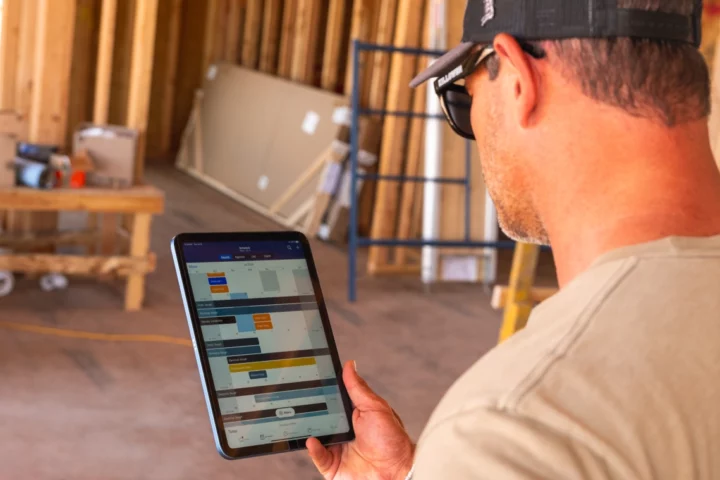
Use scheduling features to create and manage project schedules effectively. This helps in setting realistic timelines, allocating resources efficiently and identifying potential bottlenecks early on, reducing the risk of delays.
Cost Management
Buildertrend’s budgeting and financial management tools enable construction businesses to track project costs, expenses and invoices in real time. This allows for better financial control and helps identify cost overruns or deviations from the budget at an early stage.
Quality of service
Buildertrend’s document management feature ensures all project information, specifications, plans and change orders are stored and accessible to all relevant parties in one centralized location. This helps in maintaining up-to-date project information, reducing the risk of miscommunication and errors that can lead to quality issues.
Project management
Using a comprehensive suite of project management features – like task management, document sharing and reporting – enables construction businesses to improve and maintain effective construction project management practices.
Learn how to leverage these tools to manage construction risk in your business today.
For more information on how these risks are impacting builders in today’s market, download the recent State of Residential Construction annual report.
Construction risk FAQs
Get answers to the most common construction risk questions.
It’s important to manage construction risks to minimize potential financial losses, project delays and quality issues. This also helps ensure successful project outcomes and client satisfaction.
Construction businesses can identify risks by conducting comprehensive project assessments, analyzing historical data, consulting with industry experts and leveraging construction company software’s project management and budgeting features.
Construction businesses take a “risk management 101” approach by implementing proactive risk mitigation strategies, regularly monitoring project progress, maintaining open communication channels and adapting strategies throughout a construction project.
Based on what you just read, we think you'd enjoy...
These suggestions are made by our team to help you find builders and stories that you relate to!
Back to all blogs