Why construction teams need technology to scale their business

On an episode of the Breakthrough Academy’s podcast, “Contractor Evolution,” one of Buildertrend’s own team members guest starred to help answer the question: What’s the difference between good technology adopters and bad ones?
Brett Jones, key account executive of data solutions at Buildertrend, joined Benji Carlson, host of the podcast, for almost thirty minutes of insightful discussion about construction tech. They talked about why the industry is fragmented, how it’s changed over the years and what to expect moving forward.
Whether you’ve been in the business for several decades or you’re just getting started – understanding where technology fits into your construction company is key to scaling and increasing profitability.
Listen to the podcast:
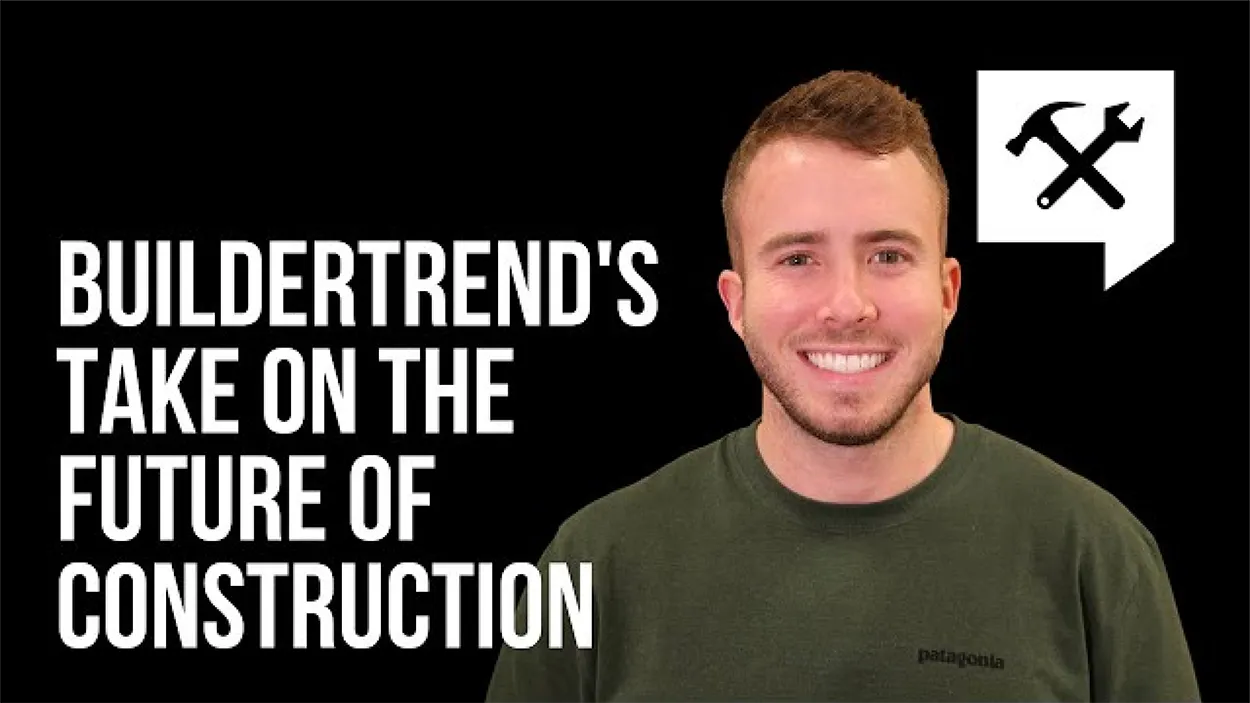
Here’s a quick recap with key insights from the episode.
What’s the difference between a CRM and an ERP?
A customer relationship management program manages a company’s interactions with clients and potential clients. It focuses on the sales part of the process.
An enterprise resource planning system, like Buildertrend, does it all from start to finish. ERP software includes a CRM to manage the sales process, but it also helps you work through the project once your client signs on. It ensures you complete the job – down to the very last signature and payment.
“Think of it as really being the backbone of your company. Providing a central source of truth for all documentation, communication and workflows,” Brett said.
After being with Buildertrend for almost six years, working as an onsite consultant for three and successfully completing over 150 onsite consultations – Brett knows his stuff.
His onsite consultations included thirty days of pre-work, two intensive days of onsite training and thirty days of post-work. With a total of 62 days to train his customers, Brett ensured every team member adopted Buildertrend successfully. He would even provide advice on what similar businesses were doing when his clients felt stuck. Impressive, right?
What’s not working in the construction industry?
Builders are really isolated in the industry because they work within their own niche and their own community. So, getting advice from someone outside that realm can really be beneficial. Brett’s had the opportunity to visit contractors all around the country and loved seeing those lightbulb moments for his clients when he provided insight on what others were doing.
“It’s a very fragmented industry because technology hasn’t disrupted it yet,” Brett said when asked about why builders typically don’t talk to competitors. “I feel like a common saying across builders is, ‘Well I’ve been doing things the same way for thirty years and had no issue.’ But as technology starts to disrupt that space, that’s a phrase they’ll need to use carefully. Tech changes with the snap of a finger and you always need to remain agile and on your feet.”
Builders who use technology tend to have a higher business acumen compared to those that don’t, according to Brett. They understand how it can make their business better, make operations more cost efficient and increase profitability.
Because of all the opportunity in the industry, including project management software, financial technology services, venture capitalists and other new technologies, there’s a lot of smart money coming in.
“Companies without tech will eventually fade away because they just aren’t competitive,” Brett added.
What advice would you give young construction entrepreneurs?
“Leverage technology. Dive into it. Understand it. See how it’s applicable to your company. It will streamline your business significantly and make you so much more competitive within your relative marketplace,” Brett said.
Not only does Brett recommend starting off with technology from the get-go, but he also knows that creating a good work culture is crucial to building a successful construction company.
“We have a huge shortage of labor as well, and we’ll see that for quite a while. The pendulum is swinging back and forth between blue-collar and white-collar roles, but the more you can take care of the individuals within your company the better off you’re going to be. Culture truly breeds outcomes at the end of the day, and Buildertrend preaches that.”
What’s happening at Buildertrend in 2023?
After acquiring several companies over the last few years, most notably CoConstruct, we now have the capability to expand into other markets besides just project management.
A huge focus for us in 2023 is financial technology. Online payments, insurance, financing and expense management are all on the list to expand or release this year. The goal is to help construction pros streamline financial processes and increase profits.
Another area we’re expanding on is materials and purchasing. Being able to leverage the power of group purchasing means our customers can get better deals on the materials they buy and save money with rebates.
“And lastly, data and analytics. We need these on a strategic partnership scale, but also to get that license to our clients so we can make them more proactive in a typically reactive industry. We want to get them those critical insights they need to better run their operations,” Brett said.
How can builders get started with Buildertrend?
Schedule a demo to learn more about how we can help your business run smoother and become more cost efficient. Once you’re a part of the Buildertrend family, we’ll get you and your team trained and ready for success the way you want to learn. Whether it’s one-on-one walkthroughs, self-help videos or in-person classes – we have the resources you need.
Already a Buildertrend customer? Get even more in-depth training tailored to your core business needs with Onsite Consulting.

Based on what you just read, we think you'd enjoy...
These suggestions are made by our team to help you find builders and stories that you relate to!
Back to all blogs