
Better collaboration, stronger trust: Buildertrend’s new Bluebeam integration
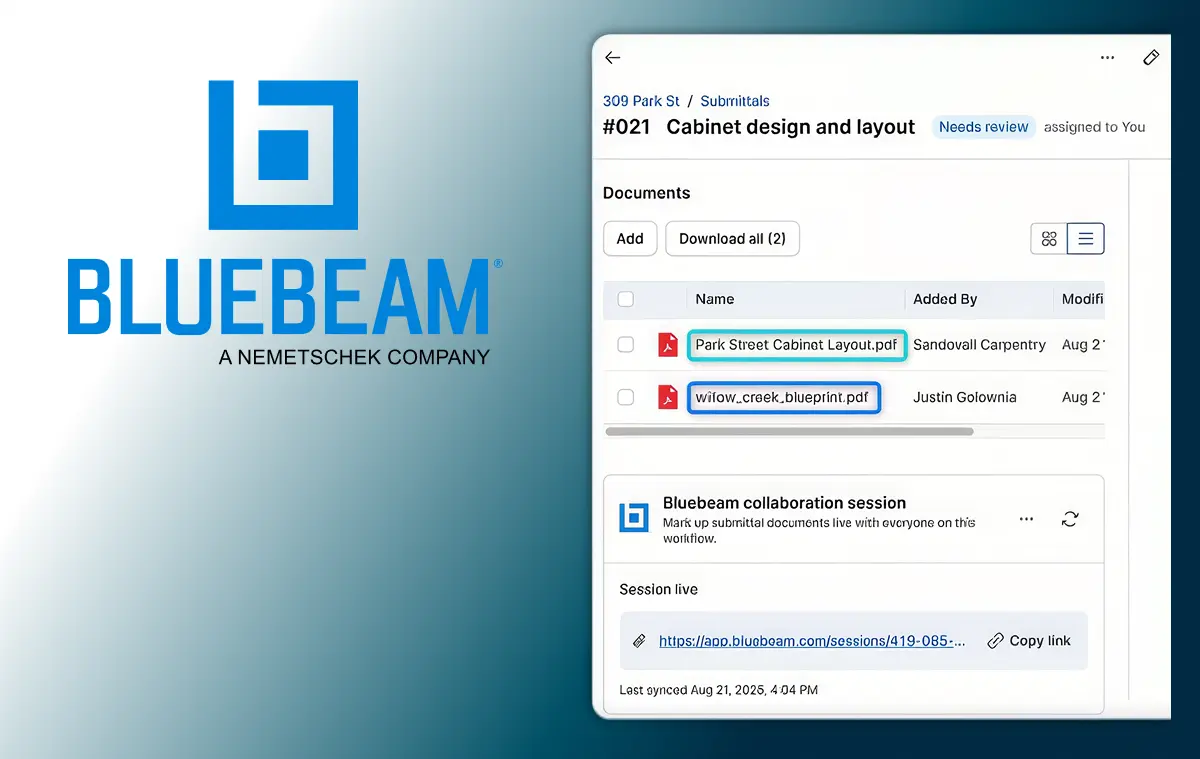
A shop drawing needs sign-off. The general contractor downloads the PDF and adds comments. The subcontractor marks up another copy. An outside reviewer emails back a third.
Now someone has to figure out which version includes everyone’s feedback and get it back into Buildertrend before the next step can move forward.
On one project, that might feel manageable. On the fifth project running at once, it becomes a job of its own.
Buildertrend’s new integration with Bluebeam helps simplify that review cycle by connecting collaborative PDF markup to Submittals and RFIs. For growing builders, it addresses a challenge that reaches beyond document management: keeping people confident in the information they share.
Trust starts with knowing everyone is working from the same information
Construction depends on people making decisions based on each other’s work. Each person needs something specific to move forward:
- Subcontractors need clear direction before work begins.
- Reviewers need enough context to evaluate a detail.
- Project managers need to know what changed before coordinating the next activity.
Plan PDFs, shop drawings and supporting documents carry that information between teams. When feedback gets scattered across separate copies, even a straightforward review can raise questions.
Did the architect see the subcontractor’s note? Does this drawing include the latest revision?
Those questions create hesitation. They also create more calls, emails and follow-ups for people who already have plenty to manage.
Reliable construction document management gives teams a consistent place to find project information. Connecting the review process to that information helps preserve confidence as more people contribute.
Trust grows when people can find the record, understand the feedback and move forward without reconstructing the conversation.
A review process has to work across more than one job
The download-markup-upload cycle can survive on a small workload because someone remembers the details. They know who has the drawing, whose feedback is missing and which attachment to use.
Growth tests that arrangement.
More projects bring more reviewers, submittals and requests for clarification. Each separate file creates another handoff to manage. Eventually, the person keeping everything straight becomes a constraint on how much work the business can handle.
That is one way the owner bottleneck takes shape: Routine work keeps coming back to the person who holds the missing context.
Reviews need to account for the field
The field adds another consideration. Someone reviewing a shop drawing may be standing beside the work it describes. A process that depends on returning to a laptop introduces distance between spotting a question and helping resolve it.
Vaughan + Co. experienced the value of accessible project files when its team moved away from printed, laminated documents. Crews could access plans and design information through phones and company iPads on the job site.
“We’re no longer playing telephone with each other,” said Liz Vaughan, of Vaughan + Co.
As builders grow, that kind of access becomes increasingly important. Teams need workflows that help information move without requiring constant intervention.
Bring Bluebeam reviews into Submittals and RFIs
Buildertrend’s Bluebeam integration connects PDF review to the records your team already uses to coordinate project details.
Here’s how the workflow comes together:
- Connect the platforms once. An internal team member connects Buildertrend to Bluebeam through company settings using a secure authorization process.
- Start a review from the record. Select “Start a Bluebeam Session” directly on a submittal or an RFI’s question view.
- Bring in the right people. Starting a session automatically invites that record’s reviewers, approvers and subcontractors, reducing the need to rebuild distribution lists or copy email addresses.
That connection matters because the people responsible for the record are brought into the document review with fewer manual steps.
For submittals, it creates a shared space to mark up PDFs that need review. For requests for information, it helps participants examine the attached drawing or detail behind a question that needs clarification.
Make it easier for outside partners to participate
Outside reviewers and subcontractors can join with a free Bluebeam ID, with full markup, measurement and commenting tools available free for 14 days. They don’t need a paid license to participate during that period.
Lowering the effort required to join a review helps bring the right expertise into the conversation.
Keep the markup connected to the project record
A collaborative review is only useful if the resulting document makes it back to the people managing the project.
With the integration, the marked-up PDF returns to Buildertrend as a new version of the original document. It stays connected to the same submittal or RFI and its version history.
Bluebeam is where the markup happens. Buildertrend remains the system of record.
That gives teams a documented reference they can return to when checking changes or reviewing earlier feedback. It also reduces the need to piece together the document’s history from inboxes and downloaded files.
What the integration currently supports
Keep these details in mind when planning a review:
- File type: PDFs only.
- RFI attachments: Question-side attachments are included. Response attachments aren’t included yet.
- RFI session requirements: RFI Update permission and an active Bluebeam Studio account.
These parameters help teams understand where Bluebeam fits into their review process.
Give collaboration room to grow
For builders evaluating construction management software as their business grows, connected workflows matter because every extra handoff competes for the team’s attention.
The Bluebeam integration gives builders another way to handle document reviews as project volume and complexity increase. It’s optional, so teams that don’t connect Bluebeam can continue using their existing workflows.
For teams ready to connect, the value is practical:
- Less coordination: Fewer separate copies and invitation lists to manage.
- Easier participation: A shared review space for internal teams and outside partners.
- A connected history: Marked-up documents stay tied to the project record.
Building that consistency is part of preparing a business for its next stage. Buildertrend’s “Built to scale” field guide offers a broader look at growth for builders considering what comes next.
More people in the review loop shouldn’t mean more manual work holding it together. A connected process gives teams more time to resolve the details and more confidence in the information behind their decisions.
See how Buildertrend keeps reviews, documents and approvals connected with Bluebeam.

Based on what you just read, we think you'd enjoy...
These suggestions are made by our team to help you find builders and stories that you relate to!
Back to all blogs