
What to look for when you’ve outgrown your construction software
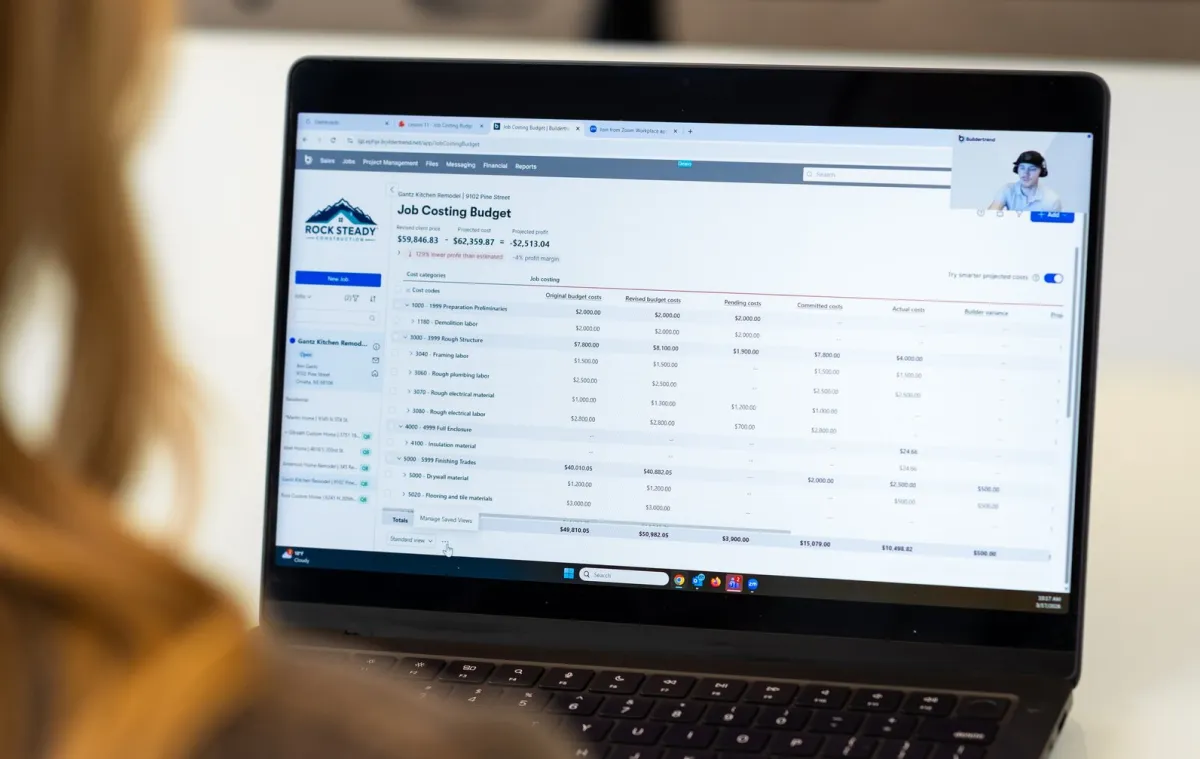
- Signs you've outgrown your construction software
- What to look for in your next construction management platform
- Think beyond today's needs
- The right software becomes a competitive advantage
- Build on a stronger foundation
- Frequently asked questions about construction management software for 8-figure builders
Many builders switch construction management software because their business has changed. More projects, larger budgets, bigger teams and increasingly complex workflows can expose limitations that weren’t obvious when the company was smaller.
The construction software that worked at $2 million or $5 million in revenue may start creating bottlenecks at $10 million and beyond. Spreadsheets multiply, teams create workarounds and information gets trapped in separate systems.
Those challenges often show up when a company’s projects, teams and financial operations become too complex for a system designed for a smaller business. The right platform should support the business you’ve built while giving you room to take on what’s next.
Signs you’ve outgrown your construction software
Growth can reveal software limitations before leadership recognizes them. If your team spends more time working around the platform than working in it, it’s worth taking a closer look.
Here are some common signals:
- Your team relies on spreadsheets outside the platform
- Financial reporting doesn’t give leadership enough detail
- Estimating, project management and accounting feel disconnected
- You’re managing multiple systems to get basic work done
- Your software can’t handle increasingly complex workflows
- Team adoption is declining because workarounds have become standard
These aren’t necessarily signs that your current software has failed. They can simply indicate that your business has reached a stage where its technology needs to become more sophisticated.
A growing company needs systems that can keep information connected as more people, projects and processes enter the picture.
What to look for in your next construction management platform
Once you’ve recognized the signs, it’s tempting to compare feature lists. A better approach is to evaluate whether the software can handle the financial, operational and project complexity that comes with growth.
The five most important areas to evaluate are:
- Connected financial management: Look for job costing, budgets, forecasting, invoicing, change orders and purchase orders that keep project and financial information connected. Integrations with accounting platforms can reduce duplicate data entry and give finance teams better visibility.
- Advanced project management: Scheduling, daily logs, client communication, file management, approvals and mobile access should give project managers and field teams access to the same information. Look for tools that can support multiple projects and more complicated workflows as your workload grows.
- Preconstruction tools: Estimating, selections, bid management, submittals, RFIs and AIA billing should connect preconstruction work to the project that follows. This can reduce the amount of information teams have to recreate after a job is won.
- AI that works inside your workflow: AI should have a practical role in day-to-day construction operations. Look for tools that can surface project information, reduce administrative work, streamline communication and help teams find answers without adding another standalone system.
- Room to scale: More revenue often means more projects, employees, vendors, financial transactions and client communication. Your software should be able to handle that added volume without forcing your team to create new spreadsheets, add more point solutions or develop increasingly complicated workarounds.
When those functions connect, teams can carry project information from estimating through completion instead of re-entering data or checking multiple systems along the way.
Think beyond today’s needs
Choosing software based only on what you need right now can put you right back where you started. Look at the business you’re building toward, not just the one you’re running today.
Consider these questions:
- Will this platform still work if we double our revenue?
- Can finance, operations and field teams work from one system?
- Will we need additional software in two years?
- How easy will it be to onboard new employees?
- Does the vendor continue investing in innovation?
A platform that works for a $5 million builder but struggles at $15 million isn’t necessarily a long-term solution. Scalable construction software should accommodate more projects, larger teams and more complicated workflows as the business develops.
The goal is to make your next software decision with the future in mind rather than solving today’s problem only to face another migration later.
The right software becomes a competitive advantage
The right construction management software can give growing builders better control over projects, financials and day-to-day operations. That control can influence everything from client relationships and team productivity to margins and business decisions.
Connected workflows can help builders:
- Win more of the right work
- Deliver a stronger client experience
- Protect project margins
- Reduce administrative overhead
- Improve access to financial and project information
- Take on additional work with greater confidence
These benefits become more valuable as builders move beyond spreadsheets and manual processes and bring more of the business into one connected system.
The right platform can also bring preconstruction, project management, financial management, client communication and AI-powered workflows together in one system. That gives growing teams a shared view of the work instead of requiring employees to piece together information from multiple places.
For a look at how growing builders use technology to manage increasingly complex projects, explore theseconstruction case studies for home builders.
That approach matters as construction businesses grow. Better-connected systems can give leadership more visibility while helping teams spend less time managing information and more time managing projects.
Build on a stronger foundation
The best time to evaluate your construction software isn’t when you’ve completely outgrown it. It’s when you first notice your team creating workarounds.
A platform designed to handle greater complexity can help you avoid another disruptive migration while giving your team better visibility across projects, financials and client communication. That gives leadership more room to focus on growth instead of managing the limitations of its software.
See how Buildertrend’s construction management software can help your growing residential construction business manage more projects, gain financial visibility and scale with confidence. Schedule a demo today.
Frequently asked questions about construction management software for 8-figure builders
Choosing new software is a significant decision, especially when a company has already invested time and resources into its current system. These questions can help you determine whether your current platform can keep up with the business you’ve built.
A scalable platform should accommodate more projects, larger teams and more complex workflows without requiring your business to add multiple systems along the way. It should also make onboarding easier as your team grows and provide the visibility leadership needs to manage a larger operation.
Frequent spreadsheets, duplicate data entry, disconnected systems and manual workarounds can indicate that your current platform no longer fits the way your business operates. Other signs include limited financial visibility, declining team adoption and difficulty managing more complex projects.
Growing builders need connected financial management, advanced project management, preconstruction tools, client communication, mobile access and AI-powered workflows. The platform should bring these capabilities together rather than requiring your team to manage several separate systems.
Builders at $10 million and above typically need stronger financial visibility, connected project workflows and the ability to manage more people and projects without adding layers of administrative work. Look for software that brings estimating, project management, financials and client communication together rather than forcing teams to manage each area separately.
Growing builders often need deeper financial visibility, more connected workflows and stronger project management capabilities. Buildertrend brings these functions together in a platform designed for residential construction businesses, helping teams manage more of the business from one place.
Based on what you just read, we think you'd enjoy...
These suggestions are made by our team to help you find builders and stories that you relate to!
Back to all blogs