



Combatting the labor shortage: How to secure the future of construction
On this episode of “The Building Code,” Zach and Charley are chatting with returning guests Maranda Adams and Ashley Kuhn, co-founders of Blair Freeman, the only 100% Black woman-owned and woman-led Class A contractor in Nebraska. Maranda and Ashley run their business with a “people first, project second” approach. They focus on transparency and make the process of building, buying and selling clear for everyone involved.
Listen to the full episode to hear more about their take on the labor shortage and how they’re personally working to combat the crisis.
What strategies have you’re using to combat the labor shortage?
Maranda: “Well, I think it starts with conversations like these. You’re having conversations with students who are younger and younger. And that’s one thing that we’ve noticed, you’ve got to start early. So, it may not be waiting until they’re about to graduate high school. If you start saying, ‘Hey, construction is a great industry. There are so many things that you can do. There are so many skilled trades,’ then you have the opportunity to get it in their head like, ‘Aha! This could be something that I’m good at.’ So, getting to the kids younger is a big one.”
Ashley: “I also think culture is a huge one. Gone are the days where any of your staff would be on a job site, get their lunch and go to their truck and eat by themselves. And that’s the job that people want to do day to day. People want to have a place. They want to have community. Even if it’s just two of them on the job site. And so, what we’ve learned is that creating that community within our company, within our trade partners and within our subcontractors. All of that has been really impactful because that’s what makes people want to show up.”
What advice do you have for business owners looking to diversify their workforce and expand their market?
Ashley: “I think for us, the biggest thing is we don’t hire exclusively within the construction industry. I think, generationally, people think that if you have been in construction, you can work in construction, and you cannot move the other way, and nobody outside can move in. But there are so many roles that are duplicable outside of the construction industry that we’ve found really big success in bringing those folks in.”
Maranda: “For other companies, making sure that your executive team is diverse is huge because you have to have that perspective. You have to have people in those leadership roles in order to attract talent that is diverse because they want to see people that look like them in executive roles. That perspective is huge to have in any company. And so, I think that’s something a lot of companies could do is diversify leadership and then you’re going to start to see diverse teams rolling in underneath.”
Links and more
With a dwindling workforce continuing to affect the construction industry, business owners are turning to technology to increase efficiency. Download our free guide for tips on how to combat the labor shortage and increase productivity by 50%.
Related content:
Tune in to the last episode to hear Jon Walker, Buildertrend’s chief technology officer, talk about the updated workflows that’ll better support the needs of builders using cost-plus contracts.
Subscribe here, and never miss an episode.
Got podcast topic suggestions? Reach out to us at podcast@buildertrend.com.
The Better Way, a podcast by Buildertrend:
Looking to add construction tech to your daily processes? On the newest season of “The Better Way, a podcast by Buildertrend,” you’ll get best practices for implementing software and getting your team on board from other industry pros and our experts. Subscribe and stream today wherever you listen to podcasts.
Follow us on social:
Listen to “The Building Code” on YouTube! And be sure to head over to Facebook to join The Building Code Crew fan page for discussions with fellow listeners.
Zach Wojtowicz:
What’s up, everybody? I’m Zach Wojtowicz.
Charley Burtwistle:
And I’m Charley Burtwistle.
Zach Wojtowicz:
This is take two of the intro.
Charley Burtwistle:
This is take two.
Zach Wojtowicz:
Catching people off guard today.
Charley Burtwistle:
Everyone’s wondering, everybody is wondering what happened on take one. They’ll never know.
Zach Wojtowicz:
That’s between us and that’s it.
Charley Burtwistle:
It’s just between us. Someday we’ll release a b-roll and they’ll hear all our mistakes and it’ll be hilarious.
Zach Wojtowicz:
That’s our going out. Excuse me. Wow.
Charley Burtwistle:
Don’t make us do a take three, Zach. Hold those sneezes and coughs.
Zach Wojtowicz:
That could have been what was to take one was just allergies.
Charley Burtwistle:
Because, the reason we need to nail this intro is we have two very, very exciting guests today who deserve a perfect intro to lead into what is sure to be a perfect episode. Zach, who do we have today?
Zach Wojtowicz:
We’ve got Blair Freeman local building group here in Omaha, Nebraska. They’ve been on the Building Code before. We got Ashley and Maranda, co-CEOs down on the street from us here in Omaha. I’m very excited to talk to them and catch up with what they’ve been doing since we last talked to them. We’re going to give you a little update.
And they were, Ashley, was also at IBS, and on our panel, so we can get a little bit of a recap of what her experience was like. And as we like to do … It was fantastic. Charley, you were dearly missed.
Charley Burtwistle:
I’m sure. I’m excited to get caught up here in this episode. They’re doing a ton of exciting things, I think. We’re constantly talking about the labor shortage culture across businesses. How do we ensure that we’re able to attract and retain employees? We’ve had numerous episodes about it, because it’s the number one thing that I think that we can solve collectively as an industry right now.
So, excited to talk to them, and they’re doing a fantastic job leading from the front. So, take a ton of notes and let’s figure out how to solve this problem together.
Zach Wojtowicz:
Let’s welcome them in.
Hey, Ashley and Maranda, welcome back to “The Building Code.” Officially, as I like to do, alumni, two time, here on “The Building Code.” It’s great to see you.
Ashley Kuhn:
Thank you.
Maranda Adams:
We’ve missed you guys.
Charley Burtwistle:
Missed you, too. Absolutely.
It’s a distinguished, very honored, prestigious group of multiple guests on “The Building Code.” Not to say that our single guests aren’t great, but obviously you guys are so good that we wanted to have you back.
For the people at home listening that weren’t fortunate enough to listen to the first episode of recording, would love for you guys to just do quick intros; who you are, a little bit about Blair Freeman, and how you got to where we’re at today.
Ashley Kuhn:
I’m Ashley Kuhn. I am the co-CEO. We do this together, through and through, of Blair Freeman. I’ll let her take from here.
Maranda Adams:
And I’m Maranda Adams. I am the co-CEO of Blair Freeman, and we are a hundred percent women-owned, a hundred percent Black-owned construction and owners rep company here in Omaha, Nebraska.
Zach Wojtowicz:
Local.
Ashley Kuhn:
How did we get our start?
Maranda Adams:
Local.
Ashley Kuhn:
We got our start from a problem project that we put our heads together and solved, and from there the rest is history.
Maranda Adams:
Here we are.
Zach Wojtowicz:
Fantastic. You guys have a ton of energy, great background, by the way we were talking about that.
Charley Burtwistle:
If you’re not watching on YouTube, now would be a fantastic time to switch over and check out the background.
Zach Wojtowicz:
That’s right. And what we’ve brought you on today to talk a little bit about, obviously, is not only Blair Freeman, but we just had the International Builder’s Show and really want to get into what your experience is.
I want to know, have you gone before? Are you a longtime attendees? Is this your first time? Tell us a little bit about your experience.
Maranda Adams:
Well, I will say that I wasn’t able to attend, I had had a speaking engagement at my alma mater at UNL, and so I wasn’t able to go. So, I sent Ashley and she rocked it, and I know she’s going to tell you all the awesome things, but I’m going next year. Next year I’m going.
Ashley Kuhn:
Yes.
So, no, I have never been. I have been to other conferences similar to that in Vegas. So, we send our team every year to one that’s called ICSC, and so, I was aware of how massive Las Vegas Convention Center is, but it was a good time. We definitely will be back. I came back and told them that we have to be there every year. It was awesome.
Charley Burtwistle:
And, Ashley, you not only were you at IBS, but you were on one of the panels. How was that experience? What did you talk through? Was this your first time?
Ashley Kuhn:
Definitely not my first panel – at all. Getting ready to retire from panels. No, I’m kidding.
But we talked a lot similar to what we’re going to talk about on this podcast, labor shortages, culture, how we do what we do day in and day out, some of the lessons learned along the way. Really cool. It was fun. And it’s also really cool to see Buildertrend’s presence in such a massive convention. You guys had a huge presence there.
Zach Wojtowicz:
I like to call it shock and awe. It’s just like blitz them with the Apple Store strategy. Our marketing team spends … and it’s a vibe for sure.
Ashley Kuhn:
It is a vibe. Music, and snacks and all kinds of stuff going on.
Zach Wojtowicz:
Everything. Swag and free stuff. It was …
Ashley Kuhn:
Free stuff, it was everything.
Zach Wojtowicz:
Our marketing team who also runs … Whenever we’re on the podcast we got to give him a huge shout-out. They make this thing work and they kill it at IBS. You see the best of it. So, thank you for the appreciation. Courtney, and Nicole, and Danielle, and everybody that makes it happen. It’s a lot of fun. Thanks for stopping by and checking it out.
And you also … I’m curious, since it was your first time, and it was a spectacle, that was my reaction, too. Let’s focus in. What were your takeaways? What do you look back on and think, “Okay, this was worth going to” if you had never been before?
Ashley Kuhn:
I think it’s just seeing the emerging trends that are coming. That’s always really helpful, especially when you’re guiding people through the construction process. It’s cool to see the emerging trends, what’s going to come through. What do you need to be training your team on? I think that’s the coolest part and that’s why I was like, “We have to get our team out here to see.”
It’s pretty awesome.
Charley Burtwistle:
Absolutely. I’d love to go someday. I was also stuck back.
Zach Wojtowicz:
You went last year!
Charley Burtwistle:
I did go last year. I did not …
Zach Wojtowicz:
Stop. Stop it, Charley. We’re not going to do this today where you’re getting all … We let you go one time. Don’t mislead our listeners.
Charley Burtwistle:
We can’t have the woe is me pity party.
But I do want to segue into a little bit what you talked about on the panel, and the topic for today’s conversation, which is the labor shortage. What’s the current landscape of the labor shortage and the residential and commercial construction industries where you guys focus? What are you seeing? Is it improving, a steady decline or where are we currently at?
Ashley Kuhn:
It’s a steady decline. We’ve just had that push, nineties, eighties where everybody was going to college and so, we definitely have a shortage of skilled trades. And so, you’re just seeing a lot of retiring happening of the skilled trades, and there’s not enough folks to backfill.
And so, I think that’s …
Maranda Adams:
Definitely.
Ashley Kuhn:
It’s a steady … It’s going to be that as the Boomers start to retire and continue to retire, it’s going to be a steady decline.
Charley Burtwistle:
I talked to … So, my dad taught Building Instruction in high school for the past 20 years. Recently retired, well sub retired, because now he’s just substitute teaching every other day anyways, but that was something that he always had …
Ashley Kuhn:
Bless him.
Zach Wojtowicz:
So, I got to meet him at IBS.
Charley Burtwistle:
Zach did …
Zach Wojtowicz:
That you weren’t there at, anyway.
Charley Burtwistle:
It sounds like he was a huge hit. I had 20 people …
Zach Wojtowicz:
He was.
Charley Burtwistle:
… be like, “I love your dad.”
Zach Wojtowicz:
We’re like, “How do we replace your dad with you?”
Charley Burtwistle:
But something he always said is just, “The biggest thing that you need right now to get into a skilled-trade industry is just showing up.” That’s where the bar is at right now and really continuing to push younger folks to explore that as an option.
But I think a lot of it also is on the industry as a whole of how do we reinvent and ensure that those opportunities exist for people fresh out of high school, fresh out of college, and how do we start beginning to replace the labor that’s retiring across the industry right now? So, curious what kind of strategies or initiatives you guys have implemented to try to address that within your own company?
Maranda Adams:
Well, I think it starts with conversations like these. So, you’re talking to people, we’re talking about the shortages. You’re having conversations with students who are younger and younger. And that’s one thing that we’ve noticed, you got to start early. So, it may not necessarily be waiting until they’re about to graduate high school. You may have to start talking to kids in middle school like, “Hey, this is what construction looks like.”
Because a lot of times kids are starting to form what they want to do or thinking about things that they’re interested in middle school, beginning of high school. And so, if you start saying, “Hey, construction is a great industry. There are so many things that you can do. There are so many skilled trades, there’s so much money to be made, there are so many projects out here” and introduce it to them early, then you have the opportunity to get it in their head like, “Aha! This could be something that I’m good at. These are some skills that I have, that attention to detail, that problem solving.” Some of those things, they just translate so well. And so getting the kids younger is a big one.
Ashley Kuhn:
And I also think culture is a huge one. Gone are the days where any of your staff would be on a job site, and get their lunch, and go to their truck and eat their lunch by themselves, and that’s the job that people want to do day to day. People want to have space, they want to have place, they want to have community in what they’re doing, even if it’s just two of them on the job site. And so ,what we’ve learned is that creating that community of, within our company, within our trade partners and our subcontractors and all of that has been really impactful because that makes it so that they want to show up.
We find subcontractors that’ll say, “I’m not going to that job for four days because I hate everybody that’s on that …” Or, “The electrician’s bothering me or the plumber’s not doing what it’s supposed to be.” And then on ours, it’s more of a community of folks that it’s not unusual to see them have a drink after 5:00 p.m. together. And that, for us, that’s been a really big game changer is creating that culture.
Zach Wojtowicz:
When you founded Blair Freeman, did you learn that, or is that something that you intentionally like … As part of your business values, you want to create that community environment?
Maranda Adams:
It was definitely very intentional from the very beginning. Ashley and I, we’ve come from different careers, corporate previously, and you learn what you love, and what people are drawn to, and what you’ve seen work. And so, when we started the company, that was one of the biggest things was family is one of our core values. And when we say family, we’re just not talking about our immediate family, we’re talking about trade partners, employees, clients, everybody out there. So, we knew going in culture was the biggest thing, because that’s how you retain good people, good clients, good trade partners is just making everybody feel like a family and having that positive culture.
So, no, it was definitely … When we started we were like, “We’re doing this, we’re doing this, and we’re not budging on it.”
Ashley Kuhn:
It also helps you to have a pulse on what people have going on in their lives without having to be too intrusive, and it helps us navigate those waters where I think maybe historically what you have going on at home is what you have going on at home, and if the world is falling apart behind you, work didn’t care. And for us, we care about both sides of that because it impacts how people show up every day. And sometimes what is huge to you at home is something that we can fix in two seconds, and it really changes how people operate on a day-to-day basis.
So, it really was very intentional. It was probably our number-one intention coming in was family.
Charley Burtwistle:
I love that, and I think that that’s been a shift Zach and I have experienced just by hosting this podcast. Everyone that we talk to of that intentionality to not just how we’re running our business, or not just how we’re building our projects, but how are we operating as a collective, as a family, as a culture, whatever we want to use. I think that construction is an industry that, for a long time, had the luxury of not having to worry about that, and then, for the reason that you guys are bringing up, is now in the forefront of we need to make this an awesome place to work and ensure that everyone loves coming in every day, loves the people that they work with.
So, that’s why we love having people like you on, is it’s such a good refresh and reminder of that spans any industry, not just the construction industry. Zach and I always leave with a ton of takeaways after these sorts of interviews, so it’s awesome to hear that you guys are leading from the front in that regard.
Zach Wojtowicz:
I think it’s such an advantage, too. When I would go to business, I could tell, I would go to a business and I traveled for Buildertrend and if they had words on the wall, and their office seemed like a safe place, and even little things like drinks after 5:00 together. Versus I would go to other businesses where that stuff seemed like it was missing. And our trainings would go so much better because they were intentional about this is an investment, and this is what we’re getting out of it.
But I think what’s hard for people is if you haven’t done it, you don’t know how to do it. And so, if you’re doing it from the beginning, it just makes things … You have that luxury. A lot of builders in construction are just reacting to the volume of trying to keep up, and addressing the labor shortage by just finding bodies so that they show up to get the job done. And that cycle is really tough to break, but it can be broken …
Ashley Kuhn:
And toxic.
Zach Wojtowicz:
And toxic, but it can be broken. People do it.
Just a call back to our last episode you guys were on, we talked a little bit about this, and you guys are an amazing company and what you’re building, but we also talked about the nonprofit that you had started. And just curious for a little update if that is progressing further or where you’re at as far as that journey and that mission.
Ashley Kuhn:
It’s funny, we were just working on a massive ramp for that this morning.
Zach Wojtowicz:
Oh, awesome.
Ashley Kuhn:
Yes, it’s still progressing. We’re in medium stages of a building for that nonprofit, and we’re working on companies related to prefab and things like that that we can do inside of a building, which helps accelerate training because people can just keep doing the same thing until they learn it and then move on to a different path. So, it’s actually blowing up a little faster than I think that we expected it to.
Maranda Adams:
All of a sudden, we woke up and were like, “Okay…”
Ashley Kuhn:
We have a whole 5013 that is operating.
Zach Wojtowicz:
Just a couple lawyers and just like that.
Ashley Kuhn:
Just like that. Those were the first things that came, were the lawyers, very expensive lawyers. But it’s refreshing to see it moving so fast, and so many people buying into it, and understanding that like you’re saying, there’s a labor crisis, is what I call it, and we need to be able to train people quicker. And what better way than have a nonprofit that can do that and free the entire city of that issue rather than just Blair Freeman and figuring it out on the back end?
Charley Burtwistle:
I love that. And I think that, again, just leading from the front, there are things that we can do as an industry, as a whole, to address the labor crisis. I’m going to officially change my verbiage to that.
Zach Wojtowicz:
Update the marketing.
Charley Burtwistle:
We’re updating the brand.
Ashley Kuhn:
It’s not shortage.
Charley Burtwistle:
It’s not a shortage.
Ashley Kuhn:
It’s a crisis.
Charley Burtwistle:
I’m curious if there’s any other recruitment methods or training programs that you guys have found efficient in attracting new talent to the construction industry.
Ashley Kuhn:
Number one, it’s always going to be your people. Our people are our brand ambassadors. We always feel somewhat guilty when we tell people that we have a wait list of people that want to work for us. We don’t have to do the formal application process in pretty much any area that we are looking to hire in, and that’s because our folks are a reflection of what’s going on inside of our organization, and it’s unusual to have people show up so happy. Usually our number one compliment is either, “You’re so fun to work with!” Or, “Everybody’s so happy.” And it’s because they love what they do every day. So, that for us is the easiest way to attract folks and retain for sure.
Maranda Adams:
And we heard it. We do an annual St. Patty’s day get together, which was this past Friday, and we heard it time and time again, just the compliments with our team, our team’s friends coming and saying …
Ashley Kuhn:
“I want a job!”
Maranda Adams:
I had family members that were like, “I’ve been trying to get a job for years.” And I was like, “It’s fine, just your time will come.”
Ashley Kuhn:
I’m pretty sure I picked up a senior grading person just by having a beer with them this past Friday.
Maranda Adams:
But our people are amazing and, like I said earlier, just getting out to the schools, getting out into the community, letting people know what we do, who we are, what we do, having conversations like this, speaking at events, that’s really … And then when people see us, see our team, it’s organic and that’s the best way for me to describe it, is just … all the people that are here, like Ashley said, we weren’t necessarily advertising for the position, it organically happened through relationships, through community. And that has been just the trend.
Ashley Kuhn:
I also say that we have a shared leadership model inside of our organization, and so, if a project or a client comes to us, it’s not just Maranda and I going, “Well do this. It’s happening. This is what we’re going to do. Even though we can’t stand the person that’s asking us to do it, and we know they’re not going to pay the bill at the end of the day, and we know they’re going to treat you like trash, but it’s money!”
We let our team make the decision. And sometimes, it’s painful for us as owners because you’re like, “That’s money!” But usually, the decisions that they make are, I would say, 10 times out of 10, are spot on. And it makes it so nobody shows up to work like, “Ugh, I have to do this.” They, as an organization, we, as an organization, get to make decisions together, and they don’t hear us barking, “Do this, do this, do this.”
Maranda Adams:
They feel empowered and I think that’s the biggest thing. They do. Like Ashley said, we’ll come in and we’ll all powwow. “What do you think? How do you want to proceed? What are your thoughts?” And so …
Ashley Kuhn:
“What markets do you want to expand into?”
Maranda Adams:
Yes.
Ashley Kuhn:
“What things do you want to do next week that we don’t do this week?” It’s all up to them, and I love that about our team.
Zach Wojtowicz:
Well, and if they’re closer to it from the day-to-day, and so what they’re looking for is the belief that they can do it. Or great leaders say, “Let’s do it.” And then if it doesn’t work, it’s like, “What do we learn from it?” Not accosting you and say, “You messed up. This is your fault. You cost me money.” It’s always an investment one way or the other. Sometimes it doesn’t turn out the way we want.
I can just sense your genuineness, just for what it’s worth. Can I get on … Is there … What’s this wait list process? You just need like a …
Ashley Kuhn:
Well, it starts with a beer or a shot.
Zach Wojtowicz:
Just for a listen …
Maranda Adams:
It’s going to be fine.
Zach Wojtowicz:
We’re just talking as far as what options are out there for people that listen. I think that’s what it is. People, through word of mouth, through wanting to hear from people they trust about people they’re working for that they trust, that’s what human connection’s all about, so I love it. I love it.
Charley Burtwistle:
One thing that you mentioned that I want to dive into a bit more is going out into the community and having these speaking engagements you guys have both brought up multiple times on this interview so far of different things that you’re doing as far as outreach. Are you working with local educational institutes as well, or vocational training programs, to build out that white list and let people know that they do have an option here?
Ashley Kuhn:
You name it, we’re doing.
So, in the summertime we usually have probably 20 plus interns come in, and they just get to see what we do day in and day out. And, I don’t know, we’re doing a pretty good job of those interns converting. Obviously, they’re younger, so a lot of them convert to staff. And then OPS, we are getting ready to do a student-built housing with them, so that gets kids in high school ready to build homes.
You name it, we’re an organization. At a university standpoint. We’re both closely aligned with both UNL, UNO, MCC. All of them. We’re, day in and day out, our team in some regard is connected to pretty much all the educational institutions in the city.
Zach Wojtowicz:
There’s a member of my team who’s talked to Metro and they have a very, and Metro is a local community college for our national listeners here, that does some really cool certification and investment. I’ve been super impressed their program, so it’s great to hear you guys are involved.
Ashley Kuhn:
It makes you want to go back to school just to learn all this stuff that they have, but you’re like, “I didn’t learn that.”
Zach Wojtowicz:
Someone on my team asked me that. She was like, “Can I go to classes during the day?” I was like, “I don’t know if we could figure that out.” But I wanted to say yes. I’m like, “It’s so cool.” And she went and tour the facility and so I love that.
Ashley Kuhn:
It’s incredible.
Zach Wojtowicz:
If you’re in the region, definitely look into it because some awesome stuff there. Former educator.
Ashley Kuhn:
They have a room that has 50 HVAC units, and it’s somebody’s job to break them, and then a student goes through and has to fix all 50. I’m like, “Do that! I want to do that!”
Zach Wojtowicz:
That’s so great.
Ashley Kuhn:
You have to feel really empowered when you can fix something 50 different ways.
Zach Wojtowicz:
Really cool.
One of the things, too, that it comes with the labor crisis and education is diversity and attracting diverse talent. You guys are a Black-owned business. You, obviously, are staples in the community. What are some of the ways that you’re looking to diversify the construction industry, and what’s your point of view on that?
Charley Burtwistle:
And maybe just to add on to that is, what advice you have for other companies that historically have hired the same way that are looking to expand their market and bring in top talent?
Ashley Kuhn:
I think for us, the biggest thing is we do not hire exclusively within the construction industry. And so, I think, generationally, people think that if you have been in construction, you can work in construction, and you cannot move the other way, and nobody outside can move in. And there are so many roles that are duplicable outside of the construction industry that we’ve found really big success in bringing those folks in.
But we always say we are diverse, equitable and inclusive as an organization, period. So, we don’t really work at it every day, it just organically happens.
Maranda Adams:
And I think that making sure … So, for other companies, making sure that your executive team, your leadership team, is diverse, is huge because you have to have that perspective. You have to have people in those leadership roles in order to attract talent that is diverse, because they want to see people that look like them in executive roles. That perspective is huge to have in any company. And so, I think that’s something that a lot of companies could do is just diversify that leadership, and those executive teams, and then you’re going to start to see diverse teams rolling underneath there.
Ashley Kuhn:
It’s also a matter of understanding what’s available in the market to start, and who’s available. So, usually there’s a pretty good pulse on what’s coming out of colleges, universities, trade unions, things like that, and being realistic with what is attainable in the diversity, equity, and inclusion space. You can’t say, “We’re going to have 50% diversity, equity and inclusion” if all the places where somebody would get their education or kicking out 10%. We have to be realistic, and we also have to make sure that we’re not just hiring a face because you’re also setting people up for failure. You have to make sure that you’re hiring candidates that are suitable for the position. But there are ways to do mentorship and things like that to be intentional about it, but we’re really big on right people, right place.
Charley Burtwistle:
And everything that you guys have talked through as far as just getting involved with the local community, and institutes, and things like that, I’d have to imagine, obviously, we focus on how that’s valuable for you in your role in hiring, but I’d have to imagine that’s invaluable for the education community, and the different trade programs, and stuff like that, too.
So, if we have people listening, it seems like a win-win to just reach out to some local colleges, local trade schools, things like that. I’d have to imagine they’re going to be overjoyed to hear from you, and work with you, and get you in front of students that could potentially end up being a labor pool for you to choose from.
Ashley Kuhn:
Including you. When you put a younger face that’s a little bit happier to be in the industry than maybe a carpenter that’s been working for 80 years that just is like, “You have 80 years before you’re going to be able to do what I can do.”
And we’ve all ran into that. That’s not interesting. Nobody wants to see that. Nobody wants to work in that day in and day out. So, I think putting a more positive spin that’s reflective of the generations that are coming into it helps make people understand that, “Oh, this is a cool gig that I can do.”
Zach Wojtowicz:
That’s how I feel about it. I’ve talked about this on “The Building Code” a few times. I was public school teacher, didn’t really have plans to leave public education, did not talk about trades as a potential option because I just didn’t know. And now that I’ve been involved in the construction industry, if I went back to teaching, I would tell my students all the time that you gain skills that translate to an industry, and one of those industries that is extremely dynamic, and interesting, and really has a ton of opportunity as well, from an ownership standpoint into a craft, honestly, is what is more akin to, and they get really good at it. And they have this beautiful, almost art-like ability to craft wood and lay tile. And there is a lot of exciting opportunities that …
Basically we need a campaign to advertise to America that construction is rife with opportunity.
Ashley Kuhn:
Do it.
Zach Wojtowicz:
We’re starting it here on “The Building Code.”
Ashley Kuhn:
Let’s do it.
Maranda Adams:
Do it.
Zach Wojtowicz:
I love it.
Charley Burtwistle:
Well, the other thing that you said, and I just love sharing this story, is looking for people that traditionally don’t come from the construction industry. And this Zach was just talking to it, too. I can’t remember who we had on, but they talked through during COVID times, they found a really good pipeline of wedding planners to construction project managers.
Ashley Kuhn:
We learned that from you. We were like, “Oh, noted!”
Charley Burtwistle:
No, jot that down.
Maranda Adams:
We did. We were like, “Do you do event planning? Come on.”
Charley Burtwistle:
Come on in. And I’m sure … There’s millions of examples like that. Public school teachers, luckily Buildertrend snagged Zach before he had the opportunity to go somewhere else. But there’s comparable skills across as long as you have the training programs to get people up to speed, and there’s opportunity regardless of where you’ve been and where you came from.
Ashley Kuhn:
And there is a crisis. So, right now what happens is people recycle the same folks, and we also are at a disadvantage because we partner with a lot of our competitors in certain models of how we build, and so, we also can’t steal from the people that we’re working with every day. So, we’re limited to what we can get. And so, that’s where we’ve strategically had to be like, “Let’s get outside of the industry.”
Zach Wojtowicz:
I think that’s a strategic advantage. That makes a lot of sense. And the best innovators are able to get outside their boxes of what we’ve traditionally done. So, just our last question, we’re a little bit up against the clock. We’d like to keep it short and snappy. We could go for two hours. That’s why we always welcome people back, so we can do that …
Charley Burtwistle:
We’ll have a third time with you guys for sure.
Zach Wojtowicz:
That’s right.
Maranda Adams:
There we go.
Ashley Kuhn:
Love it.
Zach Wojtowicz:
What is your… Construction industry, we’ve talked about interest rates, we’ve talked about the labor crisis, the skills gap. What are your guys’… If you had to put your forecasting hats on, how do you see, after IBS, after our conversation, after living, breathing the industry that you’re in for what the future holds for construction? Really simple, easy question to end the episode.
Maranda Adams:
I see it changing tremendously. Right now, we’re in this crisis, but I think all the things that we’re doing right now are going to be so impactful, that in the next five to seven years, we’re going to see all the work that we’re putting in right now. Those students, those kids are going to start graduating, and they’re going to be coming into the industry. So I see that all the work we’re doing now, it’s going to be paying off in the next five to seven years for sure.
Ashley Kuhn:
And I’m with her when we say that it’s going to change. I think the innovation is getting ready to hit construction. We’ve been building the same way for hundreds of years, and now we have technology, and new equipment, new machinery and things like that, and I think that technology is getting ready to take over.
And it’s like … I always use the Polaroid example of Polaroid knew that they weren’t going to be able to keep the camera the same way, and they didn’t evolve, and so, then they pretty much eradicated themselves. And I think a lot of that’s going to happen in the construction industry where folks are going to have to learn how to keep up with technology and the new innovation in the industry. And some folks are going to get left behind because they want to do it the old way.
Zach Wojtowicz:
Totally.
Ashley Kuhn:
And they’re going to have to learn differently.
Maranda Adams:
These gamers are going to come out, and they’re going to know how to do all the …
Ashley Kuhn:
Gamify construction, and I can’t wait.
Zach Wojtowicz:
I love it.
Maranda Adams:
They are!
Ashley Kuhn:
I keep saying I’m going to go back to tech school because I want to be with it. I want to know what’s going on in the IT world.
Charley Burtwistle:
It sounds like all four of us may be going back to school here in the not-too-distant future.
Ashley Kuhn:
Well, my rule is no papers. No papers. If I have to write a paper. I’m not coming back. I don’t have time for papers.
Zach Wojtowicz:
I would’ve been your least favorite teacher.
Maranda Adams:
Oh, no!
Ashley Kuhn:
Those blue books in college caused me trauma.
Zach Wojtowicz:
You said UNL. That gives me flashbacks, too. It was like the blue books …
Ashley Kuhn:
Yes! That is trauma on paper. It’s where anxiety came from in my life.
Maranda Adams:
Yes.
Charley Burtwistle:
Well, thank you guys so much for joining us today and for making time out of your busy schedule. Really, really appreciate it. Always an absolute pleasure to talk to you. And I think we’re definitely… Because we’re already over time.
And we got through all the questions, though, which we did get yelled at before they said, “Zach and Charley, you guys always go off script, please …”
Zach Wojtowicz:
There was no yelling.
Charley Burtwistle:
“We write through these questions intentionally. Please ask them.” So, we have to get you guys back on again. But thank you very much for this time today.
Ashley Kuhn:
Thank you so much.
Maranda Adams:
Thanks for having us again.
Charley Burtwistle:
Okay. We’ll see you soon.
Zach Wojtowicz:
All right. We just had Ashley and Maranda here from Blair Freeman Group here in Omaha, Nebraska. We nailed the intro. We nailed the interview.
Charley, bring it home, baby.
Charley Burtwistle:
Well, giving a lot of credit to us. I actually think they nailed the interview.
Zach Wojtowicz:
Great point.
Charley Burtwistle:
We were the vessel that asked the leading questions. So, minor credit to us, major credit to them. But no, it was an awesome interview. We talked about it on there, but the reason that we had them back for a second time was they’re just so inspiring, I think is a good word to describe it.
Zach Wojtowicz:
Same word popped in my head.
Charley Burtwistle:
Not just for our listeners, but for us as well, too. I always come out of these with a ton of different notes and takeaways of things that we can apply to our business here at Buildertrend. So, hopefully our listeners also picked up on some things that they can apply to their businesses as well.
But you just talk about seeing a problem and not using it as an excuse, but using it as an opportunity. That was what really resonated with me as they talked through the labor crisis of this is something that everyone’s facing right now. They are taking it head on, and going out and meeting with different schools and different community groups, and what they said, been on like 20 different speaking engagements in the last month.
And they have, I think every business out there, regardless of construction or not, would love to have a wait list of applicants that want to apply and work for them. So, clearly what they’re doing works, and I think a lot of people can use what they said as takeaways, and apply it to their own community, and their own business, and just continue to tackle this labor crisis, as they alluded to, from the front.
Zach Wojtowicz:
Absolutely.
It’s really fun to get to talk to really successful people who have a vision that you want to follow. It just goes to show that people, they crave that community, that genuineness, that purpose is probably the best way to describe it. And I think they do a fantastic job bringing that to their place of work, but also taking it outside. And that’s really special, and they deserve a ton of credit for everything they’ve built together. And it’s always great to catch up with people and hear follow-ups of what they’ve been working on.
And the other thing about problems in society, historically, is they’re going to get solved one way or the other. And it takes real people with real conviction to go through and solve those problems together. And it’s really interesting to hear that we’re already laying the groundwork, and their ending message about what’s to come, is, to me, invigorating change. We’re going to bring the construction industry forward, and I think that aligns really well with Buildertrend’s mission and what we’re trying to do.
But Maranda and Ashley, shout out to both of you for being just absolute pioneers leaders, amazing business owners, and it was a pleasure having you on “The Building Code,” and you’re always welcome back, as we said a few times, but genuinely we hope everyone out there also enjoyed it as well.
Charley Burtwistle:
And it sounds like we could have a cool podcast miniseries coming up with the four of us going back to school. Can Zach fix 50 HVAC units?
Zach Wojtowicz:
Can I get Ashley to write a paper in a blue book? That could be the subseries.
Charley Burtwistle:
There’s tons of good segments that ripe for the picking, so we’ll keep you updated on how those progress.
But until next time, I’m Charley Burtwistle.
Zach Wojtowicz:
I’m Zach Wojtowiczh.
Charley Burtwistle:
And this is “The Building Code.” We’ll see you later.
Maranda Adams & Ashley Kuhn | Blair Freeman
Places You Can find us




We think you’d also like this
e-book
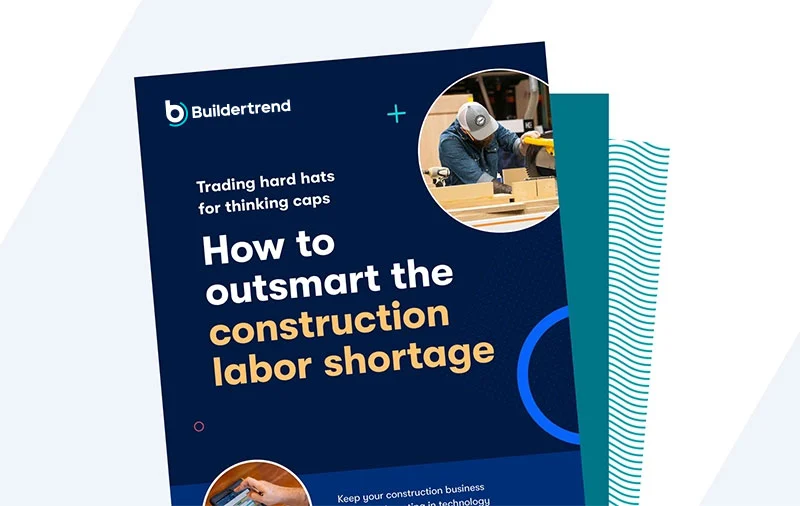
Jan 15, 2024Trading hard hats for thinking caps: How to outsmart the construction labor shortage
Trading hard hats for thinking caps: How to outsmart the construction labor shortage A comprehensive guide to navigating the labor shortage – and how to use tech to do more … Continue reading “Trading hard hats for thinking caps: How to outsmart the construction labor shortage”
The 2024 housing market outlook
In this 2024 construction industry update, Buildertrend’s in-house expert shares insight into the lock-in effect, interest rates and the labor shortage.

Construction labor shortage update for 2023 (and what to do about it)
The construction industry has faced a severe skilled labor shortage in recent years. Learn about the state of this shortage in 2023 and what to do about it.