




Geographic expansion: How to successfully manage multiple companies in different states
Today on “The Building Code,” Zach and guest host Courtney Mattern, director of brand and content marketing, are chatting with Victor Lebegue, CEO at VL Builders in Columbia Heights, Minnesota. Victor has extensive experience in the construction industry and has a background in leadership, cost accounting, organizational structure, professional development, team building and process structuring. In his current role, he oversees the day-to-day sales, marketing, financials and operations.
Listen to the full episode to hear about how this young entrepreneur is changing the construction industry for the better and managing two companies in two different states with the help of software.
Can you talk about why, when starting a construction business, it’s important to bring in people who have been in the industry longer?
“Definitely. I didn’t know anything about design or selecting materials. Everyone tells me I have a knack for it, but I don’t feel like I am actually very good at it at all. In 2020, I decided that I wanted to start doing bigger remodels, and I wanted to have intention behind it. So, I implemented a design-build process. We went from just being a GC that took everything to, ‘We’re going to design every project that we take on; we’re going to handpick the materials,’ and just really offered this experience. I’m the type of person, when I do something, I’m going to put 120% in, and I want to do it better than anybody else. So, I felt it was important for me to go out and find people that A, either had the experience or were coachable to learn the experience. Because everyone’s heard it, the horror story of, ‘I hired this contractor, he came in and they did a terrible job,’ or ‘They ran off with my money.’ For me, it’s about changing our industry as a whole.”
How has Buildertrend made managing two construction businesses in two different states easier?
“It’s hugely valuable because one of the risks of being licensed in multiple places, and being a license holder, is it’s your life and license on the line. If something goes wrong, you end up with the repercussions of that, not whoever screwed it up. So, having Daily Logs – our team really uses Daily Logs effectively. I can see what’s happening on our job sites, and my project managers in Minnesota can ask me questions. We had a kitchen they gutted the other day, and it had craft paper on the exterior walls, and then insulation, and then more craft paper, and they were like, ‘How do we approach this?’ So, I was able to just shoot a comment on there. We use one Buildertrend platform for both companies. We don’t entirely run both companies separately, which was a part of our strategic move with buying a second location. So, the document storage and everyone being able to collaborate together is immensely helpful for us.”
Links and more
Scheduling is the first step to a successful project for Cardinal Crest Homes, a business that’s making eight-plus figures a year. Download this free scheduling milestone template to simplify your project planning process.
Related content:
Tune in to the last episode to hear more about how construction software has played a substantial role in organizing the Sierra Homes team’s daily processes, communicating with clients and fostering a work-life balance.
Subscribe here, and never miss an episode.
Got podcast topic suggestions? Reach out to us at podcast@buildertrend.com.
The Better Way, a podcast by Buildertrend:
Looking to add construction tech to your daily processes? On the newest season of “The Better Way, a podcast by Buildertrend,” you’ll get best practices for implementing software and getting your team on board from other industry pros and our experts. Subscribe and stream today wherever you listen to podcasts.
Follow us on social:
Listen to “The Building Code” on YouTube! And be sure to head over to Facebook to join The Building Code Crew fan page for some fun discussions with fellow listeners.
Zach Wojtowicz:
What’s up, everybody? Zach Wojtowicz here.
Courtney Mattern:
Hi, I’m Courtney Mattern.
Zach Wojtowicz:
Oh, I’m so used to my partner picking me up. Courtney, you’re on “The Building Code” once again.
Courtney Mattern:
Yes, I’m back.
Zach Wojtowicz:
Well, we’re still ironing out our flow here.
Courtney Mattern:
Yeah, we still need people to write in and vote. Who’s got to go? Is it Zach or is it Charley?
Zach Wojtowicz:
I didn’t know that was a poll, uh-oh.
Courtney Mattern:
Uh-oh.
Zach Wojtowicz:
Hey everybody, I’m Zach. Please don’t vote me out of “The Building Code.”
Courtney Mattern:
No.
Zach Wojtowicz:
It’s good to see you.
Courtney Mattern:
It’s good to be back, I’m excited about today’s guest.
Zach Wojtowicz:
Yes. Well, today we have Victor from VL Builders, Victor Lebegue, and he is here to talk about something very unique. He’s a pretty young man in construction, he’s got an incredible story, and he’s got two businesses already. One in Minnesota and one in Colorado. Have you met any builders that have multiple businesses in different states?
Courtney Mattern:
I don’t think so. Is this our first one on the podcast? He has multiple locations.
Zach Wojtowicz:
A lot of times, they have franchises or they have different LLCs in the same area that do remodel, or new home, or a custom division. So, I’m really interested to hear his story, and learn how did this happen?
Courtney Mattern:
He’s definitely ambitious and he’s probably got a lot of good advice to share.
Zach Wojtowicz:
Yeah, so without further ado, let’s get him on here. Hey Victor, welcome to “The Building Code.” It’s great to have you here, thanks for joining us. We always like to ask, hey, tell us your story.
Victor Lebegue:
Awesome. Well, thanks Zach and Courtney for having me. I’m Victor, I’m 29 years old, and I have two custom residential design-build remodeling companies in Minnesota and Colorado. Luckily for me, I get to spend most of my time here in lovely Colorado, and with the little bit of free time that I have, I typically hang out with my dog Moose. Go camping, hiking, hit the slopes in the winter.
Zach Wojtowicz:
What a great dog name, Moose.
Courtney Mattern:
Yeah, mental note.
Zach Wojtowicz:
Yeah, file that one away. And you got the Minnesota, the Colorado time. It’s perfect.
Victor Lebegue:
Yeah, it is. It really works well actually for having two companies. It’s only an hour difference, so we can usually handle most things pretty easily within our normal time zone.
Zach Wojtowicz:
And you’re 29, I feel like an old man. I don’t have any companies.
Courtney Mattern:
Yeah, all of a sudden, I don’t feel very accomplished anymore.
Zach Wojtowicz:
You just dunking on us right in the intro, Victor.
Courtney Mattern:
Right in the intro. Yeah, but now you have to tell us, how did these two businesses come to be? What’s your background? Was this your dream as a little kid? Is it a new-found passion? What’s the story?
Victor Lebegue:
Definitely. Well, pretty much as long as I can remember, I’ve had my hands on a hammer. My dad was a carpenter by trade, he also did siding and windows. So naturally, growing up I helped him with various projects, but also life wasn’t super easy for me growing up. And usually if I wanted something, I had to go out and buy it, or pay for it somehow. So, being financially motivated, growing up in small town Minnesota where no one really cared about child labor laws …
Zach Wojtowicz:
Shout out, dads, making their kids out there work.
Victor Lebegue:
Yeah, shout out dads.
Courtney Mattern:
I think small town Nebraska is similar, too.
Zach Wojtowicz:
Yeah.
Victor Lebegue:
Definitely. So, construction was always my go-to. I did everything I could helping my dad frame up houses, various remodeling projects. And then in middle school, I worked every summer pretty much for a roofing contractor, and I don’t miss that. And then when I was 16 and got my driver’s license, I started working for a framing contractor out in North Dakota. So, I’d spend my winter breaks building pole barns, and then my summer breaks building apartment buildings for him. So, that incited my passion, I guess, for construction.
Zach Wojtowicz:
A tour in roofing really got you going, huh? You were like, “Let’s just keep …” You hit everything. I’m like, you’re going to keep going.
Victor Lebegue:
Yeah. Yeah, but my start really wasn’t planned for owning a construction company. I’ve always had an entrepreneurial side. When I was nine, I printed out business cards and I went door to door, and I sold lawn care services, and stuff like that, but I never really knew what I wanted to do with my entrepreneurial side. So, after high school, my second passion is cars, so I got into the automotive industry. And then 2018, I was laid off from being an independent contractor working for General Motors as a retail rate analyst. And I was 23 at the time, and I had just bought my first house, and I had started remodeling it. And when I lost my position with GM, I knew I didn’t want to go back to the auto industry, but I also had very little money, so I had to figure something out pretty quickly. And at the time, I also had a realtor that was going to partner with me on a real estate deal, and it needed a ton of work, so he was going to bring the money, and I was going to do the work.
But with my recent loss of income, I didn’t want to financially commit to another bill. So, luckily for me, he decided to hire me to fix up the property, and I’d always had a passion for construction, really enjoyed the challenge that came with remodeling. So, during that time, I took it as an opportunity to pick up some work, and then next thing I knew, I needed help. I couldn’t do it all on my own, so I hired some guys, and I started from there.
Courtney Mattern:
What were some of the early lessons you learned from that first gig, fixing up the house and that property?
Victor Lebegue:
Yeah, so fixing up the first place was pretty easy. It was a ton of work, I think I spent pretty much 14-hour days there by myself for four months straight. And my biggest lessons, I think, really sunk in for me in 2019. I realized I didn’t know anything about how to run a construction company. I didn’t know what job costing was, I didn’t know how to read a P&L, I didn’t know how to bid effectively, I just knew how to swing a hammer really well. And by the end of 2019, I had guys working for me, but they weren’t extremely skilled. And I was in the field, and I was doing sales calls on nights, and evenings, and weekends. And so, at the end of 2019, I didn’t have any work left because I was so busy building this addition project, and I really realized I had to learn to take off the tool belt and really start running a business effectively.
And so, I spent the next couple years just learning everything I possibly could from job costing, unit cost, estimating, everything I could about code compliance, and leading and managing people, which is what I focus a lot of my time on now.
Zach Wojtowicz:
I’m so impressed, man. That’s incredible for being so young, and just finding a way to make it happen. I’ve talked to a lot of guys in the industry that… They were you, but they’re a little bit… They’ve made it to the more seasoned side, and they’re running their multiple LLCs, and you’re already doing it. So, I feel like I am … I want to keep following you, see where you go next.
Victor Lebegue:
Definitely, I appreciate that.
Zach Wojtowicz:
Yeah, no, that’s incredible. Just looking at your website, it looks like you’ve got a good leadership team around you, too. Can you talk a little bit about why you’ve found it important to bring in some people that maybe have been in the industry and on the business side a little bit longer?
Victor Lebegue:
Definitely. I didn’t know anything about design or selecting materials, and everyone tells me I have a knack for it, but I don’t feel like I am actually very good at it at all. And so, in 2020, I decided that I wanted to start doing bigger remodels, and I wanted to have intention behind it. And so, I implemented a design-build process. We went from just being a GC that took everything to, “We’re going to design every project that we take on, we’re going to handpick the materials,” and just really offered this experience. And for me, it’s always been about … I’m the type of person, when I do something, I’m going to put 120% in, and I want to do it better than anybody else. And so, I felt that it was important for me to go out and find people that A, either had the experience or were coachable to learn the experience.
Because the other side for me, too, is I have a lot of passions, and so, I want multiple businesses, and I want to be in real estate, and I like building systems and processes, and I really love coaching people and pushing them to be better in our industry. Because everyone’s heard it, the horror story of, “I hired this contractor, he came in, they did a terrible job,” or “They ran off with my money.” And so, for me, it’s also about changing our industry as a whole.
Zach Wojtowicz:
That’s incredible. I’m curious, too, so from Minnesota, bought a business in Colorado, what’s it like running two businesses in two fairly different places, in terms of their … Even the land, the topography, the soil, what you can and can’t do from a coating standpoint? Was that a risk in buying that business? Or were you just like, “You know what? We’re going to figure it out.”
Victor Lebegue:
Yeah, I’m definitely a problem solver, so figuring it out is my motto, it doesn’t matter what comes my way. But to bring up a point, there was a lot of things that I didn’t really anticipate to be extremely different. So, when I got out to Colorado … Minnesota’s a very organized state. You’re licensed at the state level, you have continuing education requirements that you have to meet, and I’m a licensed builder there. Colorado is licensed at the city and jurisdiction level, so if you’re in an incorporated area, you’re licensed with the county, and none of those counties or cities talk to each other. They all interpret building codes differently. And Minnesota’s interesting because we get the worst of both worlds up there. It’s extremely cold in the winters, extremely hot and humid in the summers, so I’m really good with energy efficiency, and things like that. And Colorado is pretty relaxed on some of those things here compared to Minnesota, so that was always a shock for me.
But something that I’m definitely still learning about is our expansive soils here in Colorado, or bentonite, and your basement walls are framed differently because it’s very common for slabs to move and shift. So, I rely a lot on my team, my subcontractors and things like that to guide me on those areas. And if they don’t know and I don’t know, then I’m seeking out someone who does, so I can learn everything about it.
Zach Wojtowicz:
I’m just thinking about all the little metros around Denver, and just thinking about having to …
Courtney Mattern:
Figure out your license in each one, there’s so many.
Zach Wojtowicz:
Yeah, Minneapolis doesn’t have as many … Well, they do, but it’s like Colorado, for whatever reason, every time I go through Denver, it’s Littleton, Aurora.
Courtney Mattern:
It’s like, “How many towns have I just passed through?”
Zach Wojtowicz:
Yeah, it’s all just connected.
Victor Lebegue:
Yeah.
Courtney Mattern:
I’m really interested if you started … You started your first company in Minnesota, and now you’re in Colorado as well. When your journey with Buildertrend started, were you very early on thinking, “I need tech or software to keep me organized,” or is it something that was advised later on?
Victor Lebegue:
Yeah, so I definitely needed something to keep me organized. And it’s actually funny, 20… I think it was 2019, I signed up for Buildertrend, and I was like, “This is going to be great,” but I’m not super tech-savvy, even though I’m super young, and I’m better now than I was in 2019. But I had Buildertrend, and I was like, “This is way too much for me to be able to manage and use.” And I also, I was swinging the hammer every day, and doing sales calls at night, so I didn’t have time to build it out. So, I switched from Buildertrend for a little while, and then I realized we got super busy, and I had no way to schedule projects effectively. And so, that and the project portal, I was like, “Game on. We’re going to bring Buildertrend on again.” And so, for the last, I think three years, I’ve had Buildertrend, and we’ve built it out to our company, and we’re still working on building out some things this year, but it has been an immense help for us.
Zach Wojtowicz:
Well, I imagine, too, we probably have people that are using it in both states, and so even just being able to collaborate in a place together, where you’re not … And there’s just a lot of information to exchange across construction platforms, so having it in one place has got to be, for you, especially valuable.
Courtney Mattern:
Then you don’t have to drive to Minnesota every day and do site visits, right?
Victor Lebegue:
Exactly. Yeah, it’s hugely valuable, because definitely one of the risks of being licensed in multiple places, and being a license holder, is it’s your life and license on the line. So, if something goes wrong, you end up with the repercussions of that, not whoever screwed it up. So, having Daily Logs, our team really uses Daily Logs effectively. I can see what’s going on on our job sites, my PMs in Minnesota can ask me questions. We had a kitchen they gutted the other day, and it had craft paper on the exterior walls, and then insulation, and then more craft paper, and they were like, “How do we approach this?” So, I was able to just shoot a comment on there. And then we use actually one Buildertrend platform for both companies. We don’t really entirely run both companies separate, which was a part of our strategic move with buying a second location. And so, the collaboration, and just document storage, and everyone being able to collaborate together is immensely helpful for us.
Zach Wojtowicz:
Shifting gears away from Buildertrend, it popped in my head when you were talking about different … Buying a location. Do you have plans that you are taking, or design styles, that you’re taking from Minnesota, or Colorado, or vice versa? Do you notice any cross … Like, “Oh, this worked really well in this market,” and tried it in Colorado? Or what’s your aesthetic plan for your business?
Victor Lebegue:
Yeah, so we’re 100% custom, which makes it a little hard to track friends, and stuff like that because we literally do something different on every project. I think what was funny to me, and what I didn’t expect, is I’m from Northern Minnesota originally, so it’s a very rustic and cabin-type vibe, and that’s very common here in the foothills of the mountains. So, now we’re doing a lot of projects where I’m originally from, and Minnesota still seems to be on that traditional mid-century modern path. So, we don’t see a lot of cross collaboration in the materials that we’re putting in, or at least the color schemes, but I do think having the different experiences has definitely helped us with construction planning, and how we approach certain situations.
Courtney Mattern:
One challenge that was top of mind for a lot of builders I talk to is the labor shortage, and hiring, and constructions people problem. Have you had different challenges in these two different markets when it comes to hiring, recruiting talent, building out a team? Or are you seeing similar hurdles in both markets?
Victor Lebegue:
Definitely. So, that was something that was also a shock to me. We’re still trying to figure recruitment out, as is everybody right now. For every five people that are retiring, we’re typically having one enter. And so, it’s really surprising how different our labor markets are in Colorado versus Minnesota. In Colorado, we seem to be able to find skilled people in our industry relatively easily. Or when we post a job, we have a good handful of candidates, at least, to pick from. But in Minnesota, when we’re looking for field staff, project managers, sales and design staff, it’s a lot harder for us to find those skilled people. And we’re usually sifting through hundreds of applications of baristas or servers that might be looking for an easy way to make more money, or a quick industry change.
And I haven’t been able to tell for sure if it’s the industry in Minnesota, or if it has to do with the fact that most people in Minnesota have lived there their entire lives, and they have good roots and connections, and so, they’ve likely found a company that they’re super happy working with and aren’t looking to change. Whereas in Colorado, there are a lot of people who are coming here, and a lot of my team here has lived here for a long time, but I also find a lot of people that are coming here and looking for a new job. One thing that we try to focus on when recruiting is we use a multi-level recruitment process, and I stress to my team, people and culture are first. We’re a training company, even though we primarily remodel, our goal is to build people and build culture, and train them to be really good at what they do in our industry. And so, we vet everyone that comes to work for us pretty hard.
We start with a phone screen, typically they’ll come in for a first round interview, then we check the references, then they go through some testing. And then if they pass all that, then I’m meeting with them for a second round interview, and we’re bringing them in. When it comes to retaining our staff, I feel like we do a pretty good job of that, and I really try to make it a great place for us to work. So, this year, I would say it’s been a little bit challenging to break down the barriers and spread my enthusiasm between our companies. So, having really good people who are a culture fit are important because you have to keep that culture alive. And we also run on EOS, so everything’s super clear. Everyone knows their roles, everyone has a number that they’re responsible for within the company, and what issues we’re focusing on knocking down this quarter. And also, we pay really well, so we pay at the top end of the market. We have 4% match 401, 2 weeks PTO. Health, dental, life, we do seven paid holidays.
And then I also shut the company down, more so for my own sanity, between Christmas and New Year’s, fully paid for everybody. And then we try to do … Every quarter, we’re volunteering somewhere, like we did Ronald McDonald House here in Colorado last quarter, and then we’re typically also doing some sort of quarterly event just to get the team together, like top golf or ax throwing. One that I want to do is an escape room just to see how everyone does together in that.
Courtney Mattern:
It’s funny, you have a lot of.
Zach Wojtowicz:
Pickleball is another good one.
Courtney Mattern:
Yeah, pickleball. Everyone at Buildertrend, we’re all doing team outings with pickleball, and I think it’s so interesting how much overlap in some of your approaches to building a team culture is similar to what we’ve done here at Buildertrend, a tech company. So, it’s almost like you’re using those innovative techniques to attract and keep talent at a time when other companies are struggling. And what do you think the payoff or the benefits you’ve seen from … I don’t know, you just seem to have such a growth mindset, and you’re willing to be innovative. How has that benefited you so far?
Victor Lebegue:
Well, it’s funny you mentioned that we’re doing a lot of the same things as Buildertrend because I remember coming to Buildertrend University, and walking in the doors, and you can almost feel the culture in Buildertrend when you walk in. Everyone’s happy, everyone’s doing what they seem to be supposed to be doing, everyone’s greeting you, and I really wanted that for our company. And so, I actually doubled down on that. I think the benefit is, like I mentioned, your staff are happier, which gives you better customer service and customer satisfaction, and helps your brand. Everyone is willing to collaborate together, but also have those difficult conversations. A lot of companies and a lot of people struggle with coming to the table and talking about something that’s really, really difficult. And so we’re encouraging our team to have those conversations, get it out in the open. I don’t want any animosity, I don’t want resentment. If there’s a problem, let’s figure it out together, and how we move forward. And for us as a company who’s still relatively small, but wants to grow, that also helps us break down obstacles and barriers a lot faster.
Zach Wojtowicz:
You said the brand word.
Courtney Mattern:
Which one?
Zach Wojtowicz:
Well, just whenever Courtney hears brand, I just could feel … She’s going to dive into the, “The brand is the most important thing that you can have at your business.”
Courtney Mattern:
It’s an intangible asset for your business.
Zach Wojtowicz:
See, there it goes.
Courtney Mattern:
But I think it goes a long way to remember that there’s a difference between a compliant employee and a committed employee, and compliance doesn’t equal commitment. So, when you say when they’re happy … You don’t want there to be this animosity or they’re just doing things because they have to, and they’re checking it off a list. You want it to be because they want to, and they love to come to work and do what they do, which we do here. So, it’s cool that we inspired you, you got to come back and visit the office again.
Zach Wojtowicz:
Well, you can work anywhere, you can do anything, and it’s like everyone … Motivation comes from purpose, and it’s like, “This is what I do.” And the more your job can simulate that, the more output you’re going to get. It’s on the employer to create that environment. If you make it look like the Soviet Union in your office, and everybody looks the same, and they have to dress the same, and they have to do the things, and just be looking at spreadsheets or whatever, a lot of times they’re going to revolt. They’re going to say, “I hate this. I’m just here for the paycheck.” So, it’s an investment.
Courtney Mattern:
Bye.
Zach Wojtowicz:
Yeah. What were you going to say?
Victor Lebegue:
I agree with that, and it’s funny that you mentioned that. Part of our goal this year was reworking our process. When I bought Colorado, I came in super confident, and I was like, “I have all these great processes.” It was half the reason we bought the new company. And then I got here, and I started really looking at things, and I was like, “Nothing works. It’s too stringent, it’s too complicated. So, let’s simplify that, let’s break down barriers, but also let’s put enough flexibility into it, where our people can be people, and do things enough in their own style that they don’t feel like they’re working for someone who is making you stand on an assembly line having to do these things.” I think having flexibility in your processes and systems drives creativity, which also helps with purpose. And you’re right, purpose is also extremely important. And so, it was funny, last December we had our annual company meeting, and we’re establishing goals for the year. And I try to stay really quiet in that meeting because I don’t want it to be my goals, I want it to be my team’s goals.
And my team came up with the exact same thing that I wanted anyways. We settled on a similar revenue target. One of our tenure goals is to start a nonprofit foundation to help end homelessness. And my team came up with that on their own, but it was also something that’s been a big passion of mine as well. So, I think surrounding yourself with people like that is immensely helpful.
Courtney Mattern:
I love that.
Zach Wojtowicz:
You are incredible, man. I am over here, just …
Courtney Mattern:
Goosebumps a little bit.
Zach Wojtowicz:
Yeah, literally just blown away. When did you come to BTU?
Victor Lebegue:
I came to BTU, I think it was November of 2021.
Zach Wojtowicz:
Okay.
Victor Lebegue:
2020, something like that.
Courtney Mattern:
We both would’ve been here.
Zach Wojtowicz:
Yeah, I don’t know if I missed you or what, but you’re saying things that are … They’re not apparent to a lot of leaders, a lot of people, that they are open to this prosperous, always improved but never accost mindset. It’s something that I think the people that I look up to, they had to learn some of those lessons. They tried it, and they were in a much different part of their lives, so I’m really impressed at how you’ve been able to do all this. I want to know what’s the next state? You moving on to the … Are you going to take over every state in America?
Victor Lebegue:
We don’t have any plans for expansion at the moment. Actually, one of my big goals is to … I don’t know if you’d call it semi-retire, maybe step out of my companies. My goal was 30, I’m feeling like I’m not going to hit that, but I’m doing everything I can.
Zach Wojtowicz:
Yeah, you failure.
Victor Lebegue:
I do have big passions, and I’d like to just have the time to be able to spend some of my time on that instead of working my life away forever and ever. But a big goal of that, and a big passion of mine is also, like I mentioned earlier, changing the industry a little bit. And so, something that I’ve worked really hard on this year is we’re building out an online learning management system, so we can train all of our staff super effectively. And it not only trains on our company processes, but it trains on, “Here’s best practices in framing, roofing, siding, window flashing,” all these things. And so, my long-term goal is to create an employee path to ownership program, so I may not own businesses in every state, but I’d like to get to a point where we have all these things fully implemented within our company. And if I have an employee that wants to become a competitor, great, let me train you up. Let’s buy this company, let’s put you in it, and you can run it off the systems that we perfected, so.
Courtney Mattern:
Your vision statement sounds a little like Buildertrend’s, to change the way the world builds. You’ll be training these team members who are using excellent systems, who have these values of doing good in the community, and that’ll just spread. So, that’s really cool.
Victor Lebegue:
Yeah, that is one of my goals. I think the industry, there’s so many great people in the industry, so I don’t want bad mouth it, but I think there’s just as many people out there that learn from somebody who learned from somebody who learned from somebody, and what they do might work, but we’re also evolving. Technology is more of a thing in our everyday lives, and we have to learn how to grow, and change, and evolve as an industry. And so I really think it’s important to teach higher standards, and set some sort of standard for how we do things, and try to teach that to others who might not be doing it as well as us.
Zach Wojtowicz:
What an incredible message. Well, it was an honor getting to talk to you today. You’re always welcome back on “The Building Code.”
Victor Lebegue:
I’d love to come back.
Zach Wojtowicz:
I want to hear about, in a year from now, what’s …
Courtney Mattern:
Yeah, we have to mark your milestones and celebrate them on the podcast.
Zach Wojtowicz:
Maybe it’ll be your 30-year retirement, you don’t know. It could really just …
Courtney Mattern:
If you retire in the next year, you got to come here, we’ll throw you a retirement party.
Zach Wojtowicz:
That’s right, that’s right.
Victor Lebegue:
All right, I’ll take you up on that.
Courtney Mattern:
Denver’s not far from Omaha, it’s a 50 minute… I don’t know what the time change is. Is it really? Two hours, but it feels like 15 minutes.
Zach Wojtowicz:
It’s an hour.
Courtney Mattern:
It’s an hour?
Zach Wojtowicz:
Yeah.
Courtney Mattern:
Flight.
Victor Lebegue:
It’s an hour. Yeah, you’re central time, right?
Courtney Mattern:
We’ll get you a cake, it’ll be fun. We’ll open up the BT bar for you, we’ll celebrate.
Zach Wojtowicz:
I don’t think we’ve ever offered the BT bar on the pod. Courtney’s over here …
Courtney Mattern:
If he retires at 30, I mean, we better.
Zach Wojtowicz:
That’s big time, that’s big time.
Courtney Mattern:
Always looking for a reason to throw a party.
Victor Lebegue:
Hey, nothing wrong with that. Got to have fun, too.
Courtney Mattern:
Yes.
Zach Wojtowicz:
All right, Victor. Well, thanks for coming on again, and we’ll have you back, all right?
Courtney Mattern:
Yeah, thanks so much for being here with us today.
Victor Lebegue:
Sounds good. Yeah, thank you Zach and Courtney. I really appreciated meeting both of you today, and have a great rest of your day.
Zach Wojtowicz:
You, too. All right, we just had Victor on the podcast.
Courtney Mattern:
What a great interview, he was so inspiring.
Zach Wojtowicz:
He really was. I was being genuine when I was talking about his … He just has this almost old soul to him, very mature.
Courtney Mattern:
Yeah, a lot of wisdom very early in his career. And also, I think it’s worth noting his growth mindset, his ability to change and flex, and also find talent to fill in the knowledge gaps he has. I think sometimes people’s egos get in the way when they’re building their business. They get a little self-conscious about what they don’t know, and he just owned it, and built a really strong team.
Zach Wojtowicz:
Yeah, I really enjoyed his perspective and everything that he talked about with his journey. I have a ton of respect for anybody who goes and start a business when you’re young, you have different circumstances. Your safety nets are a little different, you don’t have as much fallback plans, maybe that’s a good thing too. You just, “What do I have to lose?” And go for it.
Courtney Mattern:
You don’t know what you don’t know.
Zach Wojtowicz:
Yeah, right. You just take it and run with it. But he’s been wildly successful, and I don’t know, next time I’m out in Denver, I definitely want to see if I can drop in and just shadow him a little bit.
Courtney Mattern:
I think his approach to how he takes care of his team, being at the top of the pay scale, offering great benefits and being a leader in that realm is really going to set him up for success with the challenges that the industry is facing with labor shortages. And he’s probably one to watch, and even for experience builders to take a look at, and maybe learn some lessons as well.
Zach Wojtowicz:
Yeah. Well, I hope we can get him back on in a little bit longer to continue to see the story.
Courtney Mattern:
Yeah, we’ve got to check in. If he retires at 30, we’re going to host that party here at Buildertrend.
Zach Wojtowicz:
That’s right, that’s right. I mean, what a goal. I’m like, “Well, I missed it. Maybe I’ll hit 40.”
Courtney Mattern:
Yeah. No, I don’t think … For me, it’s not …
Zach Wojtowicz:
Yeah, it’s not in the cards?
Courtney Mattern:
Fingers crossed.
Zach Wojtowicz:
Yeah. All right, everybody. Well, thank you so much for listening to today’s episode. Courtney, remind them about all of our social, where should they like, should they comment?
Courtney Mattern:
Yeah, you got to join our Building Code Crew on Facebook. It’s a Facebook community where you can chime in about what guests you want to hear from, you can ask questions to other Buildertrend users. It’s a great community, so head over to the Facebook group, and then follow us on all of our channels at Buildertrend. Make sure you like, review, and rate the podcast. That’s how we get more and more listeners, that’s how we top the charts. And you can send us emails at podcast@buildertrend.com. I mean, we would love to have your feedback. We’d love to know what you thought about the guests, we’re also always looking for guests, so send us a note, let us know how we’re doing.
Zach Wojtowicz:
And if you want to boot one of us off, obviously …
Courtney Mattern:
Yeah, you can cast your vote via email, social media or phone call. Do we have a phone? I don’t know if we have a phone number anymore, but …
Zach Wojtowicz:
Oh yeah. Just call in to support, just let it rip.
Courtney Mattern:
Yeah, call in to place your vote. American Idol.
Zach Wojtowicz:
Yeah, they’ll love that. All right, everybody, thank you so much. We’ll catch you next time.
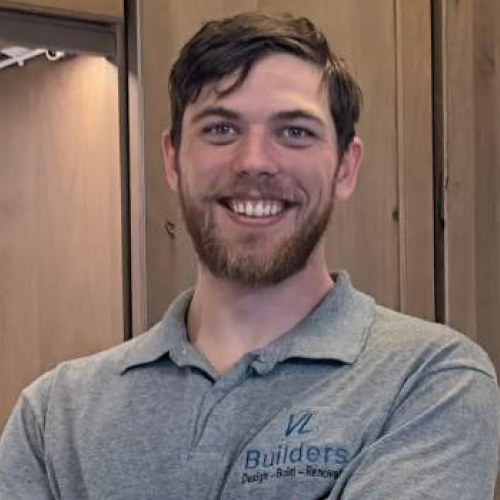
Victor Lebegue | VL Builders
Places You Can find us




We think you’d also like this

9 construction trends to watch out for in 2023
The world is changing and it’s important for construction businesses to keep up with new trends to keep up. Learn more about new construction industry trends for 2023 here.

Top 8 workforce management features for construction
Effective construction workforce management is crucial for ensuring efficient resource allocation, improved productivity and enhanced safety. Learn more here.

How to leverage your subcontractor agreement to scale your business
Learn how established builders leverage subcontractor agreements to scale their business, improve consistency and manage subs effectively with Buildertrend.