




Calming the chaos: How to balance business and personal freedom
Today on “The Building Code,” Zach and guest host Courtney Mattern, director of brand and content marketing, are talking all about how to manage operational chaos with Todd Dawalt, founder of Construction Leading Edge. Todd has 26 years of experience in the construction industry and knows what it takes to own a business and manage $300 million worth of projects.
Listen to the full episode to hear more about how to run an effective business while maintaining personal freedom.
How does systemizing business operations benefit the owner of the company?
“Everybody who’s built something has built a foundation, but maybe you’ve never thought about the definition of a foundation. The definition of a foundation is it’s the part of a building or a structure that transfers the load from the building to the earth. It transfers the load of this structure to the ground. A lot of businesses, if they were a structure like that, you would see all of the load going down to one person, the guy or the gal who owns it. They’re responsible for 100% of the load – sales, marketing, finance, estimating, pre-construction, selections, operations, everything. They’re carrying all of the load. What systems do is they help distribute the load so that construction business owners can take off some of the hats, so they can actually move into that visionary role and get onto the next thing and get out of day-to-day operations.”
How do you motivate builders or help them get over the hurdles of putting systems in place?
“Once people start thinking about, ‘How much longer am I going to deal with this and how much is it costing me every month to deal with this chaos, and how much is the stress costing me?’ A lot of the cost can’t be measured in dollars because it’s in sleep and relationships and time with their kids and family and things like that, missing vacations. Once they realize, enough is enough, I’m willing to deal with some short-term discomfort to eliminate this long-term pain that’s not going anywhere on its own, then they’re ready to get to work. Jim Rohn said something: ‘You can either deal with the weight of discipline or the weight of regrets – and discipline weighs ounces and regrets weigh tons.’ You’re going to deal with something. You’re going to carry some weight, but are you going to be disciplined and put the systems in place and deal with the ounces of that pain or are you going to go five years, 10 years down the road and only have regrets?”
Links and more
Enroll in the Construction Leading Edge Get Paid for Estimates Masterclass free for a limited time – a $1,000 value. You’ll get sales scripts, preconstruction agreement templates, pricing guidance, detailed training and more.
Be sure to check out Todd’s podcast, “Construction Leading Edge,” to hear more about topics like the right time to forget about setting goals, the side effects of a poorly designed organization and more.
Scheduling is the first step to a successful project for Cardinal Crest Homes, a business that’s making eight-plus figures a year. Download this free scheduling milestone template to simplify your project planning process.
Related content:
Tune in to the last episode to hear more about Eduardo Muniz’s story and how his drive to overcome challenges has led to his success as the owner of Boston Best Construction.
Subscribe here, and never miss an episode.
Got podcast topic suggestions? Reach out to us at podcast@buildertrend.com.
The Better Way, a podcast by Buildertrend:
Looking to add construction tech to your daily processes? On the newest season of “The Better Way, a podcast by Buildertrend,” you’ll get best practices for implementing software and getting your team on board from other industry pros and our experts. Subscribe and stream today wherever you listen to podcasts.
Follow us on social:
Listen to “The Building Code” on YouTube! And be sure to head over to Facebook to join The Building Code Crew fan page for some fun discussions with fellow listeners.
Zach Wojtowicz:
Hey everyone, welcome to “The Building Code.” Zach Wojtowicz here with …
Courtney Mattern:
Courtney Mattern.
Zach Wojtowicz:
And that is a special day for me because I get Courtney now and Charley already got a few runs.
Courtney Mattern:
I’m back. Thanks for writing in all those emails, all those messages on social media. I’m definitely making that up, but …
Zach Wojtowicz:
Well, I will say that a certain host’s father did say that I was out of the job, and that has been a source of conflict.
Courtney Mattern:
Charley’s dad texted him and said that the chick on the podcast was really cool. Your buddy is out of a job. I’m putting that one on LinkedIn. I’m putting that under accolades and awards.
Zach Wojtowicz:
Charley’s dad’s favorite host in “The Building Code.”
Courtney Mattern:
I’m going to put quotes saying, “Charley’s dad said. That’s got to go on the resume.”
Zach Wojtowicz:
Well, I’m going to throw this to you today on “The Building Code,” who do we got?
Courtney Mattern:
Today’s guest is Todd Dawalt from constructionleadingedge.com. He’s a consultant. He’s worked a lot with our CoConstruct customers on helping them put in place systems that make their businesses scalable and eliminate all of the chaos. Actually, last night at BTU, I talked to a customer who’s like, “Do you know Todd Dawalt? He’s amazing.” It’s like, “We’re going to be talking to him tomorrow, and I just can’t wait for everybody to hear his advice.”
Zach Wojtowicz:
I love these episodes where we get these construction experts as I just kind of parade around pretending to be one, but let’s not waste any more time. Let’s get him on here. Hey, Todd, welcome to “The Building Code.” It’s great to have you here. You’re a podcast veteran. I feel honored to have you on, but tell our listeners all about yourself.
Todd Dawalt:
I appreciate the opportunity to be on here. My name is Todd Dawalt. I run the Construction Leading Edge, the Construction Leading Edge podcast. My website is constructionleadingedge.com. I live in Kentucky. My wife’s a teacher. I have four kids. Over the past 10 years, I’ve spent a lot of time on bleachers, watching volleyball and basketball games. We help construction business owners systematize their construction business, and that’s what we’re all about.
Zach Wojtowicz:
I love it. I love it. That’s a no easy feat. There’s a lot of ways you can slice it in construction. Tell me a little bit about your background. Did you start in construction and decide to go into the consulting world or did you find yourself in it, kind of like me, for listeners know, I kind of fell into it. Tell us your story.
Todd Dawalt:
I have been in construction for about a little over 25, 26 years now. Right out of school, I got a civil engineering degree, went to work for a large commercial contractor in the Cincinnati market and the Lexington, Kentucky market. Did that for about five years, then had my own construction business for a few years where I learned a lot of very painful, very expensive mistakes.
Then, ended up working for a real estate developer. I’ve managed projects for companies like Jones Lang LaSalle, Procter & Gamble, very large projects from the owner’s rep side, ranging $10 million, $20 million, $30 million up to, I think, the largest project I ever did was about $110 million, senior living community. Then, the recession hit me in 2010 and new starts with the developer I was working for ceased as it did for almost everybody else.
I found myself in this part of the construction industry I didn’t even know existed. It was the sewer rehabilitation industry, very, very glamorous. Very sewer.
Zach Wojtowicz:
Very niche.
Todd Dawalt:
Very niche, but it’s multi-billion-dollar niche that most people have never heard of, maybe because it’s all under …
Courtney Mattern:
It’s very necessary, too.
Zach Wojtowicz:
Yeah, everybody, no one pays attention to the plumbing until …
Courtney Mattern:
It doesn’t work.
Todd Dawalt:
Exactly.
Zach Wojtowicz:
… then you got a real mess on your hands.
Todd Dawalt:
I found myself in that industry and I found myself running a sewer rehabilitation company. A guy brought me in to run the company and to say it was chaos would be an understatement. It was just chaos everywhere. I spent about three years eliminating chaos, putting systems in place, fixing cash flow, fixing people problems, fixing operational problems, just fixing problems. Grew that company from about $4 million in revenue up to $11 million revenue in three years and then grew it from about 15 employees up to 50 employees.
At the end of that, I thought, I was listening to a lot of podcasts, listening to Dave Ramsey, entree leadership, some other entrepreneurial podcasts. I looked around for a podcast that was like Dave Ramsey, but for construction, and I couldn’t find one. I realized, I thought my hypothesis was, “Hey, I figured out some stuff the hard way in growing this business, maybe it could help some people.”
I was listening to podcasts, so I created this thing that I wish I had, frankly 20 years ago when I owned my own business. I started the Construction Leading Edge podcast, started interviewing folks, talking about their stories, sharing some of the things that I had learned the hard way. That was March of 2014, and here we are.
Courtney Mattern:
You fast forward to today, 2023 and your specialty is sort of systemizing businesses. What do we mean when we talk about systemizing or what do you mean?
Todd Dawalt:
A lot of construction business owners are, they’re visionary entrepreneurs. They started this business, they started their business, they want to scale it and then they want to go on to other ventures. They want to acquire other businesses, start new divisions, get into real estate development, something else, but they’re stuck. They find themselves handcuffed to a desk, chained to their business. They’re stuck in day-to-day operations, spending all of their time putting out fires.
What we do is we help them put systems in place so that their business will run without them, is one way of putting it. When I think about systems, here’s how I think about systems, I studied structural engineering at the University of Kentucky and the definition of a foundation, everybody who’s built something has built a foundation, but maybe you’ve never thought about the definition of a foundation.
Well, the definition of a foundation is it’s the part of a building or a structure that transfers the load from the building to the Earth, wind loads, snow loads, live loads, dead loads, it transfers the load of this structure to the ground. A lot of businesses, if they were a structure like that, you would see all of the load going down to one person, the guy or the gal who owns it. They’re responsible for 100% of the load – sales, marketing, finance, estimating, pre-construction, selections, operations, everything. Everything goes through them. They’re carrying all of the load.
What systems do is helps, good systems are like the foundation of a business. It helps to distribute the load to other people, so that it’s not all just landing on the shoulders of the business owner. The good visual is Atlas, the guy carrying the weight of the world on his shoulders, or some people have even said they feel like this mythical character, Sisyphus, who’s constantly pushing this boulder up the hill for eternity.
Courtney Mattern:
Over and over again.
Todd Dawalt:
What systems do is they help distribute the load so that construction business owners can take off some of the hats, so that they can actually move into that visionary role and get onto the next thing and get out of day-to-day operations.
Courtney Mattern:
Last night, we had a Buildertrend University dinner. Every couple of weeks we have, I don’t know, 50 to 70 customers from across the country, sometimes from across the world, fly into Omaha at our headquarters and do two days of in-depth training. On the first day, we take a break, we have dinner, we network.
Last night it was such an odd coincidence, I was talking to a builder, Tru Builders was the company name, and he was like, “Do you know who Todd Dawalt is? He helped me double my margins.” I think it’s funny when you talk about that carrying that load and not being the sole person who is responsible for keeping the structure of your business strong, because this builder said, “Last year, I took 16 weeks off. This year I’m going to do 20 weeks because I know my business is running smoothly when I’m away.”
I think that’s, I don’t know, the emotional part of a system is you could say, “Put in place some processes,” and it’s like, “Snooze,” but you say, “You put in these processes, you’re going to be able to sleep better at night, and you’re going to be able to take 20 weeks off,” and suddenly it clicks.
Todd Dawalt:
Yup. Yeah.
Courtney Mattern:
How do you motivate the builders that you work with or help them over the hurdles of putting in place systems, because I bet it’s really painful?
Todd Dawalt:
How do I motivate them? We don’t. I tried to motivate.
Courtney Mattern:
They have to motivate themselves?
Todd Dawalt:
What I’ve learned, the hard way, after trying to motivate people for years as a project manager, running a business, in sales, et cetera, I’ve learned you can’t motivate people and frankly, they don’t need to be motivated. They have all the motivation they need. The people that come to us that we help, they’re motivated and we might help them find their motivation and articulate their motivation.
Like the gentleman you’re talking about is Max Christiansen from Tru Builders in Arizona, and he wouldn’t mind me sharing this, he’s been a long-time client. Their motivation was, he and his wife Lori, wanted to get out of the business and transition it to their daughter, Cassie, because they had a beach home, and they want to get out, they’re ready to transition into retirement. That was their motivation.
We were able to help them put the systems in place to allow them to do that without overloading their daughter, Cassie, without them losing sleep about like how’s it going to, are we overloading Cassie? Are we just throwing this pile of garbage into her lap, so that it was a good sustainable, smooth, smooth transition. It is hard, but you know what else is hard, is chaos. Once people realize that the discomfort of, and they start thinking about, “How much longer am I going to deal with this and how much is it costing me every month to deal with this chaos and how much is the stress costing me?”
A lot of the cost can’t be measured in dollars because it’s in sleep and relationships and time with their kids and family and things like that, missing vacations. Once they realize, enough is enough, I’m willing to deal with some short-term discomfort to eliminate this long-term pain that’s not going anywhere on its own, then they’re ready to get to work.
Zach Wojtowicz:
That makes a ton of sense. I’ve seen that a lot in a lot of businesses where they’re reactive, and they get stuck into that reactive mindset. They’re just constantly firefighting, things are coming at them, and that transition to being proactive is still work. It’s still difficult. It’s just now, you are being intentional and you’re actually able to control it and eventually, you’re just conditioned then to be an operator and to actually anticipate those things.
Slowly but surely, that then leads to less friction, more efficiency, more business outputs. Then they’re making more money. I’ve always tried to play around. I love the way you put that different, it’s a different mindset, but either way, it’s hard.
Courtney Mattern:
What are …
Todd Dawalt:
Jim Rohn said something, “You can either deal with the weight of discipline or the weight of regrets and discipline weighs ounces and regrets weigh tons.” You’re going to deal with something. You’re going to carry some weight, but are you going to be disciplined and put the systems in place and deal with that, the ounces of that pain or are you going to go 5 years, 10 years down the road and only have regrets because you would look up and realize, “Wow.”
Unfortunately, I’ve talked to people who said things like, “My life is passing me by. I’m working 70, 80 hours a week. I don’t know my kids. My kids are gone. I have two grandkids.” I have one client who said, “I have two grandsons. I’ve never taken them fishing, and it’s a damn shame.” You get to pick, is it the weight of discipline and putting systems in place or do you want to deal with the weight of the regrets when it’s too late? I know I have plenty of regrets and those are painful because there’s nothing you can do about them.
Courtney Mattern:
What are some of those early symptoms of chaos in our business?
Todd Dawalt:
I think of these symptoms, they are systems deficiencies. This is what we look for. One of the first things we do is we take people through an assessment, and we’ll ask them how to rate some statements. These are just some of the most common statements – I’ll read through a few of them. Sometimes they’re easy to measure, sometimes they’re not. They’ll say things like, “I’m a visionary, but I’m stuck in day-to-day operations. I can’t get out. When I think about getting out of my business, selling it one day, retiring, there’s no way out. I can’t even think about taking a vacation.”
One of the very common symptoms is, “When I do go away and try to take a week-long vacation, I’m answering phone calls and emails the whole time or if I don’t do that, I have this giant mess waiting for me when I return.” Frankly, a lot of people just can’t take a vacation. They can’t. They’re too afraid to or they just can’t afford that. Shows up as working 70, 80 hours a week, shows up as stress.
They don’t sleep well. They have health issues. In some cases, people start to put on weight because of the stress. They start to affect their family, their relationships. They’re not as present at home as they would like to be. They’re taking the stress home. Those are some of the ways that are a little tough to measure.
There are some that are pretty quantifiable, and it’s what we call profit bleeds. Profit bleeds like schedule overruns, rework, material waste, giveaways, what I call unsolicited charity where you have to give away work, either you have to or you give away work because you don’t know it, and you’re not getting paid for work for some reason. These are all symptoms of chaos and systems deficiencies.
Zach Wojtowicz:
That makes a ton of sense. When you’re going through an analysis with a business, what’s your process? What do you look at first? I mean, there’s probably more impactful profit leaders than others, where do you start?
Todd Dawalt:
Well, we start, when we look at profit bleeds, we look at a few. We look at if they have hourly employees, we look at lost productivity because that’s a huge risk. A lot of general contractors don’t have hourly employees, but a lot of companies who self-perform work do, and that is a gigantic risk and that number can get very, very large. We’ll look at rework. Let’s talk through how much do you think you’re spending on average each month on rework, doing work twice or making extra trips, schedule delays? How big of a problem are schedule overruns? Are you hitting your schedules? Are you missing your schedules?
Then, one of the most eye opening, maybe the most painful profit bleeds is one that doesn’t even show up on an invoice. You’ll never see it in a bank statement. It’s opportunity cost because when there’s chaos, when there are schedule overruns, when there’s productivity being lost, there’s opportunity cost. That opportunity cost is, a simple way to look at it is, if this project should take eight months to build, but it takes 12, then that means I have all of my resources and my overhead tied up for an additional four months on this project making the same fee, and I could have been working on the next project turning those days into dollars.
When we start to look at profit bleeds and total them up for a company that’s doing say $2 million to $3 million a year in revenue and they’re moderately profitable, it’s not unusual for them to find out that they’re bleeding out $10,000 a month or $120,000-$150,000 a year profit bleeds, and they don’t even see it. That’s a big deal.
Zach Wojtowicz:
That’s unbelievable.
Todd Dawalt:
It is very surprising. I tell people like, “This is a little bit like a colonoscopy.” The process …
Zach Wojtowicz:
The value prop.
Todd Dawalt:
… is going to be uncomfortable. There’s no rubber gloves involved, we don’t, in our process anyway, but the process is uncomfortable, but the findings are very enlightening. You need to know what’s going on.
Zach Wojtowicz:
One thing I always think about, too, is the construction industry as a whole, these are common things that are happening across the entire country, construction itself. Do you think it’s the nature of construction that it lends itself to this chaos or is it something about the industry itself? I’ve always just am curious for your perspective on why is it like this so commonly?
Todd Dawalt:
I am glad you brought that up because there’s a misconception and it’s just, there are these beliefs that we have. We believe something to be true. We just don’t even question it, right? There’s a belief that sounds like, construction is chaotic, right? Well, construction, it’s going to be chaotic, and it doesn’t have to be. If you believe construction is going to be chaotic, then it probably will be.
Personally, I managed large, very complicated projects. I managed hospital additions, emergency department additions, building out new operating rooms, they were smooth. The company that I grew from, 15 employees up to 50 employees, at 15 employees, I was working 50 to 60 hours a week. Constant chaos, constant reaction mode. I got really tired of that.
At 50 employees, revenue was tripled, profit margins were doubled. At 50 employees, I was working, I could have run that business in about 20 hours a week. We have to stop believing that construction is chaotic. Now, here’s why construction is chaotic. After spending years of digging into root cause analysis, well, why is that? Why are we doing this? Why are we having these profit bleeds? Why is it chaotic?
I’ve arrived at the deepest level root cause that I’ve found, and it’s this mindset, it’s a thinking trap that I’ve seen. I think it’s human nature, and it’s what I call the just enough to start trap. What it means is, we like to do just enough to start. What this looks like is prime example was working for a real estate developer. My job was to get this $30 million office building for Valvoline built, and it was just enough to start all the way through.
The broker, the real estate broker said, “We need 140,000 square foot building. Let’s just do just enough to get an RFP out for developers and then let’s do just enough to get a lease signed and then let’s do just enough to get a contractor on board.” Then, every time we did that, we had to go catch up and figure out all the other details, and it was just chaos. This just enough to start trap, this thinking trap, which is, “Let’s just do just enough to get an estimate signed,” because it has to be free, which it doesn’t, by the way. I’ll talk about our war on free estimates later on.
Courtney Mattern:
Yes.
Todd Dawalt:
Let’s do just enough to get an estimate out the door, just enough to get a contract signed, let’s do just enough to get selections done to get started, just enough to get the foundation of the framing crew out there and then we’ll figure out the rest later. That is the root cause of chaos.
If you were to look at it on a very simple Gantt chart, you’ve got this one bar of pre-construction activities and when pre-construction activities like selections, design, planning, purchasing, overlap with construction, that’s where you have chaos but when you separate pre-construction from construction and you have a gap in between pre-construction activities and construction activities, the construction team has everything they need to finish and that eliminates a solid 80% of the chaos.
If you want to eliminate chaos, go look at how are we doing just enough to start. It shows up in the sales process, it shows up when there is no real pre-construction process. It shows up in the construction process. It shows up in hiring. It shows up in financial systems. That’s a really long answer to why is it chaotic, it’s because we do just enough to start.
Courtney Mattern:
People are afraid sometimes of adding those structures or having a defined pre-construction process where they have to check all the boxes, because they don’t want to miss out on the job. They want to get the estimate out, but they don’t realize that having that structure and that process is actually what gives them the freedom to do more and to take a breath and to make extra money or …
Todd Dawalt:
Absolutely.
Courtney Mattern:
… I mean, not even make extra money, but make the money they should be making.
Zach Wojtowicz:
Take on more work.
Courtney Mattern:
Yeah, take on more work, take on more vacations. It gives you more freedom to have structure.
Todd Dawalt:
Absolutely. Jocko Willink said this in one of his books, either Extreme Ownership or The Dichotomy of Leadership, “Discipline equals freedom.” If you want more freedom of time, then you need to be more disciplined with your time. There’s also another misconception, people think, “Well, I’m a custom builder. I’m a custom remodeler. I need to be like the old Burger King …”
Zach Wojtowicz:
“Have it your way.”
Todd Dawalt:
“… catchphrase, which was, Have it your way,” right? We’ll do it however you want. That’s crazy. That is absolutely crazy. You need structure. Customers, one of my clients said this that stuck with me talking about customers. He said, “They’re not professional customers. They don’t do this all the time. They’re looking for somebody to lead them through this process.”
By having a very disciplined, very rigorous handoff process, we call it nailing the handoff, the pre-construction process, completing every selection, giving them everything they need to finish and then handing it off. One of our clients, we actually give these to our clients. We give them a baton, so that they can actually have a handoff meeting from pre-construction to construction.
When you do that, the customers love it. They have a better experience. It’s better for the field teams. It’s so much better on the trade partners. It’s better for everybody to have a very disciplined process, to have structures in place, but I think that’s a misconception is we got to be like Burger King, and you don’t. It’s actually in everybody’s best interest not to be like Burger King.
Courtney Mattern:
Before we wrap up today’s interview, I’m wondering if there are some quick wins you could share with our listeners. You mentioned one, maybe think about having a fee for an estimate. For our builders out there who are listening, what is something they could do tomorrow that might help them calm the chaos in their business?
Todd Dawalt:
Well, let’s talk about the free estimate. As I mentioned, we’ve declared war on the free estimate because it is the root cause of so many problems. If you trace that out, you get into projects, you ask, “Well, why is this happening?” Well, we missed this, and you trace it back to the root cause and it was, in many cases, well, we had to do the estimate for free. We didn’t have time or money to do all the selections or figure out all the allowances or buy out the whole contract.
I’m here to tell you, you can get paid for estimates. Not only is it in your best interest to get paid for estimates and pre-construction, but it’s in your customer’s best interest. When they understand the value, they will gladly pay for it. We’ve taken hundreds of builders and remodelers and general contractors through our Get Paid for Estimates process, and they’re getting paid. They will never ever do free estimates again.
We’re actually, because we’ve declared war on free estimates, we’re making our Get Paid for Estimates Masterclass available for free right now. We used to sell it for $1,000 or so, but people can get that and get the sales scripts, the pre-construction agreement templates, pricing guidance, actually hear some interviews from people who’ve done it, and probably most importantly, what you really need is the confidence to try it.
Zach Wojtowicz:
That’s …
Todd Dawalt:
That’s the difference maker is this will give you the tools you need, but most importantly, it’ll give you the confidence to try it, but once you do, once you get that first payment notification that comes through, and you’ve spent like 30 minutes with somebody, you’ll never go back. If folks want to get paid for estimates and join us in the war on free estimates, you can enroll at constructionleadingedge.com/start, that’s S-T-A-R-T. Go enroll in that, get everything you need, and let’s end the practice of free estimates.
Courtney Mattern:
The benefit is both to the builder who’s getting a more committed client, but also to the homeowner because a lot of care and thought is being put into that estimate, and it’s going to be more accurate. There’s going to be fewer surprises. It’s also good customer service.
Todd Dawalt:
Really quick win, if you’re like, “I’m not getting that.” One question you can ask, think about asking a client like, we’re at the point where either we have two options, we can either give you a free estimate that has a bunch of gaps and allowances, and we’re going to ask you to sign a contract and write a big check for a deposit and we’re going to get started, and then figure out all the details. That’s option one.
Option two is we sign a pre-construction agreement, and we go through the entire pre-construction process and then you decide if you want to move forward with the bill. The question is, when would you like to know what you’re going to get and how much it’s going to cost? Before you get started or in the middle of your project?
Courtney Mattern:
It gives them choice.
Todd Dawalt:
Every homeowner is going to say, “I want to know before I get started.” That’s why we do the pre-construction agreement. That’s why we get paid for pre-construction.
Zach Wojtowicz:
It makes a ton of sense. If it’s any consolation, I have seen more and more customers moving to this. I think you’re winning the war.
Todd Dawalt:
I hope so because we probably don’t have time to get into it, but think about the impact on builders spending 30 hours or more on an estimate, and it’s wasted time, and they’re doing this three or four times a month, and that’s keeping them from doing other things. It’s keeping them handcuffed to doing free estimates, handcuffed to their desk. It has an effect on their team. It has an effect on the trade partners, suppliers. We need to, as an industry, end the practice of free estimates. It’s in everybody’s best interest.
Courtney Mattern:
I think we’re going to have to bring Todd back either for a webinar or for a part two to dive deeper. I think Cassie from Tru Builders, she’s here today. She’s in another room taking a BTU class. I’ve invited her in on the podcast to talk about their marketing process because they’re pretty smooth on the upfront and making sure they’re getting the best clients. I know she’s doing a good job.
Todd Dawalt:
Cassie is very impressive.
Courtney Mattern:
Yes.
Todd Dawalt:
She is a very impressive young lady.
Courtney Mattern:
I know it’s their second time at BTU. She was here a couple months back, and I love hearing her stories, and I love seeing the dots connect too because construction is kind of a small world, actually, if you think about it. There’s the best, the bester, kind of watching each other and getting lessons from the best like you.
Todd Dawalt:
Absolutely.
Courtney Mattern:
Thanks. Thanks, Todd. Thanks for being on.
Zach Wojtowicz:
Todd, the pleasure is all ours. I could sit here and talk for another four hours, but you got more important things to do, so we better let you go.
Courtney Mattern:
He’s got more builders to make them more profitable.
Zach Wojtowicz:
That’s right, but please come back.
Todd Dawalt:
Absolutely. I’d be glad to.
Zach Wojtowicz:
Awesome. Thanks, Todd.
We just had Todd Dawalt, consultant on construction. I feel antiquated. He was incredible. I learned a ton. We had a great conversation. Courtney, what’d you think?
Courtney Mattern:
Well, Todd tells a story that we hear a lot from builders. They get to a certain point in growing their business and running their business, or they look back and they think, “This isn’t what I wanted. I am working long hours. I’m missing my kids growing up. I’m missing vacations. I’m in the weeds. I had this big vision for my business.”
I mean, it’s a problem we even have here in our teams at Buildertrend where we realize we need to be more efficient. We need to put a system in place. We need to take a minute, put in the work, be disciplined, let time be our partner in making us grow instead of our enemy.
I think that people will really resonate with what he had to say and be able to take away actionable feedback and tomorrow, get started on scaling their business and asking the question, am I where I need to be? Do I need to take a minute to put a system in place?
Zach Wojtowicz:
It’s almost like you have to have an out-of-body experience to be able to have that objectivity. That’s really tough. I think that’s why these consultants, we’ve had quite a few on ”The building code,” they’re so critical in my opinion, because it lets you bring in someone whose job is to be objective and to analyze, and you get blinders on.
I was talking to a customer this week who said, “The worst thing in business that you can say is, ‘But we’ve always done it this way.'” That’s the natural state for a lot of people. You think about humans are people of habits. They have core beliefs. It’s really hard to embrace that change. People like Todd, when you listen to him talk it, put it in a way that just makes sense.
Courtney Mattern:
Sometimes you have to ask yourself, why have we always been doing it this way? I think of, I don’t know, recipes, like my grandma used to make desserts or weird things that we’d eat like butter and sugar. Then, you hear the story of like, “Well, we didn’t have other desserts during the depression. That’s why we’ve been doing it that way.”
Zach Wojtowicz:
So, we’ll never change it.
Courtney Mattern:
We’re never changing it, but you learn, you put up your own hurdles, there’s traffic cones along the way and growing your business. What if they’re not there anymore and you never took the time to look back and say, “Whoa, I could have been taking a shortcut.”
Zach Wojtowicz:
If I were you, if I was a Buildertrend listener and what we talked about today resonates with you at all, I would reach out to Todd. You can catch him on constructionleadingedge.com, and it’s something that I think is worth exploring. Go check out his website for his war on free estimates, that’s really interesting content.
Courtney Mattern:
Please write to us at podcast@buildertrend.com, if you have other topics along those lines that you want to hear about, I think we should definitely invite Todd back for a part two or host a Buildertrend webinar when we can talk more in depth about scaling your business, putting systems in place. I know he’s really big on profitability and increasing your margins. We want to hear from you on what else do you want us to talk about on the pod.
Zach Wojtowicz:
Love it. Courtney, great job as always.
Courtney Mattern:
Thanks. I’m trying my best.
Zach Wojtowicz:
You’re killing it. We might just make you a permanent fixture. I said it here first. Thanks everybody. Thanks for listening to “The Building Code.” I’m Zach Wojtowicz.
Courtney Mattern:
I’m Courtney Mattern.
Zach Wojtowicz:
We’ll catch you next time.
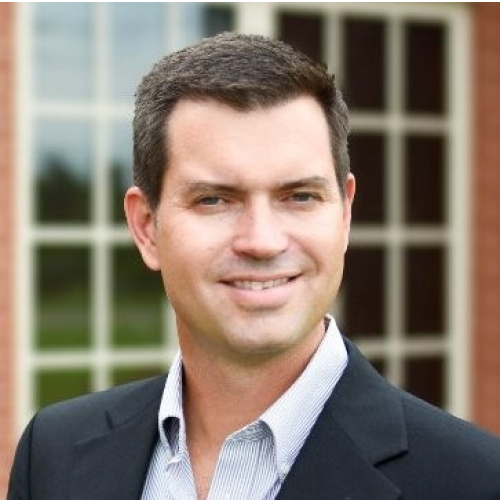
Todd Dawalt | Construction Leading Edge
Places You Can find us




We think you’d also like this

7 tips to run a construction business
Discover seven advanced tips on how to grow a construction business that’s already successful – and how to improve your processes using tech.
podcast
Mar 30, 2023Fund your future: Financing options to scale your construction business
Tune in to the full episode to hear about lending options for both your business and your clients and why taking advantage of loans can actually be beneficial.
podcast
Aug 10, 2023Protecting profit: How to increase your revenue by 15%
Listen to the full episode to hear more about how to take control of your accounting processes and ensure long-term financial success for your construction business.