Economic and industry news or trends
How XR technologies are improving the construction industry
Being a successful construction business owner in an increasingly competitive industry is hard work. You have to constantly find ways to stay ahead of the curve and one-up your competition. This is why keeping a close eye on new technologies is not just a good idea, but a wise business decision.
From augmented reality and virtual reality to mixed reality, XR technologies are transforming the way construction businesses conceptualize, design and even build properties.
With the Extended Reality technology industry expected to reach $111.5 billion by 2028, the time is ripe for you to get involved and incorporate these new technologies into your business.
This article will take a look at why the use of virtual and augmented reality in construction is already changing the game.
What’s the difference between VR, AR and MR?
So, what exactly is the difference between virtual reality, augmented reality and mixed reality?
While these three terms are used interchangeably, each technology offers distinct features that can facilitate your work and take your residential construction business to the next level.
Virtual reality
Virtual reality entirely immerses you in a digital environment and replaces the physical world with a simulated reality.
By wearing a VR headset, you’re transported to a virtual landscape where you can see and interact with digital objects and environments in real-time. But virtual reality isn’t about passively observing your surroundings; it’s about actively interacting and participating in changing them. This is what makes it particularly appealing for the construction sector.
Augmented reality
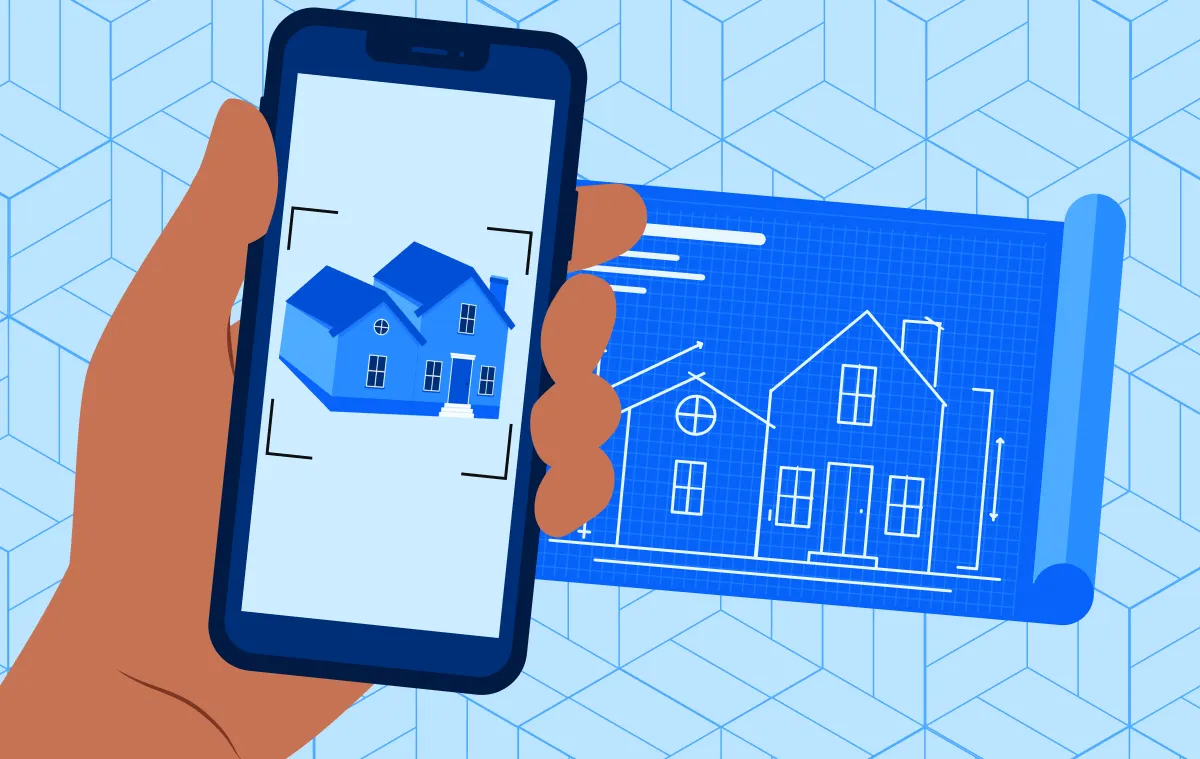
Unlike virtual reality, augmented reality overlays digital information onto the physical world. AR is also more affordable for home builders, as most smartphones and tablets can superimpose digital renderings into the real world.
AR for the construction and building industry can help you visualize what the final build will look like and make the necessary changes. Best of all, you can do this without having to go through the immense effort of building something and then having to make changes after construction.
Mixed reality
MR takes the best elements of virtual reality and augmented reality and enables you to simultaneously interact with digital and physical objects.
Mixed reality headsets create a more interactive experience that’s in between the fully digital world that virtual reality provides and augmented reality’s digital layers.
With mixed reality, you can get real-time input from the “real” environment and change the digital element accordingly.
How VR and AR are improving the construction industry
No matter how detailed and accurate your concept renderings are, there’s no better way to design, visualize and experience what your project will ultimately look like than virtual reality. Virtual reality is changing the game by allowing you and your team to transcend 2D renderings and truly explore designs from every angle.
Next-level design and visualization
By translating your 3D designs into VR-compatible environments, you can walk through the properties and gain a sense of scale, spatial layout, design and proportion. This way, you can successfully collaborate with the rest of the team to make changes, experiment with different designs, and make informed decisions before investing money and resources into construction.
AR complements VR by allowing you to overlay digital renderings onto existing properties. Say you’re renovating an old property. By introducing AR from the get-go, you can visualize changes and renovations from the comfort of your phone, without knocking down any walls.
Not only that, but you can also show the rest of the team, as well as your clients, what the final project will look like. This helps your team visualize what they need to do, propose ideas and feel more confident in their work. What’s more, it also gives your clients the peace of mind that they know what’s happening, minimizing design discrepancies.
Remote collaboration
You can also use virtual and augmented reality in construction to survey what your team is doing, without even setting foot in the construction site. How?
Both VR and AR enable all stakeholders to participate in design sessions from anywhere in the world, significantly reducing travel costs. Through a collaborative VR simulation, the whole team can make decisions in real-time and foster a sense of collaboration that, up until a few years ago, wouldn’t have been possible with a remote team.
Additionally, AR allows onsite workers to access digital blueprints, instructions and annotations. They can also share 3D images, videos and renders with remote team members.
This allows remote stakeholders or project managers to:
- View what’s happening in detail
- Identify errors
- Request changes
- Document key information
- Assign daily tasks
Increased safety and training
In such a high-risk environment, training staff and improving overall safety can be difficult and expensive. Unfortunately, this crucial aspect is often overlooked and under-invested in, which leads to thousands of injuries and even deaths that could have been avoided with proper training. Thankfully, with VR, construction sites can be safer than ever before, at a fraction of the cost.
With VR simulations, training and safety programs can be made more accessible and safer for both construction business owners and employees, as they allow workers to practice using certain machinery in a simulated environment.
With 35,000 to 62,000 forklift-related injuries every year in the U.S. alone – mainly due to a lack of proper training – these VR simulations can help avoid these accidents in the first place.
VR-based safety training modules simulate dangerous scenarios and emergencies. This empowers workers to develop the skills needed to respond to these situations. By experiencing these potential risks in VR, they can better understand the risks associated with being on a construction site, learn how to mitigate them and experience first-hand how to deal with them when they occur in real life.
Customer satisfaction
It’s safe to say that virtual and augmented realities also revolutionize the way properties are sold. By offering interactive experiences that allow buyers to actually see what the property will look like before it’s even built, you put your company one step ahead of the competition and secure buyers from early on.
With VR simulations, future property owners can actually feel what it’s like to walk through the space, examine the details and get a sense of the actual layout. This is extremely appealing for future property owners who are browsing the market and want to rest assured they’re getting the property they’re paying for.
If the property has already been built, and you’re working on securing a buyer, AR can be a useful tool to do so. AR technology is a good way to enable future buyers to personalize a space while viewing it. AR apps allow them to overlay digital decor, furniture and personal items. They can also discuss certain finishes with you and visualize them on this spot. Undoubtedly, this sense of hyper-personalization goes a long way toward helping your property stand out from the crowd and, ultimately, secure the deal.
Establish the company of tomorrow, today
There’s no doubt that the future of the construction industry lies in innovation. XR technologies, such as virtual and augmented realities, will play a massive role in the future of the industry and in securing who its leaders are.
By embracing technologies like VR, AR and MR as well as construction management software now, you’ll not only unlock new opportunities for business success but also position your company at the forefront of this ever-evolving industry.
Based on what you just read, we think you'd enjoy...
These suggestions are made by our team to help you find builders and stories that you relate to!
Back to all blogs