Economic and industry news or trends
US construction economic update: A boxing match of opportunities and challenges
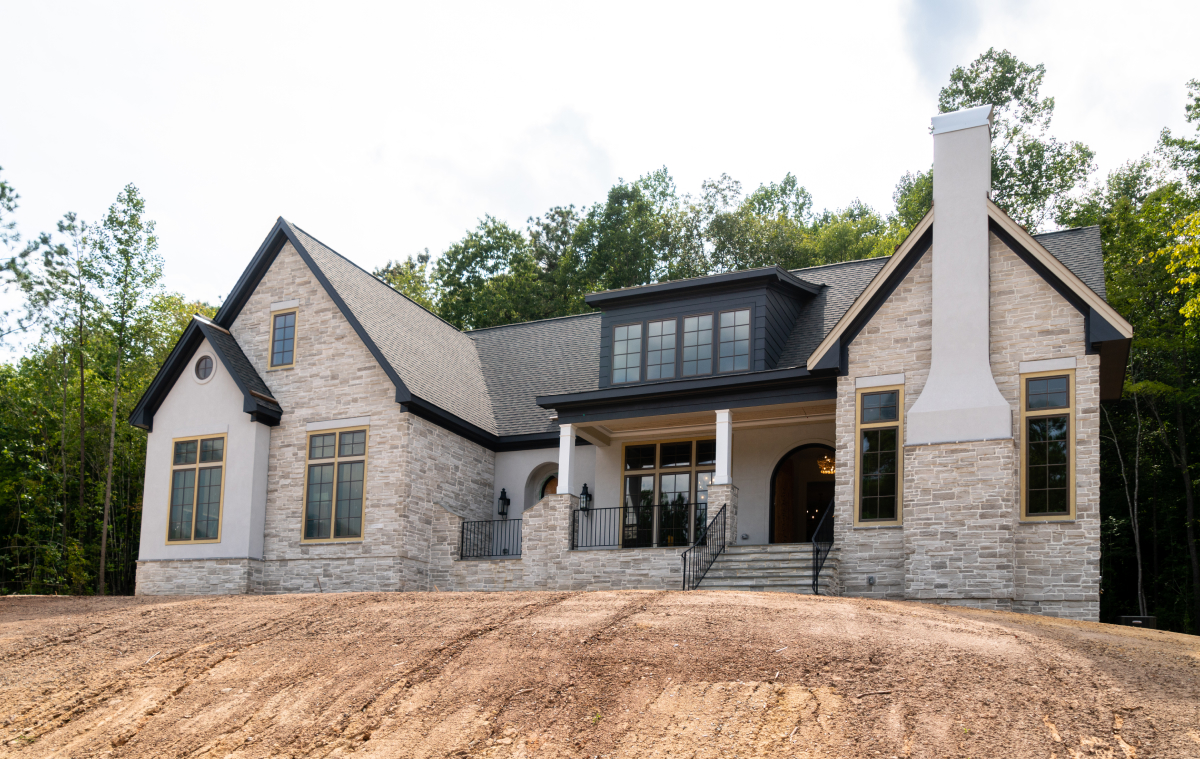
The current U.S. construction climate presents a boxing match of opportunities and challenges.
On the positive side of the ring, there’s:
- Slowing inflation
- Strong housing demand
- Improving margins
But they’re facing off against:
- High borrowing costs
- Ongoing labor scarcity
- Increased labor costs
In this midyear update, we’re discussing it all. We asked our in-house expert, Mathieu Dubeau, Ph.D., to break down the latest construction market trends you need to know about. Mathieu is a user researcher here at Buildertrend – much of the reporting within our 2023 economic report was led by him.
1. Inflation and interest rates: A balancing act
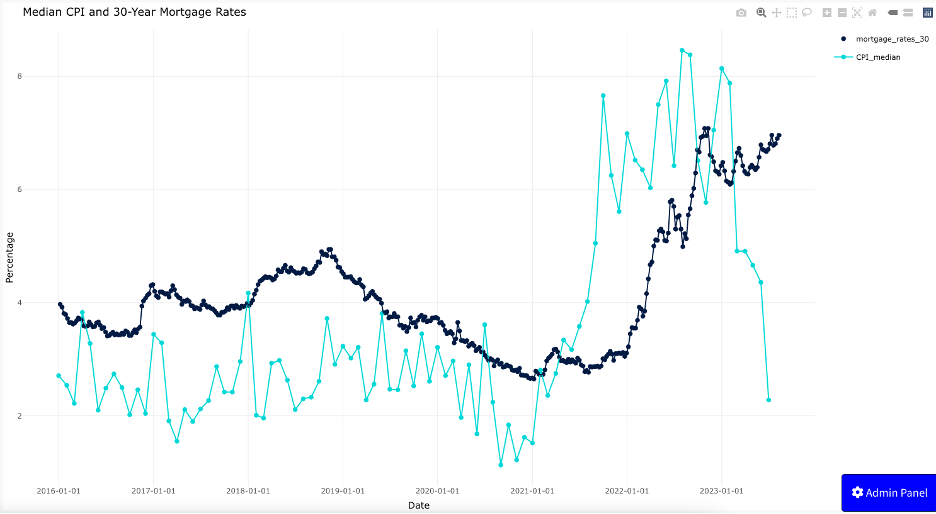
Historically, interest rates tend to track and respond to inflation rates. And their dynamic relationship has direct implications for home buyers – and builders.
Currently, inflation is down to slightly higher than 2%, indicating a favorable climate for reductions in interest rates.
For home buyers, these key trends could mean:
- Favorable financing: As inflation slows, central banks often lower interest rates to stimulate economic activity – and economic recovery. While we may never see interest rates as low as we did in recent years, experts predict it will hover around 5% by the middle of 2024. This drop is likely to spur more prospective home buyers to enter the market, as rates make borrowing more affordable.
- Reduced pressure: Slower inflation may contribute to a less frenzied housing market. A few years ago, the real estate market experienced a landscape where houses were being sold in minutes, with buyers never laying eyes on the properties. Inspections were foregone, and contingencies went by the wayside. Generally speaking, buyers may now feel less rushed to make a big-ticket purchase or may enter into a new build construction contract with a little more caution.
- Stable pricing: In a lower inflation environment, there’s generally less upward pressure on the prices of building material and labor. This can contribute to more stable construction costs, allowing buyers to have a better understanding of the final price of their new home without the uncertainty of rapid price increases driven by a volatile supply chain and material shortages.
For home builders, these key trends could mean:
- Predictable costs: Similar to the way they benefit home buyers, predictable costs can help builders better estimate project expenses, reducing the risk of sudden cost increases that can impact profitability – or lead to budget disputes with clients. This is supported by the June 2023 Producer Price Index (PPI) report, which shows that the index hasn’t seen an increase of 1% or more since March 2022.
- Improved margins: As inflation slows and interest rates stabilize, it’s easier for builders to know exactly how much a project will cost. This means builders can plan projects more accurately, avoiding sudden spikes in expenses. The PPI report mentioned above supports this theory, noting construction materials such as steel mill products and freight prices have both decreased in recent months. Ultimately, these construction trends can give builders an opportunity to take advantage of a relatively stable period to plan major projects and help safeguard profit margins.
- Market buffers: Improved profit margins help provide builders with a buffer against unforeseen challenges or market fluctuations. While current forecasts aren’t expecting drastic market changes, the past few years are a good reminder that any industry can experience rapid change. Builders should use this time to allocate funds toward operational investments, technology and business growth.
2. The resilience of housing demand
Even in a high interest rate environment, housing demand has remained strong.
As recently as August 2023, mortgage rates were above 7% – the highest 30-year fixed rate in more than 20 years. Any decreases in home prices are expected to be temporary. This can be chalked up to one big reason: the ongoing housing shortage.
Ninety-nine percent of all outstanding mortgages are lower than the current interest rate. Because of this, existing homeowners are shying away from the prospect of giving up their mortgage rates. With homeowners reluctant to sell, the existing-home market has slowed, leaving new construction as the main source of inventory.
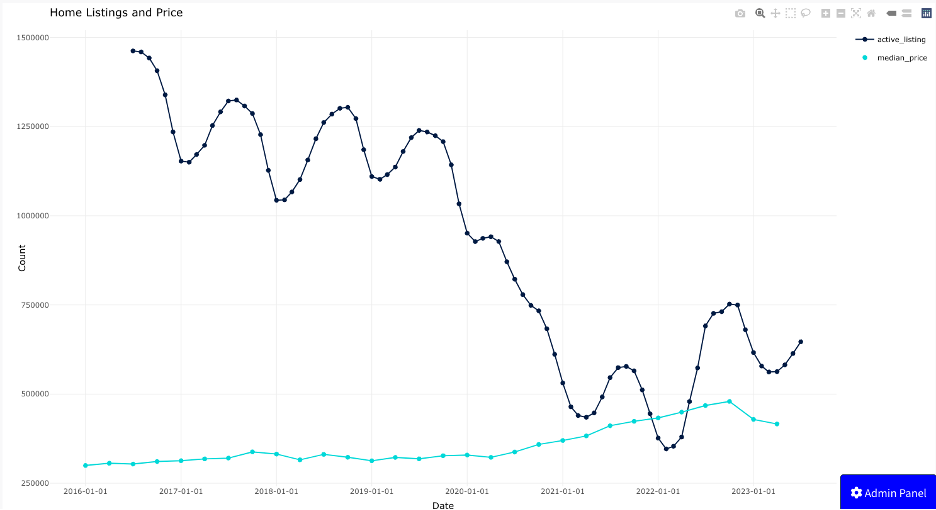
Another indicator of continued strong demand is permits and construction starts. The number of permits for future construction is on the rise. This is especially encouraging because it shows that despite market challenges such as increases in borrowing costs, there’s still demand for new projects.
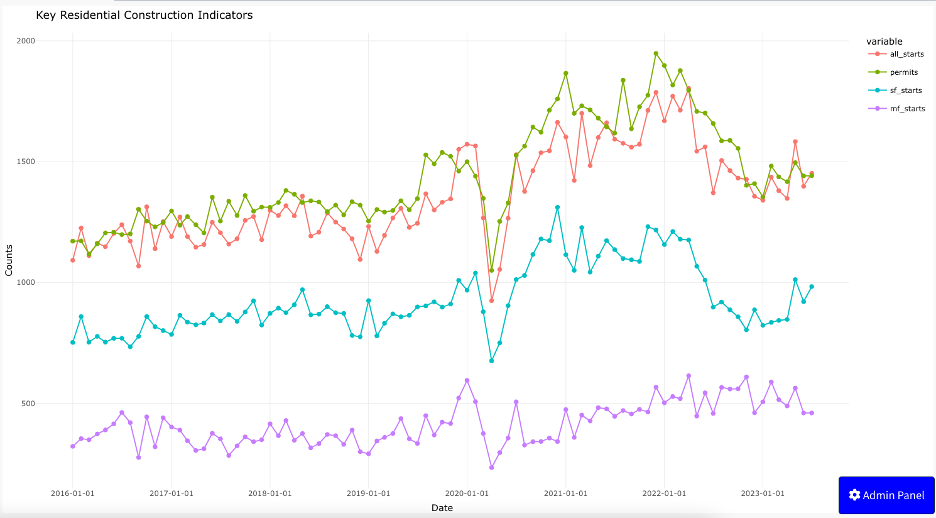
In fact, a recent report measured permits for future construction at 5.2% – the highest percentage since October 2022. Although certain regions have influenced this percentage –Northeast cities, for example, have seen a staggering 27.1% increase in permits, according to the same report – this demonstrates the resilience of housing demand, even as rates fluctuate.
This is good news for developers and builders – and the economy at large. That’s because steady construction demand can mean:
- More consumer spending
- More jobs created
- More overall economic stability
3. Construction labor shortage: A critical challenge
As we bring up the topic of job creation, it only makes sense to also talk about ongoing labor market challenges.
Despite the growth in the construction sector, there’s still a struggle to find enough workers. Job openings in construction have increased and, while the number of hires has also risen, there’s a continued shortage of available labor. This tight labor market is impacting small builders’ ability to attract construction workers, leading to rising construction labor costs and affecting margins – even when other market conditions mentioned above should be favoring stronger profit margins.
Some of the skilled labor shortage can also be demonstrated in the different specialties being demanded of contractors. Because many homeowners are upgrading their properties rather than selling, there has been increased demand for jobs as residential trade contractors.
As workers negotiate for better pay and benefits, construction businesses are seeing the effects of rising labor costs. A representative from the Associated General Contractors of America has even reported that the construction industry is now paying 80% more than the average non-farm job in the U.S.
Although there’s no magic bullet answer to the labor shortage, it’s important to consider targeting individuals from related industries or different backgrounds who may have transferable skills. Just make sure to budget dollars to invest in training and apprenticeship programs, too. This may help bridge the labor gap on your projects, as well as help bring a more sustainable flow of labor into the industry long-term.
4. Embracing construction technology
As we discuss current market changes – and challenges – it’s important to take this away from the conversation: Builders and contractors who are able to adapt and pivot their businesses to meet the changing needs of homeowners will continue to be the most successful in their market.
Here are a few ways construction company software can help you do that.
- Real-time data insights: By leveraging construction company software, you gain access to real-time data insights. From project timelines to budget tracking, this software helps you stay on top of every aspect of your construction projects.
- Enhanced project management: Construction company software offers comprehensive project management tools that allow you to plan and track your projects through every phase of construction, including scheduling, task tracking and progress monitoring.
- Cost control and budgeting: By utilizing construction company software, you gain better control over project costs and budgeting. Construction budgeting software compares your estimates to actual costs, tracking expenses and job-costing projects for profitability along the way.
- Scalability and adaptability: As market conditions change, the flexibility of digital technologies such as construction management software allows you to scale your operations up or down as needed. This helps you modify existing projects quickly and easily, minimizing disruptions to budgets and timelines. Plus, it helps prepare you to take on new projects while market demand is hot.
- Employee engagement: Let’s face it: In today’s labor market, you can’t afford to make work any more difficult for your team. At least, not if you want to keep employees on your payroll and away from your competitor’s open job listings. Construction management software helps organize day-to-day tasks and schedules, ensuring everyone –construction managers and construction workers alike – have what they need without jumping through hoops or sifting through mountains of paperwork.
Did you miss Buildertrend’s full 2023 construction outlook report? It’s not too late – download it now.
About Mathieu:
Mathieu Dubeau earned his Ph.D. in Political Science from the University of Washington, Seattle in 2021. At Buildertrend, he joins his passions for economics and research with the Buildertrend mission of empowering builders in the residential construction industry.

Based on what you just read, we think you'd enjoy...
These suggestions are made by our team to help you find builders and stories that you relate to!
Back to all blogs