
Using rubber extrusions for expansion joints in building projects
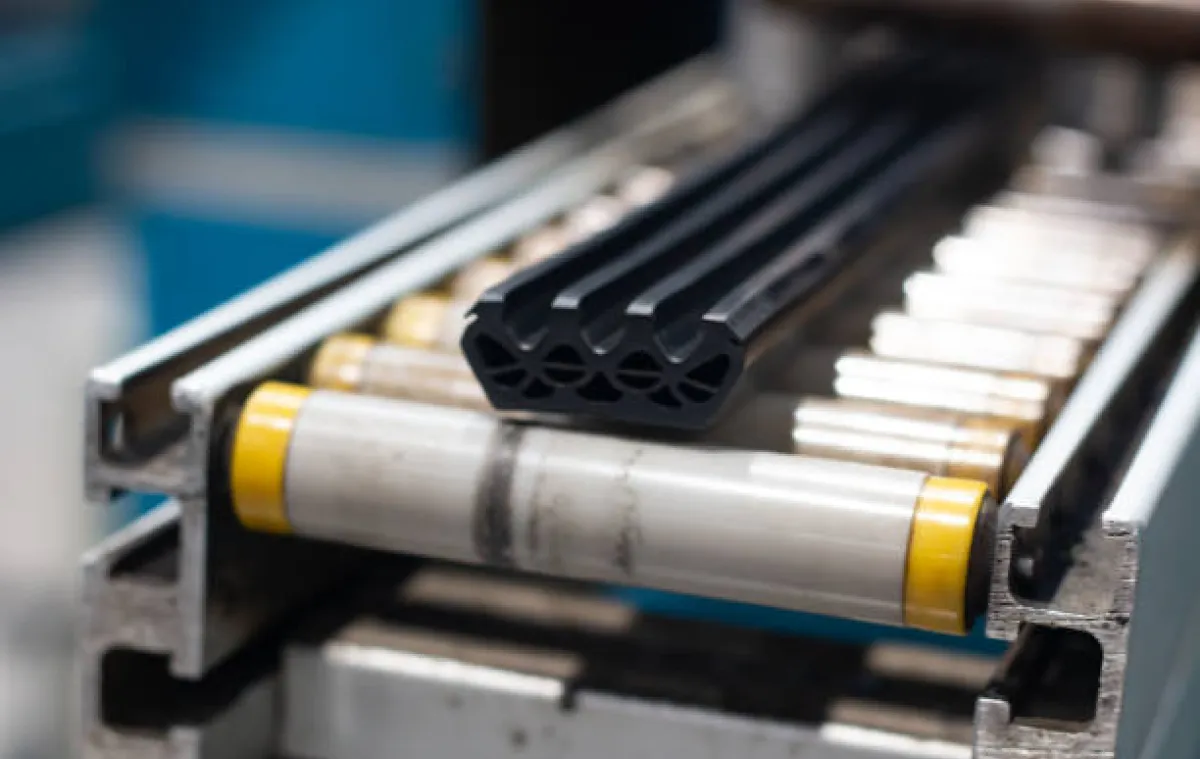
Rubber extrusions are essential components in the construction industry, primarily used to enhance the integrity and longevity of buildings and structures. They work as a barrier protecting other materials against damage from water, air and dust by ensuring an airtight and watertight seal.
Commonly found in window and door frames, expansion joints and HVAC units, rubber seals accommodate building movements while preventing leaks and drafts. Their flexibility and durability make them ideal for adapting to different shapes and surfaces, significantly contributing to the overall energy efficiency and structural stability of a building.
An expansion joint is designed to absorb and assist the expansion and contraction of construction materials. These movements are typically caused by temperature changes, seismic activity or other environmental factors. Without expansion joints buildings, bridges, roadways and pipelines could crack under stress from thermal expansion or contraction.
Rubber extrusions in expansion joints
As visible gaps between sections of a structure, expansion gaps need to be filled with a product that allows for movement of the building whilst maintaining the integrity and safety of the structure. Rubber extrusions are commonly used for this purpose as they serve two primary functions: absorbing movement and creating a watertight seal. As buildings expand and contract the rubber joints stretch or compress, absorbing movement and reducing stress on the construction materials. They also form a barrier against water, air and other debris contributing to the building’s overall integrity and comfort.
It’s possible to manufacture rubber extrusions for use in expansion joints from a diverse range of rubber compounds, each with unique properties.
EPDM Rubber
Ethylene Propylene Diene Monomer (EPDM) rubber is highly resistant to weathering, UV rays and ozone which makes it ideal for outdoor applications. As a popular mass-produced compound, EPDM offers a low-cost solution for rubber extrusions for most applications within the construction industry.
Neoprene Rubber
Known for its durability and resistance to temperature extremes, Neoprene is well-suited for buildings in varying climates.
Silicone Rubber
Silicone is often the material of choice for high-temperature applications as it can withstand extreme heat without degrading. As the material is slightly softer than EPDM and Neoprene, it is only suitable for applications that will not come into contact with sharp objects or surfaces.
Nitrile Rubber
As a material known for its excellent resistance to oils and chemicals, Nitrile is suitable for industrial settings.
When selecting which rubber compound to use for your construction application, it is important to consider the movement capability of the building and whether it needs any load-bearing capacity. The rubber material should be capable of accommodating the expected range of movement in the building and may need to support weight. These factors necessitate a rubber material that is strong, hard-wearing and tear-resistant.
It’s also important to properly consider the environment where the rubber extrusion will be used. The material must withstand environmental conditions, including UV exposure, temperature variations and potential chemical exposure.
Installing rubber extrusions in expansion joints
The installation of rubber extrusions in expansion joints is a precise process that ensures both the functional integrity and longevity of the joint. The joint area must be cleaned and prepared, ensuring it is free from debris and moisture. This reduces the chance of debris damaging or tearing the rubber extrusion and allows for the adhesive to bond effectively to the underlying surface. Once the area is clean, you can measure the required length and cut the rubber extrusion to match these dimensions. It is important that the length is the correct size to ensure a snug fit.
Some rubber extrusions may hold themselves into the gap with a tight compression fit. However, others may need to be bonded to the surface. If this is required, apply a suitable adhesive to the sides of the join where the extrusion will be placed. The type of adhesive you need to use is dependent on the type of material and any environmental conditions that it needs to withstand.
Carefully place the rubber extrusion into the joint, ensuring a tight fit evenly along the entire length. Press the extrusion firmly into place, ensuring good contact with the adhesive and the joint surfaces. In some cases, mechanical fasteners may be used in addition or instead of adhesive for large and heavy extrusions. It may also be necessary to apply a sealant around the edge of the extrusion to enhance the water tightness of the joint.
Once the extrusion has been fitted, allow adequate time for the adhesive and sealant to fully cure. After curing, inspect the installation to ensure that there are no gaps, and the extrusion is firmly in place.
Regular inspection and maintenance of rubber expansion joints are important for the longevity of the building. Inspections should look for signs of wear, degradation or damage to the rubber material. Maintenance may involve cleaning the joints, applying protective coatings or replacing the rubber extrusions if they show significant wear.
Environmental and sustainability considerations
The construction industry is increasingly focusing on sustainable practices. Rubber extrusions for expansion joints contribute significantly to sustainability through their durability and lifespan. Their long service life means fewer replacements, reducing resource use and waste. By extending the lifespan of building components, these extrusions help in conserving materials and minimising environmental impact over a building’s lifecycle.
Advances in rubber technology and the recyclability of rubber extrusions mark a critical point in environmental considerations. At the end of their useful life, these materials can often be recycled reducing the amount of material being sent to landfill. This aspect aligns with circular economy principles, promoting the reuse of materials and reducing the environmental footprint of construction projects.
Rubber extrusions in expansion joints also enhance building energy efficiency. By providing airtight seals, they minimise heat loss and gain, leading to lower energy consumption for heating and cooling. This not only reduces operational costs but also decreases the carbon emissions associated with energy use, contributing to climate change mitigation.
About Seals Direct
Seals Direct is a leading supplier of sponge and solid rubber extrusions suitable for construction project that require sealing solutions. Their range of off-the-shelf sections, as well as their ability to manufacture custom extrusions, supports this industry in the supply of associated rubber products.
Need a construction software to manage your projects?
Buildertrend’s construction management platform streamlines projects, enhances communication and improves efficiency, making it an essential tool for builders looking to optimize their operations better their business. Schedule a demo today to learn more.

Based on what you just read, we think you'd enjoy...
These suggestions are made by our team to help you find builders and stories that you relate to!
Back to all blogs