Economic and industry news or trends
5 predictions from top builders on what will shape residential construction through 2026 and beyond

- Prediction #1: Pre-construction will become the most important phase of the project
- Prediction #2: The most desirable homes won't necessarily be the biggest
- Prediction #3: Builders who embrace AI will gain an edge
- Prediction #4: Energy efficiency will become a buyer expectation, not a bonus feature
- Prediction #5: More homeowners will choose to remodel instead of move
- Looking ahead: Why builders are optimistic about 2027
If the first half of 2026 has taught builders anything, it’s that the blueprint keeps changing.
Just when the industry starts adjusting to one challenge, another emerges. Interest rates remain unpredictable. Homeowners are more selective about where they spend their money. Artificial intelligence is rapidly changing how businesses operate. At the same time, conversations around affordability, energy efficiency and long-term home performance are becoming impossible to ignore.
For residential builders and remodelers, success isn’t just about responding to what’s happening today, it’s about anticipating what’s coming next.
To get a clearer picture of where the industry is headed, we asked leading builders and remodelers across the country to share the trends they believe will define the second half of 2026 and the opportunities they’re watching as they look toward 2027.
While these experts serve different markets and specialties, their predictions reveal several common themes. From the growing role of AI and energy-efficient construction to the rising importance of intentional design and remodeling, one thing is clear: the builders who’ll thrive are the ones willing to adapt.
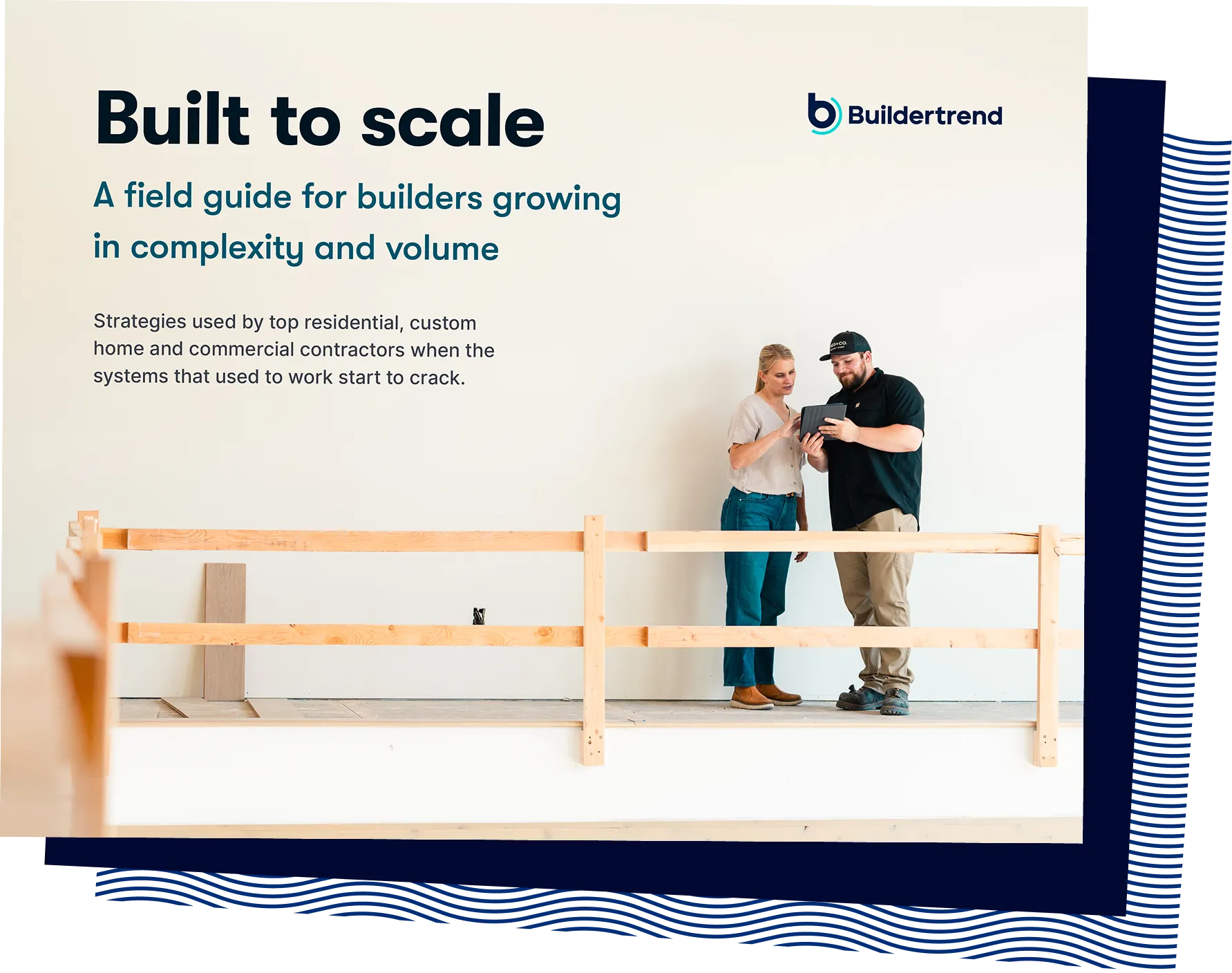
Built to scale in a market that isn’t
Get Buildertrend’s free playbook on how top contractors evolve as complexity and volume increase.
Prediction #1: Pre-construction will become the most important phase of the project
For years, many builders have viewed pre-construction as just a formality before the “real work” begins. But in the second half of 2026, that mindset may become a costly mistake.
With labor rates remaining elevated, material costs fluctuating and homeowners expecting greater transparency throughout the building process, changes made after construction begins are becoming increasingly expensive. A missed detail during design can lead to budget overruns, schedule delays and frustration for everyone involved.
That’s why more builders are placing greater emphasis on upfront planning, detailed design work and client alignment before breaking ground.
“As material and labor costs stay high, the cost of a mid-project change becomes too painful to absorb,” said Danielle and Micheal Gutelli of Clark + Aldine. “Teams that resolve every detail before breaking ground will be the ones protecting their clients’ budgets. Slowing down at the start to speed up everything after is going to stop looking optional.”
Their prediction reflects a broader shift happening across the industry. The builders who consistently deliver projects on time and on budget will be the ones who invest more time upfront clarifying scope, finalizing selections, identifying potential challenges and ensuring clients fully understand the project before construction starts.
In other words, success in 2026 won’t be determined solely by how efficiently a project is built. It will increasingly be determined by how thoroughly it’s planned.
Prediction #2: The most desirable homes won’t necessarily be the biggest
For decades, bigger homes often meant greater value. More square footage, more rooms and more amenities were viewed as clear selling points.
But many builders believe homeowners are becoming more intentional about what they want from their homes – and bigger isn’t always better.
Today’s buyers are placing greater emphasis on functionality, personalization and how a home supports their everyday lifestyle. They’re looking for spaces that work harder, flow better and reflect how they actually live rather than simply maximizing square footage.
Their prediction highlights an important opportunity for builders. Homeowners aren’t just buying a house; they’re investing in a better way of living. Whether it’s creating flexible spaces for remote work, designing kitchens that bring families together or improving flow between indoor and outdoor living areas, the value of a home is increasingly tied to how it functions rather than how large it is.
For builders, that means the sales conversation is evolving. Instead of focusing solely on price per square foot, the most successful companies will help homeowners envision how thoughtful design choices can improve their daily lives.
In 2026, the builders who win will be delivering purpose over space.
Prediction #3: Builders who embrace AI will gain an edge
The residential construction industry has never stood still. Market conditions shift, customer expectations evolve and new technologies emerge. But the pace of change is accelerating and builders who adapt will be the ones who thrive.
One of the biggest drivers of that change is artificial intelligence.
While AI won’t replace skilled tradespeople anytime soon, it’s already helping construction companies improve efficiency and make better business decisions. Builders are beginning to use AI to support everything from estimating and scheduling to marketing and administrative tasks.
“We’re still a long way from robots framing homes or installing roofing, but AI can already help with estimating, scheduling, permitting, budgets, contracts and marketing,” said Brad Leavitt of AFT Construction. “Builders who embrace these tools will gain an edge. Those who ignore them will have a much harder time staying competitive.”
For many builders, the opportunity isn’t happening on the job site – it’s happening behind the scenes.
AI can help streamline repetitive tasks and free up valuable time for teams to focus on higher-value work, including:
- Estimating and budgeting
- Scheduling and project coordination
- Permitting and documentation
- Contract management
- Marketing and content creation
- Customer communication
And the builders seeing the greatest success with AI aren’t necessarily the most tech-savvy. They’re the ones willing to stay curious, test new tools and continuously improve how they operate.
In 2026, AI may be one of the most powerful tools available to builders. But the bigger trend is adaptability itself. As new technologies continue to emerge, the companies that embrace change rather than resist it will be best positioned for long-term success.
Prediction #4: Energy efficiency will become a buyer expectation, not a bonus feature
Energy efficiency has long been a selling point in residential construction. But in the second half of 2026, builders may see it become less of an added benefit and more of a baseline expectation.
As utility costs rise and homeowners become more aware of how their homes impact their health, comfort and monthly expenses, performance is playing a bigger role in the buying conversation. Clients aren’t just asking what a home looks like. They’re asking how it lives, how it performs and what it will cost to maintain over time.
“More clients are asking about energy efficiency, building science and healthy home design,” Brad said. “Understanding how homes perform – and being able to explain that value to homeowners – is becoming increasingly important.”
Understanding more than just the materials and systems going into a home
“Whether it’s solar, insulation, mechanical systems or overall home performance, builders who understand these systems and can communicate their benefits will be in a strong position moving forward,” said Brad.
For homeowners, energy-efficient design can mean lower utility bills, greater comfort and a healthier living environment. For builders, it creates an opportunity to stand out by pairing quality craftsmanship with deeper expertise in building science.
As expectations continue to rise, energy efficiency won’t just be something builders offer. It will be something homeowners increasingly expect them to lead.
Prediction #5: More homeowners will choose to remodel instead of move
For years, buying a new home was often seen as the easiest path to getting more space, better functionality or upgraded features. But in 2026, many homeowners are taking a different approach.
Rather than entering an uncertain housing market, they’re choosing to invest in the homes they already own.
Economic uncertainty, higher interest rates and growing home equity are causing many homeowners to reconsider moving. Instead, they’re looking for ways to improve their current homes through additions, renovations and whole-home remodels.
“Many have built equity, love their neighborhood and are realizing that a major remodel or addition may make more sense than buying new,” said Chris and Yvonne Johnson of Reclaimed Karma.
Creating a significant opportunity for remodelers
Homeowners aren’t simply updating finishes or tackling small projects – they’re making strategic investments to improve how their homes function and support their lifestyles.
“The future isn’t just about building new,” Chris and Yvonne said. “It’s about helping homeowners unlock the full potential of their homes and create spaces that reflect who they are and how they live while allowing them to stay rooted in the communities they love.”
This shift reflects a broader change in homeowner priorities. Instead of searching for a better house, many are choosing to create one.
For builders and remodelers, success may increasingly come from helping clients see the possibilities within the walls they already own. Those who can transform existing spaces into homes that better fit their needs will be well-positioned as demand for remodeling continues to grow.
Looking ahead: Why builders are optimistic about 2027
While economic uncertainty, evolving technology and shifting homeowner expectations continue to shape the industry, the builders we spoke with share an overwhelmingly positive outlook for the future.
Why? Because many of the trends gaining momentum aren’t lowering the bar for builders – they’re raising it.
Across their predictions, several themes emerged:
- Greater emphasis on thoughtful planning and design
- Technology that helps builders operate more efficiently
- Increased demand for high-performance, energy-efficient homes
- Growing opportunities in remodeling and renovation
- A renewed appreciation for craftsmanship, expertise and accountability
Perhaps most encouraging is the fact that homeowners are placing greater value on quality, intentionality and long-term outcomes rather than simply speed or size.
While the tools and technologies shaping residential construction will continue to evolve, the builders best positioned for success will be those who combine innovation with exceptional client experiences, thoughtful design and quality craftsmanship.
The future of residential construction
Buildertrend helps builders do exactly that. From pre-construction planning and client communication to financial management and operational efficiency, Buildertrend gives construction professionals the tools they need to adapt to industry changes, streamline their workflows and confidently grow their businesses in 2026, 2027 and beyond.
Ready to build what’s next? Schedule a demo to see how Buildertrend can help your business stay ahead of the trends shaping residential construction.

Based on what you just read, we think you'd enjoy...
These suggestions are made by our team to help you find builders and stories that you relate to!
Back to all blogs