
The pros and cons of paver driveways vs. concrete driveways
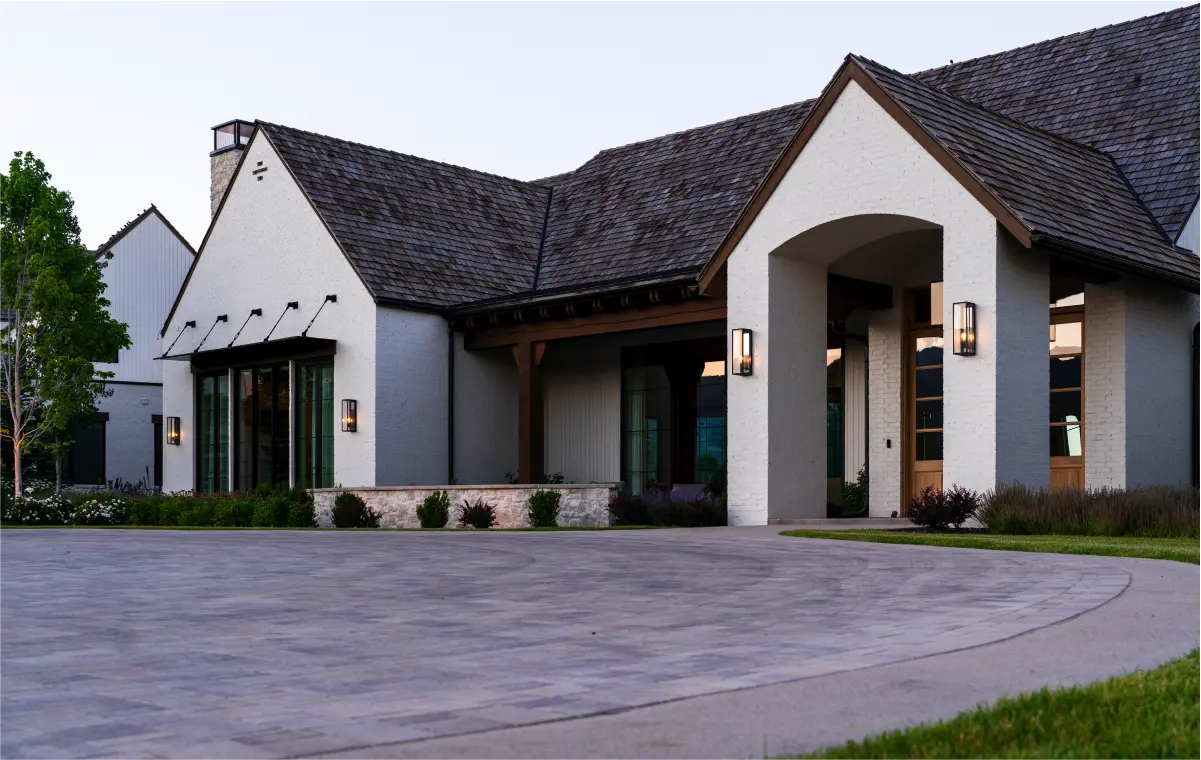
Choosing the material for a driveway is more than just a practical decision. It’s a statement about your client’s home’s character and enduring quality. The driveway is the first impression homeowners give to visitors and passersby – a prelude to the warmth and style that lies within.
As we explore the difference between paver driveways versus concrete driveways, we’ll uncover the pros and cons of each.
Whether it’s for a new installation or revamping an existing one, this guide aims to equip you with the knowledge you need to ensure your clients choose the perfect driveway for their home.
Why paver driveways stand out
Paver driveways use individual pieces of paving stones or bricks, laid in various patterns and secured with jointing sand. This method gives homeowners options for customizing the appearance of their driveway. In selecting the right driveway material, paver driveways offer many benefits.
Aesthetic appeal
Unlike concrete, pavers offer an array of choices in colors, shapes and textures. This allows homeowners to craft a distinctive entryway that complements their home. From earth tones to modern hues, the options are limitless. With pavers, clients can mix and match colors and shapes to achieve their design vision.
Durability that lasts
With a compressive strength of about 8,000 pounds per square inch, pavers are resilient and can last 50 to 100 years. This high psi ensures that paver driveways can handle the load of vehicles without cracking under pressure – making them a practical choice for both residential and commercial properties.
Versatility beyond comparison
Whether aiming for a classic herringbone pattern or an intricate basket weave pattern, pavers make it possible. The variety of shapes and sizes available means you can create patterns and designs to achieve your client’s vision. Pavers are also suitable for various climates. They can be installed to allow water permeation, reducing runoff and enhancing drainage.
Understanding paver driveway limitations
While we’re big fans of how paver driveways elevate curb appeal, they do also have limitations.
The cost factor
Paver driveways can be pricier up front compared to their concrete or asphalt counterparts. Why? The materials, the labor-intensive installation process and the craftsmanship required all add up. The installation cost for paver driveways ranges from $10 to $50 per square foot. However, this varies depending on the type of pavers used, the complexity of the design and regional pricing differences.
Maintenance matters
Paver driveways require some upkeep to keep them looking their best. Weeds can sprout between pavers, and settling or shifting may occur over time. However, the beauty of paver driveways lies in their ease of repair. Unlike concrete, which requires a complete do-over when cracked, individual pavers can be replaced. Regular sealing and occasional cleaning can also maintain the color and integrity of the pavers.
Installation intricacies
The installation process can be more complex and time-consuming than pouring concrete. It requires proper preparation of the base, precise placement of each paver, and expert finishing. This complexity is why professional installation is recommended.
Despite these considerations, the payoff is a driveway that’s a cut above the rest – both in aesthetics and function.
The benefits of concrete driveways
Concrete driveways are made from a mixture of cement, sand, aggregate and water, which harden over time to create a solid path for vehicles and foot traffic. These concrete slabs are popular for their strength and ability to withstand heavy loads.
Cost effective
Concrete driveways are cost effective. They offer a balance between upfront investment and long-term value. On average, installing a concrete driveway costs about $4 to $15 per square foot. The cost depends on factors like location, size of the driveway and decorative options chosen. This makes concrete an accessible option for many homeowners without breaking the bank.
Concrete strength
Concrete driveways can withstand heavy vehicles, generally boasting a compressive strength of 3,000 to 4,000 psi. This robustness means your driveway can take a lot of wear and tear, from scorching summers to freezing winters. Moreover, its four to six inches thickness contributes to its durability and a lifespan of 25 to 30 years.
Low maintenance
Unlike other materials that demand regular sealing or are prone to weeds, concrete driveways keep things simple. Its low maintenance stems from its solid, seamless construction. There are no gaps for weeds to sprout through, and their surface doesn’t easily harbor mold or mildew. Maintenance includes occasional cleaning with a hose or pressure washing and regular sweeping.
For personalized advice, consulting a paver driveway installer can give you the best insights tailored to your client’s needs and location.
Concrete driveway drawbacks
We’ve discussed the advantages of concrete driveways. It’s only fair that we also talk about their drawbacks. After all, helping homeowners make an informed decision means considering both sides of the coin.
Aesthetic limitations
One of the most common criticisms of concrete driveways is their lack of versatility. Unlike paver driveways, concrete driveways have a more uniform and bland appearance. While clients can choose stamped or colored concrete, they can be more expensive and might not achieve the same look or feel as other materials.
Cracking over time
Concrete driveways tend to develop cracks over time. There are several factors that contribute to cracking. These include heavy loads, improper installation and insufficient joint spacing. Minor cracks can detract from the appearance and may lead to more issues if water seeps in and freezes. Repairing these cracks can be challenging, as it’s tough to match the original concrete’s color and texture, which can lead to a patchwork appearance.
Environmental considerations: Eco-friendly driveway solutions
Permeability is a game-changer in the world of driveways. Concrete and asphalt driveways are impermeable. This means water can’t seep through them and instead runs off. Thus, these traditional driveways can cause erosion and overwhelm stormwater systems.
Permeable driveway pavers allow water to seep through the surface and into the ground below, replenishing groundwater supplies and reducing runoff. This helps manage stormwater better and reduces extensive and costly drainage systems.
The environmental impact of driveway materials also encompasses the energy used in production, the sustainability of the material and its end-of-life recyclability. Concrete, while durable, requires a lot of energy to produce and isn’t easily recycled.
On the other hand, permeable pavers are made from recycled materials and, at the end of their life, can be repurposed, minimizing waste. Permeable paver driveways also contribute to cooler urban environments.
Paving the way to the perfect driveway
Helping homeowners select the perfect material for their driveway is a decision that blends form with function. Paver driveways offer beauty and customization, allowing for a welcoming entrance to their home. On the other hand, concrete driveways have durable properties and ease of maintenance, with minimal upkeep.
A well-chosen driveway isn’t just a practical asset, it’s an extension of a home’s character. Whether your clients are drawn to paver driveways or concrete driveways, each option offers unique benefits. We encourage you to weigh these factors and consider their aesthetic, practical and functional needs.
To pave the way to your dream driveway, consult a paver driveway installer today.
And if you’re a contractor looking for a better way to manage your construction projects, schedule a demo with our team here at Buildertred.

Based on what you just read, we think you'd enjoy...
These suggestions are made by our team to help you find builders and stories that you relate to!
Back to all blogs