- Contract types
The ultimate profitability checklist
Cost plus vs. fixed price for construction projects
Check out our comprehensive guide to help you confidently determine which contract type is the best fit for your jobs.

Cost plus vs. fixed price:
How to choose the best fit for your businessAre you considering which construction contract to use for your next project?
Let us help make the decision easier.Choosing between a cost plus or fixed price contract is actually one of the most crucial steps in ensuring profitability on a job. If you’re not using the right contract type, you’re probably losing out on some serious cash that could be in your pocket.
For builders, selecting the appropriate contract model can mean the difference between maximizing financial gain and facing financial challenges.
By aligning your contract model with your typical project requirements and overall business objectives, you can mitigate risks, enhance client satisfaction and ultimately, drive success.
In this guide, we’ll define the differences of cost plus and fixed price contracts, explore the pros and cons and provide a profitability checklist that’ll help you determine the best option.
- Pros and cons
Cost plus vs. fixed price
Let’s explore the difference between these two contract types and how to go about choosing the right one for your construction projects.

What is a cost plus contract?
With cost plus contracts, clients agree to pay the builder for the actual costs of construction, plus an additional fee or percentage for profit and overhead. This model provides transparency, as clients have visibility into the actual expenses, and it allows for flexibility in adjusting project scope or materials during construction.
What is a fixed price contract?
A fixed price contract sets a predetermined total price for the project, which includes all construction costs and the contractor’s profit margin. This model offers clients certainty regarding project costs from the start, minimizing financial risks and uncertainties.
What are the pros and cons of cost plus and fixed price?
There are advantages and disadvantages to both types of contracts. When considering the pros and cons, it really comes down to three main considerations: Budget, profit and risk.
- Contract checklist
Profitability checklist: Discover which contract is right for the job
Now that you’ve reviewed the pros and cons, review this checklist with three sets of criteria to help determine whether cost plus or fixed price contracts are right for your construction projects.

Note:
If you notice that your projects are more complex, cost plus is most likely the best fit. On the other hand, if your jobs are less complicated, you should consider fixed price.
Tips for success
Understanding the project
- Assess the existing conditions and any project potential constraints.
- Involve key stakeholders to gain insight into their expectations.
- Break down the project into manageable phases and tasks.
- Leverage project management software and scheduling tools to streamline project planning and communication.
Tips for success
Setting expectations
- Take time to understand your client’s specific needs, objectives and budget constraints.
- Clearly explain the differences between fixed price and cost plus contracts.
- On cost plus contracts, be transparent about pricing components, including labor, materials and profit margins.
- Showcase the value-added services and benefits associated with each pricing model.
- Honor pricing commitments and deliver on promised services and outcomes.
- Use client feedback to refine pricing strategies, improve service delivery and enhance client satisfaction.
Tips for success
Recognizing potential risks
- Identify potential risks and uncertainties that may impact market dynamics, such as geopolitical tensions, natural disasters or economic downturns.
- Develop a strategic plan and risk mitigation strategies to address unforeseen challenges and protect against market volatility.
- Project value
Know the value of your work and price accordingly
Strategic pricing is important because it helps builders ensure profitability. By developing and implementing pricing strategies that align with your business objectives and market analysis, you can achieve revenue growth. Conducting thorough cost analysis, estimating project expenses and evaluating profit margins are critical for successful project management.
8 tips to improve project pricing

Break down costs into categories
Organize project costs into categories, such as direct costs (i.e. materials, labor) and indirect costs (i.e. overhead, permits, contingencies).
Account for material and labor costs
Estimate labor costs based on labor rates, productivity rates and hours required for each task. Then research material prices, suppliers and delivery costs to help determine material expenses and account for potential price fluctuations.
Consider equipment costs
Include costs associated with equipment rental, maintenance, fuel and depreciation when estimating project expenses.
Account for overhead
Calculate overhead costs – such as administrative expenses, insurance, taxes and general company overhead – and allocate them proportionally to project costs.
Apply profit margin
Add profit margins to the total project cost to ensure profitability and cover business expenses, risks and return on investment.
Use estimating software
Leverage construction estimating software to streamline cost analysis, improve accuracy and enhance productivity.
Regularly monitor costs
Track actual costs against estimated costs, analyze variances and adjust forecasts accordingly to ensure project profitability and financial performance.
Now, no matter how you build, you can build with Buildertrend
Recent updates to Buildertrend’s project management software make it easier to manage markup and customize options on invoices. We also introduced the new Job Costing Budget that’ll increase transparency and help manage profitability on cost plus jobs. Here’s how our platform helps support both cost plus and fixed price builders.
For builders using cost plus contracts:
- Transparency: Provide added transparency into project costs and expenses through the Customer Portal. Allow access to the budget with detailed expense breakdowns and financial summaries to help clients understand the overall cost of their project.
- Approvals: Buildertrend is a single source of truth when it comes to change orders, updated pricing, project revisions and documenting homeowner approvals.
- Client billing: Customize itemized expenses and provide detailed explanations to facilitate transparent billing. Then allow homeowners to make payments through Buildertrend.
For builders using fixed price contracts:
- Budget management: Create detailed budgets for fixed price contracts with the ability to allocate costs, track expenses and monitor budget vs. actuals to ensure financials stay on track.
- Project selections: Use the Selections feature to streamline client material choices and upgrades. This helps guide clients through the decision-making process, ensuring every detail of their project aligns with their vision and budget.
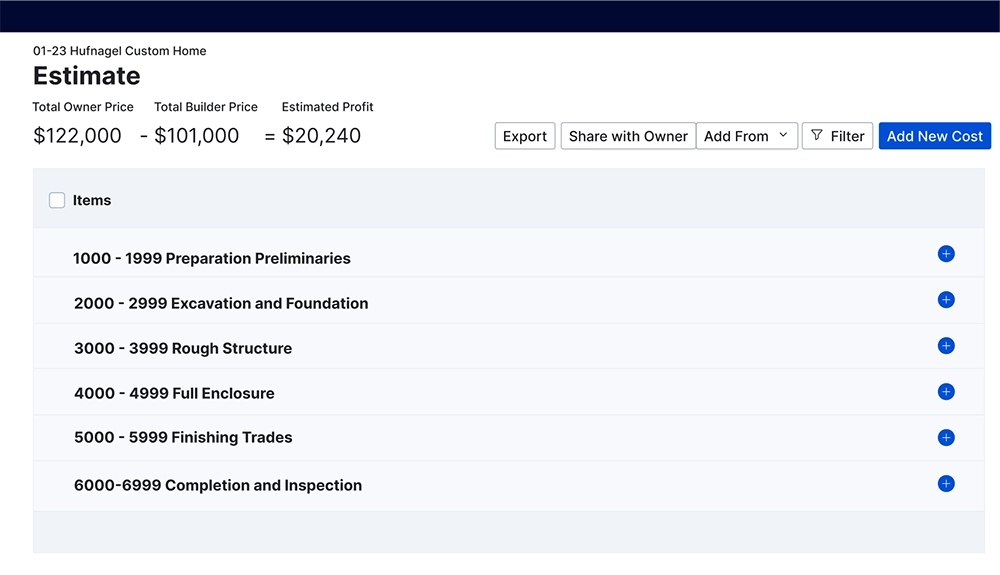
- Estimates: Use the Estimate feature to create a project roadmap that predicts costs, quantities, labor hours and more. Feel confident knowing the total project cost is accurate.

Ensure profitability with Buildertrend
Regardless of which contract you chose – cost plus or fixed price – Buildertrend offers the essential tools you need to ensure profitability for your business. You can accurately track expenses, manage project budgets and monitor profit margins in real-time, enabling informed decision-making and proactive cost management. You have the power to optimize project outcomes, enhance client satisfaction and drive long-term growth and success for your business.
Take the next step and schedule a demo today!



Unlock the full guide

Based on 5,000 reviews on



Tell us a bit about yourself
By submitting this form, you are agreeing to our Terms and Conditions Agreement and Privacy Notice. This site is protected by Google reCAPTCHA.
Schedule a demo
Set aside 30 minutes to chat with a friendly Buildertrend rep and discover firsthand how our platform can improve your business – and transform the way you work.
Based on 5,000 reviews on
Tell us a bit about yourself
By submitting this form, you are agreeing to our Terms and Conditions Agreement and Privacy Notice. This site is protected by Google reCAPTCHA.