- The residential playbook
Buildertrend 2026 data report
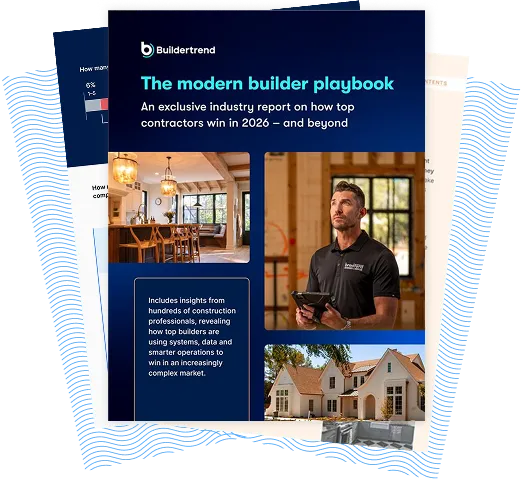
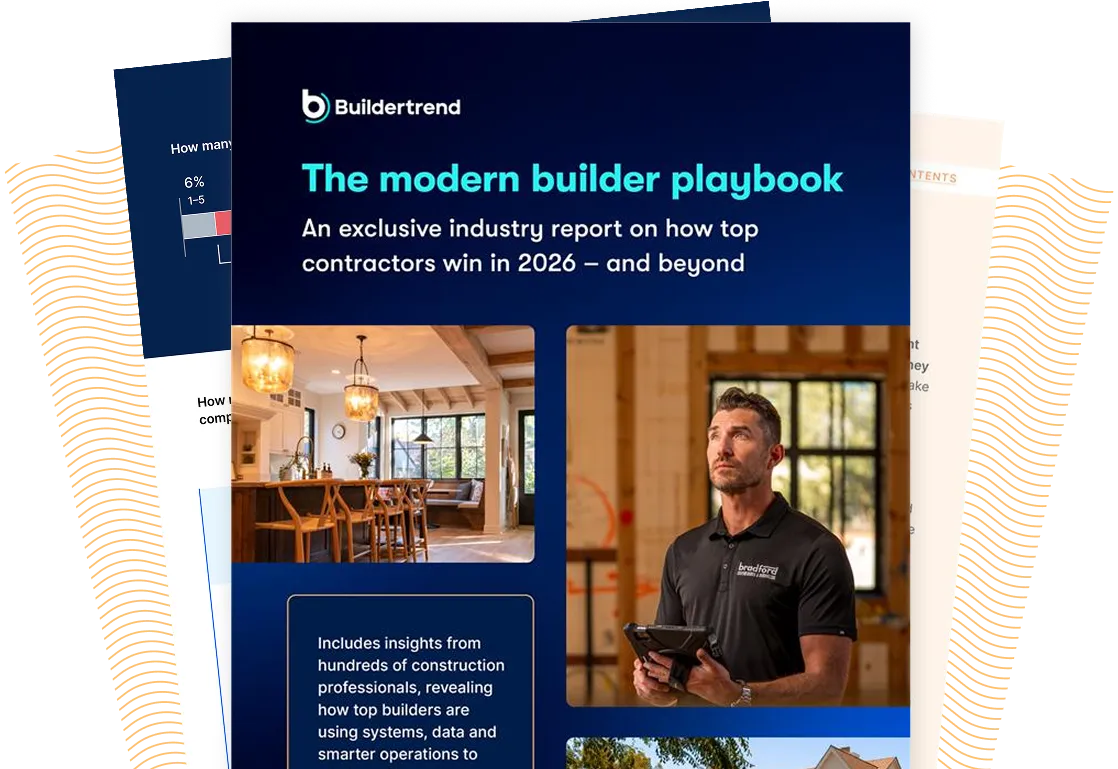
The modern builder playbook
How top contractors win in 2026 – and beyond.
Exclusive insights from hundreds of construction professionals reveal how the industry’s top builders are planning projects, managing finances, leading teams and delivering client experiences in an increasingly complex market.

Who we surveyed
The insights in this report come from experienced residential builders actively running construction businesses today.
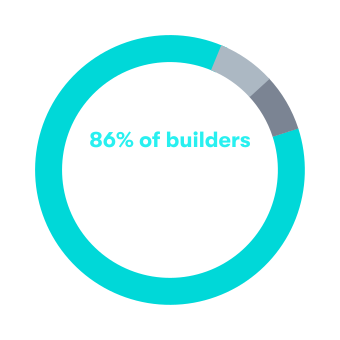
0
%
of builders have been in business for more than 8 years
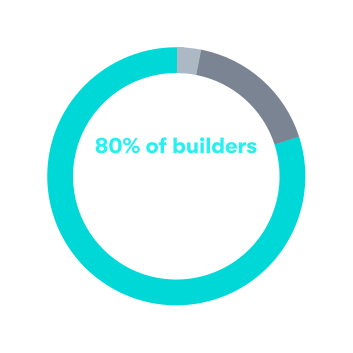
0
%
of respondents are custom home builders or remodelers
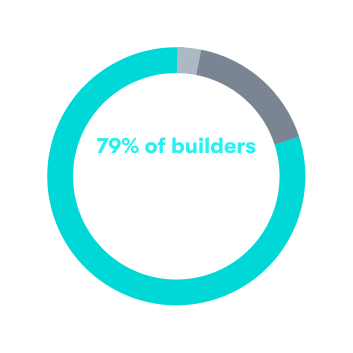
0
%
of respondents are company owners or presidents
0
%
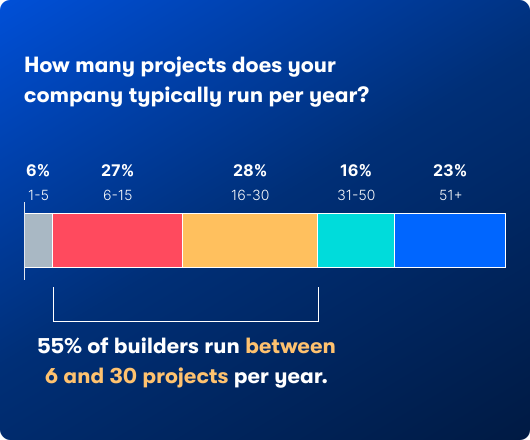
of builders manage more than six projects per year
Today’s leading builders are no longer relying on intuition alone
They’re building companies powered by systems, data, transparency and disciplined operations. They’re investing in tools that give them clearer visibility into their numbers, stronger processes for managing projects and better ways to communicate with clients and teams.
The survey insights throughout this report reinforce one central idea: the builders who succeed in today’s market are the ones who treat construction as a business, not just a craft.

Results at a glance
See how today’s most successful builders plan their businesses, run projects, manage finances and build lasting companies.


Read on for more insights and to learn how builders are thriving amid historic industry pressures.
- Historic context
Historic context
Builders are operating under historic pressure
Residential construction today is operating in one of the most complex environments the industry has faced in decades. Builders aren’t just managing projects – they’re navigating a housing shortage, workforce constraints and rising operational pressure while demand for new homes remains high.


Housing shortage
The U.S. housing market is currently short roughly 1.5 million homes*, creating significant pressure on builders to increase supply and close the gap between demand and available housing. *Source: NAHB
Labor shortage
The construction industry needs approximately 723,000 new workers every year* just to meet current demand and replace those leaving the workforce. *Source: HBI
Project delays
Workforce constraints are adding nearly two months to construction timelines on average*, making it harder for builders to deliver projects on schedule. *Source: HBI
Economic impact of workforce gaps
Labor shortages are costing the industry more than $10.8 billion annually* through lost productivity, delayed projects and reduced housing output. *Source: Builder Online
An aging workforce
Nearly 41% of the construction workforce is expected to retire by 2031*, intensifying the already significant labor gap facing the industry. *Source: HBI

To understand how today’s most successful builders are navigating these challenges and positioning their businesses for growth, Buildertrend surveyed hundreds of residential construction professionals across the industry. Read on to learn the top four takeaways for the report.

Download the full report for data and insights from top builders on business planning, sales and project operations, financials and more.
- Industry challenges
Industry challenges
The four big insights shaping the next era of residential construction
Across the Buildertrend survey, four clear insights emerged that reveal how leading builders are adapting – and where the industry is headed next.

The industry is professionalizing faster than ever
The best builders aren’t just builders anymore; they’re building systems-driven businesses. Top contractors are tracking financial performance, job costs, budget variance, schedules and broader business KPIs. What used to be managed by instinct is increasingly managed by numbers.
This shift marks a major evolution for the industry as residential construction moves away from informal processes and toward more professional, data-informed business operations.

The operating system of construction is changing
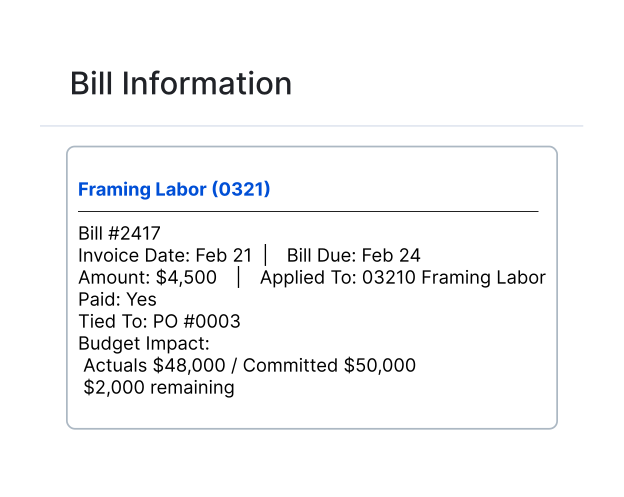
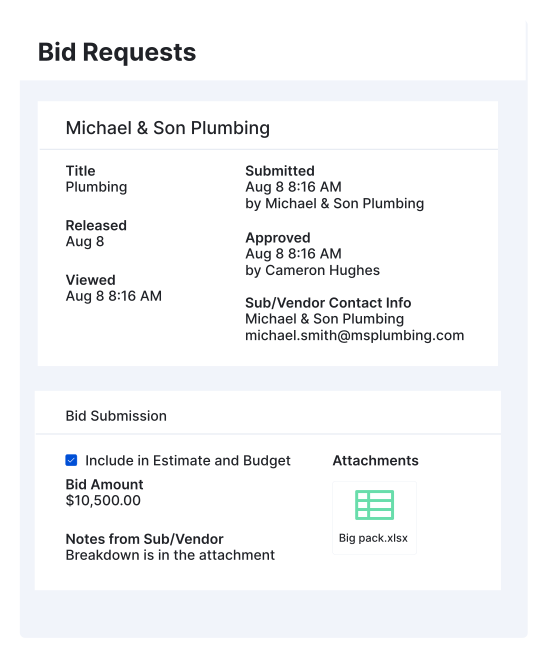
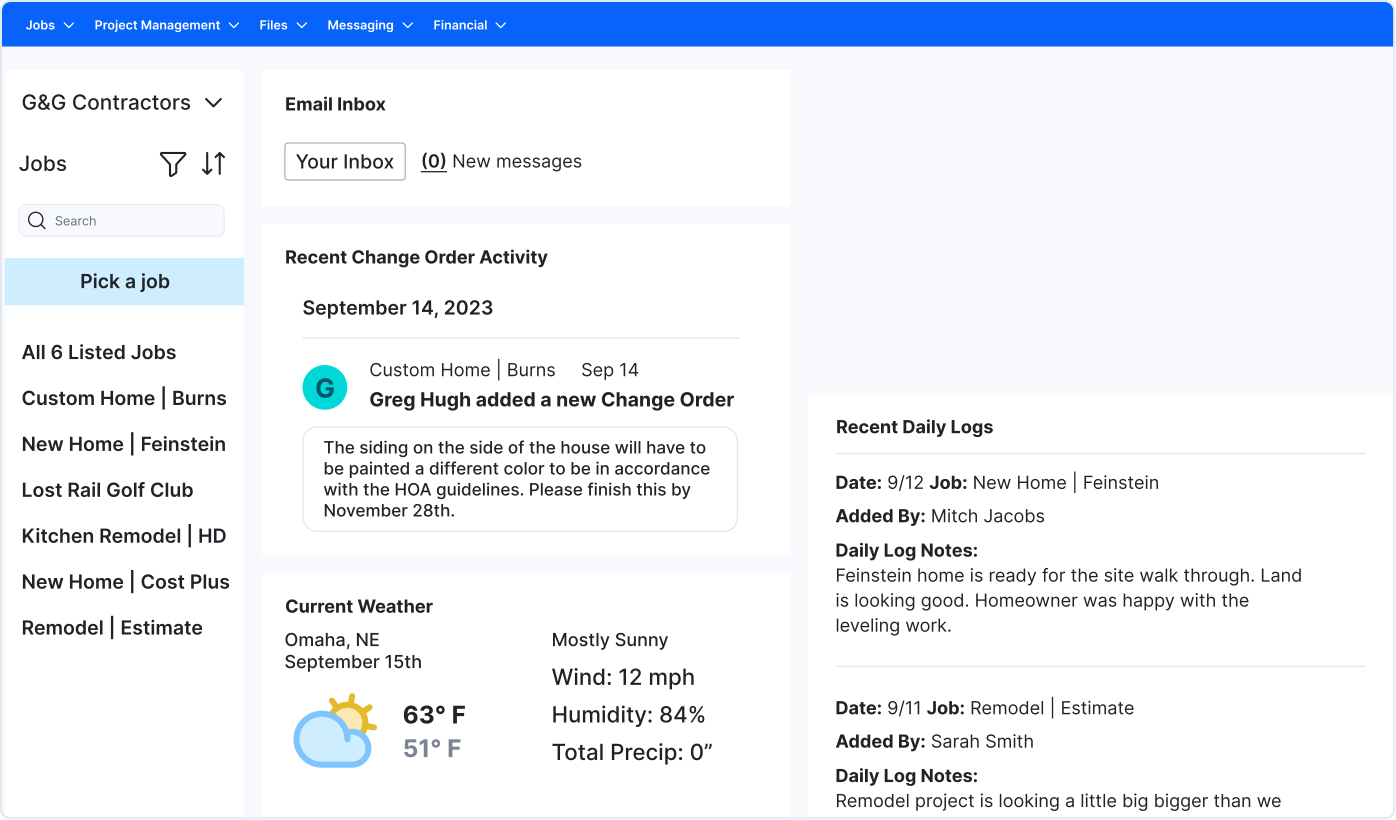
For decades, construction companies ran on a patchwork of spreadsheets, point systems, email threads, phone calls and whiteboards. That model is beginning to break down. Builders are rapidly adopting centralized platforms that connect job site activity, financial tracking, schedules, client communication and reporting in one place.
In other words, construction companies are moving toward true operating systems in the form of platforms designed to run the entire business.
The next competitive edge isn’t craftsmanship – it’s profit control
Margins are becoming the defining challenge of modern construction. The survey reveals a surprising tension: builders are tracking their finances more closely than ever before, yet maintaining predictable margins remains difficult. Labor costs, change orders and material volatility continue to disrupt profitability.
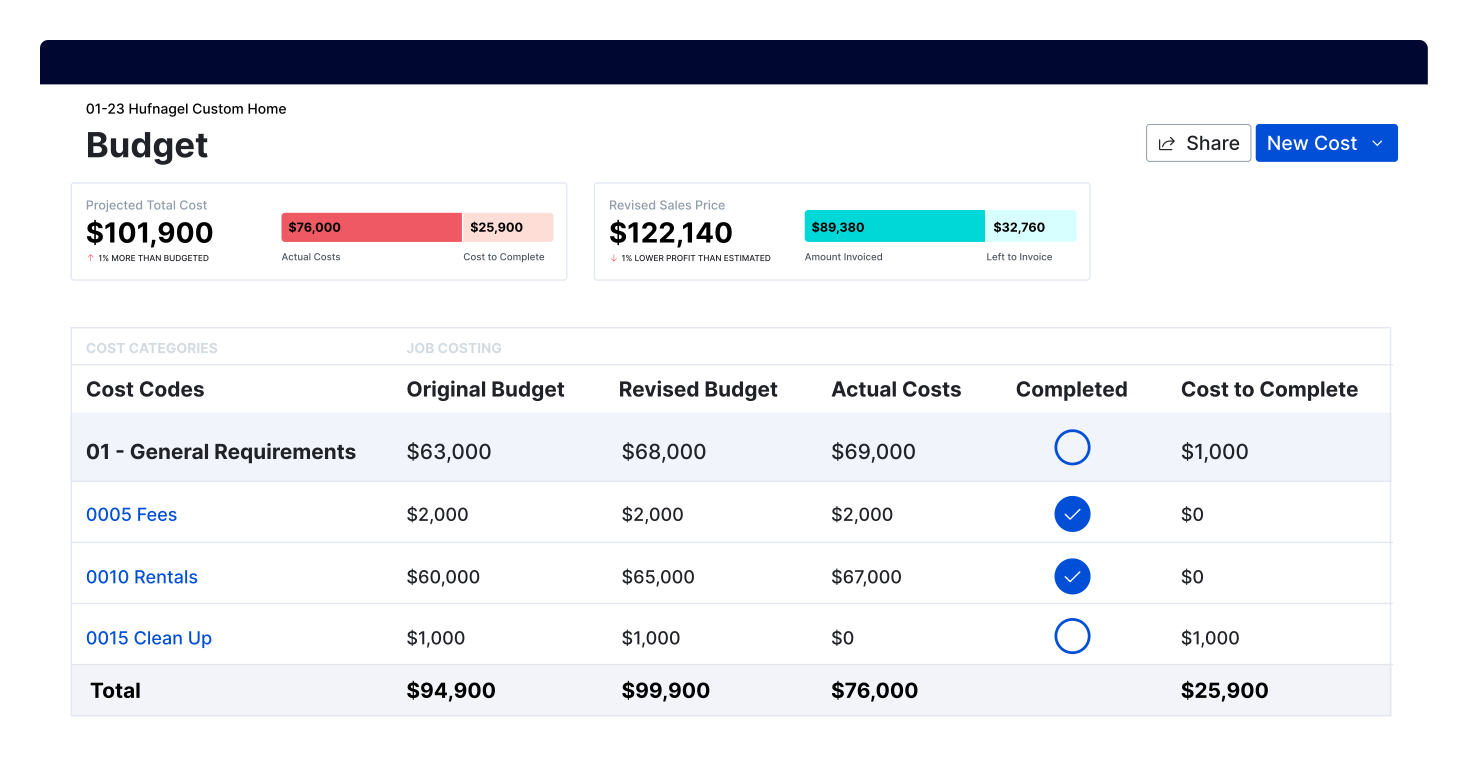
The builders who succeed in this environment aren’t just the best craftspeople. They’re the ones who can predict job costs, monitor budgets in real time and prevent margin erosion before it happens. In today’s market, financial control is becoming the industry’s next competitive advantage.
The industry still runs on trust
Even as construction becomes more digital and data-driven, one thing hasn’t changed: relationships remain the foundation of the industry. The survey shows that most builders still generate the majority of their work through referrals and word-of-mouth.
The most successful builders understand that systems and technology don’t replace relationships, but strengthen them by improving communication, transparency and coordination.
What follows is a behind-the-scenes look at how today’s most successful builders plan their businesses, run projects, manage finances and build lasting companies.
Download the full report for data and insights from top builders on business planning, sales and project operations, financials and more.
- Data-driven results
Planning the business
The new blueprint
For decades, many residential construction businesses were run largely on experience and instinct. A strong reputation, a steady stream of referrals and a full schedule were often enough to keep projects moving and companies growing.
Today’s environment demands something more . . .
Builders are planning like CEOs
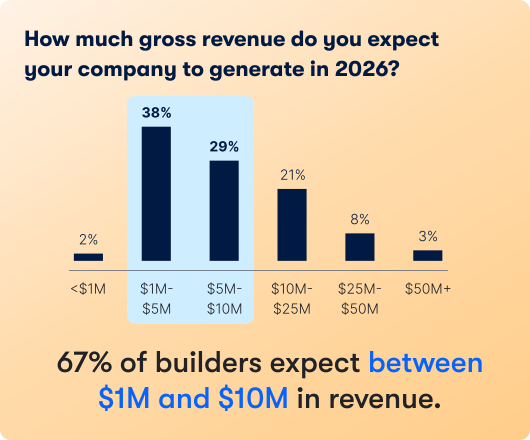
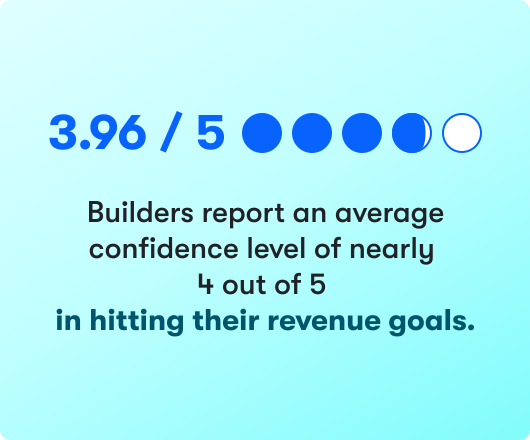
Survey results show that many residential construction companies are no longer planning project by project, but by their businesses as a whole. Instead of simply reacting to incoming work, builders are setting clearer revenue goals, managing structured project pipelines and building systems that give them greater visibility into future capacity.
In other words, the role of the builder is evolving. Today’s successful construction leaders are operating more like CEOs by balancing craftsmanship with financial planning, operational oversight and long-term growth strategy.

The data also reveals that most builders participating in this survey run established companies with stable operations and predictable workflows. They understand how many projects they can realistically manage, how their teams operate and how their business performs financially.
That level of clarity changes how decisions are made. Hiring becomes more intentional. Project selection becomes more strategic. Growth becomes something that can be planned rather than simply hoped for.
Insights in action:
How Cardinal Crest Homes scaled with intentionWhen Cardinal Crest Homes began scaling its custom home business, the team realized something many builders eventually discover: great craftsmanship alone isn’t enough to run a great construction company.
They needed a better system …

A better way to support a growing business
“We were using Excel and Google Sheets to organize budgets, draws, email messaging and file management. I got frustrated and said, ‘There’s just got to be a better way.’ Buildertrend provides convenience, saves time and gives our homeowners peace of mind.”

Joe Christensen Founder and owner of Cardinal Crest Homes
Today, Cardinal Crest Homes runs a highly organized, data-driven operation where project managers, office staff, trade partners and homeowners all stay aligned through one platform. The Kansas City design-build firm completes 15 to 20 custom homes each year – projects known for the kind of thoughtful design and craftsmanship that leave clients’ jaws on the floor.
The companies that thrive in the years ahead won’t just build great homes – they’ll build businesses designed to scale.
Download the full report for data and insights from top builders on business planning, sales and project operations, financials and more.
- Planning the business
Data-driven results
Planning with precision
In residential construction, most delays, cost overruns and stress don’t happen in the field. These troubles start long before the first shovel hits the dirt. For many builders, they have a directionless concept that is a scattered mix of spreadsheets and emails that slow progress and increase cost.

How top builders set jobs up to win
Every successful build starts with one clear differentiator: preconstruction.
Builders who standardize preconstruction processes gain control over costs, schedules and client satisfaction. When every project starts with precision planning, builders can focus less on putting out fires and more on delivering elite results.

Chris Ledet Homes saved 40+ hours per week setting up new projects when they moved to one connected system. Now they complete five extra projects each year.
Paul Ledet, Owner of Chris Ledet Homes


Want the full story?
Download the report for data and insights from top builders on business planning, sales and project operations, financials and more.
A message from our CEO
“Over the past 20 years, I’ve had the privilege of working alongside thousands of construction professionals. In that time, I’ve learned something simple but powerful about this industry: builders are some of the most resilient, resourceful and forward-thinking entrepreneurs out there.
Today, now two decades later, more than 20,000 construction companies rely on Buildertrend.

Buildertrend exists to serve builders. From day one, our mission has been to help our customers build better businesses, and that commitment continues to guide every decision we make.
Inside, you’ll find insights from hundreds of construction professionals who generously shared how they plan projects, manage finances, lead their teams and deliver exceptional client experiences. Their openness speaks to something I’ve always believed about this industry: builders are stronger when they learn from each other.
While this report focuses on how builders are operating today, it’s clear the next wave of transformation is already beginning. Emerging technologies like AI are starting to reshape how builders estimate, forecast and make decisions – and the companies that have already built strong systems will be best positioned to take advantage of what comes next. At Buildertrend, we’re beginning to integrate these capabilities into our platform in ways that help builders turn their data into faster, more informed decisions.
My hope is that the insights in these pages give you new ideas, renewed confidence and practical strategies you can put to work in your own business.”
– Dan Houghton, CEO and
Co-founder of BuildertrendDownload the full report for data and insights from top builders on business planning, sales and project operations, financials and more.










Unlock the full guide

Based on 5,000 reviews on



Tell us a bit about yourself
By submitting this form, you are agreeing to our Terms and Conditions Agreement and Privacy Notice. This site is protected by Google reCAPTCHA.